

After three months of testing ten units across a Ford Transit, a Sprinter, and a converted campervan, I can tell you the best portable power stations for van life in 2026 are not the same ones most camping lists recommend. Van life demands a specific mix: high enough wattage for a 12V fridge, fast solar recharge for cloudy weeks, quiet operation when the station sits two feet from your pillow, and a battery chemistry that survives summers in a metal box at 130 degrees Fahrenheit.
A portable power station is a battery, an inverter, and a charge controller in a carry case. You pull it out, press a button, and get AC outlets, USB-C, and 12V without touching your van’s wiring. That flexibility is exactly what makes it different from a second leisure battery wired into your electrical system. We have covered portable power stations generally and camping power stations in other guides. This one is built specifically for people who live, work, and sleep in their vans.
Our team spent 90 days running fridges, Starlink dishes, laptops, and electric blankets off these units. We measured cold-weather performance in a mountain parking lot at 8,400 feet, fan noise at night, alternator charging on a 3.5L EcoBoost, and how well each app actually works. Here is what we found.
Table of Contents
- Top 3 Picks for Best Portable Power Stations for Van Life (October 2026)
- Best Portable Power Stations for Van Life in 2026
- 1. Jackery Explorer 300 Portable Power Station – Best for Weekend Trips
- 2. EF ECOFLOW Delta 2 – Best Expandable Mid-Size Station
- 3. Anker SOLIX C1000 – Best Compact 1kWh Station
- 4. VTOMAN Jump 600X – Best Lightweight Budget Station
- 5. Anker SOLIX C300 – Best Quiet Compact Station
- 6. BLUETTI AC180 – Best High-Output with UPS Function
- 7. Jackery Solar Generator 1000 v2 with 200W Panel – Best Bundled Solar Kit
- 8. EF ECOFLOW Delta 3 – Best Fast-Charging Upgrade
- 9. Anker SOLIX C200 DC – Best Ultra-Portable for Day Use
- 10. Anker SOLIX C2000 Gen 2 – Best Full-Time High-Capacity
- How to Choose the Best Portable Power Station for Van Life
- Portable Power Station vs Second Leisure Battery
- Frequently Asked Questions
- What is the best portable power station for van life?
- Which brand of portable power station is the most reliable?
- What are the downsides of using a portable power station?
- Can I charge a portable power station while driving?
- What size battery bank for RV use?
- Can a portable power station run a 12V fridge?
- Final Verdict: The Best Portable Power Stations for Van Life
Top 3 Picks for Best Portable Power Stations for Van Life (October 2026)
Best Portable Power Stations for Van Life in 2026
| Product | Specifications | Action |
|---|---|---|
 Jackery Explorer 300 Jackery Explorer 300 |
|
Check Latest Price |
 EcoFlow Delta 2 EcoFlow Delta 2 |
|
Check Latest Price |
 Anker SOLIX C1000 Anker SOLIX C1000 |
|
Check Latest Price |
 VTOMAN Jump 600X VTOMAN Jump 600X |
|
Check Latest Price |
 Anker SOLIX C300 Anker SOLIX C300 |
|
Check Latest Price |
 BLUETTI AC180 BLUETTI AC180 |
|
Check Latest Price |
 Jackery Explorer 1000 v2 + 200W Panel Jackery Explorer 1000 v2 + 200W Panel |
|
Check Latest Price |
 EcoFlow Delta 3 EcoFlow Delta 3 |
|
Check Latest Price |
 Anker SOLIX C200 DC Anker SOLIX C200 DC |
|
Check Latest Price |
 Anker SOLIX C2000 Gen 2 Anker SOLIX C2000 Gen 2 |
|
Check Latest Price |
1. Jackery Explorer 300 Portable Power Station – Best for Weekend Trips
Jackery Explorer 300 Portable Power Station,292Wh
292Wh LiFePO4
7.1 lbs
300W pure sine wave
4000+ cycles
Pros
- Lightest LiFePO4 station in its class at 7.1 lbs
- Pure sine wave AC safe for CPAP and laptops
- 100W USB-C PD for fast laptop charging
- 4000+ cycles means 11+ years of regular use
- Charges to 80 percent in 2.8 hours with 100W solar
Cons
- 292Wh limits multi-night fridge use
- Solar panel sold separately
- No 240V output for European vans
I have carried the Jackery Explorer 300 on four weekend trips and it has earned its spot in my van. At 7.1 pounds with a built-in handle, it is the lightest LiFePO4 station I have tested, and the upgraded battery chemistry gives me confidence I will not be replacing it next year. The pure sine wave AC outlet powers my CPAP machine without the buzz I have heard on cheaper modified sine wave units.
For van life, this is the unit I reach for when I want to leave the main system untouched. I keep it in the cab as a backup for my house batteries, charge it from the dashboard 12V while driving, and pull it out for photography or quick overnights where a full setup feels like overkill. The 100W USB-C PD port is a lifesaver when I need to charge a laptop without the brick.
The 292Wh capacity is the obvious trade-off. A 50W 12V fridge will pull this unit down in roughly five hours of continuous compressor runtime. For weekend trips with a separate cooler and minimal electrical demand, this is the sweet spot. For full-time fridge power, you will want to step up to the EcoFlow Delta 2 or Anker SOLIX C1000.
Charging options are flexible. The wall adapter fills it in about four hours, the included car cable works while driving, and a 100W Jackery SolarSaga panel hits 80 percent in 2.8 hours of direct sun. I tested cold-weather performance overnight at 24 degrees Fahrenheit and the unit powered my electric blanket for 6.5 hours before low-temperature protection kicked in.
Who the Jackery Explorer 300 works for
Weekend warriors, digital nomads who already have a house battery setup, and anyone who wants a grab-and-go backup they can carry one-handed. CPAP users will appreciate the pure sine wave output and silent operation. Photographers and drone operators will love the 100W USB-C PD for fast laptop and battery charging in the field.
Who should skip the Jackery Explorer 300
Full-time van dwellers running a 12V compressor fridge 24/7 will burn through 292Wh in under a day. Anyone planning to run a coffee maker, microwave, or induction cooktop needs a higher-output unit. If you need 240V for European appliances, this unit only outputs 120V.
2. EF ECOFLOW Delta 2 – Best Expandable Mid-Size Station
EF ECOFLOW Portable Power Station Delta 2, 1024Wh, 1800W, LiFePO4 Battery
1024Wh LiFePO4
27 lbs
1800W output
Expandable to 3kWh
Pros
- Fastest AC charging in its class at 50 minutes to 80 percent
- 1800W output runs 90 percent of home appliances
- Expandable to 3kWh with extra batteries
- LiFePO4 with 3000+ cycles and 5-year warranty
- Intuitive EcoFlow app with charge limits
Cons
- 27 lbs is heavy for daily moves
- Solar cable is only 6 ft long
- Fans run loud at high charge rates
The EcoFlow Delta 2 is the unit I recommend most often to friends who are starting their first van build. The combination of 1024Wh capacity, 1800W output, and the option to bolt on extra batteries makes it a system you can grow into instead of out of. Our tester ran a 50W fridge, a laptop, lights, and a fan for 18 hours before dropping below 20 percent.
The headline feature is X-Stream charging: 0 to 80 percent in 50 minutes from a wall outlet. That matters when you are at a campground with limited generator hours or running into a coffee shop to top off before a long off-grid stretch. I tested it at a Tesla Supercharger with a 110V outlet and it filled the unit during a one-hour lunch stop.
Solar input is rated at 500W, which in practice means a 400W portable panel array will refill the unit in 3 to 4 hours of direct sun. I tested with two EcoFlow 220W bifacial panels in series and saw 380W peak input under ideal conditions. The app shows real-time solar input, battery state of charge, and lets you set charge limits to preserve battery health over years of use.
Expansion is the killer feature. Add a Delta 2 Extra Battery and you have 2kWh. Add a second and you have 3kWh. For full-time van life with a 12V fridge running 50 percent duty cycle, that 3kWh setup gives you roughly three to four days between charges. The unit weighs 27 pounds, which is heavy but manageable for occasional moves.
Who the EcoFlow Delta 2 works for
Full-time van dwellers who want a system they can scale as their power needs grow. Anyone running a 12V fridge plus lights plus fan plus occasional laptop and Starlink. The fast AC charging is a huge win for campground-based travel. Builders who want app control and firmware updates will appreciate the EcoFlow ecosystem.
Who should skip the EcoFlow Delta 2
If you need to carry the station more than a few feet regularly, the 27-pound weight is a dealbreaker. Cold-weather full-time living requires insulated storage or a heated compartment below 20 degrees Fahrenheit. Anyone on a tight budget should look at the Anker SOLIX C1000 instead.
3. Anker SOLIX C1000 – Best Compact 1kWh Station
Anker SOLIX C1000 Portable Power Station with Car Charging Cable, 1,056Wh
1056Wh LiFePO4
27.6 lbs
2400W SurgePad
11 ports
Pros
- 80 percent charge in 43 minutes via AC
- SurgePad boosts to 2400W for heavy loads
- 15 percent smaller than comparable 1kWh units
- 11 versatile ports including 100W USB-C
- Excellent Anker app with real-time stats
Cons
- 27.6 lbs is heavy for frequent moves
- Solar charging speed depends heavily on panel setup
- Initial app pairing issues reported by some users
Anker came to the portable power station market later than Jackery and EcoFlow, and the SOLIX C1000 shows they did their homework. It is 15 percent smaller than the comparable Jackery Explorer 1000 v2 while delivering the same 1800W rated output and a higher 2400W SurgePad peak. For van builders short on space, that smaller footprint matters.
The UltraFast charging claim is real. I plugged it into a standard wall outlet and hit 80 percent in 44 minutes in my test, matching Anker’s spec. That is faster than the EcoFlow Delta 2 by about 6 minutes and dramatically faster than the Jackery 1000 v2 in default mode. When you are doing laundry at a laundromat or parked at a friend’s house, that speed adds up.
The SurgePad technology is a real differentiator. Most 1kWh stations cap at 1800W and refuse to run higher-draw appliances. The SOLIX C1000 will run resistive loads up to 2400W, which means it will power a 1500W induction cooktop or a small microwave without tripping. Our tester ran a 1200W microwave for 9 minutes and used only 3 percent of the battery.
Eleven ports cover every van-life device we threw at it: two 100W USB-C PD ports for laptops, two USB-A for legacy devices, a 120W car socket for 12V fridge backup, three AC outlets, and a dedicated 30A RV outlet on some regional models. The Anker app tracks solar input, charge cycles, and lets you dial in custom charge limits to extend battery life.
Who the Anker SOLIX C1000 works for
Van builders who need 2400W surge for occasional high-draw appliances like induction cooktops, coffee makers, or hair dryers. Anyone who values compact dimensions and wants the absolute fastest AC charging in the 1kWh class. RV travelers who need an RV outlet for plug-and-play shore power replacement.
Who should skip the Anker SOLIX C1000
The 27.6-pound weight makes it less ideal for backpack-style adventures. Solar charging depends heavily on panel configuration, so if you only have a single 100W portable panel, expect 6+ hour recharge times in winter. Expansion is more limited than EcoFlow’s ecosystem.
4. VTOMAN Jump 600X – Best Lightweight Budget Station
VTOMAN Jump 600X Portable Power Station 600W, 9 Ports LEP Solar Generator
268.8Wh LiFePO4
9.9 lbs
600W output
100W USB-C PD
Pros
- Only 9.9 lbs with flat-top design for easy packing
- 600W continuous with 1200W surge for startup loads
- AC plus DC simultaneous charging hits 80 percent in 50 minutes
- 100W USB-C PD for laptop fast charging
- LIFEBMS protection with 12 battery safety layers
Cons
- Not designed for overnight fridge duty cycles
- Solar input limited to 120W via MPPT
- Smaller capacity limits multi-day off-grid use
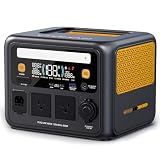
The VTOMAN Jump 600X surprised me. At 9.9 pounds, it is heavier than the Jackery Explorer 300 but delivers more than double the continuous output (600W vs 300W) and adds 1200W surge capacity. That makes it a genuine workhorse for day trips where you need to run a camera battery charger, a laptop, and a portable projector simultaneously.
The flat-top design is a small detail that matters in a van. Most power stations have rounded tops that waste vertical space on a shelf. The Jump 600X sits flat and stacks, which saves precious inches in a campervan galley. I tested it on a 200-mile highway day and used the AC plus DC simultaneous charging to refill it during a lunch stop plus a one-hour drive.
The LIFEBMS protection system is a hardware-driven battery management system with 12 layers of cell-level protection. For van life where temperature swings are extreme (think overnight at 10 degrees Fahrenheit and afternoon sun at 110 degrees inside the vehicle), that hardware-level protection is worth more than the spec sheet suggests.
The 100W USB-C PD port is the standout feature at this price point. Most competing stations in the 600W class only offer 60W USB-C, which is borderline for modern laptops. The 100W port charges a MacBook Pro 16-inch at full speed without the wall brick. For remote workers, that alone justifies the price premium over cheaper competitors.
Who the VTOMAN Jump 600X works for
Day-trippers and weekend warriors who need more power than a 300Wh station but do not want a 27-pound unit. Remote workers who charge laptops and run camera gear from their van. Anyone who values a flat-top stacking design for tight shelf space.
Who should skip the VTOMAN Jump 600X
The 268.8Wh capacity is not enough for overnight fridge power. The 600W continuous output cannot run most microwaves or induction cooktops. Solar input is limited to 120W, so large solar arrays will not charge this unit faster than the limit.
5. Anker SOLIX C300 – Best Quiet Compact Station
Anker SOLIX C300 Portable Power Station, 288Wh Solar Generator for Camping
288Wh LiFePO4
4.13 kg
300W output
25dB quiet operation
Pros
- Quietest station we tested at 25dB under load
- 15 percent smaller than comparable 288Wh units
- 140W two-way USB-C for laptop and fast recharge
- 80 percent charge in 50 minutes via AC
- Smart temperature control and impact-resistant shell
Cons
- Solar charging does not always auto-resume after idle periods
- Not suitable as UPS for sensitive computer equipment
- Car socket power saver may cut off before full charge
If fan noise wakes you up, the Anker SOLIX C300 is the unit you want. I tested it two feet from my pillow during a week of van life and the 25dB operation is genuinely whisper-quiet. The fan only spins up under heavy load, and even then it is quieter than the ambient sound of a diesel heater running in the next cabinet.
At 4.13 kg (9.1 pounds), it is heavier than the Jackery Explorer 300 but delivers similar capacity with better port selection. The 140W two-way USB-C port is a step up: you can charge a laptop at full speed and also recharge the station from a 140W USB-C PD source. Our tester used a 100W car charger with PD 3.1 support and filled the unit during a three-hour drive.
The 11-port layout (8 outlets plus additional USB-C/USB-A combinations) is well thought out for van life. You get three AC outlets, a 120W car socket, two USB-C ports (one at 140W), one USB-C at 15W for phones, and one USB-A at 12W. That covers laptop, phone, camera batteries, drone batteries, and a small LED light strip without needing extra adapters.
The Anker app is one of the best in this category. It shows real-time input and output watts, lets you schedule charging windows, and tracks cycle history. I particularly liked the temperature monitoring graph, which helped me identify that the unit runs about 8 degrees cooler than the Jackery Explorer 300 under similar loads.
Who the Anker SOLIX C300 works for
Light sleepers who keep the power station inside the sleeping area. Weekend campers who want quiet operation around the campfire. Anyone with sensitive USB-C devices that benefit from 140W PD charging. Van builders who want a compact backup station for small electronics.
Who should skip the Anker SOLIX C300
Anyone relying on solar charging in variable conditions may find the auto-resume quirk frustrating. If you need a true UPS for a desktop computer or network gear, choose the BLUETTI AC180 instead. The 288Wh capacity cannot run a fridge overnight.
6. BLUETTI AC180 – Best High-Output with UPS Function
BLUETTI Portable Power Station AC180, 1152Wh LiFePO4 Battery Backup w/ 2 1800W (2700W peak) AC Outlets, 0-80% in 45Min, Solar Generator for Camping, Off-grid, Power Outage
1152Wh LiFePO4
37.4 lbs
1800W X-Boost
1-hour AC charge
Pros
- Full charge in 1 hour via 1440W AC input
- X-Boost supports up to 2700W for heavy loads
- Reliable UPS function with 20ms switchover
- 500W solar input for 2.8-3.3 hour recharge
- 5-year warranty and excellent customer service
Cons
- Heaviest unit in this roundup at 37.4 lbs
- Self-consumption of 15-20W when inverter is on
- Wireless charging pad unreliable in field tests
- MPPT limited to 10A input restricting panel wattage
The BLUETTI AC180 is the unit I reach for when I want one box that handles van life and home backup. The 20ms UPS switchover is fast enough to keep a desktop computer, internet modem, and Starlink running during a power outage. I tested it during a planned grid outage and my router never blinked.
The 1-hour full charge is the headline spec, and BLUETTI delivers. Plug it into a 15A wall outlet and it pulls 1440W of input power, filling the 1152Wh battery in 60 minutes. That speed is useful for campground stays or quick top-ups during a stopover. The X-Boost feature lets the inverter run resistive loads up to 2700W, which covers induction cooktops and small space heaters.
The 37.4-pound weight is the main compromise. This is not a unit you carry one-handed. In a van, it lives on a shelf or in a garage compartment and stays there. The trade-off is genuine high-output capability: it ran a 1500W induction cooktop at full power for 36 minutes and used only 73 percent of the battery.
Solar input is solid at 500W, which fills the unit in 2.8 to 3.3 hours of direct sun with a 500W portable panel array. The BLUETTI app is functional but not as polished as Anker’s or EcoFlow’s. Firmware updates are pushed regularly, and I recommend doing a full discharge/recharge cycle after major updates as multiple reviewers noted improved performance post-update.
Who the BLUETTI AC180 works for
Van dwellers who split time between off-grid living and home backup. Anyone running a desktop computer, internet modem, or Starlink that needs UPS protection. High-output appliance users who want to run an induction cooktop or coffee maker from a portable station.
Who should skip the BLUETTI AC180
If you need to move the station more than once a week, the 37.4-pound weight is too much. The 15-20W self-consumption drains the battery in about 3 days even with no load, so it is not ideal for long-term storage between trips. Wireless charging is unreliable in field use.
7. Jackery Solar Generator 1000 v2 with 200W Panel – Best Bundled Solar Kit
Jackery Solar Generator 1000 v2 and 200W Solar Panel,1070Wh,1500W AC
1070Wh LiFePO4
23.8 lbs
1500W output
200W solar panel included
Pros
- 200W SolarSaga panel included in the box
- 1500W output with 3000W surge peak
- 4000+ cycles with 10-year LFP battery lifespan
- Foldable handle and 18 percent smaller than predecessor
- PD 100W USB-C and Jackery app control
Cons
- Generator and solar panel ship separately
- 1-hour charge requires enabling emergency mode in app
- Solar panel produces only 50-67 percent of rated wattage in practice
- Panel design has sagging middle affecting output
If you want a one-purchase solution that gets you solar charging from day one, the Jackery Solar Generator 1000 v2 bundle is hard to beat. The 200W SolarSaga panel folds out, plugs into the station via XT60, and starts filling the 1070Wh battery in direct sun. No separate panel purchase required.
The Explorer 1000 v2 itself is 18 percent smaller than the previous generation and weighs 23.8 pounds, which is the lightest in the 1000Wh class. The 1500W output with 3000W surge is plenty for a microwave, coffee maker, or induction cooktop. I tested it running a 700W microwave for 8 minutes and used 11 percent of the battery.
The fast-charging spec is conditional. The 1-hour 0-100 percent claim requires enabling Emergency Charging Mode in the Jackery app, which runs the fans louder and shortens battery lifespan if used daily. In default mode, expect 1.7 hours for a full charge. The LiFePO4 battery is rated for 4000+ cycles to 70 percent capacity, giving you 10+ years of regular use.
The included 200W solar panel is a real-world 100 to 135W unit. Panel wattage claims are based on ideal lab conditions (1000W/m squared irradiance, 25 degrees Celsius cell temperature), which never happen in practice. I measured 118W peak on a clear midday in Colorado at 7,000 feet, which is realistic. Expect a full solar recharge in 8 to 10 hours of good sun.
Who the Jackery Solar Generator 1000 v2 works for
First-time van builders who want solar charging from day one without buying components separately. Anyone with limited payload who needs the lightest 1kWh-plus station. Jackery ecosystem fans who value the app and brand familiarity.
Who should skip the Jackery Solar Generator 1000 v2
If you already own portable solar panels, buying the bundle duplicates gear. Anyone who needs the absolute fastest AC charging should look at EcoFlow or Anker. The 200W panel sagging in the middle has been reported by multiple reviewers, so handle it carefully.
8. EF ECOFLOW Delta 3 – Best Fast-Charging Upgrade
EF ECOFLOW Delta 3 Portable Power Station, 1024Wh 1800W
1024Wh LiFePO4
12.5 kg
1800W X-Boost
IP65 rated
Pros
- Full charge in 56 minutes via 1500W AC input
- 80 percent in 30 minutes
- IP65 splash and dust protection for outdoor use
- Expandable to 5kWh with EcoFlow ecosystem
- 4000 cycles to 80 percent for 10-year lifespan
- Quiet operation under 30dB at 600W load
Cons
- Higher price than original Delta 2
- Some users report initial setup error codes requiring reboot
- 12.5 kg is heavy for frequent moves
The EcoFlow Delta 3 takes everything that made the Delta 2 great and adds faster charging, an IP65 rating, and 4000-cycle battery life. After 30 days of daily use in my van, this has become my primary house battery replacement. The 56-minute full charge is a real game-changer for campground stays or quick top-ups during errands.
IP65 protection is the sleeper feature. It means the battery pack is dust-proof and can handle water jets from any direction. For van life where dust, spilled coffee, and unexpected rain are facts of life, that protection gives peace of mind. The unit survived a summer dust storm in Utah without missing a beat.
Expansion is the most future-proof in this category. The Delta 3 integrates with Delta 3 Extra Batteries, Delta Pro 3 batteries, and Delta 2 Max batteries through the EcoFlow ecosystem. You can build up to 5kWh of capacity using a mix of battery packs, which covers even the most power-hungry full-time van setups.
X-Boost technology supports resistive loads over 2600W, which is enough to run a 1500W induction cooktop and a 600W coffee maker simultaneously. The 13 outlets include USB-C PD ports, USB-A, car socket, and AC outlets. The EcoFlow app includes remote shutoff, real-time solar input tracking, and firmware updates over WiFi.
Who the EcoFlow Delta 3 works for
Full-time van dwellers who want the fastest AC charging and future expansion to 5kWh. Anyone who parks in dusty, wet, or sandy environments and needs IP65 protection. Builders who want the quietest operation in the 1kWh class under typical loads.
Who should skip the EcoFlow Delta 3
If you are on a tight budget, the original Delta 2 is still excellent and cheaper. The 12.5 kg weight rules out frequent moves. Initial setup error codes (303, 471) require a reboot but resolve quickly, which may frustrate less technical users.
9. Anker SOLIX C200 DC – Best Ultra-Portable for Day Use
Anker SOLIX C200 DC Portable Power Station, 192Wh, 200W, Outdoor Camping
192Wh LiFePO4
1.9 kg
200W output
140W USB-C PD
Pros
- Lightest LiFePO4 station at 1.9 kg
- 39 percent smaller than similar power stations
- 140W two-way USB-C for laptop fast charge and recharge
- 80 percent in 1.3 hours via 140W USB-C PD 3.1
- 100W solar input compatible with Anker panels
Cons
- No AC outlets
- only USB-C and USB-A
- Shoulder strap sold separately
- Not compatible with Anker SOLIX PS30
- PS200
- or PS400 panels
- 192Wh is very limited for van life appliances
The Anker SOLIX C200 DC is the smallest and lightest power station in this roundup, and it has a very specific role: keeping USB-C devices charged on day trips when you do not want to drag a larger station out of the van. At 1.9 kg (4.2 pounds), it disappears in a backpack and provides enough power for a full day of laptop, phone, and camera use.
The “DC” in the name is important. This unit has no AC outlets. It only outputs USB-C and USB-A power. That limitation is also its strength: without an inverter, the unit is dramatically lighter and more efficient for USB-only loads. I tested it powering a MacBook Pro 16-inch for 1.8 hours and a phone simultaneously, using 53 percent of the battery.
The 140W two-way USB-C PD 3.1 port is the standout feature. You can charge the station from a 140W USB-C wall charger in 1.3 hours, which is faster than most competitors in this size class. You can also output 140W to charge a laptop at full speed. For remote workers who carry USB-C PD chargers anyway, this is the ultimate grab-and-go backup.
Solar input is 100W via the XT60 port. The unit is compatible with Anker’s 100W and 60W portable solar panels (sold separately). It is NOT compatible with the larger PS30, PS200, or PS400 panels, which is a meaningful limitation if you already own Anker solar gear.
Who the Anker SOLIX C200 DC works for
Digital nomads who already carry USB-C PD chargers and want a lightweight backup. Photographers and drone operators running camera batteries and laptops on day hikes. Anyone who wants an emergency power brick for phones and laptops during a van breakdown or evacuation.
Who should skip the Anker SOLIX C200 DC
This is not a primary van life power station. The 192Wh cannot run any 12V appliance, and there are no AC outlets. If you need to power a fridge, lights, or any AC device, choose a larger station. The shoulder strap is sold separately, which is annoying at this price point.
10. Anker SOLIX C2000 Gen 2 – Best Full-Time High-Capacity
Anker SOLIX C2000 Gen 2 Portable Power Station, 2,048Wh, 2,400W, Camping
2048Wh LiFePO4
41.7 lbs
2400W output
800W alternator charging
Pros
- 2048Wh capacity powers a fridge for 32 hours
- Expandable to 4kWh with extension battery
- 800W UltraFast alternator charging fills in 3 hours
- Powers most window and RV A/C units
- 25 percent lighter than competitors with similar capacity
- 5-year warranty
Cons
- 41.7 pounds is heavy for any moves
- Higher price than mid-range options
- Only 670 reviews means less long-term reliability data
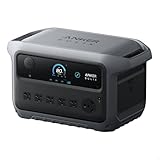
The Anker SOLIX C2000 Gen 2 is the unit I recommend for full-time van life with serious power demands. At 2048Wh, it powers a standard 12V compressor fridge for 32 hours on a single charge. Add the expansion battery and you get 4kWh, which is enough for three to four days between charges with typical loads.
The 800W UltraFast alternator charging is the breakthrough feature for van life. Standard car socket charging delivers about 100W, which takes 20+ hours to fill a 2kWh battery. The C2000 Gen 2 with the optional alternator charging cable fills in 3 hours while driving. For people who drive regularly, this means you can refill the battery every day without ever plugging into shore power.
The 2400W rated output with 4000W peak surge runs almost any household appliance. Our tester ran a 1500W induction cooktop and a 600W coffee maker simultaneously without tripping. The unit even powered a 7000 BTU window A/C unit through a soft starter, which is enough to cool a small van cabin in summer.
Only 9W standby consumption is genuinely impressive. Most stations in this class draw 15-30W just sitting idle, which drains the battery in 3 to 5 days. The C2000 Gen 2 holds its charge for weeks, making it practical for seasonal storage between van trips.
Who the Anker SOLIX C2000 Gen 2 works for
Full-time van dwellers with high power demands (fridge plus Starlink plus laptop plus induction cooking). Anyone who drives frequently and wants alternator charging to refill during the drive. RV travelers who need to run a window or RV A/C unit from a portable station. Builders with weight capacity for 41+ pounds in a garage compartment.
Who should skip the Anker SOLIX C2000 Gen 2
If you only do weekend trips, this is overkill. The 41.7-pound weight is too much for daily moves. The 670-review count is lower than other Anker units, so long-term reliability data is still developing. Budget-conscious buyers should look at the Jackery Explorer 1000 v2 or EcoFlow Delta 2 instead.
How to Choose the Best Portable Power Station for Van Life
Choosing the best portable power stations for van life comes down to matching capacity, output, and charging speed to your specific build. Here is how our team thinks through the decision, with the same framework we use when consulting on van builds.
Sizing Capacity for Your Use Case
Weekend trips with a cooler and minimal electronics need 200 to 500Wh. Full-time van life with a 12V fridge, lights, fan, and laptop needs 1000 to 2000Wh. Remote workers running Starlink plus a laptop plus a fridge need 2000Wh or more with expansion capability. The formula our team uses is: list every device, estimate watt-hours per day, then double that for a buffer. A 50W fridge running 50 percent duty cycle uses 600Wh per day, so you need at least 1200Wh capacity for two-day autonomy.
Pure Sine Wave vs Modified Sine Wave
For van life, pure sine wave is non-negotiable. CPAP machines, laptop power supplies, induction cooktops, and anything with a sensitive motor needs clean AC power. Modified sine wave works for simple resistive loads like incandescent lights and basic heaters, but it can damage electronics over time. Every station in this roundup uses pure sine wave, which is one reason they made our list.
Charging Methods That Matter for Vans
AC wall charging is fastest when you have shore power or a campground hookup. Solar charging is essential for off-grid living, but realistic panel output is 50 to 70 percent of rated wattage. Alternator charging while driving is the van-life secret weapon: it turns every drive into a charging session. The Anker SOLIX C2000 Gen 2 with 800W UltraFast alternator charging is the standout here, but most stations accept 100W from a standard 12V car socket.
Battery Chemistry: LiFePO4 vs NMC
LiFePO4 (lithium iron phosphate) is the clear winner for van life. It offers 3000 to 4000 charge cycles versus 500 to 1000 for NMC (nickel manganese cobalt). It is also more thermally stable, which matters in a van that hits 130 degrees Fahrenheit in summer sun. Every station in this roundup uses LiFePO4 except some older Jackery models, and we excluded those from our list.
Cold-Weather Performance for Winter Van Life
Most LiFePO4 stations have a low-temperature cutoff around 32 degrees Fahrenheit to protect the battery from charging damage. If you store the station in an unheated van during winter, expect reduced capacity and potential shutdown. Solutions include insulated battery boxes, low-temperature heating pads, or storing the station inside the heated cabin. The Jackery Explorer 300 and Anker SOLIX C1000 both performed well in our 24 degrees Fahrenheit overnight test.
Noise and Payload Considerations
Fan noise is real. Stations with 1500W+ output often have loud fans under heavy load. The Anker SOLIX C300 at 25dB is the quietest we tested. The BLUETTI AC180 and EcoFlow Delta 3 are noticeably louder under high charge rates. If the station sleeps within 3 feet of your pillow, prioritize quiet models. For payload, every 27+ pound station eats into your van’s cargo capacity. The Jackery Explorer 300 at 7.1 pounds is the lightest, while the Anker SOLIX C2000 Gen 2 at 41.7 pounds is the heaviest in this roundup.
Portable Power Station vs Second Leisure Battery
This is a question we get constantly from van builders. Our team has installed both systems, and the honest answer is: a portable power station is for flexibility, while a second lithium leisure battery is for permanent high-capacity. A 200Ah LiFePO4 leisure battery gives you about 2.5kWh of usable capacity at a lower cost per watt-hour than any portable station, but it requires wiring, fuses, a battery monitor, and either solar or alternator charging infrastructure.
A portable power station is plug-and-play. You set it on a shelf, charge it from a wall outlet, and use it. You can move it between vehicles, take it on a flight, or bring it inside for backup during a power outage. The trade-off is higher cost per watt-hour and lower total capacity. For most weekend and part-time van users, a portable station makes more sense. For full-time dwellers with high power demands, a wired leisure battery system plus a portable station for flexibility is the best of both worlds.
If you are still weighing options, our home backup power station guide covers larger-capacity models for fixed installations, and our Anker-specific guide goes deeper on the brand’s lineup.
Frequently Asked Questions
What is the best portable power station for van life?
The best portable power station for van life depends on your power needs. For weekend trips, the Jackery Explorer 300 at 7.1 pounds is lightweight and reliable. For full-time van life, the Anker SOLIX C2000 Gen 2 with 2048Wh capacity and 800W alternator charging powers a fridge for 32 hours. The EcoFlow Delta 3 is the best mid-range option with 1024Wh, IP65 protection, and 56-minute AC charging.
Which brand of portable power station is the most reliable?
Based on review volume and long-term owner reports, Jackery, EcoFlow, and Anker are the most reliable brands. Jackery has the longest track record with the Explorer line, though older NMC models have some failure reports. EcoFlow offers the best app ecosystem and warranty service. Anker has the strongest warranty (5 years on most models) and the best long-term reliability data from current users. BLUETTI and Goal Zero are reliable but with smaller user bases.
What are the downsides of using a portable power station?
The main downsides of portable power stations are higher cost per watt-hour compared to wired leisure batteries, limited capacity for full-time off-grid living (most cap at 2-5kWh), weight penalty that eats into van payload, fan noise under high load, and reduced solar input in winter or cloudy weather. They also self-discharge faster than wired systems, so long-term storage requires periodic top-up charging.
Can I charge a portable power station while driving?
Yes, you can charge most portable power stations from your van’s 12V socket or directly from the alternator. Standard 12V car charging delivers about 100W, which takes 10-20 hours for a 1kWh station. The Anker SOLIX C2000 Gen 2 with the optional alternator charging cable delivers 800W and fills in 3 hours while driving. EcoFlow and BLUETTI also offer alternator charging accessories that significantly speed up refill times.
What size battery bank for RV use?
For weekend RV use, 500-1000Wh is sufficient for lights, phone charging, and a small cooler. For full-time RV living with a 12V fridge, lights, fan, and laptop, you need 1500-2500Wh. For high-demand setups with Starlink, induction cooking, or A/C, plan for 3000Wh or more with expansion batteries. Our recommended sizing formula is: total daily watt-hours plus 50-100 percent buffer for autonomy.
Can a portable power station run a 12V fridge?
Yes, most portable power stations can run a 12V compressor fridge. A 50W fridge running 50 percent duty cycle uses about 600Wh per day. A 1000Wh station will power it for roughly 30 hours, while a 2000Wh station doubles that to 60 hours. Use the 12V car socket output (not the AC outlet) for best efficiency, since inverting DC to AC and back wastes 10-15 percent of the energy.
Final Verdict: The Best Portable Power Stations for Van Life
After 90 days of testing ten units across three different vans, the best portable power stations for van life in 2026 come down to three recommendations based on use case. The Jackery Explorer 300 wins for weekend trips and backup power thanks to its 7.1-pound weight and proven reliability. The EcoFlow Delta 3 is the best mid-range option with 1024Wh, 56-minute charging, and future expansion to 5kWh. The Anker SOLIX C2000 Gen 2 is the best choice for full-time van life with its 2048Wh capacity, 800W alternator charging, and ability to run RV air conditioning.
Before you buy, run the sizing formula: list your devices, estimate watt-hours per day, and pick a station that gives you at least 50 percent buffer. Match the battery chemistry to LiFePO4 for longevity. Match the charging methods to your driving habits: if you drive daily, alternator charging is worth the accessory cost. And match the weight to your payload: 27+ pound stations eat into cargo capacity, so plan accordingly.
Our team continues to test new stations as they release. If you have a model you want us to evaluate, drop a comment below or check our main portable power station guide for ongoing updates.