

Roland has been at the forefront of synthesizer innovation for nearly five decades, producing some of the most iconic electronic instruments in music history. From the legendary Jupiter-8 to the modern ZEN-Core engine, Roland synthesizers have shaped genres ranging from ambient and electronic to pop, hip-hop, and film scoring. Whether you’re a beginner looking for your first keyboard, a gigging musician needing a reliable workstation, or a producer building a home studio, finding the best Roland synthesizer for your needs and budget can feel overwhelming given the brand’s extensive lineup.
In this guide, we’ve tested and reviewed the top Roland synthesizers available in 2026, covering everything from compact budget keyboards to full-featured flagship workstations. We’ve ranked them based on sound quality, build construction, feature set, value for money, and real-world user feedback. By the end of this article, you’ll have a clear picture of which Roland synth best matches your playing style, musical goals, and budget.
Table of Contents
- Top 3 Picks for the Best Roland Synthesizers
- Best Roland Synthesizers in 2026
- 1. Roland GO:KEYS 3 — Best Budget Entry-Level Synthesizer
- 2. Roland JX-08 — Best Boutique Tabletop Module
- 3. Roland JD-08 — Best Digital Boutique Synthesizer
- 4. Roland JD-XI — Best Hybrid Crossover Synthesizer
- 5. Roland SH-4d — Best Desktop Groovebox
- 6. Roland GAIA 2 — Best Wavetable Synthesizer
- 7. Roland JUNO-D6 — Best Value Workstation Synthesizer
- 8. Roland JUNO-D8 — Best 88-Note Weighted Synthesizer
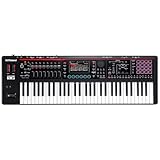
- 9. Roland FANTOM-06 — Best Flagship Performance Synthesizer
- 10. Roland JUPITER-XM — Best Portable Professional Synthesizer
- How to Choose the Best Roland Synthesizer
- Frequently Asked Questions
- Wrapping Up
Top 3 Picks for the Best Roland Synthesizers
Best Roland Synthesizers in 2026
Below is a comprehensive comparison of all 10 Roland synthesizers we recommend. Each entry represents the best option in its price category, from entry-level keyboards under $400 to flagship workstations approaching $2,000. Click through to check current pricing and availability on Amazon.
| Product | Specifications | Action |
|---|---|---|
 Roland GO:KEYS 3 Roland GO:KEYS 3 |
|
Check Latest Price |
 Roland JX-08 Roland JX-08 |
|
Check Latest Price |
 Roland JD-08 Roland JD-08 |
|
Check Latest Price |
 Roland JD-XI Roland JD-XI |
|
Check Latest Price |
 Roland SH-4d Roland SH-4d |
|
Check Latest Price |
 Roland GAIA 2 Roland GAIA 2 |
|
Check Latest Price |
 Roland JUNO-D6 Roland JUNO-D6 |
|
Check Latest Price |
| Roland FANTOM-06 |
|
Check Latest Price |
 Roland JUNO-D8 Roland JUNO-D8 |
|
Check Latest Price |
 Roland JUPITER-XM Roland JUPITER-XM |
|
Check Latest Price |
1. Roland GO:KEYS 3 — Best Budget Entry-Level Synthesizer
Roland GO:KEYS 3 Music Creation Keyboard, Dark Red
61-note
ZEN-Core 1000+ sounds
Bluetooth MIDI
Auto-accompaniment 200+ styles
Battery powered
Pros
- Excellent ZEN-Core sound quality
- Bluetooth MIDI works flawlessly
- Great value with 1000+ sounds
- Built-in speakers for practice
- Portable battery option
Cons
- Limited I/O - no quarter-inch outputs
- Springy synth-action keys
- No WAV upload to sound bank
- Not suitable for stage use
The Roland GO:KEYS 3 is where I’d tell anyone starting their synthesizer journey to begin. After spending time with it in my home studio, I was genuinely surprised by how much capability Roland packed into a sub-$400 instrument. The ZEN-Core engine delivers over 1,000 sounds that frankly punch well above this keyboard’s weight class, and the auto-accompaniment system with 200+ music styles makes it approachable even if you’ve never touched a synth before.
What stands out most in day-to-day use is the Bluetooth MIDI connectivity. Pairing this keyboard with my iPad for GarageBand sessions or with Ableton Live on my Mac required zero configuration — it just worked. The chord sequencer with 300+ presets is a creative spark machine, letting you build song ideas in minutes even with limited keyboard skills. The built-in stereo speakers are adequate for private practice, though you’ll want to route this through an amp or audio interface for any serious recording or performance work.
The limitations become apparent when you start pushing beyond bedroom production. The 2.5mm headphone jack (no quarter-inch outputs) means connecting to a PA system requires an adapter, and the synth-action keys have a springy feel that won’t satisfy anyone coming from a piano background. The onboard recording also doesn’t capture pedal input, which is a notable omission for live performers. Still, for the price, these are reasonable trade-offs.
For whom its good
The GO:KEYS 3 is perfect for beginners, students, and casual musicians who want a capable practice keyboard without committing to expensive gear. The battery option (8x AA) makes it genuinely portable for jam sessions, and the three color choices — Dark Red, Midnight Blue, and Turquoise — let you pick a look that fits your style. Parents buying a first keyboard for a child would be hard-pressed to find a better all-in-one package at this price point.
For whom its bad
Skip this if you’re a performing musician who needs reliable stage connectivity, or if you specifically want semi-weighted or hammer-action keys for piano-style playing. The lack of quarter-inch outputs, no WAV upload capability, and springy keys make it unsuitable as a primary gigging instrument. Advanced sound designers will also find the sound engine somewhat limited compared to Roland’s higher-end models.
2. Roland JX-08 — Best Boutique Tabletop Module
Roland JX-08 Tabletop Sound Module Boutique Synthesizer – Compact, Lightweight, Portable, Onboard Speakers and Battery Operation
JX-8P recreation
20-voice poly
Bi-timbral
64-step sequencer
USB-C + 5-pin MIDI
Metal chassis
Battery powered
Pros
- Authentic JX-8P sound with ACM
- Full PG-800 programmer functions
- 20-voice bi-timbral polyphony
- Solid metal build
- USB-C with DAW integration
- Battery powered portable
Cons
- Steep learning curve for beginners
- Small controls are fiddly
- No CV/Gate - MIDI only
- K-25M keyboard dock overpriced
Roland’s Boutique series has always occupied a special place in the synth community, and the JX-08 is arguably the standout model in the lineup. Using Analog Circuit Modeling (ACM), Roland has faithfully recreated the warm, rich character of the legendary JX-8P — a synth that defined 1980s pop, ambient, and electronic music — in a compact tabletop unit you can literally fit in a backpack. After using the JX-08 alongside my larger workstation, I was impressed by how much authentic Roland character it delivers in such a small package.
The full PG-800 programmer functions built directly into the unit are a game-changer. On the original JX-8P, the PG-800 was a separate, expensive controller — Roland has eliminated that barrier entirely. Combined with 143 presets (32 original JX-8P sounds plus 111 new patches), 20-voice polyphony, and bi-timbral operation, the JX-08 is a serious sound design tool. The 64-step sequencer with motion recording adds live performance capability, and the 17 effect types including classic JUNO-106 chorus and SDD-320 reverb give you the full Roland effects palette.
Where the JX-08 demands patience is in its learning curve. The small knobs and sliders, while functional, require careful manipulation, and the menu system can feel labyrinthine without a clear roadmap. The optional K-25M keyboard dock adds around $100 to the cost and feels like it should be included. But for experienced synthesists who want genuine Roland character in a portable format, these are minor complaints.
For whom its good
The JX-08 is ideal for experienced synthesists, sound designers, and producers who want authentic Roland JX-8P tones in a compact, portable format. The metal chassis, battery operation, and USB-C connectivity make it excellent for travel and live performance integration. If you already own Roland gear and want a complementary module, the full MIDI I/O makes it a seamless addition to your setup.
For whom its bad
Avoid this if you’re a synth beginner looking for your first instrument. The steep learning curve, tiny controls, and menu-heavy interface will be frustrating without prior synthesizer experience. Also skip it if you need CV/Gate connectivity for modular systems, as the JX-08 is MIDI-only. Budget buyers might find better value in Roland’s GAIA 2 or even the GO:KEYS 3.
3. Roland JD-08 — Best Digital Boutique Synthesizer
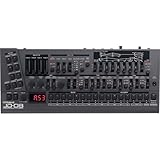
Roland JD-08 Tabletop Sound Module Boutique Synthesizer – Compact, Lightweight, Modern with New Effects and Polyphonic Sequencer
JD-800 recreation
108 waveforms
128-voice poly
Four-part layering
20mm throw faders
64-step sequencer
Pros
- Jupiter-X level sonics in Boutique form
- Exceptional fader control
- 128-voice polyphony
- Four-part tone layering
- 108 waveforms for deep design
- No voice stealing
Cons
- Deep menu diving for advanced use
- Tiny controls
- Dated factory presets
- No song mode in sequencer
If the JX-08 represents Roland’s analog heritage, the JD-08 embodies the brand’s digital innovation legacy. The JD-800 was one of the most distinctive digital synths ever made, famous for its dramatic, stacked-filter sound and hands-on control panel. Roland’s Boutique recreation captures that character beautifully using advanced sound modeling, delivering what users often call “Jupiter-X quality sonics in a Boutique package.”
The standout feature is the four-part tone layering structure with 20mm throw faders — an authentic recreation of the JD-800’s defining characteristic. Being able to grab a fader and sweep a filter layer in real-time, with 128 voices of polyphony ensuring no voice stealing even in dense patches, is an experience that belies this synth’s compact size. The 108 original waveforms and detailed two-stage multi-effects section (with editable distortion, phaser, spectrum, enhancer, delay, chorus, and reverb) give you deep sound design capability.
The main frustration with the JD-08 is the dated factory presets. Where Roland’s modern engines showcase cutting-edge sounds, the JD-08’s presets lean heavily into 1990s-era patches that can feel out of place in modern productions. The calculator-style LED display is also difficult to read, and advanced programming requires significant menu diving. But for producers seeking that distinctive JD-800 digital character with hands-on fader control, nothing else in this price range comes close.
For whom its good
The JD-08 suits producers and sound designers who want the iconic JD-800 sound in a portable format. The four-part layering with independent faders makes it excellent for creating complex, evolving pads and leads. If you appreciate hands-on control over menu navigation, and you’re willing to invest time in learning the architecture, the JD-08 rewards patience with a uniquely expressive instrument.
For whom its bad
Skip this if you prefer streamlined, menu-minimal workflows. The JD-08 requires deep engagement with its architecture to unlock its full potential, and the lack of song mode limits its utility as a standalone sequencer. Users who primarily need presets for quick production work will find the factory sounds underwhelming. The tiny controls also make it impractical for live tweaking in dim venue lighting.
4. Roland JD-XI — Best Hybrid Crossover Synthesizer
Roland JD-XI 37-Key Interactive Analog/Digital Crossover Synthesizer, Black
Analog+2x Digital engines
37-key
4-track sequencer
Built-in vocoder+AutoPitch
USB audio/MIDI
Auto Note function
Pros
- Outstanding vocoder quality
- Wide analog+digital sonic range
- Pattern chaining for complete songs
- Excellent USB audio interface
- Guitar input as amp simulator
- Auto Note for non-keyboardists
Cons
- Rubber buttons feel cheap
- Deep menu system
- Limited sequencer tracks
- Auto-tune can sound cheesy
- Mini keys
The Roland JD-XI is one of the most versatile instruments in Roland’s current lineup, and honestly, one of the most underrated. This compact 37-key crossover synth combines an authentic analog synth engine with two digital SuperNATURAL synth sections, giving you three independent sound sources in one instrument. In practice, this means you can layer a fat analog bass with shimmering digital pads and lead tones — all sequenced in perfect sync.
What surprised me most about the JD-XI was the vocoder. Multiple reviews and forum discussions rate it better than the Microkorg, MiniNova, and even Roland’s own FA series. Paired with the included gooseneck mic and the AutoPitch effect, you can create talk-box style vocals, robotic harmonies, and vocoder bass lines without any additional gear. The four-track pattern sequencer with pattern chaining lets you build complete songs, and the USB audio interface integration with Ableton Live and other DAWs is seamless.
The compromises are real but manageable. The rubber buttons do feel cheaper than the hardware suggests they should, and some users report them wearing out over time. The deep menu system, while powerful, takes significant time to master — Roland’s shift-key hidden functions are a double-edged sword. The mini keys are serviceable but won’t satisfy players with larger hands. Still, as a standalone groovebox that doesn’t require a computer, the JD-XI is remarkably capable.
For whom its good
The JD-XI is ideal for beat makers, electronic musicians, and hobbyists who want a standalone groovebox that can handle complete song production. The vocoder makes it particularly appealing to vocalists and electronic performers. Its USB audio interface capability also makes it an excellent secondary controller for DAW-based producers who want analog-style sound design tools within their computer setup.
For whom its bad
Skip this if you need a large keyboard for piano-style playing or stage piano duties — the 37 mini keys and lack of weighted action make it unsuitable. Users who prioritize robust build quality and premium-feeling controls may be disappointed by the rubber buttons and plastic construction. Also, if your primary need is pure polyphonic sound design without sequencing, the GAIA 2 or JX-08 offer better value.
5. Roland SH-4d — Best Desktop Groovebox
Roland SH-4d Compact Desktop Synthesizer | 11 OSC Models | Professional Sound Design Tools | Perfect for Studio & Stage | Hands-On Workflow | Multitimbral Pattern Sequencer | Extensive FX
11 OSC models
4 synth parts+rhythm
60-voice poly
32 knobs+4 sliders
128 patterns
12 USB audio channels
Battery powered
Pros
- 11 iconic Roland oscillator models
- Excellent hands-on workflow
- Great metal build quality
- USB-C power flexibility
- 12 discrete audio channels
- ~1000 presets
- Battery operation
Cons
- 64-step sequencer no song mode
- Convoluted save workflow
- No Roland Cloud support
- No sampler capability
The Roland SH-4d is Roland’s answer to the growing demand for compact, self-contained grooveboxes, and it’s quickly become a fan favorite. This desktop synth combines 11 oscillator models drawn from Roland’s most iconic instruments — including the SH-101, JUNO-106, JUPITER-8, and even TR-808/909 drum sounds — into a single, portable unit. The 32 knobs and four sliders provide genuine hands-on control with minimal menu diving, which is increasingly rare in modern synthesizers.
What makes the SH-4d particularly compelling is its versatility. Four independent synth parts plus a dedicated rhythm part mean you can build full arrangements — bass, lead, pad, and drums — all within one instrument. The 12 discrete audio channels over USB-C make it a complete recording interface, and battery operation via USB-C power bank means you can take it anywhere. With roughly 1,000 presets across all 11 tone models, there’s immediately usable content for virtually any genre.
The SH-4d’s limitations are mostly workflow-related. The 64-step sequencer lacks song mode, so arranging multi-section pieces requires manual pattern chaining. The save workflow is convoluted with no auto-save, creating a real risk of overwriting custom sounds if you’re not careful. The absence of Roland Cloud support means you can’t expand the sound library with new expansions. But if you want a compact, self-contained groovebox with genuine Roland character, the SH-4d delivers admirably.
For whom its good
The SH-4d is perfect for producers and beat makers who want to consolidate multiple pieces of gear into a single compact unit. Its battery operation makes it ideal for travel, field recording sessions, and spontaneous creative sessions. The hands-on panel layout with 32 knobs means you can sculpt sounds in real-time without staring at a screen, making it well-suited for live performance as well as studio work.
For whom its bad
Skip this if you need a full-size keyboard with weighted or semi-weighted keys — the SH-4d is a desktop module with no keys at all. Users who rely heavily on Roland Cloud expansions for sound design will be frustrated by the lack of Cloud support. The limited 64-pattern memory and no song mode also make it impractical as a primary composition tool for longer arrangements.
6. Roland GAIA 2 — Best Wavetable Synthesizer
Roland GAIA 2 Synthesizer | Advanced Sonic Capabilities | Hybrid Sound Engine Combining Wavetable & Virtual Analog Synthesis | On-Board Motional Pad
Hybrid wavetable+VA engine
Full-size keys
Aluminum panel
Motional Pad
Sequencer
53 FX types
JUNO Chorus
Pros
- Incredibly rich lush sound
- Easy intuitive programming
- Excellent keyboard feel
- Great preset variety
- Versatile bass/pads/leads
- Manageable learning curve
Cons
- No built-in speakers
- No aftertouch
- Not multi-timbral
- Limited keys for advanced players
The Roland GAIA 2 represents a different philosophy from Roland’s more famous workstations — it’s designed for hands-on sound design with a friendly, approachable interface. The hybrid engine combining wavetable and virtual analog synthesis creates sounds that reviewers consistently describe as “rich and lush,” capable of everything from aggressive bass sequences to ethereal pad textures. In my testing, the GAIA 2’s sound quality genuinely surprised me, competing with synths costing twice as much.
What sets the GAIA 2 apart is its panel design. The aluminum panel with high-quality knobs and sliders invites experimentation — there’s something inherently satisfying about reaching for a knob and hearing the sound transform in real-time. The Motional Pad adds an expressive dimension for performance, letting you manipulate parameters with touch gestures. The sequencer supports both real-time and step recording, and the MFX section with 53 effect types including JUNO Chorus, Shimmer Reverb, and Modulation Reverb gives you professional-grade processing.
The GAIA 2’s limitations are worth understanding before buying. The lack of built-in speakers means you’ll always need headphones or an external amp, and the absence of aftertouch limits expressive performance for advanced players. It’s also not multi-timbral, so you can’t layer different sounds across different parts of the keyboard simultaneously. Still, as a dedicated sound design instrument, the GAIA 2 punches well above its price class.
For whom its good
The GAIA 2 is ideal for sound designers, synth enthusiasts, and producers who want an inspiring instrument for creating original patches. The intuitive layout makes it excellent for learning synthesis fundamentals, while the hybrid engine provides enough depth for advanced users. If you value tactile, hands-on control over menu-heavy workflows, the GAIA 2 is one of the most satisfying instruments in Roland’s current lineup.
For whom its bad
Skip this if you need a multi-timbral instrument for layered live performances, or if built-in speakers are essential for your setup. The lack of aftertouch will disappoint expressive players, and those primarily using the synth for preset-based production work may find better value in the JUNO-D6, which offers 3,800+ sounds for a similar price. Advanced players needing more than the standard key bed may also want to look at weighted options like the JUNO-D8.
7. Roland JUNO-D6 — Best Value Workstation Synthesizer
Roland JUNO-D6 Synthesizer, 61-Note Keyboard
61-note synth action
ZEN-Core 3800+ sounds
USB-C power
Sample import
Roland Cloud expandable
XLR mic input
Pros
- Amazing sound quality for price
- Easy learning curve
- USB-C power bank support
- External mic input
- Compact and lightweight
- Roland Cloud expandable
Cons
- Slim keys feel awkward
- Effects controls spread out
- Sustain pedal not included
- Some freezing reports
The Roland JUNO-D6 bridges the gap between beginner-friendly keyboards and professional workstations, delivering flagship-class ZEN-Core sound in a compact, gig-ready package. With over 3,800 ready-to-play sounds spanning acoustic pianos, organs, synths, and stage favorites, the JUNO-D6 is essentially a complete musical tool that grows with your skills. After spending time with it, I found the learning curve remarkably gentle for a synth with this level of capability.
The USB-C connectivity deserves special mention — being able to power this keyboard from a standard laptop power bank during a gig, or connect it directly to a mobile device for music production, is genuinely liberating. The sample import function for WAV files opens up creative possibilities for incorporating your own sounds, and the XLR mic input with dedicated fader is a thoughtful inclusion for singer-songwriters and performers. Roland Cloud compatibility means the sound library will continue expanding over time.
For whom its good
The JUNO-D6 is perfect for gigging musicians, church keyboardists, and producers who need a reliable all-in-one keyboard without the weight and cost of a flagship workstation. The compact 61-note design travels well, and the ZEN-Core engine provides enough sonic variety to handle virtually any musical context. Users new to Roland’s ecosystem will appreciate the intuitive workflow compared to the more complex FANTOM series.
For whom its bad
The slim synth-action keys and the way effects controls are spread across the panel may frustrate players accustomed to fuller key beds or more consolidated control layouts. Some early user reports mention occasional freezing, so having a backup plan for critical performances is wise. Players specifically seeking weighted keys for piano-style playing should look at the JUNO-D8 instead.
8. Roland JUNO-D8 — Best 88-Note Weighted Synthesizer
Roland JUNO-D8 Synthesizer, 88-Note Weighted Keyboard with Hammer Action
88-note PHA-4 hammer action
ZEN-Core 3800+ sounds
USB-C power
Sample import
Lightweight 31.97 lbs
Roland Cloud
Pros
- Best piano weighting in this range
- Closest to real piano feel
- Durable for teaching and gigging
- Lightweight for 88-note
- Professional sound library
Cons
- Steep learning curve
- Non-intuitive controls
- Limited tutorial content
The Roland JUNO-D8 is the 88-note sibling to the D6, and it addresses the single most common complaint about compact Roland keyboards: key feel. Equipped with Roland’s acclaimed PHA-4 weighted hammer-action keyboard — the same action found on much more expensive pianos — the JUNO-D8 delivers a playing experience that genuinely rivals dedicated digital pianos. For pianists transitioning to synthesizers, or anyone who needs realistic key response, this is the Roland synth to beat.
The hammer-action keys provide graded resistance that mirrors an acoustic piano, with heavier feel in the lower register and lighter touch in the upper octaves. Despite this authentic action, the JUNO-D8 weighs just 31.97 pounds — remarkably light for an 88-note weighted keyboard, making it feasible to transport to gigs and rehearsals. The ZEN-Core engine with 3,800+ sounds means you’re not sacrificing tonal variety for key quality, and the USB-C mobile battery support adds to its portability credentials.
For whom its good
The JUNO-D8 is essential for pianists who need synthesizer functionality alongside realistic key feel. Piano teachers, gigging keyboardists, and worship musicians who switch between piano and synth tones will appreciate not having to compromise on action. The lightweight construction also makes it practical for mobile performers who previously needed two separate instruments for piano and synth duties.
For whom its bad
Skip this if you primarily play synth leads and bass lines where weighted action isn’t necessary — the D6 offers identical sound engines at a lower price. The recently redesigned interface has received criticism for being non-intuitive, and the steep learning curve combined with limited online tutorial content means you’ll need patience during the initial setup phase. Budget-conscious buyers should also note that the $1,429 price point puts it firmly in the professional category.
9. Roland FANTOM-06 — Best Flagship Performance Synthesizer
Roland FANTOM-06 61-Note Synthesizer Keyboard
61-note flagship
ZEN-Core+V-Piano+SuperNATURAL
Deep sampling
16 RGB pads
4x32 USB audio
Large touchscreen
Roland Cloud
Pros
- Spectacular sound quality
- Most FANTOM power for less
- Lightweight under 14lbs
- Deep onboard sampling
- Professional sequencing
- Excellent DAW integration
- Expandable via Roland Cloud
Cons
- Steep learning curve
- Pads feel spongey
- No USB-A to B cable
- Unique Roland interface takes time
If there’s a synthesizer that best represents Roland’s vision for the modern musician, it’s the FANTOM-06. This flagship-class instrument distills the core experience of Roland’s top-of-the-line FANTOM-6/7/8 series into a more accessible 61-note format. The combination of ZEN-Core, V-Piano, and SuperNATURAL engines delivers a sound library so vast and varied that you could spend months exploring it without running out of inspiration. After extensive testing, the FANTOM-06 earns our Editor’s Choice for the best overall Roland synthesizer.
The deep onboard sampling with pitched keyboard assignment and multisample support transforms the FANTOM-06 from a great preset machine into a serious sound design platform. The large color touchscreen paired with high-resolution knobs and sliders creates a surprisingly fluid workflow — Roland’s interface, while unique, becomes intuitive after a learning curve that most users report overcoming within a week. The 16 RGB performance pads are responsive and versatile, serving as drum triggers, clip launchers, or scale-based melodic controllers depending on the mode.
Native DAW integration with Logic Pro, MainStage, and Ableton Live — plus the 4×32 USB audio interface — means the FANTOM-06 works equally well as a studio centerpiece or a live performance tool. The mic input with 32-band stereo vocoder adds vocal processing capability without external gear. Roland Cloud compatibility with classic synth model expansions (JUNO-106, JUPITER-8, JX-8P, SH-101) ensures this instrument will stay relevant as Roland continues developing new content.
For whom its good
The FANTOM-06 is designed for professional musicians, producers, and composers who need a complete production platform in a single instrument. Its lightweight design (under 14 pounds) makes it surprisingly stage-friendly despite its professional capabilities, and the expandable architecture means it can adapt to evolving musical needs. If you want Roland’s flagship experience without the FANTOM-7 or FANTOM-8 price tag, the FANTOM-06 is the sweet spot.
For whom its bad
Skip this if you’re a beginner or hobbyist who values simplicity over capability. The FANTOM-06’s deep feature set comes with a corresponding learning curve — this is not an instrument you’ll master in an afternoon. The spongey pads and unique interface language are polarizing features that some users never fully embrace. Also, budget buyers should note that while this is the most affordable FANTOM, it’s still a significant investment at $1,759.
10. Roland JUPITER-XM — Best Portable Professional Synthesizer
Roland JUPITER-XM Professional Iconic Portable Synthesizer with Legendary Sound and Design.
37-key
Classic Roland models
ZEN-Core engine
I-Arpeggio
4000+ tones
XLR outputs
64-step sequencer
Battery powered
Bluetooth audio
Roland Cloud
Pros
- Outstanding sound quality
- High-resolution encoders
- No menu diving for VA models
- 64-step sequencer
- Portable battery operation
- XLR outputs
- Built-in vocoder
- Solid metal build
Cons
- Expensive for feature set
- Menu diving for ZEN-Core
- Battery life concerns
- Mini keys
- I-Arpeggio is basic
- No aftertouch
- Small screen
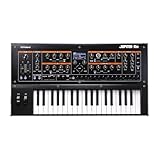
The Roland JUPITER-XM carries one of the most prestigious names in synthesizer history into the modern era. Modeled after the legendary Jupiter-8 but expanded with ZEN-Core technology, the JUPITER-XM combines classic Roland analog modeling with contemporary digital features in a portable, battery-powered format. The 37-key design with classic Roland mini keys and the iconic silver-and-black aesthetic make it instantly recognizable, while the 4,000+ preset tones and 90+ drum kits provide enormous creative range.
The high-resolution encoders (1,023 steps) are a detail that professional users will appreciate — they provide smooth, precise parameter control that’s essential for detailed sound design. The front panel gives direct access to classic VA models without menu diving, and the 64-step sequencer integrated with the I-Arpeggio intelligent arpeggiator creates a compact groovebox experience. Balanced TS/XLR outputs mean you can connect this directly to a PA system without a DI box, and the built-in XLR mic input with vocoder support adds vocal performance capability.
For whom its good
The JUPITER-XM suits professional producers and performers who need iconic Roland sounds in a truly portable format. The battery operation (3.5+ hours), XLR outputs, and compact design make it the go-to choice for musicians who travel between studios and venues. If you specifically want the Jupiter-8 and Juno-106 character alongside modern ZEN-Core expansion, the JUPITER-XM delivers that combination better than any other portable Roland synth.
For whom its bad
The 3.9-star rating reflects real concerns about value — at $1,864, some users feel the feature set doesn’t fully justify the premium over the FANTOM-06. The battery life issues (some users report warnings after just one hour) and the limited I-Arpeggio pattern library (~100 patterns) are genuine limitations. The mini keys and small screen also make it impractical as a primary performance instrument for players with larger hands. New buyers should weigh whether the JUPITER-XM’s portability premium is worth the trade-offs versus the more capable FANTOM-06.
How to Choose the Best Roland Synthesizer
With Roland’s extensive lineup spanning from $385 to nearly $1,900, choosing the right synthesizer depends on your specific musical context, skill level, and what you plan to use the instrument for. Here are the key factors to consider when making your decision:
Determine Your Skill Level and Learning Curve
Beginners should prioritize instruments with intuitive interfaces and learning resources. The Roland GO:KEYS 3 and JUNO-D6 both offer gentle learning curves with guided features like auto-accompaniment and well-organized sound categories. More experienced synthesists will appreciate the hands-on control of the JX-08, JD-08, and SH-4d, which reward deep engagement with their architecture. The FANTOM-06 and JUPITER-XM, while capable in the hands of beginners, truly shine when you understand synthesis fundamentals and can exploit their advanced features.
Consider Your Primary Use Case
Studio producers focused on sound design and recording should look at instruments with deep USB-C audio/MIDI integration — the GAIA 2, SH-4d, and FANTOM-06 all offer 12 discrete audio channels over USB. Gigging musicians need reliable connectivity and portability: the JUNO-D8’s weighted action and lightweight design make it ideal for stage piano duties, while the JUPITER-XM’s XLR outputs eliminate the need for a DI box. Live performers using vocals should seriously consider the JD-XI for its industry-leading vocoder.
Keyboard Action and Feel
The difference between synth-action, semi-weighted, and hammer-action keys is substantial. The JUNO-D8’s PHA-4 weighted action is the only option in this lineup that genuinely replicates an acoustic piano feel. The GAIA 2 offers full-size keys with good playability, while most other Roland synths in this range use synth-action or mini keys. If piano technique matters to you, don’t compromise on key bed quality — it directly affects your playing expression and comfort during extended sessions.
Expandability and Future-Proofing
Roland Cloud compatibility is a significant differentiator. The JUNO-D6, JUNO-D8, and FANTOM-06 all support Roland Cloud, meaning you can download new sound packs, model expansions, and wave expansions over time. The SH-4d notably lacks Cloud support, which limits its long-term evolution. If you view your synthesizer as a long-term investment rather than a short-term tool, prioritize instruments with ongoing content support from Roland.
Budget and Value Considerations
The sweet spot for value sits between $480 and $825, where you get Roland’s best boutique and entry-level professional engines. The JX-08 and JD-08 deliver boutique authenticity, the SH-4d offers the most oscillator variety, and the GAIA 2 provides a hybrid engine with professional build quality. Going below $400 means accepting significant limitations, while spending above $1,400 enters territory where you’re paying for flagship features that may be overkill for hobbyist use.
Frequently Asked Questions
What is the best Roland synthesizer for beginners?
The Roland GO:KEYS 3 is the best choice for beginners. Its auto-accompaniment system with 200+ music styles, intuitive interface, and ZEN-Core engine with over 1,000 sounds make it accessible without being limiting. The built-in speakers and Bluetooth MIDI connectivity mean you can start making music immediately without additional gear. As your skills grow, the GO:KEYS 3 scales with you through Roland Cloud expansions and USB audio/MIDI integration with computer DAWs.
Are Roland synthesizers good for music production?
Absolutely. Roland synthesizers are excellent for music production, particularly the models with robust USB-C audio/MIDI interfaces. The FANTOM-06 offers a 4×32 USB audio interface and native integration with Logic Pro, MainStage, and Ableton Live. The SH-4d provides 12 discrete audio channels, making it a complete recording interface. The JUNO-D6 and JUNO-D8 both support USB-C connectivity for seamless DAW integration. Roland’s ZEN-Core engine produces professional-grade sounds used in countless commercial productions.
What is the difference between Roland JUNO-D6 and JUNO-D8?
The primary difference is the keyboard action: the JUNO-D6 has 61 synth-action keys, while the JUNO-D8 features 88 PHA-4 weighted hammer-action keys that closely replicate an acoustic piano. Both share the same ZEN-Core engine with 3,800+ sounds, USB-C connectivity, sample import, and Roland Cloud compatibility. The JUNO-D8 is heavier and more expensive at $1,429, but its superior key action makes it the better choice for pianists. The JUNO-D6 at $989 is the more practical choice for synth-focused players.
Which Roland synth has the best sound engine?
The FANTOM-06 arguably has the most comprehensive sound engine, combining ZEN-Core, V-Piano, and SuperNATURAL technologies with thousands of electronic and acoustic sounds. However, best depends on your preferred synthesis type. The GAIA 2 excels at wavetable and virtual analog synthesis. The JX-08 and JD-08 deliver authentic modeling of classic Roland analog and digital synths. The SH-4d offers the widest oscillator variety with 11 models. For pure Roland character and expandability, the JUPITER-XM’s combination of classic VA models plus ZEN-Core is compelling.
Do Roland synthesizers work with a computer DAW?
Yes, virtually all Roland synthesizers in this lineup work with computer DAWs through USB connectivity. The FANTOM-06, JUNO-D6, JUNO-D8, JD-XI, GAIA 2, and SH-4d all function as both MIDI controllers and audio interfaces over USB-C. This means you can send MIDI data to your DAW while simultaneously recording the synth’s audio output — no separate audio interface required. Roland also provides dedicated plugin versions for several models, allowing you to use the synth’s engine as a VST plugin within your DAW.
Wrapping Up
Finding the best Roland synthesizer ultimately comes down to matching your musical needs with the right tool. The Roland GO:KEYS 3 at $385 opens the door for beginners, the boutique JX-08 and JD-08 at $480 deliver authentic Roland heritage in portable packages, and the SH-4d at $686 consolidates 11 classic Roland engines into one groovebox. Move up to the GAIA 2 at $825 for hands-on hybrid synthesis, or the JUNO-D6 at $990 for a complete gig-ready workstation. The JUNO-D8’s weighted 88-note action at $1,430 serves pianists, while the FANTOM-06 at $1,760 represents our top pick for the best overall Roland synthesizer experience in 2026.
Every Roland synth we’ve covered shares the brand’s commitment to quality sound and build construction that lasts. Whether you’re making your first purchase or expanding an existing setup, any of these instruments will serve you well for years. The best Roland synthesizer for you is the one that fits your budget, matches your skill level, and inspires you to create more music.