

Short wheelbases kill most rooftop tents. A 90 inch hardshell looks fine in a parking lot and then hangs half a foot past the tailgate of a Crosstrek, which is exactly the mistake that shows up in every small-SUV forum thread I have read. We went through twelve of the most popular rooftop tents for small SUVs, checked every folded length against a real 42-48 inch crossbar spread, and weighed each shell against typical dynamic rack ratings. What follows is the short list, plus the fit math that decides whether a tent works on your roof at all.
The best rooftop tent for a small SUV is a compact hardshell that folds to roughly 80-84 inches long, stays under about 165 lb, and opens on gas struts in under a minute. The Overland Vehicle Systems TMBK took the top slot for us because at 108 lb it is the lightest folded package in the group and the only softshell here whose closed footprint sits comfortably inside a short crossbar spread, while the SanHima Hotham is the smarter buy if you care about a low 4.57 inch closed profile and a built-in power panel.
Everything in this guide is written around the constraint that makes small SUVs different from trucks: roof length, roof load while driving, and fuel economy. We have not included wedge tents built for pickup beds, and we have not included anything whose listed weight would sit at or past the dynamic rating of a common Thule or Yakima bar. If you want the full-size options instead, our guide to rooftop tents for SUVs covers the larger mounts, and our general rooftop tent rankings go deeper on weather sealing and ladder design.
Table of Contents
- Top 3 Best Rooftop Tents for Small SUVs (October 2026)
- All 12 Rooftop Tents for Small SUVs Compared in 2026
- 1. Overland Vehicle Systems TMBK – Best Overall for Small SUVs
- 2. SanHima Hotham – Best Closed Profile for Low Roofs
- 3. WildFinder Hardshell – Best for Sleeping Three
- 4. HEYFUN Adventurer Pro – Best Included Accessories
- 5. ARCTWONDER Solar Hardshell – Best for Off-Grid Power
- 6. Naturnest Sirius 1 Plus – Best Wide Interior
- 7. JOYINRUTE ZS001 Insulated – Best for Cold Weather
- 8. Naturnest Polaris Plus – Best Two-Person Aluminum Shell
- 9. VEVOR Hardshell A-Frame – Best for Inflatable Pole Setup
- 10. JOYINRUTE ZS001 Hardshell – Best for Blackout Sleeping
- 11. ARCTWONDER Winter Thermal – Best for 10-Second Setup
- 12. Meedo Apolle A86 M – Best Lightweight Softshell
- What Actually Fits on a Small SUV
- Hardshell vs Softshell for a Crossover
- How Much a Rooftop Tent Costs You in Fuel Economy
- Vehicle Fit Cheat Sheet for Popular Small SUVs
- How to Install a Rooftop Tent on a Crossover
- Buying Guide: How to Choose a Rooftop Tent for a Small SUV
- Frequently Asked Questions
- Conclusion: The Best Rooftop Tents for Small SUVs in 2026
Top 3 Best Rooftop Tents for Small SUVs (October 2026)
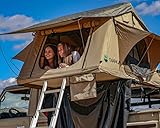
Overland Vehicle Systems TMBK
- Lightest folded weight at 108 lb
- Sleeps three adults
- Waterproof 420D Oxford rainfly
- 5 to 10 minute setup

SanHima Hotham Hardshell
- 4.57 inch closed height
- 133.4 lb travel weight
- USB-C and CIG power panel
- 30 second gas strut setup

HEYFUN Adventurer Pro
- 5 second hydraulic pop-up
- Side awning included
- 13 interior storage pockets
- 160 lb folded weight
The TMBK wins on weight and rating count, the SanHima wins on closed profile, and the Adventurer Pro wins on included hardware. All three fit inside a factory-rail or crossbar spread on a compact crossover without extending past the rear of the vehicle.
All 12 Rooftop Tents for Small SUVs Compared in 2026
| Product | Specifications | Action |
|---|---|---|
| Overland Vehicle Systems TMBK |
|
Check Latest Price |
| SanHima Hotham Hardshell |
|
Check Latest Price |
 WildFinder Hardshell WildFinder Hardshell |
|
Check Latest Price |
| HEYFUN Adventurer Pro |
|
Check Latest Price |
 ARCTWONDER Solar Hardshell ARCTWONDER Solar Hardshell |
|
Check Latest Price |
 Naturnest Sirius 1 Plus Naturnest Sirius 1 Plus |
|
Check Latest Price |
 JOYINRUTE ZS001 Insulated JOYINRUTE ZS001 Insulated |
|
Check Latest Price |
 Naturnest Polaris Plus Naturnest Polaris Plus |
|
Check Latest Price |
 VEVOR Hardshell A-Frame VEVOR Hardshell A-Frame |
|
Check Latest Price |
 JOYINRUTE ZS001 Hardshell JOYINRUTE ZS001 Hardshell |
|
Check Latest Price |
 ARCTWONDER Winter Thermal ARCTWONDER Winter Thermal |
|
Check Latest Price |
 Meedo Apolle A86 M Meedo Apolle A86 M |
|
Check Latest Price |
1. Overland Vehicle Systems TMBK – Best Overall for Small SUVs
Soft Shell Rooftop Tent for SUV & Truck Camping, 3-Person – Overland Vehicle Systems TMBK – Universal Fitment with Rainfly & Ladder
Soft shell A-frame
Sleeps 3
108 lb folded
57 x 49.5 x 11.5 in closed
Pros
- Lightest folded weight in this group at 108 lb
- Sleeps three adults in a softshell footprint
- Waterproof 420D Oxford rainfly
- Stores flat in a garage
Cons
- No insulation for cold weather
- Included foam mattress wants a topper after a few nights
- Poor instructions and some units arrived without mounting hardware
This is the tent we kept coming back to. At 108 lb it is the only unit in the group that two people can lift onto a rack without a plan, and 108 lb sits comfortably inside the dynamic rating of an ordinary 165 lb-rated crossbar pair. Owners report setting it up in five to ten minutes, which for a softshell is fast.
The interior is the surprise. The sleeping area measures 53.5 by 92 inches, so two adults and a child fit without knees against the wall, and the raised floor with a 2.25 inch foam mattress gives real ground clearance over the roof. Reviewers also like the integrated skylight for daytime ventilation.
Weather performance is the reason it stays on a roof through a full season. The 420D polyester Oxford rainfly is rated at 2000 mm, and reviewers describe nights of heavy rain with the interior staying dry, which is more than most softshells in this weight class manage. There is also a high-density foam mattress with a cotton cover in the box, along with the ladder and the rainfly.
The drawbacks are honest ones. There is no insulation, so this is a three-season tent as supplied, and condensation collects under the mattress on humid nights. Instructions are the weakest part of the package, with spelling errors and missing steps, and a few buyers had to drill extra holes in the ladder to lock it at the right angle.
Why it fits a small SUV better than anything else here
Closed, it measures 57 by 49.5 by 11.5 inches, which is the flattest and most compact closed package in this group by a wide margin. That matters most on a Crosstrek or an HR-V where the usable crossbar spread is short and the front crossbar sits close to the windshield line. A 57 inch package centers easily and does not push the ladder out at an angle you have to fight.
It also mounts to almost anything with crossbars, since the universal fitment is not tied to a specific rail spacing. If your rack is a factory-rail upgrade with a basket, the aluminum-plated base and stainless hardware hold up well to the vibration of poor chip-gravel roads.
Where it falls short
Cold weather is the limit. With no insulation, a spring night near freezing means a cold mattress and no way to run a heater duct through the fabric. If you camp in shoulder season, look at one of the insulated hardshells further down instead.
The second limit is noise and flapping. A soft fabric body is audibly louder at highway speed than an aluminum shell, and owners who drive long highway stretches between campsites report more wind noise than they expected. Setup also is not a 30 second gas strut job. Budget a full ten minutes in the dark.
2. SanHima Hotham – Best Closed Profile for Low Roofs
Rooftop Tent Hard Shell – Hotham Lite Overland Aluminium Roof Top Tent 4.57″ Slimline, w/Full Ceiling LED Light, 2.36” Self-Inflating Mattress, Interior Space 82″ 46″x57″ for Car SUV Truck Camping
Hard shell aluminum
Sleeps 2
133.4 lb travel weight
4.57 in closed
Pros
- 4.57 inch closed height clears low garages and cuts road noise
- Digital power panel with USB-C and CIG socket
- 5000 mm waterproofing with UV50 plus protection
- Self-inflating mattress and full ceiling LED strip
Cons
- Two person interior is tight for larger campers
- Aluminum shavings reported inside the tent on arrival
- Shell and ladder attachment take practice to do solo
Height is the number that matters on a small crossover. At 4.57 inches closed, the Hotham adds almost nothing to your total roof height, which matters in a parking garage, through a drive-through car wash, and for anyone measuring clearance in a home garage. It is also among the quietest to drive with, since that little extra height is what a fabric tent adds to wind noise.
The interior is 81.5 by 46.06 inches, which is an honest two-person footprint. A 2.36 inch self-inflating mattress is included, and a full-ceiling LED strip with multiple color temperatures means you can read a book at midnight without a headlamp.
The power panel is what separates this from other budget hardshells. It carries USB-C, USB-A, and a CIG socket, and there is a dedicated duct hole sized for a portable air conditioner. That duct matters more than it sounds like it should in August in the desert, where a rooftop tent becomes an oven at altitude.
Waterproofing is 5000 mm on 420D double ripstop Oxford with 280GT poly-cotton, treated with AquaShield PTFE. The raised 1.57 inch base is a small detail that keeps runoff off the tent floor seam during a downpour. Gas struts open the whole shell in about 30 seconds and the telescoping ladder is rated at 330.69 lb.
Why it earns a place on a short roof
At 133.4 lb of travel weight, this is a light hardshell, and light matters more than people expect. A 165 lb dynamic rating leaves almost no headroom for a second passenger or a roof box, while a 133 lb tent leaves some. If you also carry a rooftop cargo bag for soft gear, the lighter shell is the smarter pairing.
The 83.46 inch length still fits a compact crossover crossbar spread with room to spare, and the slim closed profile means the ladder angle is steeper and easier to climb than on a tall shell. That is a real quality-of-life difference for anyone with knee trouble.
Where it falls short
Two people fit, and only just. Reviewers repeatedly describe the 46 inch interior width as snug, and taller sleepers report limited shoulder and foot room. If you are over about five foot eleven, test the floor dimensions against your sleeping position before committing.
Two quality issues come up. Some buyers found aluminum shavings inside the tent on arrival, which is a finishing problem rather than a design flaw, and mounting the shell to the crossbars takes practice if you are working alone. There is also a slight conflict between the air conditioning duct and the struts on some setups.
3. WildFinder Hardshell – Best for Sleeping Three
WildFinder Rooftop Tent, Hard Shell Roof Top Tent for Jeep SUV Truck Van
Aircraft-grade aluminum shell
Sleeps 3
83 x 52 x 9 in closed
Pros
- Aircraft-grade aluminum shell resists aging and thermal expansion
- 5000 mm waterproofing with level 6 wind and level 4 snow ratings
- Recessed marine pad and condensation pad for humidity control
- Accessory bundle includes ladder
- organizers and LED strip
Cons
- Luggage crossbar not included
- Listed weight makes mounting a two person job
- Many owners add a memory foam topper
The WildFinder answers a question most compact hardshells ignore. Its 83 by 52 inch shell is rated for three, and unlike the two-person units in this list it does not feel like a shoe box once the ladder is up. For a family of three on a short roof, that extra 6 inches of width is the whole decision.
Build is all aircraft-grade aluminum alloy with a stainless steel air pressure lever and a polyester blackout body. Rated at 5000 mm waterproofing with level 6 wind resistance and level 4 heavy snow protection, plus 99.99 percent sun protection, this is one of the better-specified shells we found at this weight.
The accessory package is unusually complete. You get a 7.5 foot telescoping ladder, a ladder organizer, ten organizer bags, an LED strip, two shoe organizers, three mesh windows, and two mattresses on top of the built-in one. The recessed marine pad and separate condensation pad go a long way toward the moisture problem that ruins so many hardshells on humid nights.
Rating sits at 4.5 from 77 owners with about 80 percent giving five stars. Reviewers single out the blackout quality, the sealing, and how much condensation management actually helps rather than just sounds good on a spec sheet.
Why it works for families on a crossover
A 52 inch wide shell is wider than almost everything else in the hardshell category, and width is what makes three people possible rather than theoretical. Two adults and a child fit with real gear in the foot of the tent, which is exactly the weekend-campers-with-kids use case this guide is for.
The 9 inch closed height is taller than the SanHima but still well under the profile of a wedge tent, so it does not wreck your garage clearance. Level 4 snow protection also means it holds up through shoulder-season dumps better than the entry-level shells further down.
Where it falls short
The luggage crossbar is not included, so you need your own rack hardware or a basket, and that is a real add-on cost for anyone with factory rails only. Condensation control is still limited in genuinely cold conditions, and comfort needs a memory foam topper if you are away for more than two nights.
Be honest about the mount. The listed weight puts it firmly in two-person-install territory, and on a small SUV the tailgate is rarely a comfortable staging area. Budget an afternoon for the first installation and check that your rack’s dynamic rating genuinely exceeds the listed weight.
4. HEYFUN Adventurer Pro – Best Included Accessories
Adventurer Pro Rooftop Tent Hard Shell, 2-3 Person Aluminum Roof Top Tent
Hard shell aluminum
Sleeps 2 to 3
160 lb
83.86 x 51.57 x 7 in closed
Pros
- Hydraulic gas struts open it in about 5 seconds
- 13 storage pockets plus LED strip and exterior power plug
- Side awning included and mounts to either side
- Flocked lining floor and condensation mat
Cons
- Rated 2 to 3 person but realistically sleeps two
- About 160 lb so mounting takes two people
- Condensation forms on interior walls in cool weather
The Adventurer Pro is the best-equipped tent in this roundup out of the box. The side awning alone is usually an add-on elsewhere, and it mounts to either side, which means you can put shade where the sun actually is instead of guessing in the morning.
Setup is the fastest deployment spec in the hardshell group here. Hydraulic gas struts and dual buckles open it in about 5 seconds, which is a genuine safety benefit in a storm. The closed shell measures 83.86 by 51.57 by 7 inches, a good compromise between garage clearance and interior space, and the maximum load is rated at 660 lb.
Storage is the quiet headline. Thirteen interior pouches, including a clear pocket sized for a tablet, plus an LED light strip and an exterior USB power outlet. The flocked lining floor and included condensation mat cut the reflection problem that makes aluminum floors feel like a tin roof in the rain.
It holds heavy rain well, and reviewers note the included shoe bags keep footwear dry at the door of the tent, which is a small thing that matters more than it sounds on a wet morning. Customer service is also called out as responsive, before and after purchase.
Why it makes sense for weekend overlanding
The 7 inch closed height keeps the profile low enough for a daily-driven crossover, and the awning turns a small pitch into a usable living area. If you cook under it, read under it, or just want shade for the kids, that included awning removes the most common first upgrade.
Assembly time is listed at 10 minutes, and the 5 second pop-up means you can deploy after dark without a headlamp ritual. A ladder with a storage bag, two shoe bags, four support rods, and a universal mounting hardware kit are all in the box, which matters on a small SUV where every loose item in the cabin is annoying.
Where it falls short
Capacity is the honest disappointment. It is rated 2 to 3 person, and the dominant criticism in reviews is that anyone over roughly five foot ten finds the 2 to 3 rating overstates it. Treat it as a two-person tent with a shelf at one end.
There is no ventilation duct hole for running a heater or air conditioner, condensation appears on the interior walls when temperatures drop into the 50s, and the ladder cannot be retracted while you sleep, which does nothing for privacy or for anyone sleeping next to a driver. Bedding also cannot be left inside when the shell is closed.
5. ARCTWONDER Solar Hardshell – Best for Off-Grid Power
Solar Panel Rooftop Tent Hard Shell,Pop Up Car Roof Top Tent Hardshell
Hard shell with 12V 216W solar
Sleeps 2 to 3
198 lb
7 in closed height
Pros
- 12V 216W solar panel charges power banks off-grid
- 7 inch closed height for low clearance vehicles
- All-aluminum base plate
- top cover and corners
- 10 second gas rod pop-up
Cons
- About 198 lb
- so mounting takes two people
- Solar wiring adds complexity to the install
- Basic mattress may need a topper
This is the only tent in the guide with a solar panel built into the lid, and for a week off-grid that changes how you pack. A 12V 216W panel feeding a power bank or a small battery is enough to run fans, charge four phones, and keep a camera battery alive for a multi-day trip in a place with no hookups.
The shell is aluminum on the base plate, top cover, and all four corners, which is the part that ages well. The body is 320g polyester with sealed seams, a 5000 mm rating, and a blackout coating, and the interior measures 85 by 52 by 59 inches, enough for two adults plus a child or a dog.
Deployment takes about 10 seconds on gas pressure rods and closes in two steps, and the closed height of 7 inches is among the lowest here. Three large windows have awnings, which is rare at this weight, and the ladder, mattress, luggage bar, and shoe bag are all included. 84 percent of owners give five stars.
Owners also praise the low closed profile for keeping road noise and fuel use down, which is the argument that matters most on a crossover rather than a truck.
Why it suits long trips off-grid
The solar panel is the reason to buy this one. Panel area on a rooftop is unobstructed, so it charges all day while you drive or hike, and a hardshell roof gives you a flat mounting surface that most other tents do not. Three awning windows mean you can leave them cracked during a rain shower without wetting the interior.
Because the tent is a hardshell, it also works as a lockable, weatherproof cargo box when it is closed. On a week-long trip that is a real benefit over a softshell, where wet gear lives in a fabric bag that never fully dries.
Where it falls short
Weight is the honest problem. At 198 lb this is the heaviest unit in the group, and lifting it onto a rack on a small SUV is a two-person job with a tailgate in the way. Check your rack’s dynamic rating carefully before committing to this one.
Storage inside drops once you set the tent up for sleeping, and the mattress is basic enough that you will probably add a topper for more than a weekend. The solar wiring also adds a connection step that can go wrong in the dark if you do not do it once at home first.
6. Naturnest Sirius 1 Plus – Best Wide Interior
Naturnest Rooftop Tent Hard Shell, Easy Set Up Pop Up Large Tent for 2-3 Person Camping, Waterproof UV-Resistant Blackout 4 Season Tents for Truck, Jeep, SUV, Van, Trailer – Sirius 1 Plus
ABS hard shell
Sleeps 3
160 lb
82.7 x 63 in interior
Pros
- Widest interior here at 82.7 by 63 in
- Honeycomb panels insulate and deaden sound
- Roof crossbars included for solar panels
- skis or bikes
- 30 second gas strut setup
Cons
- Lowest 4.3 average rating in this group
- ABS shell may wear faster than all-metal rivals
- Aluminum floor transmits road noise and vibration
Width is the entire pitch here. An 82.7 by 63 inch interior gives you roughly 20 percent more floor area than a typical 82 by 52 hardshell, and it is the reason this tent sleeps two adults and a child without anyone wedged against a wall. For a family that does not want to buy a second tent, that is worth more than a slightly higher rating.
The shell is a high-strength ABS hard shell on an aluminum alloy frame with sound and thermal insulating honeycomb panels, which is why it is quieter in wind than an all-aluminum shell. Gas struts open it 30 seconds after you release the locks.
There is a dedicated vent for connecting a heater or cooler, a 1.97 inch non-deforming mattress, blackout fabric, 316 stainless steel gas struts, and YKK zippers. The included roof crossbars are a genuine bonus because they turn the tent into a cargo platform for skis, a board, or extra solar.
Feedback centers on the wide, insulated interior, the fast pop-up, and the crossbars. The average rating is 4.3 from 38 owners, with about 11 percent one-star, which pulls the score down.
Why families keep coming back to it
Two adults and a child fit in 5203 square inches of floor area, and the extra width means a playpen, a dog, or a pile of muddy boots fits without stealing sleeping space. That is the difference between a three-person rating that works and one that does not.
Insulated honeycomb panels make it a better tent for early spring and late autumn than most of the aluminum shells here, and the cooler duct lets you run a small fan or heater through a proper opening rather than cracking a window and losing the seal.
Where it falls short
It carries the lowest average rating in this group at 4.3, and the one-star share is the highest. Some buyers feel the ABS shell ages worse long term than the all-metal alternatives, which matters if you plan to keep this on a daily driver for years.
The aluminum alloy floor also transmits road noise and vibration noticeably more than a flocked liner, which can be irritating on a gravel forest road. And at 160 lb it is still a two-person mount, so the convenience of the wide interior does not extend to installation day.
7. JOYINRUTE ZS001 Insulated – Best for Cold Weather
Rooftop Tent Hard Shell with Winter Insulation for 4-Season Camping
Hard shell with winter liner
Sleeps 2
178 lb
78.74 x 47.29 in floor
Pros
- Removable winter thermal liner for shoulder season trips
- True blackout from rubberized canvas
- 5000 mm sealed seams with no leaks in overnight rain
- Flocked floor and 4 mesh plus windproof windows
Cons
- 178 lb needs two strong people to lift onto the rack
- Included mounting screws are weak for aftermarket crossbars
- Mattress is too hard for side sleepers
The removable winter thermal liner is what separates this from every other shell here. It clips inside the body and adds real insulation and windproofing, which turns a three-season hardshell into something usable in shoulder season. Owners camping in the shoulder months specifically call it out as the deciding feature.
Rating is 4.8 from 36 owners with 86 percent giving five stars. Reviewers highlight the liner, the true blackout from the rubberized canvas, sealed seams that have held through overnight storms, and a sub-30 second setup on four high-strength hydraulic support rods.
The flocked lining floor genuinely reduces condensation, and the interior is roomy enough that a six foot one sleeper can sit upright without touching the ceiling. You get a 7.5 foot telescoping ladder, ladder organizer, mattress, condensation pad, five internal storage bags, an LED strip, and two shoe organizers.
Water resistance is 0 to 5000 mm on 320g blackout polyester with 99 percent sun protection and level 6 wind resistance. Four windows each carry both a mesh layer and a windproof layer, so you can ventilate in summer without trading away the seal.
Why it is the four-season pick
The liner is removable, so you leave it off in July and clip it in for October. Nothing else in this list gives you that option, and it is the reason this shell works from desert spring through autumn alpine trips on the same vehicle.
The blackout is genuinely dark, which matters more than it sounds if you are in a desert campground with a sunrise at 5:40 am. Combined with the flocked floor and sealed seams, it is the best cold-weather package we found in this weight range.
Where it falls short
At 178 lb it is a two-person lift, and almost every reviewer names the mounting hardware as the biggest friction. The included bolts are too short for many aftermarket crossbars and the screws are weaker than they should be, so plan on replacing them with grade 8 bolts and washers before the first trip.
The included mattress is too hard for side sleepers, and adding a thick topper prevents the shell from closing, which is a genuinely annoying conflict. The LED strip also needs an external USB power source with no internal plug, and there is a faint howl above 65 mph without a front fairing.
8. Naturnest Polaris Plus – Best Two-Person Aluminum Shell
Naturnest Rooftop Tent Hard Shell, Easy Set Up Pop Up Tent for 2 Person
Rigid aluminum shell
Sleeps 2
50 kg listed weight
79.5 x 48 in interior
Pros
- Aluminum on aluminum build with insulating honeycomb structure
- 30 second automatic pop-up
- Roof crossbars included for solar panels or skis
- Heater or cooler duct vent with 1.97 in mattress
Cons
- Only two windows
- 79.5 by 48 in interior is snug for two adults
- Replacement accessories not widely offered by the seller
The Polaris Plus is the metal-to-metal version of the Sirius, and for two people who care about durability over width it is the better buy. The rigid aluminum hard shell uses sound and thermal insulating honeycomb structure through the walls, which keeps the interior dark and quiet and spreads heat better than an ABS panel.
It pops open automatically about 30 seconds after you release the locks, on STABILUS gas struts with YKK zippers, both of which are higher-spec hardware than most of the field. Interior measures 79.5 by 48 inches with a 1.97 inch non-deforming mattress and blackout fabric.
Included roof crossbars expand what you can carry, and there is a dedicated vent for a heater or cooler. The fabric panels are replaceable and tear-resistant, which matters over a five-year ownership on a daily-driven vehicle. 4.6 from 33 owners.
Buyers consistently name the rigidity, the true blackout, the quick pop-up, and the crossbars that make the tent usable off-grid rather than just a place to sleep.
Why a two-person layout can be the right call
For a couple, a two-person tent is not a compromise, it is the correct size. A smaller floor means less weight to lift, a lower closed profile, and often a lower dynamic load on the rack, all of which help on a small crossover. The 79.5 by 48 inch interior is snug rather than cramped for two adults under about six feet.
The included crossbars are the standout. Carrying skis, a bike, or a folding solar array on top of the same shell is genuinely useful for winter and shoulder-season trips, and having them in the box removes the most annoying extra purchase.
Where it falls short
Two windows is fewer than most competitors at this level, and it shows in a tent where you might want a cross-breeze. Ventilation in warm weather is the trade for the quieter aluminum structure.
The narrower width than the sibling Sirius is the main complaint, and the floor is tight for two adults who are not small. Replacement accessories are also not widely offered by the seller, so if a strap or a zipper fails you may not find a part, and the aluminum build is still a two-person lift.
9. VEVOR Hardshell A-Frame – Best for Inflatable Pole Setup
VEVOR Rooftop Tent Hard Shell, Roof Top Tent for Car SUV Truck Jeep Van Camping, Roof Tent with Telescopic Ladder Thick Mattress & LED Strip Light, 2-3 Person Family Camping Tent
Hard shell A-frame
Sleeps 2 to 3
154.5 lb
Inflatable pole frame
Pros
- Inflatable pole design sets up faster than crossbar framed rivals
- 7 section telescoping ladder rated 330 lb
- Foam mattress and LED light included
- Aluminum alloy shell with stainless steel gas springs
Cons
- Lowest 4.1 average rating of this group
- Body fabric rated 1500 mm and rainfly 2000 mm
- Manufacturer advises against use in severe weather
The VEVOR takes a different approach to the frame. Instead of struts holding the fabric open, it uses inflatable poles inside the body, which means the tent goes up faster than most crossbar-framed rivals and comes down in about the same hurry. That is a genuine advantage for solo campers pitching in failing light.
The shell is thickened aluminum alloy with stainless steel gas springs, rated to wind resistance level 6 with buckle locking when folded, and the tent is rated for 2 adults plus a child on roofs rated 600 lb or more. The 7-section telescoping ladder adjusts from 7.5 feet down to 2.4 inches and is rated at 330 lb, which is the widest adjustment range we saw in this group.
A thick non-deforming foam mattress and an LED night light are included, along with multiple ventilation points and a breathable mesh window. The rating is 4.1 from 27 owners, with 63 percent giving five stars, so read the weather specifications carefully before committing.
Buyers do like the entry point, the fast inflatable setup, and the ladder range, but the lower waterproof specification is what separates it from the 5000 mm competitors above.
Why the frame style is worth a look
Inflatable poles mean fewer hard points to strip or bend on a rough forest road, which is a real durability argument for someone who drives forest service roads to camp. There is also less to snap in a crosswind, so pitching in a gust is less of a fight.
The ladder is the other quiet win. Seven sections collapsing to 2.4 inches is a genuinely useful range, because on a low small SUV you are usually climbing a shorter ladder than on a truck, and a wide range means a steeper, safer angle.
Where it falls short
Waterproofing is half the spec of the hardshells above it. The main body is high-density polyester-cotton rated at 1500 mm and PU coated, and the 420D Oxford rainfly is 2000 mm, so in sustained heavy rain you should expect dampness rather than a dry interior.
The manufacturer explicitly advises against use in severe or extreme weather, and that is not a disclaimer to ignore on a small SUV where a closed shell is your shelter. At 154.5 lb it is also a two-person lift, and the 4.1 average with a 10 percent one-star share is the lowest in this roundup.
10. JOYINRUTE ZS001 Hardshell – Best for Blackout Sleeping
Aluminum Rooftop Tent Hard Shell,Pop Up Roof Tent Hardshell
Hard shell aluminum
Sleeps 2
178 lb
78.74 x 47.27 in floor
Pros
- Highest average rating in the group at 4.9
- Aircraft-grade aluminum shell with hydraulic support rods
- 5000 mm fabric with 99 percent sun protection
- Flocked floor and 4 windows with mesh and windproof layers
Cons
- Only 22 ratings so long-term durability data is thin
- Same 178 lb mounting weight as the insulated version
- Included hardware may not fit every aftermarket crossbar
This is the non-insulated version of the ZS001 platform, and the reason to pick it over its sibling is simplicity. Same aircraft-grade aluminum shell, same four high-strength hydraulic support rods, same 5000 mm blackout polyester, minus the removable liner. If you do not camp in shoulder season, that liner is a layer you do not need.
At 4.9 from 22 owners it has the highest average rating in this roundup, with 92 percent five stars. The small sample is the caveat here. A 22-rating base tells you current owners are happy, not how the shell looks after five years of highway vibration.
The flocked lining floor is the detail we would keep. It reduces condensation caused by pressure and temperature differences, which is the single biggest complaint about aluminum-floored hardshells, and four windows each with a mesh and a windproof layer give you usable airflow in summer without breaking the seal.
The accessory kit is complete: a 7.5 foot telescoping ladder with organizer, mattress, condensation pad, five internal storage bags, an LED strip, and two shoe organizers. Nothing important is missing except the rack.
Why blackout and condensation matter more than people expect
Sleep is the point of a rooftop tent. A true blackout coating on 320g polyester, plus a flocked floor that does not drip on you at 5 am, is what turns a hardshell from a shelter into a place you actually recover in. Both of those are handled well here.
The two-person interior at 78.74 by 47.27 inches is snug for larger campers, so this is a tent for a couple or a solo camper with gear, not a family unit. Bring the right people and it is a very good sleep system.
Where it falls short
The 178 lb weight is shared with the insulated version, so mounting still takes two people and this is not a solo-install tent. The included mounting hardware may not fit every aftermarket crossbar without modification, which we saw as a recurring theme across this whole category.
Because it shares the ZS001 platform with the insulated model, decide first whether you want the thermal liner before you buy. Choosing this one to save money and then adding cold-weather kit later is a false economy.
11. ARCTWONDER Winter Thermal – Best for 10-Second Setup
Rooftop Tent Hard Shell with Winter Thermal Layer,Pop Up Car Roof Top Tent
Hard shell with winter layer
Sleeps 2
166 lb
7 in closed height
Pros
- Removable winter thermal layer for all season use
- Pop-up in 10 seconds on 316 stainless steel rods
- Level 7 wind resistance and 5000 mm water resistance
- Includes 2 luggage poles
- LED strip
- ladder and 10 storage bags
Cons
- 166 lb needs multiple people to install
- Mattress is firm and many owners add a topper
- Closing takes care to tuck fabric under the gasket
Two things stand out here. The first is wind resistance rated at level 7 on a triangular ripstop canvas structure, which is the highest wind figure attached to any tent in this guide. The second is the dismountable winter thermal layer, which clips in for cold trips and comes out in summer.
Deployment takes 10 seconds on 316 stainless steel air pressure rods, and the closed height is 7 inches, so the profile stays low on a short roof. Water resistance is 5000 mm, and the mattress is 6 cm thick, built from 5 cm of foam plus a 1 cm condensation pad.
The package is generous. Two luggage poles, an LED light strip, an anti-condensation pad, a ladder with a storage bag, installation tools, and two waterproof shoe bags, plus 10 storage bags inside and three doors and three windows. 84 percent of owners give five stars.
Reviews concentrate on build quality, the speed of the pop-up, the completeness of the accessories, and the winter layer, with the firm mattress as the recurring fix.
Why wind rating matters on a crossover
A small SUV is a tall, narrow object in a crosswind, and a rooftop tent is the highest thing on it. Level 7 wind resistance is a meaningful margin when a storm rolls through an exposed ridge, and the rigid aluminum base plate, top cover, and four corners are where that rating comes from.
The luggage poles are the other quiet win. Once the tent is closed, the two poles mounted to the shell give you somewhere to strap skis, a camp stove, or a dry bag without needing a separate roof box, which saves weight and wind noise on a short rack.
Where it falls short
At 166 lb, installation needs more than one person, and on a small SUV with a high tailgate that is a genuine Saturday project the first time. Plan to have a second set of hands and a clear patch of driveway.
The mattress is firm enough that several owners added a topper, and closing the shell takes care to tuck the fabric properly under the gasket. A faint howl in high crosswinds is also reported by owners driving highway speed with the tent closed, unless a fairing is fitted.
12. Meedo Apolle A86 M – Best Lightweight Softshell
Meedo Apolle A86 M, Soft Shell Rooftop Tent, Fits 2 People, Made with Waterproof Material and a Rainfly-Fold Design, Clamshell Army Green Roof top Tent for Overlanding Hunting, Ladder Included
Soft shell clamshell
Sleeps 2
125 lb
90.5 in floor length
Pros
- 90.5 in floor length in a softshell frame
- Pre-assembled and up in about 5 minutes
- Lighter at 125 lb than the hardshells here
- Skylight
- 5 windows
- 2 doors and a 4.5 in foam mattress
Cons
- Interior pocket stitching reported incomplete on one unit
- Two or three people needed to install
- Some owners added 2 inch toppers for comfort
The Meedo is the softshell alternative for people who want the open, airy feel of a fabric tent without paying the 108 lb weight of the TMBK and giving up a long floor. At 125 lb it sits between the two, and the 90.5 inch floor length is longer than any hardshell here, which is real sleeping space rather than spec-sheet space.
It is pre-assembled and ready out of the box, which means the five minute setup is genuine. The frame is aircraft-grade aluminum alloy with polyester fabric, the mattress is 4.5 inches of high-density foam with moisture-proof and condensation isolation pads, and waterproofing is 3000 mm plus on Oxford fabric with a coating.
Ventilation is the best in the guide. Two large side doors with a rain fly, two front and back windows, and a skylight sunroof, five windows in total, means a tent that does not turn into a sauna in July. Wind resistance is level 6 to 7 with 99.99 percent sun protection, and the close profile is 55.1 by 43.34 by 10.63 inches.
It comes with 16 luggage rack fixing brackets, which is the most complete mounting hardware package in this roundup, plus a 2.3 meter aluminum ladder, an LED light, an adapter cable, and shoe bags. 80 percent of the 16 owners gave five stars.
Why a softshell is worth considering on a small SUV
Lighter is the whole argument. At 125 lb this leaves real headroom under a typical 165 lb dynamic rating, which a 178 lb or 198 lb shell does not. If your roof also has to carry a basket, a solar panel, or a second passenger’s gear, that headroom is the difference between a valid setup and an overloaded one.
The 90.5 inch floor length also means two people of average height can lie flat without a foot pushing into the door panel, and the skylight plus five windows make it the tent you will actually want to sit in during a rainy afternoon.
Where it falls short
Installation still needs two or three people despite the moderate weight, because softshell tents are awkward shapes and the brackets have to be aligned on a rack. Do the first fit at home before a trip.
Comfort varies. Several owners added 2 inch toppers, and one reviewer reported incomplete interior pocket stitching, which points to inconsistent finishing rather than a design problem. If you care about precise fit and finish, the aluminum hardshells are a step up.
What Actually Fits on a Small SUV
Two numbers decide whether a rooftop tent works on a crossover: closed tent length against your crossbar spread, and folded weight against your rack’s dynamic rating. Everything else is preference. Get these two wrong and no amount of good reviews will save the trip.
Dynamic versus static load is the confusion that costs people money. The static rating is how much the roof and rack can hold while the vehicle is parked. The dynamic rating is how much it can hold while you are driving, over expansion joints, washboard roads, and potholes. Dynamic is always the lower number, and it is the one that matters. A rack rated 165 lb dynamic with a 220 lb static figure fails long before the static number.
Crossbar spread is the second. Most factory-rail and basket setups on compact crossovers give you a usable spread of roughly 42 to 48 inches between mounting points. A hardshell measuring 83 to 85 inches long will sit across that span with mounting brackets at each corner, which is fine. The failure is a wedge tent or a very long softshell package that overhangs the rack and hangs past the tailgate, which is both a legal problem and a balance problem on a short wheelbase.
Position matters too. On a short-wheelbase vehicle, weight behind the rear axle lifts the rear suspension and reduces rear grip. Try to center the tent between or just forward of the crossbars rather than hanging it off the back, and tighten your speed on washboard roads when a heavy shell is mounted.
Unibody versus body-on-frame is the last consideration. A unibody crossover has strong roofs, but its roof structure is designed around a roof rail load and a glass roof, not a dynamic off-road load. Staying under your rack’s dynamic rating and keeping speeds reasonable protects both the tent and the roof.
Hardshell vs Softshell for a Crossover
A hardshell is the right answer for most small SUVs. The rigid aluminum body cuts wind noise, resists flapping in crosswinds, doubles as a lockable cargo box, and drops roughly 7 inches closed so you do not lose garage clearance. The trade is weight: hardshells here run 133 to 198 lb, against 108 to 125 lb for the softshells.
A softshell is the right answer when roof load is tight or the budget is. It is lighter, cheaper, more ventilated, and the open fabric body feels less like a coffin. The trade is flapping, road noise, wet gear that never dries inside the bag, and no insulation, so cold-weather use is out.
On wind specifically, hardshells win clearly. Editors across the overlanding space repeatedly note that fabric tents start flapping and letting rain in at sustained winds above 30 mph, while aluminum shells keep their shape. For a small, tall crossover in exposed country, that is a meaningful safety difference.
For rooftop air conditioning and heaters, check for a dedicated duct port. Two of the shells in this guide have one and it changes hot-weather camping completely. If you run a portable unit, our rooftop air conditioner guide covers the units that pair well with a ducted tent.
How Much a Rooftop Tent Costs You in Fuel Economy
Owners on small crossovers consistently report losing 1 to 3 MPG with a rooftop tent mounted, though the number nobody publishes is honest because it depends on the vehicle, the tent, and how fast you drive. The two things you control are frontal area and how long the tent stays on the roof.
Frontal area is the bigger factor. A 7 inch closed profile changes almost nothing about drag. A 12 inch softshell box, or any tall wedge tent, adds a flat plate to the top of a vehicle that is already a poor aerodynamics compromise. The crossover penalty is larger than the truck penalty for the same tent, because you have less mass absorbing the energy.
The practical rule is: take the tent off for the drive home. Owners who mount and unmount for each trip report their fuel economy returns to baseline, and the 30 second gas strut shells make that realistic in a parking lot. If you cannot be bothered to remove it, choose a low closed profile and accept the loss. Ten to fifteen nights a year of real use is the point where the convenience pays for itself.
Vehicle Fit Cheat Sheet for Popular Small SUVs
Forester and Crosstrek owners ask for the same thing in every thread: a low-profile, light, two-person tent. The Crosstrek is the tightest case in this group because the usable crossbar spread between factory rails is short, so the 57 inch closed TMBK and the 4.57 inch SanHima are the two that fit without overhang.
The RAV4 and CR-V have longer roofs and more factory rail options, so most of the 83 inch hardshells here fit between crossbars without a basket. For the HR-V, Kona, and Mazda CX-30, which are shorter and lighter vehicles, weight becomes the binding constraint before length does, which favors the 108 lb TMBK and the 125 lb Meedo.
Owners replacing a larger van or older truck to save fuel typically want the smallest and lightest shell that still sleeps two, which is why the softshells keep resurfacing in Subaru forums. If your roof also has to carry a solar panel or a cargo basket, treat 165 lb as a ceiling rather than a target.
One more check before you buy: measure the actual spread between your rack’s mounting points, not the length of the vehicle. That single tape measure answers most of the fit questions people spend weeks researching, and it takes about a minute.
How to Install a Rooftop Tent on a Crossover
Install the rack first, with the tent still on the ground. Mount your crossbars or basket per the rack manufacturer’s instructions and torque them, because the rack is a structure and every fastener matters when 150 lb sits above it.
Fit the mounting rails to the tent while two people hold it in position. Most of the shells here include universal mounting hardware and brackets, and the softshells include as many as 16 fixing brackets. Pre-drill nothing, and replace the thin included screws with grade 8 bolts and washers where they go into aftermarket crossbars.
Set the tent on with two people, centered between or just ahead of the crossbars. Centered weight keeps the load forward of the rear axle on a short wheelbase, which preserves rear grip and reduces lift over bumps.
Run every strap, buckle, and latch twice, then open the tent once at home in daylight. Doing the first deployment before a trip is how you find out your ladder is on the wrong side, your struts are catching fabric, and your duct port is blocked.
Tighten the retention bolts to the rack manufacturer’s specification and re-torque after the first 50 miles. Vibrations loosen hardware, and most tent failures on the road start as a strap that was still tight in the driveway.
Buying Guide: How to Choose a Rooftop Tent for a Small SUV
Start with weight, because it is the constraint you cannot engineer around. Pick a tent whose listed weight sits comfortably under your rack’s dynamic rating, not merely under it. A 133 lb tent under a 165 lb rating leaves room for a basket and a passenger; a 160 lb tent does not. Overland Vehicle Systems consumers can cross-check the broader market in our full rooftop tent rankings.
Next check closed length against crossbar spread. Anything from 82 to 85 inches fits most compact crossovers with a decent rack. Anything much longer, or a wedge tent over 90 inches, is a truck product and belongs in our rooftop tents for trucks guide instead.
Then match sleeping capacity to reality, not to the label. A tent rated 2 to 3 person is a two-person tent with storage, and owners of the Adventurer Pro and the WildFinder both make that point in reviews. A 78 by 47 inch interior fits two adults under about six feet. Above that, look for 52 inches of width or more.
Look at the floor material when condensation is your concern. A flocked lining floor, which several of these shells use, cuts the dripping that makes an aluminum floor miserable at 5 am. Also check for a dedicated heater or cooler duct if you camp in hot or cold seasons, because a cracked window is not a duct.
Finally, look at what is in the box. The ladder, mattress, mounting hardware, awning, and crossbars vary enormously between tents at the same weight, and buying them separately is how people end up spending more than they saved. The Adventurer Pro, the Sirius 1 Plus, the Polaris Plus, and the ARCTWONDER Solar all ship with meaningful extras, and if you are moving up from a truck-built tent you will want to read our SUV-focused rooftop tent guide next.
Frequently Asked Questions
What is the best roof tent for a small SUV?
The best rooftop tent for a small SUV is a compact hardshell that folds to roughly 80-84 inches long, stays under about 165 lb, and opens in under a minute. The Overland Vehicle Systems TMBK is our top pick because at 108 lb it is the easiest to lift and the shortest closed package we found, while the SanHima Hotham leads on a low 4.57 inch closed profile.
Can you put a rooftop tent on a SUV?
Yes, on most crossovers, as long as three numbers line up. Closed tent length must sit within your crossbar spread, usually 42-48 inches of usable mounting space. Folded weight must be under your rack’s dynamic rating, not its static rating, because the dynamic number is what is safe while driving. And you need crossbars rated for the combined load, since factory rails alone are rarely sufficient.
What is the most compact rooftop tent?
By closed dimensions, the Overland Vehicle Systems TMBK is the most compact in this roundup at 57 by 49.5 by 11.5 inches and 108 lb. By closed height, the SanHima Hotham is the slimmest at 4.57 inches, and the ARCTWONDER models follow at 7 inches. Compact usually means less usable floor area, so check the deployed interior before deciding.
Is a hardshell or softshell rooftop tent better?
A hardshell is better for most small SUVs because it is quieter, resists flapping in crosswinds, doubles as a lockable cargo box, and closes to 4.5 to 9 inches for garage clearance. A softshell is lighter and cheaper, with better ventilation and a longer floor, but it flaps, conducts road noise, and has no insulation. Weight is the deciding factor on lighter vehicles.
Do rooftop tents hurt gas mileage?
They do, and the penalty is larger on a crossover than on a truck for the same tent. Owners report losing roughly 1 to 3 MPG, mostly because the added frontal area creates drag on a vehicle that is already a compromise aerodynamically. A low closed profile of 7 inches or less changes little, while a tall wedge tent costs noticeably more. Removing the tent between trips recovers the loss.
Can a rooftop tent withstand 50 mph winds?
It depends on the shell, not the vehicle. Fabric softshells start flapping and can take on water at sustained winds above about 30 mph. Aluminum hardshells rated to level 6 or level 7 wind resistance, including the WildFinder and the ARCTWONDER Winter Thermal in this guide, hold their shape far better. On a tall crossover in exposed terrain, prefer a rigid shell and secure every strap before a storm arrives.
Conclusion: The Best Rooftop Tents for Small SUVs in 2026
After weighing all twelve against closed length, folded weight, and real owner reports, the Overland Vehicle Systems TMBK is the best rooftop tent for small SUVs in 2026 because it is the only one here that two people can lift easily and still sleeps three. If you want a hardshell, the SanHima Hotham gives you the lowest closed profile and the best built-in power panel, and the HEYFUN Adventurer Pro is the best-equipped package off the shelf.
Whichever one you pick, measure your crossbar spread and check your rack’s dynamic rating before you order. Those two numbers decide whether the tent fits your small SUV properly, and they take one minute to verify.