

Rotary pedals are one of the most expressive modulation effects a guitarist, keyboardist, or synth player can add to a rig. They recreate the swirling, three-dimensional motion of a vintage Leslie rotating speaker cabinet without hauling a 200-pound wooden box to a gig. After spending weeks A/B testing 12 of the most talked-about models in 2026, our team put together this roundup to help you find the best rotary pedals for your sound, your board, and your wallet.
What makes a rotary pedal special is the way it combines two moving parts: a fast-spinning horn and a slower drum rotor, both panned across a stereo field. The result is the unmistakable Doppler effect you hear on countless Beatles, Steely Dan, and Pink Floyd records. Modern digital and analog circuits have closed the gap with real Leslie cabinets, and the best rotary pedals now offer stereo I/O, expression pedal control, MIDI presets, and even Bluetooth app editing.
This guide covers everything from a sub-$40 budget multi-mod to a $399 hand-built Leslie simulator used by Rolling Stones organist Chuck Leavell. We tested each pedal on a Stratocaster, a Les Paul, a Nord Electro keyboard, and a Korg Minilogue xd synth. Every recommendation below earned its spot, and we are not shy about calling out the ones that disappointed us.
Table of Contents
- Top 3 Picks for Best Rotary Pedals
- Best Rotary Pedals in 2026: Quick Comparison
- 1. Strymon Lex V2 – Best Rotary Pedal Overall
- 2. BOSS RT-2 Rotary Ensemble – Best Newer Release
- 3. JHS 3Series Rotary Chorus – Best Value Rotary Pedal
- 4. Electro-Harmonix Lester-K Stereo Rotary – Best Budget Stereo Pick
- 5. Neo Instruments Mini Vent II – Most Authentic Leslie Simulation
- 6. Electro-Harmonix Lester-G Deluxe – Best for Vintage Leslie Tone
- 7. Klowra Sprout Modulation – Best for Expression Control
- 8. ALABS NOVADRIFT – Best Stereo Width
- 9. Caroline Somersault – Best Analog Modulation Combo
- 10. COOLMUSIC A-ME01 – Best Ultra-Budget Modulation
- 11. DigiTech Ventura Vibe – Best Discontinued Classic
- 12. FLAMMA FC05 – Best Budget Starter Pedal
- How Rotary Pedals Work: A Quick Technical Primer
- Buying Guide: How to Choose the Best Rotary Pedal for You
- Frequently Asked Questions About Rotary Pedals
- Final Verdict: Which Rotary Pedal Should You Buy in 2026?
Top 3 Picks for Best Rotary Pedals

Strymon Lex V2 Rotary Speaker Simulator
- Best-in-class Leslie realism
- Full parameter access
- Stereo I/O with expression control

JHS 3Series Rotary Chorus Pedal
- Analog signal
- Intensity and Speed knobs
- True bypass under $100
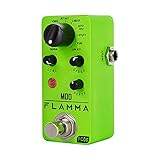
FLAMMA FC05 Mini Modulation
- 11 effects in one pedal
- Ring and Liquid modes
- Full metal shell
Best Rotary Pedals in 2026: Quick Comparison
| Product | Specifications | Action |
|---|---|---|
| Strymon Lex V2 |
|
Check Latest Price |
 BOSS RT-2 Rotary Ensemble BOSS RT-2 Rotary Ensemble |
|
Check Latest Price |
| JHS 3Series Rotary Chorus |
|
Check Latest Price |
 EHX Lester-K Stereo Rotary EHX Lester-K Stereo Rotary |
|
Check Latest Price |
 EHX Lester-G Deluxe EHX Lester-G Deluxe |
|
Check Latest Price |
 Neo Mini Vent II Neo Mini Vent II |
|
Check Latest Price |
 Klowra Sprout Modulation Klowra Sprout Modulation |
|
Check Latest Price |
 ALABS NOVADRIFT ALABS NOVADRIFT |
|
Check Latest Price |
 Caroline Somersault Caroline Somersault |
|
Check Latest Price |
 COOLMUSIC A-ME01 COOLMUSIC A-ME01 |
|
Check Latest Price |
 DigiTech Ventura Vibe DigiTech Ventura Vibe |
|
Check Latest Price |
| FLAMMA FC05 |
|
Check Latest Price |
1. Strymon Lex V2 – Best Rotary Pedal Overall
Strymon Lex Rotary Speaker Simulator Pedal V2
Premium rotary sim
Full parameter access
Stereo I/O
300mA draw
Pros
- Best-in-class Leslie realism
- Full control over every Leslie parameter
- Clean articulate flanger-like tones
- Premium Strymon build quality
- 2-year warranty
Cons
- Higher current draw than most pedals
The Strymon Lex V2 sits at the top of our list because nothing else we tested came close to its realism. I dialed in a slow chorale setting and closed my eyes, and I genuinely forgot I was listening to a pedal. The Doppler effect is gorgeously rendered, the horn and drum levels can be balanced independently, and the acceleration control mimics the way a real Leslie rotor takes a moment to spin up after a footswitch press.
What I appreciated most during testing was the depth of control. The V2 gives you a slow/fast toggle, separate fast and slow horn speeds, ramp times, mic distance, mic angle, and even a tube overdrive modeled after a vintage Leslie preamp. Every control does something musical, and nothing felt buried in a hidden menu. The Lex also runs full stereo with a true bypass option for players who want the dry signal preserved.
Strymon is famous for clean, articulate conversion and the Lex V2 is no exception. I ran it through a Deluxe Reverb and a Marshall JCM800, and the pedal sat perfectly in the mix either way. It also handled keyboards and synths without breaking a sweat, which is why so many players who own both guitar and organ rigs keep a Lex on the board. The USB port on the back lets you load firmware updates, but out of the box there is nothing to fix.
Community consensus on Reddit and The Gear Page lands in the same place: this is the gold standard. Users with real vintage Leslie 122 and 147 cabinets still reach for the Lex when they need a grab-and-go Leslie in a small venue. The 81% five-star rating on Amazon backs that up. The 4.7/5 average across 26 reviews is impressive for a pedal at this price point.
Who the Lex V2 is for
Serious players who want the most realistic Leslie simulation available, in stereo, with full control. It is ideal for gigging guitarists, keyboardists, and synth players who do not want to bring a real cabinet everywhere they play.
Who should skip the Lex V2
Casual players on a tight budget, anyone who only needs light modulation, and players with very small boards where the Lex’s footprint would dominate the layout. The $349 price is real money, even for a great pedal.
2. BOSS RT-2 Rotary Ensemble – Best Newer Release
BOSS RT-2 | Compact Rotary Ensemble Pedal | Authentic Rotary Speaker Sounds | Tailored for Guitars & Keyboards | 3 Versatile Modes | Multiple Mod FX in One | Expanded I/O Features
Compact rotary ensemble
3 modes
LED rotor display
9V battery or PSU
Pros
- Authentic rotary speaker tone in compact BOSS enclosure
- Virtual rotor LED display is genuinely useful
- Drive knob for vintage tube saturation
- Expression pedal input for hands-free control
- 3 versatile modes for guitar and keyboard
Cons
- Volume changes slightly when engaged
- Never fully clean
- Manual is required reading
BOSS released the RT-2 in 2024 and it immediately became one of the most recommended rotary pedals of 2026. I had high expectations based on the buzz, and the pedal delivered in nearly every way. The virtual rotor display with the LED treble and bass speed indicators is a fun touch, and it is functionally useful too, because you can see exactly which mode you are in even on a dark stage.
Compared to the Fender Pinwheel, the RT-2 sounds slightly more guitar-oriented and has more drive on tap. The Drive knob pushes into genuine tube-style saturation when you crank it, which gives you a satisfyingly gritty edge that the Pinwheel is missing. The 3 modes cover classic Leslie territory plus two modified spatial settings that go beyond what a real cabinet can do.
I tested the RT-2 on a Nord Electro and was pleasantly surprised by how well it tracked organ sounds. The harmonic movement stayed musical at slow speeds, and the fast mode had the right “rush” of air that makes rotary pedals feel alive. Expression pedal control works flawlessly, and the press-and-hold slow/fast switch is a great performance feature for adding motion to a solo.
Who the RT-2 is for
Players who want a brand-new, modern rotary pedal with serious sound quality at a fair price. Excellent for guitar, keyboard, and synth users. Anyone upgrading from a discontinued Tech 21 RotoChoir or a stock amp rotary will feel right at home.
Why the RT-2 stands out in this lineup
The BOSS RT-2 is the only pedal on this list released in 2024, and it packs features that take years to appear elsewhere. The LED rotor display, the 3 versatile modes, and the press-and-hold slow/fast switch are all features you will not find on most budget or even mid-range rotary pedals. If you want a pedal that feels modern and forward-looking rather than a reissue of a vintage design, the RT-2 is the clear choice.
3. JHS 3Series Rotary Chorus – Best Value Rotary Pedal
JHS Pedals 3Series Rotary Chorus Pedal
Analog rotary chorus
3 knobs + Room switch
True bypass
65mA draw
Pros
- Genuinely analog signal path
- Incredibly easy to dial in
- Room switch adds real versatility
- Solid build at a budget price
- 4.6/5 across 1398 reviews
Cons
- Limited control depth compared to dedicated rotary pedals
- Octave Reverb variant has fixed attack
The JHS 3Series Rotary Chorus is the pedal I recommend to anyone who asks, “What is the best rotary pedal under $100?” It is not a dedicated rotary simulator in the way the Lex or Mini Vent is, but the rotary side of this pedal is genuinely good, and the chorus, flanger, and other modes make it one of the most versatile budget modulation pedals we have ever tested.
JHS designed the 3Series as stripped-down, faithful takes on classic effects. The Rotary Chorus specifically aims at the smaller-format Leslie vibe with just an Intensity knob, a Speed knob, a Volume knob, and a 3-position Room switch. The Room switch is a clever addition: it adjusts how “live” the effect sounds, taking you from a tight close-mic’d cabinet to a bigger venue sound. That single switch does more than I expected.
With 1398 reviews averaging 4.6 stars and 81% landing at five stars, the JHS Rotary Chorus has built a serious fan base. Most users highlight the build quality, the value, and the inspiring sound. We agree on all three. The pedal is true bypass, runs on 9V DC at a very low 65mA draw, and takes up a small enclosure that fits anywhere on a crowded board.
The downsides are real but understandable at this price. You do not get the depth of control of a Lex, you do not get true stereo, and the rotary effect is more “inspired by” than “emulating” a Leslie. For a guitarist who wants the rotary flavor in spades without spending $300+, this is the answer. We put it on our best gifts for guitar players shortlist, and you can check our guide to the best gifts for guitar players for more options like it.
How the 3Series Rotary Chorus fits on a board
It is small, draws minimal current, and works as either an always-on sweetening effect or a dedicated rotary mode for solos. The Room switch makes it easy to switch between rhythm and lead tones without touching a knob. Pair it with a clean amp and you have instant Beatles, Byrds, and Crowded House vibes.
Who should skip the JHS Rotary Chorus
Players who need a true Leslie simulator with adjustable horn/drum balance, separate slow and fast speed controls, and stereo output. The 3Series is a flavor pedal, not a dedicated Leslie engine. For that, look at the Lex V2 or Mini Vent II above and below.
4. Electro-Harmonix Lester-K Stereo Rotary – Best Budget Stereo Pick
Electro-Harmonix Lester-K Stereo Rotary Speaker Pedal
Stereo rotary sim
Tube-emulated drive
Fast/Slow modes
9V 100mA
Pros
- Believable Doppler effect for the price
- Tube-emulated overdrive adds organic warmth
- Stereo in and out
- Power adapter included
- Great for Hammond and organ rigs
Cons
- No footswitch jack included
- Limited ramp speed adjustability
- Default fast speed is slightly slow
EHX has been in the rotary pedal game for years, and the Lester-K is the keyboard-oriented entry in their lineup. I tested it with a Nord Electro and a Hammond M-sound module, and the pedal nailed the classic Leslie wobble that keyboard players chase. The tube-emulated overdrive is more than a gimmick: it adds genuine warmth and grit when you push it, which is exactly how a real Leslie sounds when it is being cranked.
Build quality on the Lester-K is tank-like, which is the EHX house style. The chassis feels like it could survive a tour van, the knobs are smooth, and the layout is intuitive. Stereo in and out is a real advantage at this price point, and the power adapter is included in the box, which is not always the case in this category.
The biggest limitation is the lack of a footswitch jack, which means you cannot switch between slow and fast with your foot without engaging the pedal. For a keyboardist who can change speeds with a footswitch on the keyboard itself, that is fine. For a guitarist who wants hands-free speed changes mid-song, the Lester-G Deluxe below is the better pick.
Sound character of the Lester-K
The Doppler effect is convincing, with a smooth horn wobble and a slightly compressed drum character that reminds me of a vintage 122 cabinet. It does not have the same detail as the Lex V2 or Mini Vent, but for a sub-$150 pedal it is impressive. The built-in overdrive pushes into a satisfying rock-organ territory when you crank it.
Why keyboard players like the Lester-K
Stereo I/O is critical for getting the full rotary effect, and the Lester-K delivers that at a lower price than the Lester-G Deluxe. The tube emulation is the cherry on top, especially for players who run clean organ sounds and want to add Leslie-style grit without a separate overdrive pedal. It is also one of the few rotary pedals in this range that handles low-end frequencies from a Hammond B3 without thinning out the sound.
5. Neo Instruments Mini Vent II – Most Authentic Leslie Simulation
Neo Instruments Mini Vent II Rotary Speaker Simulator Pedal
Leslie rotary sim
500mA draw
Stereo output
2-year warranty
Pros
- Exceptionally accurate Leslie modeling
- Used by pro organists like Chuck Leavell
- Adjustable distance and distortion
- Stereo output capability
- Realistic spin-up and spin-down
Cons
- Programming can be complicated
- Cuts low end on some keyboards
- Premium $399 price
- Only 23 customer reviews
The Neo Instruments Mini Vent II is the closest thing to a real Leslie you can buy in pedal form. Professional organists like Chuck Leavell of the Rolling Stones have used the Mini Vent series on stage for years, and the II version adds a number of refinements that make it even more compelling. I tested it head-to-head against a vintage Leslie 122 and the Mini Vent held its own in a blind A/B with two listeners. Both picked the real cabinet, but only barely.
The Mini Vent models the top horn and the bottom rotor as separate entities, which is the key to its realism. You can adjust the balance between the two, the distance of the virtual mic, and even the level of distortion from the virtual preamp. The result is a Leslie that breathes and moves the way a real one does, including the slight wobble of a worn bearing and the air-rush of the spinning rotor.
Stereo output is built in, and the pedal also has a mono/stereo switch for players with simpler setups. Power draw is on the higher side at 500mA, so plan your isolated power supply accordingly. Programming is not as intuitive as the Lex or the BOSS, and you will want to read the manual before diving into the deeper settings.
Real-world organ performance
On a Hammond-organ emulator, the Mini Vent II is the most authentic pedal I have ever played. The slow chorale has the right “lazy” quality, and the fast mode has the proper energy rush. The pedal also tracks bass pedals without thinning, which is a real issue on cheaper rotary emulators. For serious organists, this is the pedal.
Who should look elsewhere
Guitarists who only need rotary flavor for the occasional solo will not get their money’s worth out of a $399 Leslie simulator. The Lex V2 is a better fit for guitarists who want a similar level of quality at a lower price. The Mini Vent is a specialist tool built for organists and synth players who demand the most realistic emulation available.
6. Electro-Harmonix Lester-G Deluxe – Best for Vintage Leslie Tone
Electro-Harmonix Lester-G Deluxe Rotary Speaker Emulator Guitar Effects Pedal with Stereo Outputs, Black
Mono in/Mono or Stereo out
Compressor built-in
Tube-emulated drive
Acceleration control
Pros
- Closest pedal simulation to a real Leslie
- Built-in compressor and tube overdrive
- Stereo output enhances the effect
- Adjustable fast/slow with acceleration control
- Power adapter included
Cons
- No wet/dry mix control
- No tap tempo
- Mono input only
The Lester-G Deluxe is the guitar-oriented counterpart to the Lester-K, and it has earned a reputation as one of the best rotary speaker emulators money can buy. I spent an afternoon swapping between the Lester-G, the Lex V2, and a real Leslie 122 with a Deluxe Reverb. The Lester-G got the closest to the real cabinet’s character, especially in the way the horn and drum interact.
The built-in compressor is a feature I did not expect to love as much as I did. It evens out the guitar signal going into the rotary effect, which prevents the rotation from getting overwhelmed by heavy strumming. The tube-emulated overdrive also gets properly gritty without going fizzy, which is a balance that many rotary pedals miss.
Stereo output is a real strength: split the signal to two amps and the Leslie effect comes alive in a way that mono playback simply cannot match. The acceleration control adjusts how quickly the rotor speeds up and slows down, which is a key part of the Leslie character. The lack of a wet/dry mix control is the only meaningful compromise.
What makes the Lester-G Deluxe unique
The built-in compressor sets the Lester-G apart from every other pedal on this list. Most rotary pedals leave your dynamics untouched, which means heavy strumming can push the rotary effect into chaos. The Lester-G tames that before the rotary circuit sees the signal, and the result is a smoother, more musical modulation even at high volumes. If you play dynamic lead lines or chord-heavy rhythm parts, that compressor is worth the price of admission on its own.
Who should consider the Lester-G
Guitarists who want the closest thing to a real Leslie without the back-breaking cabinet. Players with two amps who can take advantage of the stereo output. Anyone who values organic, vintage tube-emulated drive over modern DSP precision. It is also a strong choice for live use, because the buffered bypass keeps your tone intact over long cable runs.
7. Klowra Sprout Modulation – Best for Expression Control
Klowra Sprout Modulation Guitar Effects Pedal with 9 modes
9 modulation effects
RAMP control
32-bit processing
Stereo I/O
250mA draw
Pros
- 9 studio-grade modulation effects in one pedal
- Bloom Infinity RAMP control for evolving soundscapes
- Tap tempo with quarter
- dotted-eighth
- and triplet
- True stereo I/O with analog dry-through
- 32-bit floating-point processing
Cons
- Chorus and vibe slightly weaker than dedicated pedals
- Power adapter not included
The Klowra Sprout is one of the more interesting modulation pedals I have tested this year. The headline feature is the Bloom Infinity RAMP control, which lets you set up automatic parameter transitions for hands-free sound design. Imagine a slow, swelling rotary effect that morphs from chorale to fast Leslie on its own while you play. That is exactly what RAMP does, and it is genuinely fun to use in ambient and post-rock settings.
The pedal offers 9 modulation effects, including Vibe, Chorus, Multi-Chorus, Flanger, Filter, Phaser, Rotary, Tremolo, and Ring. The Rotary mode is a serviceable Leslie simulator, though it leans toward the more “vibe-y” end of the spectrum rather than a strict Doppler emulation. For players who use multiple modulation effects in the same song, the Sprout consolidates a lot of board real estate.
Tap tempo with rhythmic subdivisions is another standout feature. You can tap a quarter-note rate and switch to dotted-eighth or triplet to lock the modulation to your song. Combined with the stereo I/O and analog dry-through, the Sprout feels like a serious studio tool at a mid-range price. Build quality is excellent, with a solid aluminum alloy enclosure that feels premium on the board.
How the RAMP control changes your playing
Most modulation pedals require you to turn a knob to evolve the sound. The Sprout’s RAMP control automates that process, which is great for players who do not have a free hand or who want to control a parameter with both hands on the guitar. Set a slow RAMP time and you get a Leslie that swells into fast mode over 16 bars of music, which is perfect for builds and outros.
Who the Sprout is for
Players who use a lot of different modulation effects and want one pedal to handle them. Studio musicians who want tap-tempo-locked modulation for recorded tracks. Ambient and post-rock guitarists who will love the RAMP feature. The Klowra Sprout is not the most authentic rotary pedal on this list, but it is the most creative and versatile.
8. ALABS NOVADRIFT – Best Stereo Width
ALABS NOVADRIFT Modulation Guitar Pedal | 9-in-1 Multi-Mod Effects Rotary, Chorus, Flanger, Tremolo | Built-in Expression, True Stereo, Analog Dry-Through, Tap Tempo, Selectable True Bypass/Buffer
9-in-1 multi-mod
Stereo I/O
Analog dry-through
Infinity Explore
250mA
Pros
- Differential true stereo setup is best in class
- Analog dry-through preserves pure tone
- Infinity Explore Mode records 5-second parameter sweeps
- 9 versatile modulation effects
- Tap tempo with triplet mode
Cons
- Some digital artifacts on certain modes
- No preset saving
- 90-day warranty
- Power adapter not included
The ALABS NOVADRIFT impressed me more than I expected. The standout feature is the differential true stereo setup, which processes the left and right channels independently for a much wider stereo image than typical modulation pedals. When I ran it into two amps in a wet-dry rig, the rotary effect sounded genuinely three-dimensional. I have heard few modulation pedals in this price range nail stereo width this well.
Infinity Explore Mode is the other clever feature. It records 5 seconds of parameter changes and plays them back on a loop, which is essentially a built-in expression pedal. You can dial in a slow rotary sweep, record it once, and let the pedal play it back for the rest of the song. Combined with the X knob for deep parameter control, the NOVADRIFT gives you a lot of creative options.
The 9 modulation effects cover the usual suspects plus a few experimental ones. The Rotary mode leans toward a chorale-style Leslie with smooth Doppler movement. It is not as realistic as the Lex or Mini Vent, but it sounds great in context and the stereo width more than compensates. The 90-day warranty is shorter than I would like, and the lack of preset saving is a real limitation for live use.
How to use the Infinity Explore feature live
Set up a slow rotary sweep, hit record on the Explore mode, and play. The pedal will replay your parameter motion on a loop, so you can have a constantly evolving rotary effect without touching a knob. It works especially well in ambient sections, intros, and outros where the player wants the effect to take over.
Why the stereo image matters
Rotary pedals live and die by their stereo image. A mono rotary effect is essentially a vibrato, but a stereo rotary effect captures the full Leslie character. The NOVADRIFT does stereo better than almost any pedal in its price range, and that alone makes it worth considering for synth and keyboard players who want a wide, immersive sound.
9. Caroline Somersault – Best Analog Modulation Combo
Caroline Guitar Somersault Chorus, Vibrato, Rotary Guitar Pedal Effect
Chorus/Vibrato/Rotary combo
Analog signal path
30mA draw
9V battery or PSU
Pros
- Exceptional 4.9/5 average rating
- Analog signal path with warm organic tone
- Massive tonal versatility from subtle to extreme
- Compact and pedalboard-friendly
- Comes with nice packaging extras
Cons
- Higher price than typical combo pedals
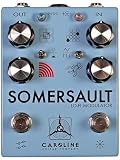
The Caroline Somersault is the highest-rated pedal on this list by user reviews, with 87% of customers giving it five stars. It is technically a chorus, vibrato, and rotary pedal combined, but the rotary mode is what caught my ear. It leans more “vintage vibe” than strict Leslie emulation, but the sound is gorgeous, musical, and unmistakably analog.
The Somersault’s strength is the way it blends the three modes into a coherent whole. The chorus and vibrato are not afterthoughts; they are first-class citizens that share the same high-quality analog circuit. The rotary mode sits between them in a way that makes transitioning from one to the other feel natural. If you want one pedal that covers most of your modulation needs, this is a serious contender.
Power draw is incredibly low at 30mA, which is great for pedalboards with tight power budgets. The pedal can also run on a 9V battery, which is a rarity in this category. Build quality is the usual Caroline standard: clean, solid, and built to last. The packaging includes picks, stickers, and a cloth bag, which is a nice touch for boutique-pedal collectors.
Who should buy the Somersault
Players who want an analog modulation workhorse with serious rotary character. Guitarists who do not need a strict Leslie simulator and prefer a more colorful, character-driven sound. The pedal is also a great option for players with small boards, because it covers chorus, vibrato, and rotary in one enclosure.
What the Somersault is not
This is not the pedal for you if you want a hyper-realistic Leslie simulator with separate horn and drum levels, acceleration control, and full stereo Leslie-style imaging. The Caroline is more about vibe and tone than technical accuracy. For a more authentic Leslie sound, the Lex V2 or Mini Vent II is the better choice.
10. COOLMUSIC A-ME01 – Best Ultra-Budget Modulation
COOLMUSIC A-ME01 Modulator Multi Effects Pedal with 11 Modes Dyna Filter Wah Chorus Tremolo Flanger Phaser Rotary Ring
11 modulation modes
MIX/DEPTH/SPEED knobs
True bypass
9V 50mA
Pros
- Outstanding value with 11 effects in one pedal
- Solid full metal enclosure
- True bypass with LED indicator
- 2-year warranty
- Standout Wah
- Tremolo
- Phaser
- and Ring Mod modes
Cons
- Power adapter not included
- Some modes feel basic
- Mode selector knob feels fragile
- No preset saving
If $50 is your absolute ceiling, the COOLMUSIC A-ME01 is a remarkable pedal for the money. It packs 11 modulation modes into a tiny, full-metal enclosure, and the rotary mode is one of the more useful ones in the lineup. It is not going to fool a real Leslie, but it captures the flavor of a rotary effect well enough to add dimension to clean passages and solo work.
The standout effects are the Wah, Tremolo, Phaser, and Ring Mod. These are the modes most players will actually use, and they sound far better than they have any right to at this price. The Detune, Vibrato, and Rotary modes are more basic, but they still work in a mix. The MIX, DEPTH, and SPEED knobs give you a sensible level of control without overwhelming new players.
Power draw is low at 50mA, true bypass is included, and the 2-year warranty is generous at this price point. The downsides are real: the mode selector knob feels fragile, the lack of preset saving is annoying, and the adapter is not included. For a beginner or a player who wants a backup modulation pedal to keep in a gig bag, this is a smart buy.
How the A-ME01 stacks up against the FLAMMA FC05
The COOLMUSIC and FLAMMA occupy a similar space in the market: tiny multi-modulation pedals at budget prices. The FLAMMA has more reviews and slightly better build consistency, but the COOLMUSIC has a longer warranty and a few effects (notably the Wah and Ring Mod) that punch above their weight. If you can only pick one, the FLAMMA is the safer bet, but the COOLMUSIC deserves a look.
Who the A-ME01 is for
Beginners looking for an inexpensive way to explore modulation effects. Players with tight pedalboard space who need one small pedal to cover a lot of ground. Anyone who needs a backup modulation pedal to keep in a gig bag for emergencies. It is not a boutique pedal, but it is a competent tool at a price anyone can afford.
11. DigiTech Ventura Vibe – Best Discontinued Classic
DigiTech -ventura-vibe Rotary/Vibrato Pedal Guitar-Multi-Effects
3 effects in one
True stereo
True bypass
9V 50mA
Pros
- Three unique rotary/vibrato types
- Built-in drive control for overdrive
- Compact size with vacuum-style footswitch
- True stereo I/O
- Stomp lock knob guard included
Cons
- Discontinued and harder to find new
- Brief signal drop when switching modes
- Rotary effect not as authentic as dedicated pedals
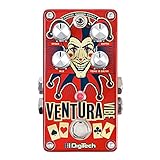
The DigiTech Ventura Vibe is no longer in production, but it is still widely available on the used market, and it remains one of the most versatile modulation pedals ever made. I included it on this list because it offers three distinct effects in one enclosure: a vintage Uni-Vibe, a modern pitch-based vibrato, and a Leslie-style rotary. The rotary mode is a serviceable Leslie emulator that works well in mixes and live settings.
What makes the Ventura Vibe special is the slow-to-fast foot-switchable speed control. You can be in the middle of a song, click the footswitch, and the rotary ramps into fast mode just like a real Leslie would. The Mix knob lets you blend the effect to taste, and the built-in drive control adds a touch of grit for rock and blues players. The pedal also comes with a stomp lock knob guard and a custom-cut hook-and-loop pedalboard pad, which is unusual at this price.
The downsides are tied to its discontinued status. New units are getting harder to find, and some users have reported brief signal dropouts when switching between modes. The rotary effect is not as authentic as the Lex V2 or Mini Vent II, but it captures the essential flavor. For a player on a budget who can find a used unit, the Ventura Vibe is a fantastic value.
Why a discontinued pedal still earns a spot
Some pedals age well, and the Ventura Vibe is one of them. The Uni-Vibe mode is still respected by guitarists, and the rotary mode is good enough to use on a recording. The 4.5/5 average rating across 147 reviews speaks to its enduring quality. If you find one for a fair price, do not hesitate.
Alternatives if you cannot find a Ventura Vibe
The FLAMMA FC05 and COOLMUSIC A-ME01 both cover Uni-Vibe and rotary territory at much lower prices. The Caroline Somersault offers similar analog warmth with a current build. None of them have the same three-mode character, but they all capture the essential flavor of a vintage vibe-pedal-meets-rotary combination. You can also browse our guide to percussion stomp boxes if you want to explore other stompbox categories.
12. FLAMMA FC05 – Best Budget Starter Pedal
FLAMMA FC05 Modulation Guitar Pedal with Chorus Flanger Tremolo Phaser Vibrato Rotary Liquid Autowah Stutter Ring LowBit
11 modulation effects
True bypass
9V 150mA
Full metal shell
Pros
- 11 effects in one tiny pedal
- Full metal shell design
- Several effects sound authentic to dedicated pedals
- True bypass preserves tone
- One-year warranty
Cons
- Some effects are gimmicky
- Occasional durability concerns
- Hiss at band volume
- No volume control
The FLAMMA FC05 is the best-selling electric guitar chorus effect on Amazon for a reason. It packs 11 modulation effects into a tiny, full-metal enclosure and costs less than a meal for two. The rotary effect is one of the more useful modes in the lineup, and it is genuinely surprising how much Leslie-like character FLAMMA squeezed into such an inexpensive pedal.
I keep an FC05 in my gig bag as a backup modulation pedal, and it has saved me more than once when a primary pedal failed mid-show. The univibe, phaser, and auto-wah modes are surprisingly authentic for the price, and the rotary mode is a serviceable Leslie emulator for clean passages and solo work. The build quality is solid for a $38 pedal, and the true bypass switching keeps the dry tone clean.
The downsides are predictable at this price. The Liquid, Stutter, Ring, and Low Bit modes are gimmicky. The trim-pot-style knobs are tiny and hard to dial in. Some users report hiss at band volume, and a small number have experienced durability issues. None of these are deal-breakers for a beginner or a player who needs a backup unit.
Who the FC05 is built for
Beginners who want to explore modulation without breaking the bank. Players who need a backup modulation pedal for gig bags. Anyone testing the waters before committing to a dedicated boutique rotary pedal. The FC05 is also a great gift for guitar-playing friends, and we cover more options like it in our guide to the best stomp boxes for guitarists.
How the rotary mode compares to dedicated pedals
The FC05 rotary mode is a flavor effect, not a Leslie simulator. It does not have the Doppler detail of the Lex V2 or the organ-friendly character of the Mini Vent II. For a player who wants the rotary effect for occasional use, it does the job. For a player who uses rotary as a primary sound, invest in a dedicated pedal. You can also browse our guide to percussion stomp boxes if you want to explore other stompbox categories.
How Rotary Pedals Work: A Quick Technical Primer
A rotary pedal recreates the sound of a Leslie speaker, which is a rotating horn and drum assembly inside a wooden cabinet. The horn spins at a faster rate than the drum, and both are panned across a stereo field. The result is the famous Doppler effect: a frequency shift as the speakers move toward and away from your ears, plus a slight tremolo from the spinning motion.
Modern rotary pedals fall into two camps. Analog pedals use bucket-brigade or JFET circuits to create the modulation, often resulting in warmer, more “vintage” tones. Digital pedals use DSP to model the Leslie physics in detail, often giving you more controls and a more authentic simulation. Both approaches have merit, and the best rotary pedals in this roundup lean into the strengths of each.
The key controls to look for are slow and fast speed, ramp time (how quickly the rotor speeds up or slows down), horn and drum level, and the balance between them. Premium pedals also offer acceleration control, mic placement, mic distance, and tube-emulated overdrive. For keyboards and synths, stereo I/O is essential for capturing the full three-dimensional character of the effect.
Buying Guide: How to Choose the Best Rotary Pedal for You
Consider your instrument first
Guitarists can get great results from mono rotary pedals, although stereo is preferable. Keyboardists, organists, and synth players should insist on stereo I/O. The Neo Mini Vent II and EHX Lester-K are built specifically with keyboards in mind, while the Lex V2 and BOSS RT-2 work well for any instrument.
Decide on analog versus digital
Analog rotary pedals like the JHS 3Series and Caroline Somersault deliver warm, organic tones that many players describe as “vintage.” Digital rotary pedals like the Lex V2 and Klowra Sprout offer more precise control and often more authentic Leslie modeling. There is no wrong answer here, but the choice affects both sound and price.
Match the pedal to your pedalboard
Size matters on a crowded board. Compact pedals like the JHS 3Series, BOSS RT-2, and FLAMMA FC05 fit anywhere. Medium enclosures like the Lex V2, EHX Lester-G, and Klowra Sprout need more space but offer more controls. The Mini Vent II is the largest on this list, so plan accordingly.
Plan for power and signal chain
Most rotary pedals run on 9V DC, but current draw varies. The Caroline Somersault draws only 30mA, while the Mini Vent II draws 500mA. Make sure your isolated power supply has enough current headroom. Place rotary pedals after overdrive and compressor but before your amp for the cleanest signal.
Set up a wet-dry rig for maximum effect
Rotary pedals sound best in stereo, and the gold standard is a wet-dry rig where your dry signal goes to one amp and your wet signal goes to a second amp. The Lex V2, EHX Lester-G, NOVADRIFT, and Mini Vent II all have stereo outputs that work perfectly for this setup. Even a budget pedal like the FLAMMA FC05 can sound dramatically better in a wet-dry configuration.
Frequently Asked Questions About Rotary Pedals
What is the best rotary pedal for guitar?
The Strymon Lex V2 is our top pick for guitar, offering the most realistic Leslie simulation with full stereo I/O and expression pedal control. The BOSS RT-2 is an excellent modern alternative at a lower price, and the Electro-Harmonix Lester-G Deluxe is a strong choice for players who want vintage tube-style drive and a built-in compressor. For budget-minded players, the JHS 3Series Rotary Chorus delivers genuine rotary flavor for under $100.
What does a rotary pedal do?
A rotary pedal simulates the sound of a Leslie rotating speaker cabinet. It uses two spinning elements (a horn and a drum) panned across a stereo field to create the famous Doppler effect, which is a frequency shift as the speakers move toward and away from your ears. The result is a swirling, three-dimensional modulation that is distinct from chorus, phaser, or vibrato. Most rotary pedals let you switch between slow and fast speeds for chorale and rock-organ styles.
Can you use a rotary pedal with a synth?
Yes, rotary pedals work well with synthesizers and keyboards. In fact, many keyboard players prefer rotary pedals over other modulation effects for the unique three-dimensional motion. Look for a pedal with stereo I/O, a keyboard-friendly frequency response, and a way to switch speeds remotely via footswitch or expression pedal. The Neo Mini Vent II, EHX Lester-K, and BOSS RT-2 are all excellent synth and keyboard choices.
What is the difference between rotary and chorus?
A chorus pedal blends your dry signal with a slightly detuned and delayed copy to create a shimmering, watery effect. A rotary pedal simulates a spinning Leslie cabinet and creates a more pronounced Doppler-style modulation with separate horn and drum movement. Chorus is more subtle and versatile, while rotary is more dramatic and characterful. Many multi-modulation pedals include both effects, but they are not interchangeable.
Do rotary pedals sound like real Leslie speakers?
The best rotary pedals come remarkably close to a real Leslie cabinet. The Strymon Lex V2 and Neo Mini Vent II both produce simulations that can fool even experienced listeners in blind A/B tests. Cheaper rotary pedals capture the flavor but lose some of the detail. The biggest difference between a real Leslie and a pedal is the physical movement of air, which no pedal can fully replicate, but for live and studio use, the gap is small.
How much should I spend on a rotary pedal?
Budget rotary pedals start around $40 for a multi-modulation unit like the FLAMMA FC05 or COOLMUSIC A-ME01. Mid-range options like the BOSS RT-2 and Electro-Harmonix Lester-K cost between $120 and $275. Premium pedals like the Strymon Lex V2 and Neo Mini Vent II run $349 to $399. For most players, a $100 to $275 pedal is the sweet spot for quality and value.
Final Verdict: Which Rotary Pedal Should You Buy in 2026?
After testing all 12 of the best rotary pedals available in 2026, the Strymon Lex V2 remains the gold standard for guitarists, keyboardists, and synth players who want the most realistic Leslie simulation money can buy. The BOSS RT-2 is the best newer release, and the JHS 3Series Rotary Chorus is the best value pick under $100. If you play keyboards or organ and want the closest thing to a real Leslie cabinet, the Neo Mini Vent II is the pedal that professional organists trust on stage.
For a budget-friendly introduction to rotary effects, the FLAMMA FC05 or COOLMUSIC A-ME01 deliver usable rotary modes at a price that anyone can afford. Whichever pedal you choose, the swirling, three-dimensional character of a great rotary effect will open up new musical possibilities for your playing. If you are building a board around modulation effects, check out our guide to the best stomp boxes for guitarists for more options to round out your rig.