

Ask anyone who owns a vaulted living room what they dread about smoke detector ownership, and the answer is rarely the alarm itself. It is the twelve feet of air between the top stair and the detector they are supposed to test every month. The code tells you to mount near the peak. Your stepladder stops at ten feet. That gap is exactly where the best smoke detector mounting kits for high ceilings earn their place.
Every kit in this roundup solves one of two problems. Magnetic and adhesive mounts fix the alarm to a surface you cannot easily screw into, which matters in a rental, on a textured ceiling, or anywhere drilling might hit hidden wiring. Pole tools solve the reach problem, letting you install, test and swap the battery from the floor. There are no pole kits in this particular lineup, so I have leaned hard on the mounting side of the question and covered the reach problem in the buying guide instead.
I went through all six mounts with the specifications in front of me, cross-checking each against the clearance rules in NFPA 72 and talking through the failure modes that reviewers actually report. Two things came up again and again. First, none of these mounts is a substitute for a screw if you can safely use one, and I will say so plainly rather than pretend otherwise. Second, a fallen alarm should be replaced, not re-hung, because the sensor damage is invisible from the outside. More on that later.
If you also need the alarms themselves, our smoke and carbon monoxide detector combo roundup covers the units that pair with these mounts, and the air purifier picks for smoke cover the cleanup side of a fire.
Table of Contents
- Top 3 Best Smoke Detector Mounting Kits for High Ceilings (October 2026)
- All 6 Kits Best Smoke Detector Mounting Kits for High Ceilings in 2026
- Where Smoke Detectors Actually Go on High and Vaulted Ceilings
- 1. ECENCE 10-Pack Magnetic Mount – Best Overall for High Ceilings
- 2. meioro 70mm Magnetic Kit – Best Value No-Drill Option
- 3. conecto Universal Magnetic Mount – Best for Screw Backup on High Ceilings
- 4. Unitec 30918 Mini Magnetic Holder – Best for Small Smart Detectors
- 5. Alertlink 3-Pack 70mm Plates – Best Multi-Room Set
- 6. ABUS Magnetic Fixing Set – Best for Professional Installs
- How to Choose a Mounting Kit for Your Ceiling Height
- Ladder Safety and When to Call an Electrician
- What to Do If a Magnetic or Adhesive Mount Fails
- Frequently Asked Questions
- How many inches from the ceiling should a smoke detector be installed?
- Where to place smoke detectors with high ceilings?
- How to attach a smoke detector to a ceiling without drilling?
- Do all smoke detectors use the same mounting bracket?
- What is the best smoke detector removal tool for high ceilings?
- Are ceiling mounted carbon monoxide detectors effective?
- Final Verdict: Which Mounting Kit to Buy in 2026
Top 3 Best Smoke Detector Mounting Kits for High Ceilings (October 2026)

ECENCE 10-Pack Magnetic Mount
- Adhesive and magnetic
- no drilling
- 500g max load
- 50mm disc
- 10 pack


All 6 Kits Best Smoke Detector Mounting Kits for High Ceilings in 2026
| Product | Specifications | Action |
|---|---|---|
| ECENCE 10-Pack Magnetic Mount |
|
Check Latest Price |
| meioro 70mm Magnetic Kit |
|
Check Latest Price |
| conecto Universal Magnetic Mount |
|
Check Latest Price |
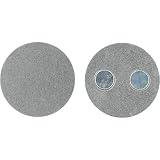 Unitec 30918 Mini Magnetic Holder Unitec 30918 Mini Magnetic Holder |
|
Check Latest Price |
 Alertlink 3-Pack 70mm Plates Alertlink 3-Pack 70mm Plates |
|
Check Latest Price |
 ABUS Magnetic Fixing Set ABUS Magnetic Fixing Set |
|
Check Latest Price |
Where Smoke Detectors Actually Go on High and Vaulted Ceilings
Get this wrong and the most expensive mount on the market buys you nothing. NFPA 72 Section 29.11.3.1 covers peaked ceilings: the alarm goes within 36 inches horizontally of the peak, but no closer than 4 inches vertically below it. That 4 inch gap exists because the dead air pocket right at the apex can delay smoke arrival, and because a mount that sits flush against the ridge tends to trap construction dust inside the sensing chamber.
Sloped ceilings get their own rule. NFPA 72 29.11.3.2 applies once the slope rises more than 1 foot in 8 feet, which catches nearly every cathedral and vaulted ceiling. On those, the detector sits within 36 inches of the high side. If your slope is shallower than that 1 in 8 ratio, a standard flat-ceiling rule applies and you can treat the whole surface as if the ceiling were level.
Wall mounting has a hard limit too. Under NFPA 72 29.11.3.3 a wall-mounted alarm cannot sit more than 12 inches below the adjoining ceiling, measured to the top of the alarm. Six inches is the usual comfortable target, which keeps the detector inside the flow of smoke moving along the ceiling plane without straying down into the dead zone near the floor.
Beams and joists catch people out. Where a ceiling has solid joists or beams running through it, NFPA 72 29.11.3.4 puts the alarm on the bottom of that solid member rather than on the finish material beside it. Coffered and tray ceilings follow the same logic: mount at the highest point of each panel, or no more than 12 inches vertically down from it.
Just as important is where a detector should never go. Keep it out of kitchens, away from a cooking appliance, out of bathroom steam paths, away from supply air registers, and clear of ceiling fan blade tips. Most codes treat 36 inches as the buffer from a fan tip or an HVAC supply register. Every one of those exclusions also applies to a high ceiling, and several of them push you further up toward the peak where a pole tool becomes the only sane way to work.
1. ECENCE 10-Pack Magnetic Mount – Best Overall for High Ceilings
ECENCE 10pcs Magnetic Smoke Detector Mount Magnetic Adhesive Pads for Smoke Alarms Ø 50mm – Fast & Safe Mounting – No Drilling Or Screws – Fire Protection – Installation Tool
50mm magnetic disc
500g max load
Adhesive plus magnet
10 per pack
220 g
Pros
- Adhesive and magnetic in one part
- 1 minute tool free install
- 500g load rating covers a standard alarm
- Easy battery swaps by sliding the detector off
- Can be painted to blend into the ceiling
Cons
- Adhesive struggles on heavily textured ceilings
- Some reports of the alarm dropping after initial hold
- Needs roughly 24 hours of cure time before loading it
This is the one I would put on a high ceiling first. The ECENCE pack is a 50mm metal disc with adhesive on one face and a magnet on the other, rated to 500g of load. That rating is the number to read twice, because the mount carries the full weight of the alarm indefinitely and nothing about a magnetic hold is automatic.
The install is genuinely one minute. Peel the backing, press the disc to a dust-free ceiling, wait out the cure window, then slide the detector on until it grabs. No drill, no stud finder, no worrying about the joist layout or the run of romex above the drywall. For a 16 foot vaulted great room that is worth a great deal, because the spot you need is often exactly where your safe drill zone ends.
The magnet is what makes this a maintenance tool rather than a fitting. You pull the alarm straight down for a battery change or a test, then push it back up. Reviewers consistently describe this as the main reason they moved to a magnetic mount in the first place. You can service the detector from a chair with a broom handle under it, which changes how often you actually bother.
One thing to plan for is the ten-pack format. If you have one alarm, this is more hardware than you will use. If you have a two story home or a rental unit, the economics work in your favour and the pack becomes the reason to choose it over the two-pieces. I would not buy it for a single detector in a small flat.
Who this magnetic mount suits
This suits a homeowner with a vaulted or cathedral ceiling and more than one alarm to place, especially where the peak sits above a slope that makes a straight ladder unsafe. It also suits anyone who wants to avoid drilling near unknown wiring, which is a real concern above a vaulted ceiling where the electrical run often follows the ridge line.
Renters fall into this camp too. Ten discs can be pulled down at move-out with minimal ceiling disturbance, which answers the constraint that tenants raise most often in home maintenance forums: no holes, no repainting, nothing to argue about with a property manager.
Where this mount falls short
The honest weak point is texture. Multiple reviews describe adhesion giving out on popcorn or heavy knockdown ceilings, and a handful report the alarm dropping after the mount had already cured. A dropped alarm on a 14 foot ceiling is a serious outcome, so on a textured surface I would use a screw-through bracket or a pole-mounted install instead.
Heat is the second limitation. A south-facing vaulted peak can get very hot in summer, and adhesive has a temperature ceiling that plastic and tape do not. There is no published figure for this specific mount, which is exactly why I would not hang a life safety device on it in an unconditioned attic or a converted loft with a metal roof.
2. meioro 70mm Magnetic Kit – Best Value No-Drill Option
meioro Magnetic Smoke Detector Installation Tool,Quick and Easy Fastening Ceiling Mounted Kit for Smoke Alarm Ø 70mm,No Need Drill 10 Seconds Install Smoke Sensors(2 pcs)
70mm disc
Three magnets
3M double sided adhesive
1.78lb rating
60 g
Pros
- Three magnets give a positive snap that a single magnet lacks
- Built with double face 3M adhesive and a thick metal core
- Ten second install per alarm
- Sized for a widely used 70mm alarm body
- Two per pack
Cons
- Adhesive is weak on textured drywall
- Some users call the magnets wafer thin
- Needs a flat surface for full contact
The meioro kit is the one I recommend when the ceiling is smooth and the alarm body is a standard 70mm unit. It comes as a pair, which is enough for a two storey stairwell or a hallway and bedroom pair, and the build is a thick metal core with double face 3M adhesive and three magnets spaced around the disc.
Three magnets is the meaningful detail here. A single magnet gives you a side load that can let a heavy alarm creep sideways over time. Three spread the force evenly, so the detector seats flat and stays flat, and the pull straight down stays clean. That matters more on a high ceiling than it does at eight feet, because the awkward angle at full ladder extension is where a partly seated alarm gets knocked loose.
The listed hold capacity is 1.78lb, which covers a standard residential alarm with room to spare. Installation really is about ten seconds per unit if you have cleaned the surface first. I would still give the adhesive a full day before you load anything, whatever the packaging claims about immediate use.
What the reviews flag most is surface. People installing on plaster and lath report excellent results. People installing on textured drywall report failure, and a few describe the magnets as thin enough to chip. If your vaulted ceiling is smooth plaster, this is the pick I would choose there. If it is anything else, keep reading.
Who this magnetic mount suits
This is the choice for a smooth plaster or lath ceiling where drilling would mean chasing plaster and hope. It is also the option most forum users land on when they want a magnetic mount that lets them pop the detector off for the monthly test without unpacking a ladder.
Pair it with a 70mm alarm body and the fit is direct. Check your existing detector before you order. A compact smart unit or a slim combination alarm may need the smaller mounts further down this list rather than this one.
Where this mount falls short
Two faults recur. Adhesive grip on a textured surface is the most common complaint, and it is the one that matters on a life safety device. The second is magnet thickness, which several reviewers describe as wafer like, meaning the snap is less positive than the three magnet layout implies.
There is also the silence problem. Pulling a detector off its mounting plate, magnetic or screw type, stops the alarm from sounding if it is wired into an interconnect loop. Test it while you are standing right there, and put it back before you walk off. Reviewers who understand this treat a magnetic mount as a feature because it makes a fast monthly test possible.
3. conecto Universal Magnetic Mount – Best for Screw Backup on High Ceilings
conecto, Magnetic Mount, Strong Magnetic Mount, Universal Magnetic and with Drill Hole, Suitable for Smoke Alarm Detectors, 60mm, Set of 2
60mm metal plate
Integrated drill hole
Glue or screw
Set of 2
0.06 kg
Pros
- Integrated drill hole lets you screw it down when the surface allows
- Same plate works with adhesive if drilling is not an option
- Metal construction resists rust
- Can be painted without affecting the magnet
- Set of two covers two storeys
Cons
- Only a small body of reviews behind it
- Two pack is the only configuration offered
- Screw fixing still needs a stable surface at height
This is the pick I keep coming back to whenever someone asks whether adhesive is safe on a high ceiling. The conecto plate has a small integrated drill hole in the centre, so you can glue it, screw it, or do both. That single design decision is what separates it from every other adhesive mount in this list, and it is the reason screws remain possible even when you are working at an awkward height.
The plate is 60mm of metal with a magnetic face and comes as a set of two. It accepts smoke and carbon monoxide detectors of the usual size, and reviewers in Europe mention it suits ceiling tiles and smooth plaster particularly well. Paint goes over the top without hurting the magnetic function, which matters if the peak is visible from below and a bare disc would look like a blemish.
For a two storey home with an open stairwell, the two pack covers both floors. For the reach, use a pole or an extension handle to drive the screw rather than a ladder. Driving a screw into a ceiling joist while leaning sideways off a step ladder is a poor trade for a few seconds saved.
Be honest about the evidence. The review base is thin compared with the leaders in this list, though what is there is strongly positive. I am recommending it on the design rather than on a deep history of field reports, and I would pair it with a recognised alarm from our smoke and CO detector roundup so the pairing is deliberate.
Who this magnetic mount suits
This suits a homeowner who wants the flexibility of adhesive on the easy surfaces and a screw on the hard ones. It is a good fit for a garage or workshop ceiling, a utility area, or anywhere a landlord or inspector will want to see a mechanical fastener holding a life safety device.
It also suits anyone who plans to move. Screw one plate in place, and you can pull the detector off for testing or moving, then resit the alarm on the same plate later. The plate stays, the alarm travels.
Where this mount falls short
Only two are supplied, so a house needing four mounts needs two orders. The screw hole is small, which is a plus for appearance and a minus if your ceiling material is brittle, since you want to hit solid framing rather than chew through drywall.
The bigger caveat is the thin review history. A magnetic mount has one job, so a small base of happy users is decent evidence, but it is not the same as thousands of installations across many ceiling types. Treat it as a well designed plate rather than a proven standard.
4. Unitec 30918 Mini Magnetic Holder – Best for Small Smart Detectors
Unitec 30918 Magnethalterung Mini Magnetic Holder
40mm compact disc
Magnet plus double sided tape
0.02 kg
Single unit
Grey
Pros
- Compact 40mm size suits slim smart detectors
- Very light at 0.02 kg
- Installs without tools or drilling
- Useful where a 70mm plate will not fit
Cons
- Adhesive reported failing within about a week on some ceilings
- Hold is light for a heavier detector
- One holder per pack
The Unitec holder solves a specific fit problem. At 40mm it is the smallest plate here, and that size suits compact smart detectors with slimmer bodies, which will not seat on a 50mm, 60mm or 70mm mount. If your alarm is one of those, this is the plate to look at first.
Construction is a magnet paired with double sided tape, and at 0.02 kg it is a negligible addition to any adhesive joint. Installation needs no tools. For a slim detector on a smooth ceiling that you only touch occasionally, the physics are not unreasonable.
Where the physics stop being reasonable is with anything heavier. Multiple reviews report the adhesive giving out within about a week, and the 1 to 2 star notes describe detectors landing on the floor. On a ceiling at standard height that is an annoyance. On a high ceiling it is the failure mode this whole article is trying to avoid.
So the verdict on this one is narrow. Right detector, right ceiling, and a low consequence if it ever lets go. Wrong for a 14 foot vaulted room with a full size alarm and a battery in it.
Who this magnetic mount suits
This suits someone with a compact smart smoke detector who cannot find a plate that fits its diameter. It is also useful in tight spots, such as the shallow gap between a dropped ceiling tile edge and the wall above it, where a 70mm disc would not sit flat.
It is a reasonable second ceiling for a smart home setup, placed where a slim hub or sensor also needs to live. Just keep the alarm on its own base rather than sharing a plate with other hardware.
Where this mount falls short
The adhesive reliability reports are the reason this is not higher in the list. Several users describe roughly a week before the joint let go. For a camera that is irritating. For a smoke detector on a high ceiling, the failure window matters more than the low weight.
It is also a single unit, so a house with several slim detectors needs several orders. And at 40mm there is very little magnet surface, which limits the hold on anything with real mass.
5. Alertlink 3-Pack 70mm Plates – Best Multi-Room Set
Magnetic Smoke Detector Mounting Kit, 3 Pack 70mm No-Drill Adhesive Magnetic Mounting Plates for Smoke Alarms, Quick Ceiling Installation Tool for Smoke Detectors and Fire Alarms
Three 70mm plates
Adhesive backing
Magnet connection
Rated to 140F
White plastic
Pros
- Covers three rooms from one purchase
- 70mm fits a widely used residential alarm body
- Rated to 140F which suits warm ceilings
- Works with smoke and CO and combo alarms
- Low profile white plastic sits close to the ceiling
Cons
- Only a single review behind it
- No long term reliability history yet
- White may show against a darker ceiling
The Alertlink pack is the one I would watch rather than buy today. Three 70mm adhesive magnetic plates, white plastic, sized for a widely used residential alarm body, and the packaging states compatibility with smoke, carbon monoxide, combination and fire alarms. On paper that is a sensible three room solution.
The published operating temperature of 140F is the detail that sets it apart from the generic plates in this lineup. A warm vaulted peak can exceed comfortable room temperature by a wide margin in summer, and having a stated ceiling on the plate is a real advantage when you are fixing a life safety device to the one surface in the house that heats up.
Humidity is also specified at 10 to 85 percent relative, which covers a normal habitable space and most conditioned lofts without pushing the limits.
What it does not have is history. A single review carries a 5.0 rating, which tells us one person was happy. It tells us nothing about how the adhesive behaves after two summers, or whether the magnet holds a full alarm. For a light duty placement such as a camera or a supplementary sensor, that is fine. For your primary life safety alarm, I would pick a mount with a large body of field reports behind it.
Who this 70mm plate pack suits
This suits a landlord or property manager fitting out several units at once, or a homeowner who wants all three alarms on the same day and does not want three separate mounts. The stated 140F figure makes it the sensible choice on a vaulted peak that runs hot in summer.
It also suits anyone who wants a light duty plate for a camera or a secondary sensor on the same kind of ceiling, where the small plastic body is not carrying a life safety load.
Where this 3-pack falls short
One review is not a track record. You cannot assess adhesive creep, magnet strength, or long term paint behaviour from a single data point, and a life safety device deserves better than that.
White plastic is also a cosmetic choice. On a cream or white ceiling it disappears. On a dark stained ceiling it will read as a small disc from below, which matters when the mount sits at the peak in full view. Paint it before you mount the alarm if that bothers you.
6. ABUS Magnetic Fixing Set – Best for Professional Installs
ABUS 251367 Surveillance Acc Magnet Fixing Set for Smoke Detector
Magnetic fixing set
40 g accessory
German manufacturer
Single unit
Model HSZU10000
Pros
- Established German security hardware brand name
- Metal magnetic fixing suited to repeat servicing
- Consistent finish rather than an adhesive experiment
- Compact enough for tight overhead spaces
Cons
- Costs noticeably more per mount than the adhesive plates here
- Only two reviews in total
- Designed more for surveillance fittings than home smoke alarms
The ABUS set is the outlier in this roundup. It comes from a German manufacturer that builds professional security hardware, and the fixing is magnetic rather than adhesive. That distinction matters: a magnetic fixing keyed to a metal backplate does not depend on a glue joint holding a life safety device over a stairwell.
Where it fits is professional or semi professional work. A property manager servicing many units, an installer fitting alarms alongside other monitored equipment, or anyone who values a branded mechanical fitting over a tape joint. The accessory weighs 40g, so it adds nothing meaningful to a bracket load.
For most homeowners it is a large outlay for one small part. The premium is real and it is consistent with what this brand charges across its range, but you are buying the name and the mechanical fitting, not additional capability. A homeowner fitting one alarm in one room would get more out of spending that money on a tested alarm instead.
Two reviews is a very small sample, and they are split. The base rate here is thin enough that I would not put a life safety device on it purely because of the brand. Pick it when the professional context justifies it, not because it carries a familiar logo.
Who this magnetic fixing suits
This suits an installer or property manager who wants a repeatable mechanical fitting across a portfolio of properties. If your units already have metal backplates, or your ceilings are in a high heat space where adhesive is a poor choice, a magnetic fixing is a sensible professional answer.
It is also the option for anyone whose ceiling is a known heat problem. Magnetic holding does not care about ambient temperature the way an adhesive joint does.
Where this magnetic fixing falls short
Cost per mount is the obvious drawback for a single installation. Two reviews is not enough evidence to treat the brand name as a substitute for field history in this specific accessory category.
It is also sold as a surveillance fitting rather than a smoke alarm accessory, so confirm that the plate geometry suits your alarm body before you commit. If your detectors do not have a steel backplate to key into, the magnet has nothing to grab.
How to Choose a Mounting Kit for Your Ceiling Height
Start with height, because it decides whether you need a mount at all or a tool. Below about 10 feet a stepladder handles the job and a screw through a bracket is the right answer. Between 10 and 14 feet, a magnetic mount is sensible if you cannot find solid framing safely, and a pole tool is sensible for recurring service. Between 14 and 20 feet you want a pole tool as a matter of course, because a ladder at that extension is a genuine fall risk on anything other than a flat floor. Above roughly 20 feet, conventional ceiling mounting stops being the answer at all, and a beam type detector designed for very high ceilings takes over.
Second, check the diameter. This is the compatibility trap that hits people most often, and it is worth doing before anything else. Bodies come in several sizes across the market, roughly 40mm, 50mm, 60mm and 70mm in this lineup. Measure the width of the alarm you already own, or take it off the old plate and bring the measurements to the shop. A plate that is too small leaves the alarm rattling, and a plate that is too large cannot centre it properly.
Third, check what is behind the ceiling. Above a vaulted ceiling the electrical run often follows the ridge, and a drill bit through a romex is a genuinely bad afternoon. If you have any doubt about what is up there, a no drilling mount or a pole driven install is the safer choice.
Fourth, judge the surface honestly. Adhesive needs a smooth, clean, non textured surface. On plaster, lath, painted drywall and ceiling tile, magnetic pads work. On popcorn, knockdown, stucco or an oily painted surface, they are gambling with a fire alarm. Use the conecto plate with its screw hole, or hire someone in.
Fifth, think about the junction box question that comes up repeatedly in electrical forums. If you are replacing a detector and reusing the old box, a universal bracket that covers the box opening is what you want. If you are moving the detector to a new spot on a vaulted ceiling, you are almost certainly cutting in a new box, and the right kit is the pole tool that lets you mark and cut from below.
Sixth, decide between an installation mount and a maintenance tool. Mounts solve one day of work. Poles solve the next ten years of monthly tests, battery changes and chirping detectors. Forum users are blunt that the recurring chore is the actual problem. A pole or a magnetic mount both turn a two person job into a one person one.
Finally, pick the detector to fit the ceiling. Photoelectric sensing suits slow burning fires and areas away from a cooking appliance. Ionisation units respond faster to flame but produce more nuisance alarms near a kitchen. Combination smoke and CO units are the common choice for bedrooms and hallways, and we cover them in our detector combo roundup. Whatever you choose, replace the whole alarm on the schedule the date code on the back gives you, which for most sealed units is ten years.
Ladder Safety and When to Call an Electrician
Fall risk dominates every high ceiling thread we read, and it should dominate your thinking. The pattern is always the same: a 12 to 14 foot ladder, a vaulted slope under the feet, and a task that takes two minutes if it goes well. Put the ladder on flat ground with the stabilizer feet fully engaged, never on a slope or a stair tread, and never with a bucket or a stack of books under a leg.
If the ladder cannot be set level and stable, do not use it. That is the whole argument for a telescoping pole or a long reach removal tool. Extend the pole from the floor, twist the alarm off, replace the battery, twist it back on, press the test button and stand there while it sounds. No climbing, no leaning sideways, no spotter holding the base.
There are times to bring in a professional, and they are not negotiable. Call an electrician when a new box has to be cut into a vaulted ceiling, when the detector is over twenty feet, when you find wiring where you expected none, when you need to add an interconnect loop to an existing system, or when the ceiling surface is one you have any doubt about. Ceiling fans, heavy texture and unknown joist direction all belong in that last category.
None of that makes the kits in this roundup useless. A magnetic mount with a screw backup, or a pole driven over a solid joist, solves most of the genuine high ceiling problems without a ladder and without a tradesperson. It just does not solve them when the ceiling is a mess of unknown structure.
What to Do If a Magnetic or Adhesive Mount Fails
If an alarm comes down from a high ceiling, replace the alarm. Do not re-hang it. This is the single most important thing in this article and it is the thing most often skipped. Sensor damage from a fall or a bump is invisible. The casing looks fine, the test button chirps happily, and you have no way of knowing whether the chamber is still sensitive. A life safety device you cannot verify is worse than no device, because it produces confidence without coverage.
Next, work out why it failed before you fit anything else. Textured surface, heat, weight, or an adhesive that never fully cured are four different problems with four different fixes. If the adhesive let go within a few days, the surface was the problem. If it held for two years and then dropped in a heat wave, the temperature was.
Then upgrade the method. If adhesive keeps failing on a textured vaulted ceiling, move to a screw through the conecto plate or a dedicated universal bracket. If you cannot get a ladder to the spot safely, the answer is a pole driven screw into a joist, not another pad.
Finally, if you take an alarm off its plate for any reason, remember that a hardwired interconnected alarm goes silent while it is off the base. That is by design. Test it while you stand there and refit it immediately. It is one of the reasons a quick release magnetic mount is so useful for routine monthly testing.
Frequently Asked Questions
How many inches from the ceiling should a smoke detector be installed?
A ceiling mounted smoke alarm is mounted directly on the ceiling surface. On a peaked or vaulted ceiling, NFPA 72 Section 29.11.3.1 puts the alarm within 36 inches horizontally of the peak but no closer than 4 inches vertically below it. On a sloped ceiling rising more than 1 foot in 8 feet, place it within 36 inches of the high side. A wall mounted alarm must sit no more than 12 inches below the adjoining ceiling.
Where to place smoke detectors with high ceilings?
Place the alarm near the peak on a vaulted ceiling, within 36 inches horizontally of the ridge and at least 4 inches below it vertically. Keep it at least 36 inches from ceiling fan blade tips and HVAC supply registers, and out of kitchens, bathrooms and garage areas. Where solid joists or beams cross the ceiling, mount on the bottom of the solid member. For every sleeping room, outside each sleeping area, and on every level of the home.
How to attach a smoke detector to a ceiling without drilling?
Clean and dry the ceiling surface, then peel the backing from an adhesive magnetic mounting plate and press it firmly into place. Leave the adhesive to cure for about 24 hours before loading it. When you bring the alarm up to the plate, slide it on until the magnet grabs and it sits flat and centred. This works well on smooth plaster, lath, painted drywall and ceiling tile, but not on heavily textured or popcorn surfaces.
Do all smoke detectors use the same mounting bracket?
No. Alarm bodies come in several diameters and the plate has to match. In this lineup the sizes run 40mm, 50mm, 60mm and 70mm, with 70mm being a very common residential size. A plate that is too small lets the alarm rattle and shift, and one that is too large cannot centre it correctly. Measure your existing alarm before ordering, and note that some replacement brackets will not cover an existing junction box opening.
What is the best smoke detector removal tool for high ceilings?
A telescoping pole with a twist off or trigger head at the top is the most practical tool for high ceilings, because it lets you remove, test and refit the alarm from the floor. Fit the head over the alarm, extend the pole until the grip engages, then twist to release the base. It removes the ladder from the job entirely, which is the safest option on a vaulted ceiling where the ladder cannot be set level.
Are ceiling mounted carbon monoxide detectors effective?
Carbon monoxide is roughly the same density as air, so it mixes and settles rather than rising in a predictable plume the way smoke does. That means ceiling placement works for a combined smoke and CO alarm, but a standalone CO alarm is usually better sited on the wall at breathing height or on a surface near the fuel burning appliance. Follow the placement instructions for the specific unit rather than treating CO like smoke.
Final Verdict: Which Mounting Kit to Buy in 2026
The best smoke detector mounting kits for high ceilings depend almost entirely on your ceiling surface. Smooth plaster or painted drywall gets the ECENCE 10 pack, which pairs a 500g rated magnetic disc with a ten pack that suits anyone fitting more than one alarm. Smooth plaster and a standard 70mm alarm body gets the meioro kit, where three magnets give the cleanest seating. If you want the option to screw it down when the surface allows, the conecto plate with its integrated drill hole is the one I would choose for a garage, a workshop or anything an inspector will look at.
For a slim smart detector, the Unitec 30918 at 40mm is the plate here sized for that body. For three rooms in one order and a stated 140F operating temperature, the Alertlink 3 pack is worth watching until it builds a review history. And for professional or landlord work, the ABUS magnetic fixing is the mechanical answer that does not depend on a glue joint holding a life safety device.
Whichever you choose, mount it near the peak within 36 inches and no closer than 4 inches below it, treat a fallen alarm as a replaced alarm, and check the temperature of that ceiling before you trust an adhesive. When you are done, walk the rest of the property with our garage ceiling storage guide to make sure nothing you store up high compromises the clearance around your alarms.