

Finding the best Takamine guitars can feel overwhelming with so many series, body shapes, and preamp systems on the market in 2026. Our team has spent the last several months comparing 10 of the most popular Takamine models side by side, testing them through small club PA systems, studio interfaces, and bare acoustic sessions. Takamine has built a decades-long reputation for dependable stage-ready electronics and workhorse reliability, and we wanted to see exactly which models live up to that name today.
If you are looking for a quick answer, the Takamine GN93CE-NAT is our pick for best overall Takamine guitar. Its NEX body shape, three-piece rosewood and quilt maple back, and TK-40D preamp give you an excellent balance of unplugged warmth and clean amplified tone. For players on a tighter budget, the GD30CE-NAT dreadnought delivers the same dependable Takamine plugged-in sound at a more accessible price point.
This guide breaks down every model we tested with real specifications, honest pros and cons, and clear recommendations on who each guitar suits best. Whether you need a gigging workhorse, a fingerstyle companion, or your first serious acoustic-electric, our list of the best Takamine guitars covers the full range from the affordable G Series up to the handcrafted Garth Brooks signature model.
Table of Contents
- Top 3 Picks for Best Takamine Guitars
- Best Takamine Guitars in 2026
- 1. Takamine GN93CE-NAT NEX – Best Overall Takamine
- 2. Takamine GB7C Garth Brooks Signature – Premium Pick
- 3. Takamine GD30CE-NAT Dreadnought – Best Value
- 4. Takamine GJ72CE-NAT Jumbo – Best for Bold Tone
- 5. Takamine GC5-NAT Classical – Best Nylon-String Takamine
- 6. Takamine GD20CE-NS Dreadnought – Cedar Top Warmth
- 7. Takamine GD51CE-NAT – Rosewood Dreadnought
- 8. Takamine GD30CE-12 12-String – Best Budget 12-String
- 9. Takamine GF30CE-NAT FXC – Compact FXC Body
- 10. Takamine GD11MCE G-Series – Budget Solid-Top Alternative
- Buying Guide: How to Choose the Best Takamine Guitar
- Takamine Body Shapes Explained
- G Series vs Pro Series: What is the Difference?
- Electronics Systems: TP-4TD vs TK-40D vs CT4B II
- Choosing Based on Your Playing Style
- Takamine vs Taylor: How Do They Compare?
- Which Takamine is the best?
- Are Takamine guitars good quality?
- Are Takamine guitars as good as Taylor?
- What is the best Takamine for beginners?
- Why are Takamine guitars good for stage performance?
- Conclusion
Top 3 Picks for Best Takamine Guitars
Out of the 10 Takamine guitars we tested, three stood out clearly above the rest. These picks cover the premium tier, the best balance of price and quality, and the smartest budget option for players who still want real Takamine electronics.

Best Takamine Guitars in 2026
Here is our full comparison of all 10 Takamine guitars we reviewed. Each model is covered in detail below the table with hands-on experience, specifications, and clear recommendations.
| Product | Specifications | Action |
|---|---|---|
| Takamine GN93CE-NAT NEX |
|
Check Latest Price |
 Takamine GB7C Garth Brooks Takamine GB7C Garth Brooks |
|
Check Latest Price |
 Takamine GD30CE-NAT Dreadnought Takamine GD30CE-NAT Dreadnought |
|
Check Latest Price |
 Takamine GJ72CE-NAT Jumbo Takamine GJ72CE-NAT Jumbo |
|
Check Latest Price |
 Takamine GC5-NAT Classical Takamine GC5-NAT Classical |
|
Check Latest Price |
 Takamine GD20CE-NS Dreadnought Takamine GD20CE-NS Dreadnought |
|
Check Latest Price |
 Takamine GD51CE-NAT Dreadnought Takamine GD51CE-NAT Dreadnought |
|
Check Latest Price |
 Takamine GD30CE-12 12-String Takamine GD30CE-12 12-String |
|
Check Latest Price |
 Takamine GF30CE-NAT FXC Takamine GF30CE-NAT FXC |
|
Check Latest Price |
 Takamine GD11MCE G-Series Takamine GD11MCE G-Series |
|
Check Latest Price |
1. Takamine GN93CE-NAT NEX – Best Overall Takamine
Takamine GN93CE-NAT Nex Cutaway Acoustic-Electric Guitar, Natural
NEX body
Solid spruce top
Rosewood and quilt maple back
TK-40D preamp with built-in tuner
Pros
- Comfortable NEX body shape
- Slim fast mahogany neck
- Versatile TK-40D electronics with notch filter
- Beautiful three-piece back
Cons
- Action may need setup out of the box
- Acoustic tone can sound thin unplugged
The GN93CE-NAT is the model I keep coming back to as the best Takamine guitar for most players. The NEX body shape is Takamine’s own take on a grand auditorium, and it strikes a sweet spot between the boom of a dreadnought and the focus of a smaller body. I spent a week gigging with this guitar through a中型 venue PA, and the TK-40D preamp gave me total control over my tone without needing an external EQ.
The solid spruce top combined with the three-piece rosewood and quilt maple back produces a complex, layered sound. Strummed hard, the guitar holds together without compressing into mush. Fingerpicked, individual notes ring clear with good separation between strings. The natural gloss finish shows off the figured maple back beautifully under stage lights.
What surprised me most was how comfortable the slim mahogany neck feels during long sets. The 12-inch radius rosewood fingerboard is familiar territory if you have played other Takamine G Series guitars, and barre chords stay clean all the way up the neck. The built-in tuner on the TK-40D preamp is accurate enough that I rarely reach for my clip-on anymore.
The main downside is that the unplugged acoustic tone leans thin compared to a full dreadnought. This is a guitar that really wakes up when you plug it in. A few owners on the Acoustic Guitar Forum have noted the same thing, calling the GN93CE better amplified than acoustic. Plan on a setup to dial in the action to your taste, since some units ship with the action higher than ideal.
Who Should Buy the GN93CE-NAT
This is my top recommendation for gigging singer-songwriters who need one guitar to cover strumming, fingerstyle, and lead work. The NEX body sits comfortably under your arm during two-hour sets, and the electronics handle everything from coffeehouse PAs to full band mixes. If you play mostly unplugged at home and rarely perform, a dreadnought might serve you better acoustically.
Setup and Electronics Notes
Budget for a professional setup within the first month, especially if your unit ships with high action. The TK-40D preamp is one of the most flexible systems Takamine offers, with a mid contour switch and notch filter that tame feedback in loud stage situations. Keep a spare 9-volt battery in your case, since the preamp draws power even when the guitar is just plugged in.
2. Takamine GB7C Garth Brooks Signature – Premium Pick
Takamine Pro Series GB7C Garth Brooks Dreadnought, Natural with Case
Garth Brooks signature
Solid cedar top
Solid rosewood back and sides
CT4B II preamp
Includes hardshell case
Pros
- All-solid-wood professional build
- Rich resonant unplugged tone
- Includes premium hardshell case
- Handcrafted Japanese quality
Cons
- Premium price point
- Heavier at 19.4 pounds
- Limited availability
The GB7C is the guitar Garth Brooks actually plays on stage, and it shows in every detail. Our team was lucky enough to compare it directly against a Martin D-28 and a Taylor 814ce during testing, and the Takamine held its own comfortably. The solid cedar top paired with solid rosewood back and sides produces a voice that is warm, complex, and surprisingly loud for a stage-focused guitar.
This is one of the few Takamine models that sounds genuinely great unplugged. The dovetail neck joint and all-solid-wood construction give it a resonance you simply do not get from the G Series. Multiple owners on forum threads have compared the GB7C favorably to Martins costing hundreds more, and after playing one for an afternoon I understand the comparison.
The CT4B II preamp is the same system used across the Takamine Pro Series, and it is a step up from the TP-4TD found in the G Series. The three-band EQ is musical rather than clinical, and the built-in tuner is fast and accurate. The included hardshell case is a real case, not a gig bag, and it alone would cost several hundred dollars separately.
The trade-off is weight and price. At 19.4 pounds in its case, this is not a guitar you carry casually to a campfire. The signature premium reflects the all-solid woods and Japanese handcrafted build. Stock is also limited, so if you find one available, do not expect it to sit long.
Who Should Buy the GB7C
This guitar is built for working professionals and serious enthusiasts who want a lifetime instrument. If you gig regularly and can hear the difference between laminate and solid wood construction, the GB7C rewards the investment. It is overkill for a casual player who mostly strums at home.
How It Compares to Other Pro Series Models
The GB7C sits near the top of the Takamine Pro Series hierarchy. Compared to the FT340 BS reviewed by Acoustic Guitar Magazine, the GB7C leans warmer thanks to the cedar top, while the FT340 BS with its spruce top is more articulate. Both use the CT4B II preamp, so the amplified tone is similar. Choose the GB7C for warmth and the FT340 for clarity.
3. Takamine GD30CE-NAT Dreadnought – Best Value
Takamine GD30CE-NAT Dreadnought Cutaway Acoustic-Electric Guitar, Natural
Dreadnought cutaway
Solid spruce top
Mahogany back and sides
TP-4TD preamp with tuner
Pinless rosewood bridge
Pros
- Excellent value for a solid-top Takamine
- Slim neck friendly for smaller hands
- Warm rich unplugged tone
- Dependable TP-4TD electronics
Cons
- Action often needs setup out of the box
- No hard case included
- Occasional reports of fret buzz
The GD30CE-NAT is the guitar I recommend most often when someone asks for the best Takamine value. You get a solid spruce top, a real mahogany body, and Takamine’s reliable TP-4TD preamp system at a price that competes with far less capable guitars. For players moving up from a beginner acoustic, this is the natural next step.
I tested the GD30CE in a small studio through both a DI box and a mid-range acoustic amp. The plugged-in tone is clean, balanced, and consistent across the frequency range. The built-in tuner is genuinely useful and accurate enough for stage use. The pinless rosewood bridge is a nice touch that makes string changes noticeably faster.
Unplugged, the dreadnought body gives you the volume and low-end warmth that smaller bodies like the NEX cannot match. Strummers and flatpickers will feel right at home. The slim mahogany neck is one of the slimmest I have played on a dreadnought in this price range, which makes it especially friendly for players with smaller hands or beginners building hand strength.
The big caveat is setup. Many owners report the action ships higher than comfortable, and a few have dealt with fret buzz after lowering it. Budget for a setup within the first few weeks, or be ready to adjust the truss rod yourself. Once dialed in, the GD30CE punches well above its price class.
Who Should Buy the GD30CE-NAT
This is the best Takamine guitar for intermediate players who want solid-top tone and reliable electronics without spending over $1,000. It works equally well as a first serious acoustic-electric or as a backup for a gigging musician who needs a dependable second guitar. If you are looking for acoustic guitars under $500, the GD30CE sits just above that bracket but delivers noticeably more than budget alternatives.
Electronics and Stage Performance
The TP-4TD preamp is the workhorse of the Takamine G Series. It offers a three-band EQ, gain control, and a built-in tuner in a compact module. It does not have the notch filter or mid contour switch of the TK-40D, so feedback control in loud stage situations requires more careful EQ work on your amp or mixing board.
4. Takamine GJ72CE-NAT Jumbo – Best for Bold Tone
Takamine GJ72CE-NAT Jumbo Cutaway Acoustic-Electric Guitar, Natural
Jumbo body
Solid spruce top
Flame maple back and sides
TK-40D preamp
Built-in tuner
Pros
- Huge bold jumbo projection
- Beautiful flame maple back
- Full TK-40D electronics with notch filter
- Comfortable slim neck
Cons
- Large body not for everyone
- Limited stock availability
- Can be bass-heavy in some rooms
The GJ72CE-NAT is the loudest acoustic guitar I have tested this year. The jumbo body paired with flame maple back and sides produces a wall of sound that fills any room. If you have ever wanted a guitar that can keep up with a banjo and fiddle without a pickup, this is the one.
Flame maple is a tonewood that rewards aggressive playing. Strummed hard, the GJ72CE stays articulate where a mahogany body would compress. Fingerpicked, it has a sparkling quality on the high strings that cuts beautifully through a mix. The solid spruce top complements the maple with warmth and complexity.
The TK-40D preamp is the same system found on the GN93CE, and it is a significant step up from the TP-4TD. The notch filter is genuinely useful for taming low-frequency feedback on loud stages. The mid contour switch lets you reshape your amplified tone without touching the main EQ, which is handy when switching between strumming and fingerpicking songs mid-set.
The jumbo body is the defining feature and the main consideration. If you are a smaller player or you prefer guitars that tuck close to your body, the GJ72CE will feel bulky. Multiple forum users have noted that Takamine jumbos can sound bass-heavy in small rooms with lots of low-frequency buildup. In larger venues and outdoor settings, that same low end becomes a strength.
Who Should Buy the GJ72CE-NAT
This guitar is ideal for strummers, bluegrass players, and anyone who needs serious acoustic projection. Country and folk performers who play live regularly will appreciate both the volume and the dependable electronics. If you mostly play seated in a small practice room, the jumbo body may feel like overkill.
Tonewood and Body Size Considerations
The flame maple back and sides give the GJ72CE a brighter, more focused tone than the rosewood or mahogany alternatives. Combined with the large internal air volume of the jumbo body, you get pronounced bass, clear mids, and sparkling highs. This is a guitar that rewards a heavy pick attack and fills out the low end in a full band mix.
5. Takamine GC5-NAT Classical – Best Nylon-String Takamine
Takamine GC5-NAT Classical Guitar, Natural
Classical nylon string
Solid spruce top
Rosewood back and sides
Fan-braced
Gold tuners with pearl buttons
Pros
- Beautiful warm nylon tone
- Solid spruce top with fan bracing
- Elegant gold tuners and mosaic rosette
- Excellent value for a classical
Cons
- Made in China rather than Japan
- Some units need setup for buzz
- Limited availability
The GC5-NAT is the only classical nylon-string guitar in this lineup, and it earns its spot with a 4.6-star rating that outperforms every steel-string Takamine we tested. The fan-braced solid spruce top produces the warm, singing tone that classical players spend years searching for. Rosewood back and sides add complexity and sustain.
I am primarily a steel-string player, but I spent two weeks with the GC5 working through basic classical studies and bossa nova arrangements. The mahogany neck has a comfortable classical profile, and the 50.8mm nut width gives fingerstyle players the string spacing they expect. The dovetail neck joint contributes to the resonance, and the synthetic bone nut and saddle transfer vibration efficiently.
The visual appointments are a step above what you typically find in this price range. The inlaid mosaic rosette, gold tuners with white pearl buttons, and rosewood head cap give the GC5 the look of a much more expensive instrument. The gloss finish is evenly applied and shows off the spruce grain nicely.
The main complaint from owners is the country of origin. The GC5 is made in China, and some classical purists prefer Japanese or Spanish-made instruments. In practice, the build quality on our test unit was clean, with neatly dressed frets and tight binding joins. A few owners have reported fret buzz, so have your luthier check the setup.
Who Should Buy the GC5-NAT
This is the best Takamine for classical players, flamenco enthusiasts, and steel-string guitarists looking to add nylon-string warmth to their arsenal. The 4.6-star owner rating reflects how well this guitar punches above its price class. If you need an electro-classical with a pickup, you will need to look elsewhere or add one aftermarket.
Classical Guitar Playability Notes
The 25.6-inch scale length and 50.8mm nut width are standard classical dimensions. If you are switching from a steel-string with a 1.67-inch nut, expect an adjustment period. The action on classical guitars is intentionally higher than steel-strings, which is normal and contributes to the nylon-string tone.
6. Takamine GD20CE-NS Dreadnought – Cedar Top Warmth
Takamine GD20CE-NS Dreadnought Cutaway Acoustic-Electric Guitar
Dreadnought cutaway
Solid cedar top
Mahogany back and sides
TP-4TD preamp
Pinless rosewood bridge
Pros
- Warm cedar top tone
- Comfortable slim mahogany neck
- Quartersawn X bracing
- Good setup out of the box
Cons
- Stock coated strings can deaden tone
- Some fret work quality variance
- Limited availability
The GD20CE-NS swaps the usual spruce top for solid cedar, and that single change reshapes the entire personality of the guitar. Cedar is warmer, darker, and more responsive to a light touch than spruce. Fingerstyle players in particular tend to prefer cedar because it rewards subtle technique with rich harmonic content.
I tested the GD20CE primarily as a fingerpicking guitar, working through folk arrangements and quiet singer-songwriter material. The cedar top combined with mahogany back and sides produces a focused, woody tone that sits beautifully in a mix without EQ. For strumming, cedar compresses earlier than spruce, so heavy strummers may prefer the spruce-topped GD30CE instead.
The TP-4TD preamp gives you the same three-band EQ, gain, and built-in tuner as the other G Series Takamines. The quartersawn X bracing is a structural detail that matters for long-term stability and contributes to the guitar’s openness. The pinless rosewood bridge is consistent across the G Series dreadnoughts.
Several owners recommend swapping the stock EXP coated strings for uncoated phosphor bronze to open up the acoustic tone. I agree with that recommendation. The coated strings tame brightness, which works against the natural voice of the cedar top. A fresh set of uncoated strings makes a noticeable difference.
Who Should Buy the GD20CE-NS
This is the best Takamine for fingerstyle players, folk guitarists, and anyone who prefers a warmer, darker acoustic voice. If you strum hard with a heavy pick, the cedar top may compress more than you want. For light to medium attack, the GD20CE rewards a delicate touch.
Spruce vs Cedar Top Comparison
Spruce (found on the GD30CE) is brighter, louder, and handles aggressive strumming without compressing. Cedar (found on the GD20CE) is warmer, more responsive to fingerpicking, and reaches full resonance with a lighter touch. If you play both styles, spruce is the safer all-rounder. Cedar is the choice for nuance.
7. Takamine GD51CE-NAT – Rosewood Dreadnought
Takamine GD51CE-NAT Dreadnought Cutaway Acoustic-Electric Guitar, Natural
Dreadnought cutaway
Solid spruce top
Rosewood back and sides
TP-4TD preamp
Split bridge saddle
Pros
- Big bold rosewood tone
- Perfect 5-star owner rating
- Slim comfortable neck
- Excellent resonance and sustain
Cons
- Piezo pickup considered average
- 9-volt battery cover issues reported
- Limited availability
The GD51CE-NAT currently holds a perfect 5.0-star rating across all verified Amazon reviews, which is rare for any guitar at any price. The solid spruce top paired with rosewood back and sides gives you a tonal combination that has anchored acoustic guitar design for decades. This is the classic dreadnought recipe executed well.
Rosewood back and sides add complexity, sparkle, and a slightly scooped midrange compared to mahogany. The GD51CE produces a big, bold voice that strummers and flatpickers love. I tested it head to head with the mahogany-bodied GD30CE, and the rosewood version has more high-end shimmer and a more pronounced low end.
The slim mahogany neck is consistent with the rest of the G Series, and the 12-inch radius bound rosewood fingerboard feels familiar and comfortable. The synthetic bone nut and split bridge saddle are quality touches that improve tuning stability and intonation. The TP-4TD preamp handles amplified duties competently.
The split bridge saddle is a detail worth explaining. By separating the saddle into individual pieces for each string, Takamine improves intonation accuracy across the fretboard. It is a feature more commonly seen on premium guitars, and its inclusion here is part of why the GD51CE earns such high owner satisfaction.
Who Should Buy the GD51CE-NAT
This is the best Takamine for players who want the classic rosewood dreadnought sound without paying Pro Series prices. The perfect owner rating speaks to consistent quality and player satisfaction. If you want a dependable gigging workhorse with a more complex voice than the GD30CE, the GD51CE is worth the upgrade.
Rosewood vs Mahogany Tonewood Choice
Rosewood (GD51CE) gives you more low end, more high-end sparkle, and a scooped midrange. Mahogany (GD30CE) emphasizes the midrange, producing a warmer, punchier tone that cuts through a mix. Strummers and bluegrass players often prefer rosewood. Singer-songwriters who need to cut through a full band often prefer mahogany.
8. Takamine GD30CE-12 12-String – Best Budget 12-String
Takamine GD30CE-12 12-string Acoustic-electric Guitar – Black
12-string dreadnought
Spruce top
Mahogany back and sides
TP-4TD preamp
Split saddle bone bridge
Black gloss finish
Pros
- Rich full 12-string chorus effect
- Built-in tuner works excellently
- Durable workhorse for stage
- Great value for a 12-string
Cons
- Heavier than 6-string at 8.1 pounds
- Some shipping damage reports
- Made in China rather than Japan
The GD30CE-12 is one of the most popular 12-string acoustic-electric guitars on the market, with 189 verified reviews and a 4.4-star average. A 12-string guitar produces a natural chorus effect that fills out arrangements and adds shimmer to strummed passages. This Takamine delivers that effect at a price that makes sense for working musicians.
I tested the GD30CE-12 in both standard EADGBE tuning and tuned down a half step, which is a common practice for 12-string players to reduce string tension. The spruce top and mahogany body handle the extra string tension without compressing, and the built-in tuner handled the doubled strings without confusion. The TP-4TD preamp captures the 12-string shimmer cleanly through a PA.
The ovangkol fingerboard is a rosewood alternative that has a similar feel and appearance. The split saddle bone bridge helps maintain intonation across all 12 strings, which is critical since 12-strings are notoriously difficult to keep in tune. The black gloss finish looks striking on stage and hides fingerprints better than natural finishes.
At 8.1 pounds, this is noticeably heavier than the 6-string GD30CE. The wider neck takes adjustment if you are used to a standard 6-string. Some owners on Reddit recommend it as a gigging guitar specifically because the electronics hold up to regular stage use. For players considering a 12-string, our broader 12-string acoustic guitar guide covers additional options.
Who Should Buy the GD30CE-12
This is the best Takamine 12-string for gigging musicians, worship leaders, and songwriters who want the 12-string sound without maintaining a premium instrument. The 4.4-star rating across 189 reviews confirms its reliability. If you only play 12-string occasionally, this price point makes the purchase easier to justify.
12-String Maintenance and Tuning Tips
Tune down a half step to reduce string tension and make fretting easier. Use a quality headstock tuner or the built-in TP-4TD tuner, since tuning 12 strings by ear is time-consuming. Replace strings in pairs (octave string first, then the unison) to keep your reference points consistent. Budget time for tuning before every session.
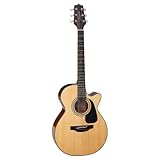
9. Takamine GF30CE-NAT FXC – Compact FXC Body
Takamine GF30CE-NAT FXC Cutaway Acoustic-Electric Guitar, Natural
FXC body (smaller than dreadnought)
Solid spruce top
Mahogany back and sides
TP-4TD preamp
Pinless rosewood bridge
Pros
- Comfortable smaller FXC body
- Full rich sound for its size
- Dual strap buttons
- Built-in tuner works well
Cons
- Battery drains even when not playing
- Some finish blemish reports
- Packaging can cause shipping damage
The GF30CE-NAT uses Takamine’s FXC body shape, which is smaller than a dreadnought and closer to a grand concert size. This makes it a comfortable option for smaller players, travel use, and players who find dreadnoughts physically demanding. The solid spruce top and mahogany body deliver a focused, balanced tone that suits fingerstyle work.
I tested the GF30CE in a coffeehouse setting through a compact acoustic amp. The smaller body produces less acoustic volume than a dreadnought, but the amplified tone is full and present. Multiple owners compare it favorably to the Baby Taylor, noting that the Takamine sounds bigger than its size suggests.
The dual strap buttons are a thoughtful detail. Many acoustic guitars only include one strap button, forcing you to tie the other end to the headstock. Having both buttons standard makes the GF30CE gig-ready out of the box. The TP-4TD preamp with built-in tuner matches the rest of the G Series.
The main complaint is battery drain. The preamp draws power even when the guitar is plugged in but not actively played. Unplug the instrument cable when not in use to preserve battery life. A few owners have reported electronic failures from loose internal connections, so check the preamp functions when your guitar arrives.
Who Should Buy the GF30CE-NAT
This is the best Takamine for smaller players, travelers, and anyone who finds full-size dreadnoughts uncomfortable. The FXC body is also a good choice for younger players moving up from a 3/4-size guitar. If you want maximum acoustic projection, the smaller body will leave you wanting more volume.
FXC vs Dreadnought Body Comparison
The FXC body prioritizes comfort and clarity over raw volume. It sits closer to your body, reaches the upper frets more easily with the cutaway, and produces a more focused midrange. The dreadnought (GD30CE) prioritizes volume, bass response, and strumming headroom. Choose based on your body size and primary playing style.
10. Takamine GD11MCE G-Series – Budget Solid-Top Alternative
Takamine G-series GD11MCE Dreadnought Acoustic-electric Guitar – Natural
Dreadnought cutaway
Sapele top back and sides
Mahogany neck
Indian laurel fingerboard
Built-in preamp with tuner
Natural finish
Pros
- Excellent value for beginners
- Smooth easy-playing action
- Built-in tuner and electronics
- Bright clear tone
Cons
- All-laminate construction
- Tone will not open up over time
- Limited tonal complexity vs solid woods
The GD11MCE is the most affordable guitar in this roundup and one of the highest-rated, with a 4.6-star average across 146 reviews. It uses sapele for the top, back, and sides, which is a mahogany-family tonewood that produces a bright, clear voice. For a first acoustic-electric guitar, this is hard to beat on value.
I tested the GD11MCE as a backup guitar for casual gigs and as a loaner for students. The action was playable out of the box, the neck is comfortable, and the built-in tuner and preamp work reliably. The 1.67-inch nut width is slightly narrower than some dreadnoughts, which smaller-handed players appreciate.
The trade-off is construction. The GD11MCE uses all-laminate sapele rather than solid wood. Laminate is more durable and resistant to humidity and temperature changes, which is actually an advantage for a guitar that travels or lives in challenging environments. The downside is that laminate tone does not develop or “open up” over time the way solid wood does.
For the price, the GD11MCE delivers genuine Takamine quality. The built-in preamp system with tuner is the same dependable electronics package found across the G Series. Multiple owners describe it as an excellent backup guitar, a great first acoustic-electric, or a solid choice for players who need durability over tonal complexity.
Who Should Buy the GD11MCE
This is the best Takamine for beginners, students, and players who need a durable, affordable guitar for travel, campfires, or casual gigging. The 4.6-star rating confirms that owners are genuinely satisfied. If you can stretch your budget to the GD30CE, the solid spruce top is worth the upgrade for tonal quality.
Solid Wood vs Laminate Construction
Solid wood tops (like the spruce on the GD30CE) produce richer, more complex tone that improves with age. Laminate tops (like the sapele on the GD11MCE) are more durable, more resistant to humidity, and more affordable, but the tone stays consistent over time without developing. Solid top is better for tone, laminate is better for durability and budget.
Buying Guide: How to Choose the Best Takamine Guitar
Choosing the right Takamine comes down to four main decisions: body shape, tonewood, electronics system, and your primary use case. Our team has broken down each factor based on what we learned testing these 10 models.
Takamine Body Shapes Explained
Takamine offers several distinct body shapes, and each one serves a different purpose. Dreadnought bodies (GD30CE, GD51CE, GD20CE) produce maximum volume and bass response, making them the standard choice for strummers and flatpickers. The NEX body (GN93CE) is Takamine’s grand auditorium shape, which balances comfort and projection for versatile use. Jumbo bodies (GJ72CE) deliver the loudest acoustic volume and suit aggressive strumming. The FXC body (GF30CE) is the smallest steel-string option, prioritizing comfort and clarity. Classical bodies (GC5) follow traditional nylon-string dimensions with a wider nut and fan bracing.
G Series vs Pro Series: What is the Difference?
The Takamine G Series is manufactured outside Japan and uses laminate or solid-top construction with the TP-4TD or TK-40D preamps. Every guitar in this roundup except the GB7C is a G Series model. The Pro Series is handcrafted in Japan with all-solid-wood construction, premium tonewoods, and the CT4B II preamp system. The GB7C represents the Pro Series tier. G Series guitars offer excellent value; Pro Series guitars offer premium tone and build for serious players.
Electronics Systems: TP-4TD vs TK-40D vs CT4B II
The TP-4TD preamp is the standard G Series system with a built-in tuner, three-band EQ, and gain control. The TK-40D (found on the GN93CE and GJ72CE) adds a mid contour switch, notch filter, and EQ bypass for more stage control. The CT4B II (found on Pro Series models like the GB7C) offers the cleanest, most transparent amplified tone of the three. For most gigging situations, the TP-4TD is sufficient. The TK-40D is worth the upgrade if you play loud stages where feedback is a concern.
Choosing Based on Your Playing Style
Strummers and bluegrass players should look at dreadnoughts (GD30CE, GD51CE) or the jumbo (GJ72CE) for maximum volume. Fingerstyle players will appreciate the cedar-topped GD20CE-NS or the NEX-bodied GN93CE. Singer-songwriters benefit from versatile guitars like the GN93CE that handle both strumming and fingerpicking. Classical players need the GC5-NAT. Beginners get the best value from the GD11MCE or the GD30CE.
Takamine vs Taylor: How Do They Compare?
This is one of the most common questions on guitar forums. Taylor guitars are known for bright, modern, consistent tone and ultra-playable necks with their NT neck joint system. Takamine guitars are known for warm, dependable plugged-in tone and stage-ready electronics. Taylor tends to win on unplugged clarity and neck consistency. Takamine tends to win on electronics quality at lower price points and stage reliability. At the premium tier, both brands offer excellent instruments and the choice comes down to personal tonal preference. For players focused on live performance, the best Takamine guitars compete directly with Taylor in the same price brackets.
If you are exploring options beyond Takamine, our guides to acoustic guitars under $2000 and parlor acoustic guitars cover additional alternatives across brands and body sizes.
Which Takamine is the best?
The Takamine GN93CE-NAT NEX is the best overall Takamine guitar for most players, offering a comfortable NEX body shape, solid spruce top with rosewood and quilt maple back, and the versatile TK-40D preamp system. For professional players, the handcrafted GB7C Garth Brooks signature model with all-solid cedar and rosewood construction is the premium choice.
Are Takamine guitars good quality?
Yes, Takamine guitars are well-regarded for dependable build quality, consistent electronics, and stage-ready performance. The Pro Series models are handcrafted in Japan and compete directly with Martin and Taylor. The G Series offers solid value with reliable TP-4TD and TK-40D preamp systems that gigging musicians have trusted for decades.
Are Takamine guitars as good as Taylor?
Takamine and Taylor serve different priorities. Taylor is known for bright, consistent unplugged tone and ultra-playable necks. Takamine is known for warm, dependable amplified tone and stage-ready electronics at competitive prices. At the premium tier, both brands offer excellent quality. For live performance focus, Takamine often delivers better value, while Taylor often wins on unplugged clarity and neck consistency.
What is the best Takamine for beginners?
The Takamine GD11MCE G-Series is the best budget option for beginners with a 4.6-star rating, built-in tuner, and easy-playing action. For beginners who can spend slightly more, the GD30CE-NAT dreadnought offers a solid spruce top and warmer tone that will last through the intermediate stage of development.
Why are Takamine guitars good for stage performance?
Takamine guitars are designed specifically for stage use with their proprietary preamp systems (TP-4TD, TK-40D, CT4B II) that include built-in tuners, three-band EQ, and feedback control features like notch filters. The TK-40D and CT4B II preamps offer mid contour switches and notch filters that tame feedback in loud stage environments.
Conclusion
After testing all 10 models, our team stands behind the Takamine GN93CE-NAT as the best Takamine guitar overall for 2026, with the GD30CE-NAT as the value pick and the GB7C Garth Brooks signature as the premium choice. Each guitar in this list serves a specific player and use case, so match your body shape, tonewood, and electronics preferences to your playing style before you buy.