

Most people living in open country more than about 25 miles from a broadcast tower need one thing above all else: a rooftop or mast-mounted outdoor directional antenna with real VHF and UHF elements. Flat amplified panels that dominate indoor antenna marketing fall apart at that distance, and no amplifier rescues them. Our picks below lead with the RCA ANT751E, a pre-assembled Yagi that has held a 4.4 star average across more than 12,000 owner reviews, plus the Antennas Direct ClearStream 4V for households that need dedicated high-VHF elements.
We spent weeks reading owner reviews on all eight antennas below, comparing how each behaves at real distances, in wooded terrain, and when feeding more than one television. What nobody tells you on a product page is that advertised mile range is not a standardized measurement. Two antennas can both claim 100 miles and land nowhere near each other in practice, so this guide matches every pick to a distance tier you can check yourself in five minutes.
Table of Contents
- Rural reception rules of thumb
- Top 3 Picks for Best TV Antennas for Rural Areas (October 2026)
- RCA ANT751E Outdoor Yagi
- PBD WA-2608 Motorized Rotator
- GE 29884 Outdoor Antenna
- All 8 Rural TV Antennas at a Glance in 2026
- 1. RCA ANT751E Outdoor Yagi Antenna for Rural Over-the-Air Reception
- RCA Compact Outdoor or Attic Yagi HD TV Antenna with Super Long 75 Mile Range – Digital OTA Antenna for Clear VHF & UHF Reception, NexGenTV ™ Compatible, Supports 4K/8K 1080p TVs
- Who should buy the RCA ANT751E
- When to choose something else
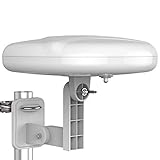
- 2. 1byone 360 Degree Omnidirectional Outdoor Antenna for Rural Homes That Hate Aiming
- 1byone Outdoor TV Antenna, 360°Omni-Directional Reception, 100+ Miles Range
- Who should buy the 1byone omnidirectional antenna
- When to choose something else
- 3. PBD WA-2608 Amplified Outdoor Antenna with Motorized 360 Degree Rotation
- PBD Amplified Outdoor TV Antenna for Local Channels, 360° Remote Rotation
- Who should buy the PBD WA-2608
- When to choose something else
- 4. GE 29884 Outdoor HD Digital Antenna as the Budget Pick for Rural Areas
- GE Outdoor HD Digital TV Antenna, Long Range Smart TV Antenna
- Who should buy the GE 29884
- When to choose something else
- 5. Antennas Direct ClearStream 2V for Multi-Directional Rural Reception
- Antennas Direct ClearStream 2V Indoor Outdoor TV Antenna UHF VHF Multi-Directional, 60+ Mile Range, 4K 8K UHD, NEXTGEN TV – w/Reflector, 20-inch Mast
- Who should buy the ClearStream 2V
- When to choose something else
- 6. Five Star FSA-5812 All-Metal Yagi Antenna for Long Rural Runs
- Five Star TV Antenna Indoor/Outdoor Yagi Satellite HD Antenna with up to 200 Mile Range – Attic or Roof Mount TV Antenna, Digital OTA Radio/FM Antenna for 4K 1080P with Mounting Pole
- Who should buy the Five Star FSA-5812
- When to choose something else
- 7. Antennas Direct ClearStream 4V for Rural VHF 7 and 9 Stations
- Antennas Direct ClearStream 4V Outdoor TV Antenna
- Who should buy the ClearStream 4V
- When to choose something else
- 8. Winegard HD-7694P Heavy-Duty Yagi for Long-Term Rural Installs
- Winegard HD7694P Heavy-Duty Outdoor Yagi TV Antenna
- Who should buy the Winegard HD-7694P
- When to choose something else
- Which Antenna Class Matches Your Distance From the Towers
- Check Your Signal Before You Buy Anything
- Wooded Lots and Hilly Terrain Change the Antenna You Need
- Do You Need an Amplifier, or Will One Hurt You
- Aiming, Mounting and Running Coax the Right Way
- Frequently Asked Questions
- What is the best TV antenna to buy for rural areas?
- What is the best TV antenna for a wooded area?
- Do free TV antennas really work?
- What is the best TV antenna amplifier?
- Should I set my TV antenna to short range or long range?
- Why does my rural antenna only get a few channels?
- What antenna picks up the most TV channels?
- Conclusion: Matching the Best TV Antennas for Rural Areas to Your Site
Rural reception rules of thumb
Go outdoor and high. Every foot of mast height you gain opens up more of the horizon and picks up stations an attic or window mount will never hold.
Aim accurately. Pull your tower list from AntennaWeb or the FCC Antenna Web tool, note the compass bearing to each transmitter, and point the antenna there before you scan.
Check VHF versus UHF. Rural markets often run their ABC, CBS or NBC affiliates on VHF channels 2 through 13. Thin flat antennas cannot hold those, which is why a missing channel 6 is the most common rural complaint we see.
If you want the short version before you keep reading: match the antenna class to your distance from the towers, favor a directional design over an omnidirectional one for open country, and treat any range number over 100 miles as marketing rather than a spec. Everything else in this guide follows from those three ideas.
Top 3 Picks for Best TV Antennas for Rural Areas (October 2026)

RCA ANT751E Outdoor Yagi
- VHF and UHF coverage
- Pre-assembled with fold-out reflector
- Mast and hardware included

PBD WA-2608 Motorized Rotator
- 360 degree remote rotation
- Built-in low-noise amplifier
- Two TV outputs plus 40 ft coax

GE 29884 Outdoor Antenna
- 70+ mile VHF and UHF reach
- Attic or rooftop mountable
- Limited lifetime pledge
Each of those three solves a different problem. The RCA is the one we would put on a roof without hesitating, the PBD is the only pick here you can aim from your couch, and the GE is the cheapest path to a working rooftop antenna. Our full reasoning for all eight follows.
All 8 Rural TV Antennas at a Glance in 2026
| Product | Specifications | Action |
|---|---|---|
| RCA ANT751E Outdoor Yagi |
|
Check Latest Price |
 1byone 360 Outdoor Omnidirectional 1byone 360 Outdoor Omnidirectional |
|
Check Latest Price |
| PBD WA-2608 Motorized Outdoor |
|
Check Latest Price |
| GE 29884 Outdoor HD Digital |
|
Check Latest Price |
 Antennas Direct ClearStream 2V Antennas Direct ClearStream 2V |
|
Check Latest Price |
 Five Star FSA-5812 Yagi Five Star FSA-5812 Yagi |
|
Check Latest Price |
 Antennas Direct ClearStream 4V Antennas Direct ClearStream 4V |
|
Check Latest Price |
 Winegard HD-7694P Heavy-Duty Yagi Winegard HD-7694P Heavy-Duty Yagi |
|
Check Latest Price |
1. RCA ANT751E Outdoor Yagi Antenna for Rural Over-the-Air Reception
RCA Compact Outdoor or Attic Yagi HD TV Antenna with Super Long 75 Mile Range – Digital OTA Antenna for Clear VHF & UHF Reception, NexGenTV ™ Compatible, Supports 4K/8K 1080p TVs
VHF and UHF
Pre-assembled fold-out UHF reflector
Mast, clamp and transformer included
Coax sold separately
Pros
- Pre-assembled
- no element alignment needed
- Works for VHF and UHF so low channel 2-13 stations come in
- Light 2 lb build is easy to carry up a ladder
- Matching transformer
- mast clamp and hardware in the box
Cons
- Coaxial cable is not included
- Directional design needs careful aiming at your towers
- One year limited warranty
This is the antenna we keep coming back to for farms and acreage homes because it removes the single step that trips up most first-time outdoor installers. The UHF reflector folds out and locks with snap-lock elements, so there is no rotating crimped tube into a frame hole while you are standing on a ladder. It is 2 pounds, it handles both VHF and UHF, and it carries a 4.4 star average from more than 12,000 reviews.
Owner reviews describe the same pattern repeatedly. Point it at the towers and it delivers the full local lineup, including the low VHF station that flat antennas drop. Turn it a few degrees the wrong way and a handful of channels disappear. That sensitivity is normal for a Yagi and is exactly why the free RCA Signal Finder app is useful.
On the technical side, it is a 75 ohm antenna with a maximum listed range of 369600 feet, which works out to roughly 70 miles in the listing copy. Treat that as an optimistic ceiling rather than a promise. The unit supports 4K, 8K and 1080p broadcasts on both bands, and the matching transformer plus mast and locking mast clamp come in the box.
The one omission that generates the most returns is the coax. Buying a 4.4-star antenna and then discovering you need another purchase before you can even test it is frustrating, so factor RG6 cable and the appropriate connectors into your plan. Mounting hardware is included, which is more than some rivals manage.
Who should buy the RCA ANT751E
If you are between roughly 25 and 60 miles from your transmitters, on a farm, ranch or acreage property with an open southern or western exposure, this is the antenna we would buy first. The combination of VHF and UHF coverage and zero assembly fiddling makes it the safest single choice for a household replacing cable or satellite.
It also suits anyone who wants one antenna rather than a stack. You get both bands from a single element array, and the included mast clamp means you can put it on a roof gable, a chimney or a separate pole and re-aim it later as seasons change foliage.
When to choose something else
Buy a different antenna if your towers are 70 miles or more out, because a single Yagi of this class starts running out of margin against the free-space path loss. Move up to the ClearStream 4V or a comparable high-gain directional instead.
Skip it as well if you refuse to aim anything. An omnidirectional design removes the aiming step entirely, and that convenience is worth more to some people than the extra gain. Just accept less front-to-back rejection from interfering signals behind the antenna.
2. 1byone 360 Degree Omnidirectional Outdoor Antenna for Rural Homes That Hate Aiming
1byone Outdoor TV Antenna, 360°Omni-Directional Reception, 100+ Miles Range
360 degree omnidirectional reception
Built-in pre-amplifier and LTE filter
RG6U coax and hardware included
One TV output
Pros
- No rotation or rotor needed
- Built-in amplifier with Smart Pass technology
- LTE filter blocks cellular interference on the coax run
- Tool-free install with coax in the box
- Moisture-proof housing suits RV
- attic and marine use
Cons
- Lowest rated pick in the group at 3.8 stars
- Splits reduce channel count for a second TV
- Single TV output out of the box
The appeal here is obvious. This antenna receives from every direction at once, so you can mount it once and never think about bearings again. For a household on a wooded lot where towers sit in two different compass directions, that solves a problem no single directional antenna can.
The catch shows up in the reviews. Across more than 10,000 ratings this is the lowest-scoring antenna we examined, sitting at 3.8 stars with a notable share of one-star reviews. Owners like the convenience but report results falling short of the advertised 100-plus-mile reach in real countryside conditions, and some needed to add a separate amplifier for the most distant stations.
Technically it is a compact 11.81 by 11.81 inch housing with 75 ohm impedance and a built-in pre-amplifier using Smart Pass technology, plus an integrated 4G LTE filter that keeps cellular traffic off your coax run. A two-year warranty is included, and it is rated as moisture-proof and flame retardant.
RG6U coax and mounting hardware are in the package, so unlike several directional picks here you can connect it the same afternoon it arrives. The real constraint is the single TV output. Any splitter you add divides the signal, and on a marginal rural signal that division is the difference between a full channel lineup and a frustrating half of it.
Who should buy the 1byone omnidirectional antenna
Choose it when your towers are spread across more than one compass direction and you would rather not climb a ladder to adjust anything. It is also a reasonable second antenna for a property where a directional unit locks one cluster of stations but leaves another cluster unreachable.
RVers, boaters and people with a metal roof where drilling is unwelcome also like the weather-resistant, tool-free design. It supports 4K-ready over-the-air reception through a standard tuner.
When to choose something else
Do not pick this as your deep fringe option. Past roughly 45 to 50 miles, the constant small size of a 360-degree element set costs you real gain compared with a directional array that concentrates energy toward one target.
Skip it too if two televisions are a requirement. Plan on a proper outdoor preamplifier and a quality splitter, or buy a dual-output antenna from the start rather than splitting an already weak signal.
3. PBD WA-2608 Amplified Outdoor Antenna with Motorized 360 Degree Rotation
PBD Amplified Outdoor TV Antenna for Local Channels, 360° Remote Rotation
Motorized 360 degree rotation
High-gain low-noise amplifier
Dual TV outputs
NEXTGEN TV ready
Pros
- Aim from indoors with the wireless remote
- Biggest review base of the roundup at nearly 19000 ratings
- Complete kit with pole
- 40 ft RG6 and hardware
- Feeds two TVs without a splitter
Cons
- Lightweight mostly plastic build
- Remote has a single button so aiming is slow
- Rotor can stick or drift out of position
No other antenna on this list lets you change which direction it faces without climbing anything. The WA-2608 spins 360 degrees on a wireless remote, which turns a frustrating afternoon of trial and error into a five-minute job from the couch with the TV’s signal meter on screen.
At roughly 19,000 reviews this is the most widely used pick here, and the pattern in owner feedback is consistent. People moving to a rural address report going from a handful of channels to 40 or more, frequently after trying a weaker antenna first. That reception improvement in bad mounting positions is the reason it earns its place.
On paper it is an amplified outdoor array with a high-gain, low-noise amplifier, dual TV outputs so you can drive two sets without buying a splitter, and NEXTGEN TV readiness for ATSC 3.0 markets. The box includes 40 feet of RG6 coax, a mounting pole, all hardware and a printed guide, which makes it the best-equipped kit on this list.
The complaints are mechanical rather than electrical. The housing is mostly plastic and light, the rotor sometimes sticks or drifts to a position on its own, and the one-button remote makes fine aiming slow. Also note the pre-amplifier only powers when the rotor control box is connected, so keep that box in the chain.
Who should buy the PBD WA-2608
This suits first-time installers, anyone on a tall pole mount, and households feeding two televisions. Finding the sweet spot by angle and height is half the work in rural reception, and a remote-controlled rotor removes the ladder from that process entirely.
It is also a good choice if you want an amplified design but not a flat panel. The element array is doing the heavy lifting, with the amplifier there to recover cable loss after the split, which is the correct order for two outputs.
When to choose something else
Choose a non-amplified antenna instead if your site is close to the towers. Near a transmitter, an amplifier can push the signal past what the tuner handles and manufacture noise rather than channels.
Pass on it if you live somewhere with heavy ice loading or sustained high wind, since the light build is not what you want on a tall exposed mast. A zinc-plated steel Yagi is a better long-term bet there.
4. GE 29884 Outdoor HD Digital Antenna as the Budget Pick for Rural Areas
GE Outdoor HD Digital TV Antenna, Long Range Smart TV Antenna
70+ mile VHF and UHF
Non-amplified clean signal path
Attic, roof or mast mounting
J-mount hardware included
Pros
- Passive design avoids amplifier noise and overload
- Works at 40 to 60 miles per owner reports
- Limited lifetime replacement pledge
- Attic-friendly and also weather rated for roof mounting
Cons
- Tedious assembly aligning element tubes
- Tiny instructions with unlabeled parts
- Very directional
- coax sold separately
This is the antenna we would point a budget-conscious buyer toward, and the one we would test before spending more. It is non-amplified, which means the signal goes straight from element to tuner with no active electronics to add noise, and owners regularly report pulling all the major networks from 40 to 60 miles out.
It also holds a 4.4 star average across more than 10,700 reviews and sits near the top of the category in sales rank, which tells you how many people have installed one. A limited lifetime replacement pledge and free US-based technical support add real value for a first-time antenna buyer.
The frame measures 29 by 15 by 20.5 inches and weighs 3 pounds, with 75 ohm impedance and a listed 70-mile reach across VHF and UHF. It is designed with hidden attic installation in mind but is weather resistant enough for roof or mast mounting, and the J-mount hardware is included. Coax is sold separately.
The honest drawback is assembly. Owners describe crimped element tubes that must be rotated to line up with holes in the frame, plus small printed instructions with parts that are not individually labeled. Budget twenty minutes and a clear work area. The other complaint is sensitivity: a 5-degree turn can drop channels.
Who should buy the GE 29884
Buy it if you want to spend the least and still end up with a rooftop antenna rather than a flat indoor panel. It also suits strong-signal rural markets where an amplifier would overload, and anyone willing to start in the attic and see how many channels it finds before moving it outside.
Because it has no built-in amplification, cable runs should stay reasonable and you should use quality RG6. If you are running a long cable or splitting to several sets, budget for a separate amplifier.
When to choose something else
Step up to a larger array past 60 or 70 miles, where extra gain becomes the deciding factor rather than cost. The Winegard HD-7694P and the ClearStream 4V both carry more margin for deep fringe.
Skip it if assembly time is your main concern. The motorized PBD and the pre-assembled RCA avoid the fiddly element alignment entirely, and that difference matters when you are doing the install alone on a roof.
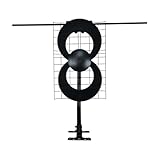
5. Antennas Direct ClearStream 2V for Multi-Directional Rural Reception
Antennas Direct ClearStream 2V Indoor Outdoor TV Antenna UHF VHF Multi-Directional, 60+ Mile Range, 4K 8K UHD, NEXTGEN TV – w/Reflector, 20-inch Mast
Double-loop multi-directional array
Included reflector for front gain
20 inch pivoting-base mast
60+ mile reach
Pros
- Reflector rejects interference from behind the element
- Multi-directional coverage suits scattered towers
- Long-term owners report 8+ years of service
- Lifetime manufacturer antenna warranty
Cons
- Weak on VHF channels 7 and 9 in some markets
- Confusing assembly diagrams
- 20 inch mast base is unstable indoors unless bolted down
The ClearStream 2V is the middle step between an omnidirectional antenna and a full directional Yagi. It is multi-directional, so it covers a broad arc without rotating, but the included reflector behind the elements adds forward gain and rejects whatever is coming from the opposite direction.
Owners with antennas in the field for eight years or more describe it as dependable hardware rather than a gadget. It is also one of the few designs here that works as an indoor antenna when you are not far from towers, which makes it a flexible choice for farmhouses where the best mounting point changes with the season.
Physically it is 18 by 31.4 by 6.5 inches and 2 pounds, with a 20 inch mast and a pivoting base that mounts to vertical or horizontal surfaces. It handles NEXTGEN TV, 4K, 8K UHD and 1080p with no internet connection required, and the box includes the antenna, reflector, mast, adjustable mast clamp and all-weather hardware.
The recurring weakness is high VHF. The single Hi-VHF dipole is not strong on channels 7 and 9 in some markets, and forum users regularly mention channel 6 as the one station it often misses. If your local affiliates sit on low VHF channels, pay attention to that before buying. Assembly diagrams also draw complaints, so budget time for the instructions.
Who should buy the ClearStream 2V
It fits rural setups where towers cluster in one general direction but are spread across more than a single bearing, and where a rotor feels like overkill. The reflector is the differentiator in areas with interfering towers to the north or south.
It is also a strong first antenna for someone who wants to try outdoor reception without committing to a permanent mast plan, since the pivoting base works on a wall, in an attic gable or outdoors.
When to choose something else
Move up to the ClearStream 4V if your missing stations are consistently on VHF 7 and 9, since that model adds dedicated Hi-VHF elements and four loops. Choose a pure directional Yagi past about 50 miles for the extra concentration.
Avoid it if you plan to use it indoors on a shelf. The 20 inch mast base wants to be bolted down, and several owners found it unstable without that step.
6. Five Star FSA-5812 All-Metal Yagi Antenna for Long Rural Runs
Five Star TV Antenna Indoor/Outdoor Yagi Satellite HD Antenna with up to 200 Mile Range – Attic or Roof Mount TV Antenna, Digital OTA Radio/FM Antenna for 4K 1080P with Mounting Pole
Extended-length Yagi elements
All-metal construction
40 ft coax and 20 inch pole included
Also works for FM radio
Pros
- Metal build outlasts plastic amplified panels outdoors
- Extended elements give sharp side nulls and strong forward gain
- Coax and mounting pole included
- Also usable as a radio and FM antenna
Cons
- Advertised 200 mile range is unrealistic
- Hardware is plain steel that will rust
- Sparse instructions that lean on video tutorials
This is the antenna that rewards skipping the inflated range number and reading the other specs. The FSA-5812 is listed at 200 miles, which owner reviews treat as fiction. What they actually report is a realistic reach somewhere around 60 to 70 miles, and several people who switched over from more expensive antennas saw channel counts jump sharply.
The build is the real story. It is all metal rather than the light plastic housing on most amplified panels, and the extended-length elements produce sharp side nulls with strong forward gain. That means it rejects signals from the sides better than a typical array, which matters on a property with a neighbor’s tower to the west.
The package is unusually generous: the Yagi, 40 feet of coax cable and a 20 inch mounting pole. It mounts on a roof, in an attic, on a chimney, an eave or a mast, and works with or without clean line of sight. Some elements arrive pre-assembled, though partial assembly is still required. It receives VHF and UHF and doubles as an FM and radio antenna.
Owners criticize the plain steel mounting hardware for rusting, the single u-bolt mount for not holding the antenna level while you aim it, and the sparse written instructions. The listing also uses the word satellite in the title, which is simply wrong for a Yagi over-the-air antenna and worth ignoring.
Who should buy the Five Star FSA-5812
Choose it if you want a metal antenna that will sit on a roof through several seasons of ice and wind without the housing cracking. It is a good fit at 40 to 65 miles where you want strong forward gain and side rejection without buying the most expensive option in this roundup.
The included coax and pole also make it attractive for people doing a first outdoor install without a parts run beforehand, which is one of the most common reasons a first purchase gets abandoned.
When to choose something else
Pick something with better hardware if the antenna will live on a permanent exposed mast. Steel u-bolts and wing nuts need replacing with stainless fasteners before they seize, and some installers prefer to do that up front.
Look elsewhere if you want the strongest low VHF performance at long range, since a full high-VHF and UHF Yagi design such as the Winegard HD-7694P has dedicated elements for both bands rather than one combined array.
7. Antennas Direct ClearStream 4V for Rural VHF 7 and 9 Stations
Antennas Direct ClearStream 4V Outdoor TV Antenna
Four loops with Hi-VHF elements
43 degree multi-directional pattern
20 inch pivoting-base mast
Lifetime warranty
Pros
- Dedicated Hi-VHF elements for the VHF 7 and 9 stations others miss
- Four-loop design with reflectors adds gain
- Premium durable construction
- Sturdy 20 inch mast with pivoting base
Cons
- Narrower 43 degree beam demands precise aiming
- Costs more than the two-loop model
- Coax sold separately
Channel 7 and 9 are the holes in most antennas on this list, and the ClearStream 4V is the fix. It uses four patented loops with dedicated Hi-VHF elements plus reflectors, and it is the pick we would send to a household that keeps losing the same low VHF affiliate no matter which other antenna they try.
Rural markets lean on low VHF more than suburban ones, which is why this matters disproportionately here. The same model also carries a 4.4 star average with a 71 percent five-star share, and a lifetime manufacturer warranty behind it.
It measures 17.4 by 27.8 by 6 inches and weighs 4.1 pounds, with a 43 degree horizontal reception pattern served by dedicated UHF and Hi-VHF elements. That narrower pattern is the trade you accept for the gain. The included 20 inch mast, pivoting base, reflectors, Hi-VHF kit, adjustable mast clamp and all-weather hardware make up a complete outdoor install.
There is a real counterpoint in owner feedback. A handful of buyers found the 4V performed worse than the smaller 2V in their specific terrain, which is a reminder that more gain cannot beat a badly chosen beam orientation. Coax is not included.
Who should buy the ClearStream 4V
Buy it when your channel list from AntennaWeb includes VHF stations in the 7 to 13 range and you have already been disappointed by cheaper antennas. It also suits fringe and rural users who want more gain than a two-loop model while keeping a multi-directional pattern that avoids aiming guesswork.
If you are comfortable on a roof with a compass, the 43 degree beam is manageable. Plan the bearing from your tower list before you climb, and you will usually get it right the first time.
When to choose something else
Choose a rotor-mounted directional instead if your towers sit more than 60 degrees apart or behind a hill, because a 43 degree beam cannot cover both. The motorized PBD handles that case without you re-aiming by hand.
Skip it if you are near the towers. Close-in, the extra gain and narrow pattern solve problems you do not have, and a simpler indoor or omnidirectional antenna is the more sensible purchase.
8. Winegard HD-7694P Heavy-Duty Yagi for Long-Term Rural Installs
Winegard HD7694P Heavy-Duty Outdoor Yagi TV Antenna
Zinc-plated steel construction
Non-amplified directional Yagi
High-VHF and UHF elements
Mounting hardware included
Pros
- Zinc-plated steel resists corrosion and harsh weather
- Non-amplified path keeps strong-signal areas clean
- Weighs only 6.7 lb for a metal Yagi
- Long production history and RV Halo aiming app
Cons
- Listed 45 mile reach is lowest in this roundup
- Less forgiving on very long cable runs
- Grounding equipment and mast are separate purchases
The Winegard is the choice when you want hardware that outlives several antenna purchases. It is a zinc-plated steel Yagi, which is a different durability proposition entirely from the plastic amplified housings that crack after a few winters on an exposed roof.
It is also the least-reviewed pick here at roughly 1,200 ratings, and that is a function of build rather than weakness. Fewer people buy premium metal antennas, so the installed base is smaller. Among owners who have one, the 4.4 star average and 71 percent five-star share describe a well-regarded, long-running model.
The design is directional and non-amplified, receiving High-VHF and UHF signals with a listed reach of up to 45 miles or more, and it is NextGen TV and 4K Ultra HD compatible. At 6.7 pounds it is unusually light for a metal Yagi, which matters when you are carrying it up a ladder. The RV Halo app and its TV Channel Finder utility help with placement and aiming.
Be realistic about the range figure. Forty-five miles is the lowest listed reach of the eight antennas here, and a non-amplified design gives you less margin on long coax runs, so plan on quality RG6 and a shorter drop from the mast. Mounting hardware is included; a mast and grounding equipment are additional purchases.
Who should buy the Winegard HD-7694P
This suits farms and acreage properties in windy, exposed country where a plastic housing would eventually fail, and it pairs well with the requirement to ground a tall mast properly. The corrosion resistance is the headline feature for anyone planning a permanent rooftop install.
It is also the natural choice in a strong-signal area. Because the signal path is passive, there is no amplifier to overload, so it behaves predictably even close to transmitters.
When to choose something else
Choose a higher-gain array if you are 50 to 70 miles from the towers or have a long cable run from a tall mast. Passive designs simply have less margin for the losses you are stacking up.
Look elsewhere if you want the largest review base, because a smaller pool of owners means fewer accounts of how it behaves in unusual terrain. The mass-market picks here have tens of thousands of installations behind them.
Which Antenna Class Matches Your Distance From the Towers
Distance is the single biggest factor in whether an antenna works, and it is the one variable you can check before spending anything. Advertised mile ranges are not standardized across brands, so treat them as loose categories rather than measurements.
Here is how we tier them for countryside homes. Inside about 25 miles, a compact indoor or indoor-outdoor antenna frequently works. Between 25 and 50 miles, you want a genuine outdoor directional or multi-directional unit. From 50 to 70 miles, choose a high-gain array with dedicated VHF and UHF elements and expect careful aiming. Past 70 miles, you need the largest directional design you can mount and a tall mast.
Terrain eats into every one of those tiers. A 40 mile distance across a valley with a ridge between you and the transmitter behaves like a much longer path, which is why height is the cheapest gain available to a rural installer.
Check Your Signal Before You Buy Anything
Two free tools do most of the work. AntennaWeb and the FCC Antenna Web tool both show your address overlaid with nearby towers, distances, compass bearings and the channel numbers each one broadcasts. RabbitEars.info adds predicted signal strength by channel and direction.
The most important step is reading the channel numbers. Anything between 2 and 13 is VHF, and rural markets frequently put ABC, CBS or NBC there. Anything from 14 upward is UHF, which is easier to receive and which almost every antenna handles well. If your list is full of low VHF channels, rule out thin flat panels immediately.
The color coding on those maps also reflects station group type rather than performance, so use it to plan aiming direction rather than to judge an antenna. Once you know your bearings, write them down. They will make the actual install faster than trial and error from the lawn.
Wooded Lots and Hilly Terrain Change the Antenna You Need
Leaves and terrain cost real signal. Foliage in full growth attenuates the higher UHF frequencies more than VHF, which is why a wooded rural property can lose its entire UHF lineup in summer while keeping a low VHF station. If your reception changes dramatically between seasons, height is the answer.
Practical steps that work on wooded lots: get the antenna above the canopy rather than beside it, use the largest mast you can safely mount, and favor designs with longer elements for the forward gain. Clearing a direct line of sight between the array and the tower direction helps more than any amplifier.
Hills create a different problem, a dead zone where the tower sits behind a ridge. A rotor or motorised rotation becomes valuable here, because the useful bearing changes by where you stand. Keep in mind that big buildings, metal roofing, brick and stucco also block signals, which is why an attic mount sometimes works better than a first-floor window even in hilly country.
Do You Need an Amplifier, or Will One Hurt You
An amplifier is a signal conditioner, not a signal creator. It cannot pull in a station your antenna never received. What it does well is recover loss along a long coax run and compensate for splitting to multiple televisions.
Placement is everything. A preamplifier mounted at the antenna boosts the signal before cable loss, which is correct for long runs and multiple splits. An inline amplifier near the television is right when you already have plenty of signal at the antenna but lose it down the wire.
The common mistake is amplifying a signal that is already too strong, which pushes it past what the tuner handles and produces noise, freezing or a blank screen. Non-amplified designs such as the Winegard HD-7694P and the GE 29884 exist precisely for that situation. If your tower list shows a very strong nearby station, start unamplified and only add gain if a rescan proves you need it.
Aiming, Mounting and Running Coax the Right Way
Aim with a plan. Take the compass bearing from AntennaWeb, stand behind the antenna and rotate until the direction lines up with your phone or compass. Then set the TV to long range if your model offers that setting, run a channel scan, and make small adjustments rather than large sweeps.
Mount as high as practical. Each additional foot of mast clears obstructions such as trees, terrain and other roofs. Compare attic versus rooftop honestly: an attic mount avoids roof work and leaks but costs you signal and puts foil-backed insulation between the antenna and the tower, while a roof mount gives you the height you need at the price of leaks and harder servicing.
Watch your cable. RG6 is the standard for outdoor runs and loses less than lighter coax as length increases. Keep the total run as short as you can, secure it properly to the mast, and ground the mast according to local code if it is tall. A damaged or loose connector at the end of a long run can cost more signal than a mediocre antenna gains.
For a second television, use a distribution amplifier ahead of the splitter rather than a splitter alone, and power the preamplifier from the antenna end. If you need two sets and the signal is marginal, a dual-output antenna avoids the split entirely. Our guide to TV hearing amplifiers covers a related question rural viewers ask often, and our floating TV console picks cover the other half of the setup once your picture is solid.
Finally, rescan after every seasonal change and after any storm. Leaf growth, new construction and a bumped coax connector all change the channel list, and a rescan takes five minutes.
Frequently Asked Questions
What is the best TV antenna to buy for rural areas?
An outdoor directional or multi-directional antenna with genuine VHF and UHF elements, mounted as high as possible and aimed at your towers. Beyond roughly 25 miles from transmitters, flat indoor panels cannot hold a stable signal. Our top pick is the RCA ANT751E, a pre-assembled Yagi that receives both bands and holds a 4.4 star average.
What is the best TV antenna for a wooded area?
Height is what matters most on a wooded lot. Mount the antenna above the tree canopy rather than beside it, use the tallest safe mast, and favour designs with longer elements for forward gain. Foliage attenuates UHF more than VHF, so summer reception is often worse. Favour dedicated VHF elements if your local affiliates broadcast on channels 2 through 13.
Do free TV antennas really work?
Yes, and in rural areas they are usually the only way to receive the major networks. Free over-the-air signals are broadcast free; the antenna and cable are the only costs. Results depend on distance, height and line of sight rather than price. An expensive antenna cannot fix a blocked site, but a well-chosen outdoor antenna reliably delivers every station available in your area.
What is the best TV antenna amplifier?
For rural use, a masthead preamplifier mounted at the antenna is the right choice, because it boosts the signal before long coax runs and splitter losses eat into it. Inline amplifiers near the television suit cases where the antenna already produces a strong signal. Avoid amplifying an already overloaded signal, since that creates noise rather than channels.
Should I set my TV antenna to short range or long range?
Set it to long range when your towers are far away or scattered, and to short range when a strong nearby transmitter would overload the tuner. If channels drop in and out as you change the setting, that is a sign the signal sits in the middle. Long range is the better starting choice for most countryside homes.
Why does my rural antenna only get a few channels?
The most common causes are height, aiming and VHF support. A window or low attic mount blocks line of sight, a directional antenna pointed at the wrong bearing rejects your towers, and thin flat panels cannot hold channels 2 through 13. Check AntennaWeb for your bearings and channel numbers, then move the antenna higher and rescan.
What antenna picks up the most TV channels?
Channel count depends on distance, terrain and mounting height far more than on brand or price. The antenna that picks up the most channels for a rural home is the one mounted highest and aimed precisely at your tower bearings, with real elements for both VHF and UHF. An omnidirectional design catches more directions but concentrates less gain on each one.
Conclusion: Matching the Best TV Antennas for Rural Areas to Your Site
The best TV antennas for rural areas are outdoor directional designs with real VHF and UHF elements, mounted high and aimed at bearings you pull from AntennaWeb before you climb anything. Our top pick, the RCA ANT751E, covers both bands with no assembly fiddling and the largest proven track record here.
Match the class to the distance. Inside 25 miles a compact antenna may do. Between 25 and 50 miles go outdoor directional. Between 50 and 70 miles choose a high-gain array with dedicated VHF elements. Past 70 miles use the largest directional antenna you can safely mount. For two televisions pick a dual-output model or add a distribution amplifier ahead of the splitter, and if you want zero aiming effort, the 1byone omnidirectional covers every direction without a rotor.
Before you buy a television to pair with it, our TV lift cabinet reviews cover where to put it once your picture is stable. Last updated for 2026.