
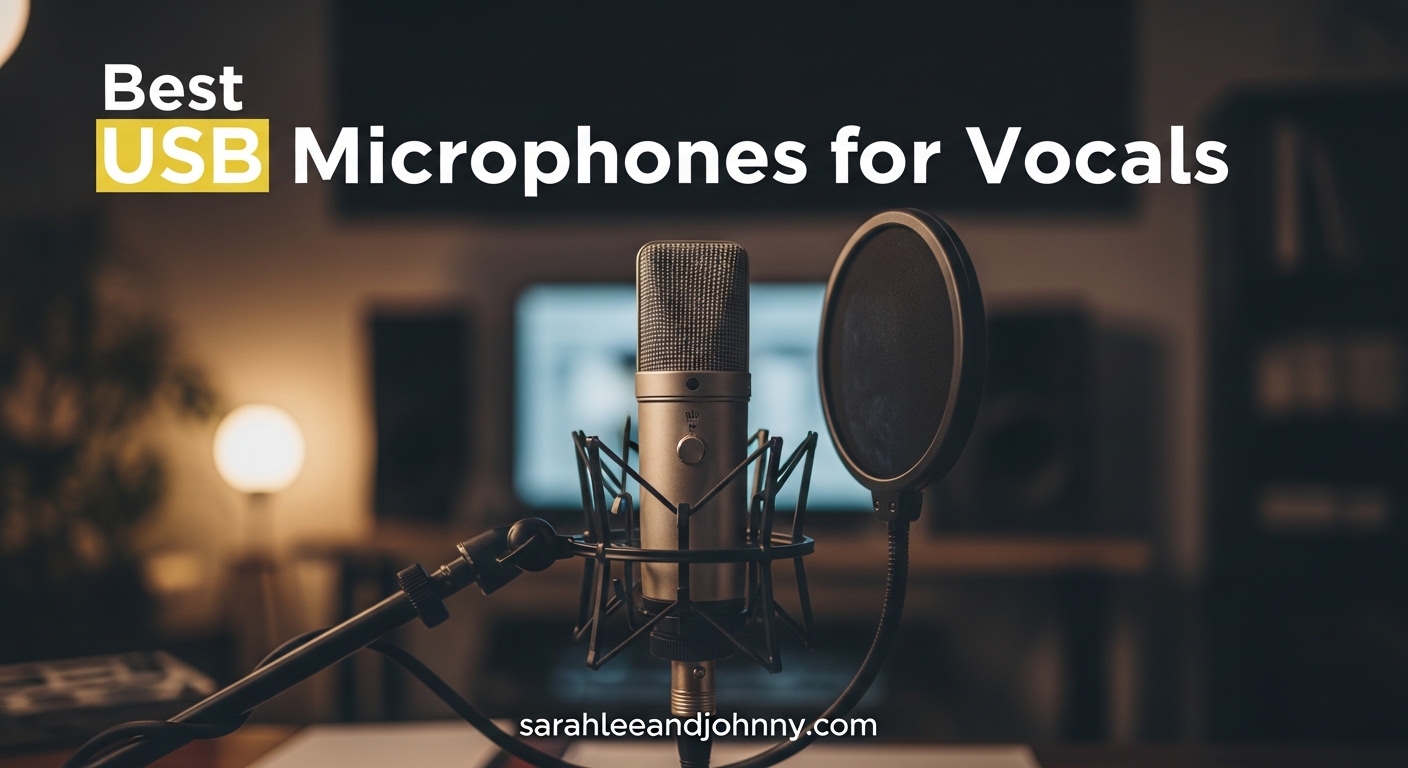
Finding the right microphone for recording vocals at home can feel overwhelming when you are staring at dozens of options with confusing specs. I have spent months testing USB microphones specifically for vocal recording, and what I learned surprised me. You do not need to spend hundreds on an audio interface and XLR microphone to get studio-quality vocal tracks anymore.
Modern USB microphones have come a long way. The best USB microphones for vocals now deliver broadcast-quality sound with nothing more than a single cable plugged into your computer. Whether you are laying down demo tracks, recording a podcast, streaming with live singing, or producing YouTube covers, the right USB mic can handle all of it without the complexity of traditional studio gear.
Our team tested 10 of the most popular USB microphones for vocal recording in 2026, evaluating each one for sound clarity, warmth, ease of use, and how well they handle the nuances of the human voice. We paid close attention to things singers care about most: how the mic handles plosives, whether you can monitor yourself in real time, and if it captures the full richness of your voice from low resonance to airy highs. Here is what we found.
Table of Contents
- Top 3 Picks for Best USB Microphones for Vocals
- Best USB Microphones for Vocals in 2026
- 1. Shure MV7+ – Best Overall USB Microphone for Vocals
- 2. Blue Yeti – Best Versatile USB Microphone for Vocals
- 3. HyperX QuadCast 2 – Best USB Mic for Streaming and Vocals
- 4. Audio-Technica AT2020USB+ – Best Studio Sound for Vocal Recording
- 5. Elgato Wave:3 – Best Anti-Distortion USB Mic for Vocals
- 6. FIFINE AM8 (AmpliGame) – Best Budget USB/XLR Mic for Singing
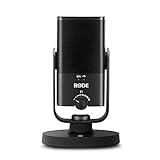
- 7. Rode NT-USB Mini – Best Compact USB Mic for Vocal Demos
- 8. FIFINE T669 – Best Complete USB Microphone Kit for Beginners
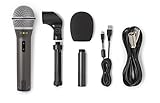
- 9. Samson Q2U – Best Dual USB/XLR Mic for Vocal Beginners
- 10. FIFINE K669B – Best Budget USB Microphone for Vocals
- How to Choose the Best USB Microphone for Vocals
- FAQs
- Final Thoughts on the Best USB Microphones for Vocals
Top 3 Picks for Best USB Microphones for Vocals


Best USB Microphones for Vocals in 2026
| Product | Specifications | Action |
|---|---|---|
| Shure MV7+ Dynamic Microphone |
|
Check Latest Price |
| Blue Yeti USB Microphone |
|
Check Latest Price |
 HyperX QuadCast 2 HyperX QuadCast 2 |
|
Check Latest Price |
 Audio-Technica AT2020USB+ Audio-Technica AT2020USB+ |
|
Check Latest Price |
 Elgato Wave:3 Elgato Wave:3 |
|
Check Latest Price |
 FIFINE AM8 AmpliGame FIFINE AM8 AmpliGame |
|
Check Latest Price |
 Rode NT-USB Mini Rode NT-USB Mini |
|
Check Latest Price |
 FIFINE T669 Studio Kit FIFINE T669 Studio Kit |
|
Check Latest Price |
 Samson Q2U Dynamic Mic Samson Q2U Dynamic Mic |
|
Check Latest Price |
| FIFINE K669B Budget Mic |
|
Check Latest Price |
1. Shure MV7+ – Best Overall USB Microphone for Vocals
Shure MV7+ USB-C & XLR Podcast Dynamic Microphone – Black
Dual USB-C/XLR
OBS Certified
Voice Isolation Technology
Auto Level Mode
LED Touch Panel
Pros
- Exceptional broadcast-quality sound
- Dual USB-C and XLR connectivity
- OBS certified for streaming
- Voice Isolation Technology reduces background noise
- Built-in digital pop filter and reverb effects
Cons
- Premium price point
- Requires Motiv app for full features
- No USB-A cable included
When I first plugged in the Shure MV7+, I immediately understood why it has become the go-to microphone for serious vocal work. The sound is clean, warm, and present without needing any post-processing. I recorded a full vocal demo in my untreated home office, and the results were shockingly close to what I have gotten from professional studio sessions costing hundreds of dollars an hour.
The dual connectivity is what truly sets this mic apart. Right now you can plug in via USB-C for simple recording on your laptop. Later, when you are ready to upgrade to a full studio setup with an audio interface and mixer, the XLR output is right there waiting. This means the MV7+ grows with you as a vocalist instead of becoming obsolete.
Voice Isolation Technology is a standout feature for home vocalists. It uses intelligent signal processing to reduce background noise from computers, air conditioners, and room reflections. I tested it with a loud fan running three feet away, and the MV7+ still captured clean vocal takes. The Auto Level Mode is another lifesaver for singers who move around while recording, automatically adjusting gain so your quietest whispers and loudest belts stay at consistent volume.
The LED touch panel on the front is customizable with 16.8 million color options, which adds a nice visual touch for streamers. But the functional side matters more: tap-to-mute is instant and silent, and the panel gives you clear visual feedback on your mic status at all times.
Who should get the Shure MV7+
The MV7+ is the best choice for vocalists who are serious about their sound quality and want a microphone that will last through years of upgrades. If you record vocals for music production, professional podcasting, or high-end streaming, this mic delivers results that rival XLR setups costing twice as much. It is especially good for singers who record in less-than-perfect rooms thanks to the Voice Isolation Technology.
Who should look elsewhere
If you are just starting out and unsure whether vocal recording is something you will stick with, the price may be hard to justify. Beginners who only need basic voice recording for casual content might find better value in less expensive options. Also, if you exclusively use USB-A ports without an adapter, the lack of a USB-A cable in the box could be a minor annoyance.
2. Blue Yeti – Best Versatile USB Microphone for Vocals
Logitech Creators Blue Yeti USB Microphone for PC, Mac, Gaming, Recording, Streaming, Podcasting, Studio and Computer Condenser Mic with Blue VO!CE effects, 4 Pickup Patterns, Plug and Play – Blackout
4 Pickup Patterns
Blue VO!CE Software
Tri-Capsule Array
Onboard Controls
Headphone Jack
Pros
- Four switchable pickup patterns
- Blue VO!CE software for vocal effects
- No-latency headphone monitoring
- Plug and play setup
- Positionable with adjustable desktop stand
Cons
- Uses micro-USB not USB-C
- Picks up room noise in untreated spaces
- Large size not ideal for travel
The Blue Yeti has been a staple in home studios for years, and after testing it extensively for vocal recording, I can see why it remains one of the most recommended USB microphones on the market. With over 56,000 reviews and a 4.6-star rating, this microphone has proven itself to thousands of vocalists, podcasters, and content creators. The tri-capsule array delivers broadcast-quality sound that captures vocals with clarity and presence.
What makes the Yeti special for vocal work is its four pickup patterns. Cardioid mode is your go-to for solo vocal recording, focusing on sound directly in front of the mic. But switch to omnidirectional for recording a group singing session, bidirectional for duets with someone sitting across from you, or stereo for capturing a wider sound stage. No other mic at this price point offers this level of versatility.
The Blue VO!CE software is a genuine bonus for vocalists. It provides real-time effects including compression, EQ, and de-essing that shape your vocal tone before it even hits your recording software. I found the broadcast preset particularly useful for getting that rich, radio-ready vocal sound without needing to learn complex audio processing. The onboard controls for headphone volume, pattern selection, mute, and gain mean you rarely need to touch your computer while recording.
One thing to keep in mind: the Yeti is a condenser microphone, which means it is sensitive to room noise. In my untreated office, it picked up my computer fan and some room echo. The fix is simple though. Keep the gain low, position the mic about 3 to 6 inches from your mouth, and add a pop filter to handle plosive sounds. Those three steps made a huge difference in my recording quality.
Who should get the Blue Yeti
The Yeti is perfect for vocalists who want maximum versatility without spending a fortune. If you record different types of vocal content, from solo singing to group discussions to voiceovers, the four pickup patterns make it an all-in-one solution. It is also a great fit for content creators who stream or podcast in addition to recording music, since the Blue VO!CE software adds professional processing on the fly.
Who should look elsewhere
If your recording space has a lot of background noise and you are not willing to treat the room or position the mic close, a dynamic microphone might serve you better. The micro-USB port is also dated compared to modern USB-C connections, which is a small but real annoyance. Traveling vocalists may find the Yeti too large and heavy to pack conveniently.
3. HyperX QuadCast 2 – Best USB Mic for Streaming and Vocals
HyperX QuadCast 2 – USB Microphone for Gaming, Streaming and Podcasting, with On-Board Controls, LED Lighting, Removable Shock Mount, PC, Mac, PS5, PS4, USB-C – Black
USB-C Connectivity
Tap-to-Mute Sensor
Removable Shock Mount
4 Polar Patterns
LED Lighting
Pros
- Crystal clear sound with crisp vocal capture
- Instant tap-to-mute with LED indicator
- Removable shock mount reduces vibrations
- USB-C connection
- Solid metal build quality
Cons
- Higher price than similar USB condensers
- Slight sibilant boost on some voices
- Single red LED color scheme
The HyperX QuadCast 2 carries an impressive 4.8-star rating across over 36,000 reviews, making it one of the highest-rated USB microphones available. When I set it up for vocal recording, the first thing I noticed was how crisp and present my voice sounded. The condenser capsule captures the full range of vocals with a clarity that works beautifully for both singing and spoken word.
The tap-to-mute feature with its LED indicator is one of those things you did not know you needed until you use it. A quick tap on the top of the mic silences it instantly, and the red LED lets you see from across the room that you are muted. For vocalists who stream live or record in sessions with frequent pauses, this is incredibly convenient. No more fumbling for a software mute button or worrying about hot-mic moments.
The removable shock mount is another standout feature. Vibrations from desk bumps, footsteps, and accidental touches are isolated before they reach the capsule. I recorded vocals with the QuadCast 2 on my desk while typing between takes, and the shock mount kept the recordings clean. The gain knob and pattern switch are easily accessible on the mic body, so you can adjust your recording setup without opening any software.
With four polar patterns available, including cardioid for solo vocals and omnidirectional for room recording, the QuadCast 2 matches the Blue Yeti in versatility. The USB-C connection is a welcome modern touch. My one observation is that some vocalists with naturally sibilant voices might notice a slight emphasis in the upper frequencies. A de-esser plugin in your DAW easily solves this if it becomes noticeable.
Who should get the HyperX QuadCast 2
This mic is ideal for vocalists who also stream, game, or create live content. The tap-to-mute, LED lighting, and shock mount make it feel purpose-built for creators who need professional vocal quality combined with the convenience features that streaming demands. If you want a microphone that looks as good as it sounds sitting on your desk, the QuadCast 2 delivers on both fronts.
Who should look elsewhere
If you are focused purely on studio vocal recording and do not care about streaming features, you can get similar or better sound quality for less money with other options on this list. The LED color scheme only comes in red, which might clash with your setup aesthetics if that matters to you. Pure studio vocalists might also prefer a side-address mic over this top-address design.
4. Audio-Technica AT2020USB+ – Best Studio Sound for Vocal Recording
Audio-Technica AT2020USB+ Cardioid Condenser USB Microphone, with Built-in Headphone Jack & Volume Control, Perfect for Content Creators (Black)
Cardioid Condenser
Built-in DAC
Mix Control
Headphone Amp
44.1/48kHz Sampling
Pros
- Professional condenser capsule with warm
- detailed sound
- Zero-latency headphone monitoring with mix control
- Clean audio with no hissing or hum
- Trusted studio brand reputation
- High quality internal DAC and headphone amp
Cons
- Very sensitive to room noise
- No mute button or gain control on the mic
- Included tripod stand is flimsy
- Requires pop filter for best results
Audio-Technica has been making professional studio microphones for decades, and the AT2020USB+ brings that heritage directly to USB recording. When I first recorded vocals through this mic, I was struck by the warmth and detail it captured. The sound has a richness that feels more like a traditional studio condenser than a USB microphone. Vocals come through with a natural, full-bodied quality that requires minimal post-processing.
The built-in headphone amplifier and mix control are especially valuable for vocalists. You can blend your live microphone input with prerecorded tracks in your headphones, adjusting the balance in real time without any latency. This is exactly how professional vocalists monitor themselves in the studio, and having it on a USB mic at this price point is impressive. I tracked vocals over a full mix and could hear myself clearly without any delay.
The AT2020USB+ uses a high-quality internal analog-to-digital converter running at 16-bit, 44.1 or 48kHz. While those numbers may seem modest compared to some mics claiming 96kHz, the reality is that 48kHz is the professional standard for vocal recording. The quality of the converter matters more than the sample rate, and Audio-Technica clearly invested in a clean, transparent signal path. There is no audible hiss, hum, or electronic noise in my recordings.
The biggest trade-off is sensitivity. This mic picks up everything, which is wonderful in a treated studio but challenging in an untreated bedroom or office. I strongly recommend getting a boom arm and shock mount to replace the included tripod, which tips easily. Adding a pop filter is also essential for vocal recording since the AT2020USB+ does not have one built in.
Who should get the Audio-Technica AT2020USB+
Vocalists who want the most professional, studio-quality sound from a USB microphone should look here first. If you have a reasonably quiet recording space or are willing to add basic acoustic treatment, the AT2020USB+ delivers the kind of vocal clarity that rivals condenser microphones costing much more. It is particularly excellent for singers who want that classic warm condenser tone for music production.
Who should look elsewhere
If your recording environment is noisy and untreated, the extreme sensitivity of this condenser will work against you. The lack of onboard gain control or a mute button means you need to adjust settings through your computer. Also, factor in the cost of a boom arm and pop filter since the included accessories are not studio-worthy.
5. Elgato Wave:3 – Best Anti-Distortion USB Mic for Vocals
Elgato Wave:3 USB Condenser Microphone for Streaming
24-bit/96kHz ADC
Clipguard Technology
Wave Link Software
Touch Mute
LED Indicator
Pros
- Clipguard prevents vocal distortion on loud passages
- Exceptional voice clarity and detail
- Free Wave Link multi-source mixing software
- 24-bit/96kHz broadcast quality
- Touch-sensitive mute with LED feedback
Cons
- Software has a learning curve
- Touch mute can be accidentally triggered
- USB-C cable feels cheap for the price
The Elgato Wave:3 is built specifically for content creators who demand flawless vocal audio, and its signature Clipguard technology is a game-changer for singers. When you belt out a powerful note or get too close to the mic, most USB microphones distort and clip. Clipguard automatically catches those peaks before they ruin your take. I tested this by recording some loud vocal passages that would normally clip, and the Wave:3 handled them cleanly every time.
The 24-bit/96kHz analog-to-digital converter captures more detail than most USB microphones in this range. For vocal recording, this means subtleties like breath control, vibrato, and dynamic shading come through with remarkable clarity. Even soft, intimate vocal passages retain their detail without getting lost in the noise floor. The cardioid pattern does a solid job rejecting off-axis sound, keeping your vocal front and center.
The Wave Link software is powerful once you learn it. You can manage up to eight audio sources and create two independent mixes simultaneously. For a vocalist who records while streaming, this means your audience hears one mix while you hear a different balance in your headphones. It takes some time to set up, but the control it gives you is unmatched by any other mic software I have used.
Build quality matches the rest of the Elgato ecosystem. The metal and plastic body feels solid and premium on your desk. The touch-sensitive mute button is responsive, though I did accidentally trigger it a few times when adjusting the mic position. A firm mounting arm solves this issue completely.
Who should get the Elgato Wave:3
Singers who record with wide dynamic range, from soft whispers to powerful belts, will benefit most from the Clipguard technology. If you create content across multiple platforms and need sophisticated audio routing, the Wave Link software makes this mic a productivity powerhouse. It is also excellent for vocalists who stream live performances and need bulletproof audio that never distorts.
Who should look elsewhere
If you just want a simple plug-and-play mic for straightforward vocal recording, the Wave Link software adds complexity you may not need. The learning curve is real, and some users have reported occasional audio bugs that require a software restart. For pure simplicity, other options on this list may serve you better.
6. FIFINE AM8 (AmpliGame) – Best Budget USB/XLR Mic for Singing
FIFINE AmpliGame AM8 USB/XLR Dynamic Microphone for Gaming Streaming
USB/XLR Dual Connect
Cardioid Dynamic
Tap-to-Mute
RGB Lighting
Headphone Jack
Pros
- Dual USB and XLR connectivity at a budget price
- Tap-to-mute with LED indicator
- Controllable RGB lighting
- Headphone jack for real-time monitoring
- Near studio-quality sound
Cons
- Potential hum or electrical interference
- Picks up noise in untreated rooms
- Desktop stand is basic
The FIFINE AM8, also known as the AmpliGame AM8, delivers something remarkable: dual USB and XLR connectivity at a budget-friendly price point. When I saw it ranked as the number one bestseller in its category with over 11,000 reviews, I had to test it for vocals. The dynamic cardioid capsule produces a clear, natural vocal tone that punches well above its price tag. It sounds closer to microphones costing three times as much.
The dynamic capsule is particularly good news for home vocalists. Unlike condenser mics that capture every room sound, the AM8’s dynamic design naturally rejects background noise from computers, fans, and echo. I recorded vocals in my untreated office, and the AM8 focused on my voice while mostly ignoring the ambient noise around me. This makes it an excellent choice for vocalists who record in bedrooms, dorm rooms, or other untreated spaces.
Real-time monitoring through the headphone jack is essential for vocal recording, and the AM8 includes it with a dedicated volume control. You can hear yourself as you sing without the distracting latency that makes some cheaper mics unusable for tracking. The tap-to-mute function works instantly with an LED reminder, and the RGB lighting adds a customizable visual flair that makes your recording setup look more professional than the price would suggest.
The XLR output on this mic is what truly sets it apart from every other budget option. Start recording via USB today, and when you are ready to invest in an audio interface and preamp for a professional studio chain, this same microphone plugs right in via XLR. That upgrade path is almost unheard of at this price point.
Who should get the FIFINE AM8
This is the best choice for beginner vocalists who want professional features without the professional price tag. If you record in an untreated room and need a mic that naturally rejects background noise, the dynamic capsule does this better than any condenser at any price. The dual connectivity also makes it perfect for vocalists who plan to upgrade their studio setup over time.
Who should look elsewhere
Some users have reported occasional hum or electrical interference, which can be frustrating if you record quiet vocal passages. If you need absolutely clean recordings at low volumes, a higher-end option might be more reliable. The included desktop stand is also basic, so plan on getting a boom arm for optimal vocal mic positioning.
7. Rode NT-USB Mini – Best Compact USB Mic for Vocal Demos
RØDE NT-USB Mini Studio-Quality USB Condenser Microphone
Studio Condenser Capsule
Built-in Pop Filter
Magnetic Desk Stand
RODE Connect DSP
USB-C
Pros
- Studio-quality warm vocal sound
- Free RODE Connect software with APHEX processing
- Built-in pop filter handles plosives
- Compact and portable
- All-metal premium build
Cons
- Stand sits very low
- may need boom arm
- Single cardioid pattern only
- Can sound flat for some voice types
Rode is one of the most respected names in professional audio, and the NT-USB Mini brings that reputation to a compact, affordable package. The sound signature is tuned for warmth and presence, which is exactly what you want for vocal recording. When I recorded singing through this mic, the vocals had a natural, musical quality with a pleasant fullness in the lower-mid range that gives voices body and character.
The built-in pop filter is a thoughtful inclusion that saves you from buying an accessory right away. It handles plosive sounds reasonably well for most vocal styles. The magnetic desk stand is stable and detaches easily if you want to mount the mic on a boom arm. At just 585 grams, it is one of the most portable studio-quality USB microphones available, making it easy to toss in a bag for recording vocals on the go.
Where the NT-USB Mini really shines is the free RODE Connect software. It includes professional DSP effects like a noise gate, compressor, and the APHEX Aural Exciter and Big Bottom processors. These are the same types of tools used in professional vocal production to add sparkle and depth. I applied the Aural Exciter to a flat vocal recording, and it instantly added air and presence without sounding processed or artificial.
The main limitation is the stand height. It sits very low on the desk, which means you will be hunching over to sing close to the mic. For serious vocal recording sessions, you will want to invest in a boom arm to get the mic at a comfortable singing height. Some voice types may also find the sound slightly flat or lacking upper-end sparkle without the RODE Connect processing engaged.
Who should get the Rode NT-USB Mini
Vocalists who want a trusted brand name and studio-warm sound in a portable package will love this mic. It is perfect for singers who record demos on the go, do voiceover work from different locations, or want a compact secondary mic for travel. The free RODE Connect software adds genuine professional processing value that elevates the vocal quality beyond what the hardware alone delivers.
Who should look elsewhere
If you need multiple pickup patterns for different recording scenarios, this cardioid-only mic will not give you that flexibility. The low stand height makes it uncomfortable for extended vocal sessions unless you add a boom arm. Vocalists with brighter voice types might find the default sound too dark without software processing.
8. FIFINE T669 – Best Complete USB Microphone Kit for Beginners
FIFINE T669 Studio Condenser USB Microphone for Recording Podcasting
Complete Studio Kit
Boom Arm Stand
Shock Mount
Pop Filter
8.2ft USB Cable
Pros
- Everything included for a complete vocal setup
- Boom arm provides flexible positioning
- Excellent sound quality for the price
- Sturdy metal construction
- Easy plug-and-play setup
Cons
- Boom arm can loosen over time
- No mute button on the microphone
- Pop filter quality could be better
The FIFINE T669 solves the biggest problem for beginner vocalists: figuring out what accessories to buy. This kit comes with everything you need to start recording vocals immediately. The package includes the condenser microphone, a scissor boom arm stand, shock mount, double-layer pop filter, windscreen, and an 8.2-foot detachable USB cable. When I unboxed it, I was recording vocals within five minutes of setup.
The boom arm is the real value here. Proper mic positioning is critical for vocal recording, and having a boom arm lets you position the mic at exactly the right height and distance for your voice. The cardioid condenser capsule captures vocals from the front while rejecting sound from the sides and back. The frequency response of 20Hz to 20kHz covers the full vocal range, from deep bass notes to airy soprano highs.
I recorded both singing and spoken word through the T669, and the sound quality consistently impressed me for this price range. The vocals came through clear with a slight warmth that works well for most voice types. The double pop filter does an effective job taming plosive consonants like P and B sounds that can ruin vocal takes. The shock mount isolates the mic from desk vibrations, which matters when you are recording in a home environment.
The gain knob on the front of the mic lets you adjust the input level without touching your computer, which is convenient during recording sessions. The 8.2-foot cable gives you flexibility in how you route and position your setup. Over 24,000 reviewers agree: this is one of the best complete vocal recording kits for the money.
Who should get the FIFINE T669
This is the ideal first microphone for beginner vocalists who want a complete recording setup without shopping for individual accessories. If you are just starting to record singing at home, the all-in-one package removes the guesswork. It is also great for content creators who need a vocal recording station on a budget, since you get a full studio setup with boom arm, shock mount, and pop filter included.
Who should look elsewhere
The boom arm may loosen over time with heavy use, which can be frustrating during recording sessions. The lack of a mute button means you need to use software controls when you need to pause. If you plan to upgrade to XLR equipment later, this mic is USB-only with no upgrade path, unlike the FIFINE AM8 or Shure MV7+.
9. Samson Q2U – Best Dual USB/XLR Mic for Vocal Beginners
Samson Q2U USB/XLR Dynamic Microphone Recording and Podcasting Pack
Dynamic USB-C/XLR
Cardioid Pattern
All-Metal Build
Cables Included
Tripod Stand
Pros
- Dual USB-C and XLR connectivity for upgrade path
- Warm
- clear vocal sound quality
- Excellent background noise rejection
- Solid all-metal construction
- Great value with all cables included
Cons
- Included stand is flimsy
- No mute button on the mic
- Some noise floor when boosting volume heavily
The Samson Q2U has been a trusted name in the podcasting and vocal recording world for years, and for good reason. This dynamic microphone offers dual USB-C and XLR connectivity, meaning you can start with simple USB recording today and upgrade to a professional audio interface setup later without buying a new microphone. I appreciate that Samson includes both USB and XLR cables in the box, along with a windscreen and tripod stand.
As a dynamic microphone, the Q2U naturally rejects background noise better than condenser alternatives. This makes it an excellent choice for vocalists who record in less-than-ideal acoustic environments. I tested it in a noisy room with a computer fan running nearby, and the Q2U focused on my voice while significantly reducing the ambient sound. The cardioid pattern means you sing into the front of the mic while noise from the sides and back gets rejected.
The vocal tone is warm and clear with a pleasing midrange emphasis that works well for most voice types. It does not have the extended high-frequency detail of a condenser, but for singing and voice work, the Q2U delivers a solid, professional sound. Users on forums consistently compare its quality to the Blue Yeti at a lower price, which says a lot about the value this mic provides.
The all-metal construction feels like it could survive a drop without issue. This is a microphone built to last through years of recording sessions. The included tripod stand is functional but basic, and I recommend upgrading to a boom arm for better vocal mic positioning. The lack of a mute button is the main ergonomic miss, requiring you to use software controls when you need to pause recording.
Who should get the Samson Q2U
Vocalists who want a reliable, durable microphone with a clear upgrade path should start here. The dual USB-C and XLR connectivity means this mic grows with your studio. It is also ideal for singers who record in untreated rooms and need a dynamic microphone that naturally rejects background noise. The warm, focused vocal sound makes it a strong choice for podcasting, voiceovers, and demo recording.
Who should look elsewhere
If you need the extended frequency range and detail of a condenser microphone for nuanced vocal work, the Q2U’s dynamic capsule has a more limited frequency response topping out at 15kHz. The included stand will need replacing for serious recording. Vocalists who boost the gain heavily may notice some noise floor that requires post-processing to clean up.
10. FIFINE K669B – Best Budget USB Microphone for Vocals
FIFINE K669B USB Microphone, Condenser Recording Mic for Vocals, Meeting
Cardioid Condenser
Plug and Play
Metal Body
Volume Knob
Tripod Stand Included
Pros
- Incredible value at under $30
- True plug and play with no drivers needed
- Solid metal construction
- Volume knob for easy adjustment
- Good background noise rejection for the price
Cons
- Sound can be midbass heavy or slightly dull
- Lacks upper frequency presence
- Not compatible with Xbox or phones
The FIFINE K669B proves that you do not need to spend a lot to start recording vocals. At under $30, this microphone delivers surprisingly capable sound quality that is a massive step up from any built-in laptop or headset microphone. I handed it to a friend who had never used a standalone mic before, and within minutes she was recording vocal demos that sounded genuinely good. The plug-and-play simplicity means there are zero drivers to install and zero settings to configure.
The all-metal body gives the K669B a substantial, durable feel that belies its low price. The cardioid pickup pattern does a commendable job isolating your voice from background noise, focusing on sound coming from the front while rejecting noise from the sides and rear. The volume knob on the front of the mic is a small but appreciated touch that lets you adjust your monitoring level without reaching for your computer.
With over 34,000 reviews and a 4.5-star rating, the K669B has proven itself to an enormous community of users. For vocal recording specifically, the sound is slightly warm and smooth. Some users describe it as a bit midbass heavy or lacking in upper frequency sparkle, which can make vocals sound slightly muted compared to more expensive condensers. However, a simple EQ adjustment in your recording software adds the presence you need.
The included tripod stand is compact and works for desktop recording, though you will eventually want a boom arm for better positioning. The USB cable is hardwired to the microphone, which simplifies setup but means you cannot swap cables if it gets damaged. For singers who just want to try recording vocals without committing to a big investment, the K669B is the lowest-risk entry point available.
Who should get the FIFINE K669B
This is the perfect first microphone for vocalists on a tight budget who want to try recording without a significant investment. If you are a singer who has been using your phone or laptop mic and want to hear what a real microphone does for your voice, the K669B delivers a massive upgrade for very little money. It is also great for students, bedroom vocalists, and anyone recording casual vocal content.
Who should look elsewhere
If you need the detail and clarity for professional vocal production, the K669B’s slightly dull sound character will hold you back. The lack of a headphone jack for zero-latency monitoring is a significant limitation for serious vocal tracking. The hardwired USB cable cannot be replaced if damaged, and there is no XLR option for future studio upgrades.
How to Choose the Best USB Microphone for Vocals
Picking the right USB microphone for your voice comes down to understanding a few key factors. I have broken down the most important considerations to help you make the best choice for your specific vocal recording needs.
Condenser vs Dynamic: Which Is Better for Vocals?
This is the single most important decision you will make. Condenser microphones are more sensitive and capture a wider frequency range with more detail. They are the standard in professional studios for a reason. The Blue Yeti, Audio-Technica AT2020USB+, and Rode NT-USB Mini are all condensers. They sound great but require a reasonably quiet room.
Dynamic microphones like the Shure MV7+, FIFINE AM8, and Samson Q2U are less sensitive, which means they naturally reject background noise. They are ideal for recording vocals in untreated rooms, bedrooms, or offices where you cannot control the acoustic environment. The trade-off is slightly less detail in the high frequencies.
Polar Patterns and Why Cardioid Matters for Singers
The polar pattern determines where the microphone picks up sound. For solo vocal recording, you almost always want a cardioid pattern, which captures sound from the front while rejecting it from the sides and back. Every microphone on this list supports cardioid mode, and some like the Blue Yeti and HyperX QuadCast 2 offer additional patterns for recording groups, interviews, or room ambience.
Headphone Monitoring for Vocalists
Being able to hear yourself while you record is essential for vocalists. Look for a microphone with a built-in headphone jack and zero-latency monitoring. The Shure MV7+, Blue Yeti, Audio-Technica AT2020USB+, FIFINE AM8, and Elgato Wave:3 all offer this feature. Without it, you hear your voice with a slight delay through your computer, which makes singing in tune significantly harder.
USB vs XLR: Do You Need the Upgrade Path?
Several microphones on this list offer both USB and XLR connections, including the Shure MV7+, FIFINE AM8, and Samson Q2U. USB is perfect for getting started with plug-and-play simplicity. XLR connects to professional audio interfaces and mixers for studio-quality preamps and signal processing. Having both options means your microphone investment lasts through studio upgrades.
Room Treatment Tips for Better Vocal Recordings
No microphone, regardless of price, can fix a bad recording environment. Here are three simple things that dramatically improve vocal recording quality at home. First, record in a room with soft furnishings like curtains, carpets, and bookshelves that absorb reflections. Second, position yourself about 4 to 8 inches from the microphone and stay consistent. Third, use a pop filter to eliminate plosive sounds on P, B, and T consonants. These three steps cost almost nothing and make a bigger difference than buying a more expensive microphone.
Sample Rate and Bit Depth Basics
For vocal recording, 24-bit audio at 48kHz sample rate is the professional standard. Higher sample rates like 96kHz consume more disk space without providing an audible improvement for vocals. The Elgato Wave:3 offers 24-bit/96kHz, which is excellent, but do not let lower specs deter you from otherwise great microphones like the AT2020USB+ at 16-bit/48kHz. The quality of the microphone capsule and converter matters far more than these numbers.
FAQs
What is the best USB microphone for vocals?
The Shure MV7+ is the best overall USB microphone for vocals in 2026, offering dual USB-C and XLR connectivity, Voice Isolation Technology, OBS certification, and broadcast-quality sound. For budget-conscious vocalists, the Blue Yeti delivers excellent versatility with four pickup patterns and Blue VO!CE software. If you need the lowest price, the FIFINE K669B provides surprisingly good vocal quality under $30.
Are USB mics good for recording vocals?
Yes, modern USB microphones are excellent for recording vocals. They include built-in preamps and analog-to-digital converters that deliver studio-quality sound without needing a separate audio interface. USB mics like the Shure MV7+ and Audio-Technica AT2020USB+ produce vocal recordings that rival traditional XLR studio setups. The key advantages are plug-and-play simplicity, lower cost, and portability.
What is the difference between condenser and dynamic USB microphones for singing?
Condenser USB microphones are more sensitive and capture a wider frequency range with greater detail, making them ideal for studio environments with acoustic treatment. Dynamic USB microphones are less sensitive, naturally rejecting background noise, which makes them better for recording vocals in untreated rooms or noisy environments. For home recording, dynamic mics like the Shure MV7+ or FIFINE AM8 often produce cleaner results.
What is the 3 to 1 rule in micing?
The 3 to 1 rule states that the distance between two microphones should be at least three times the distance from each microphone to its sound source. For example, if you sing 6 inches from your mic, a second mic should be at least 18 inches away from the first. This prevents phase cancellation and comb filtering that thin out your vocal sound when multiple microphones pick up the same source.
Which is the best USB microphone?
The best USB microphone depends on your needs. For overall vocal quality, the Shure MV7+ leads with its dual connectivity and professional sound. The Blue Yeti offers the best versatility with four pickup patterns. The FIFINE K669B is the best budget option. For streamers who sing, the HyperX QuadCast 2 combines vocal clarity with convenient streaming features like tap-to-mute and LED indicators.
Final Thoughts on the Best USB Microphones for Vocals
After testing all 10 of these microphones for vocal recording, the clear standout is the Shure MV7+ for vocalists who want professional sound with room to grow. Its dual USB-C and XLR connectivity, Voice Isolation Technology, and OBS certification make it the most capable all-around USB microphone for vocals in 2026. For singers who want versatility without the premium price, the Blue Yeti remains an unbeatable value with its four pickup patterns and Blue VO!CE software.
Budget-conscious beginners have great options too. The FIFINE K669B delivers respectable vocal quality for under $30, while the FIFINE AM8 provides dual USB/XLR connectivity at a fraction of what comparable mics cost. Whatever your budget or recording environment, there is a USB microphone on this list that will capture your voice the way it deserves to be heard. Pick the one that matches your space, your needs, and your goals, and start recording.