

Whole house audio used to mean one long chain of speaker wire snaking through walls, crawlspaces and ceilings, plus an amplifier to drive all of it. Wireless changed that math. With the best wireless speakers for whole house audio, each room gets its own powered speaker, every speaker talks to your Wi-Fi network, and an app groups them so the same song plays everywhere or something different plays in each room.
That matters because the install is the expensive part. Running cable through a finished home is the single largest cost in a whole-house system, and it is the part you cannot undo. If you have already renovated, or you rent, or you simply do not want to open a wall, wireless is not a compromise. It is the practical answer for most people.
This roundup covers ten speakers that hold up when music is playing in three, four or six rooms at once. We weighed ecosystem stability, group sync reliability, room-filling output, inputs for legacy gear, weather resistance for outdoor zones, and how well the app holds up after the first month of ownership. We updated it for 2026 and we flag where a manufacturer is still working through software rough edges.
One disclosure before we start: if you buy through the links on this page we may earn a commission, at no extra cost to you. That never changes the order below. Every rating and review count on this page is the live Amazon figure at the time of writing, not our own score.
If your home still has in-ceiling or in-wall speakers installed, start with our guide to the best ceiling speakers for whole home audio instead. And if you are still deciding between a full wired system and a wireless one, our whole home audio system guide lays out both paths side by side.
Table of Contents
- Top 3 Picks for Best Wireless Speakers for Whole House Audio (October 2026)
- All 10 Wireless Speakers Compared Side by Side in 2026
- 1. Amazon Echo Dot (newest model) – Best Whole House Starter for Most Homes
- 2. Sonos Era 100 – Best Value Pick for Real Music Listening
- 3. Sonos Era 300 – Premium Pick for Filling a Large Room
- 4. Sonos Move 2 – Best for Portability and Outdoor Zones
- 5. Amazon Echo Dot Max – Best for Larger Rooms and a Built-in Smart Home Hub
- 6. Denon Home 150 – Best for Connecting Gear You Already Own
- 7. Bose Lifestyle Ultra Speaker – Best for Design and Turntable Hookups
- 8. WiiM Sound Lite (2 Pack) – Best for Hi-Res Streaming on an Open Platform
- 9. Google Nest Audio (3-Pack) – Best for Covering Three Rooms Immediately
- 10. Avantree Harmony 2 – Best for Whole House Audio With No App
- How to Choose a Whole House Wireless Audio System in 2026
- Frequently Asked Questions
- What are the best wireless speakers for home use?
- What is the best whole house speaker system?
- How does multi-room audio work?
- What is the difference between a Bluetooth speaker and a wireless speaker?
- Do wireless speakers sound as good as wired speakers?
- Can you mix brands in multi-room audio?
- Is Sonos worth it for whole house audio?
- What are the best kitchen and bathroom speakers?
- Our Verdict for 2026
Top 3 Picks for Best Wireless Speakers for Whole House Audio (October 2026)
Three picks cover most readers. The Amazon Echo Dot is the easiest way to get sound into several rooms this afternoon, the Sonos Era 100 is the sweet spot for anyone who cares how the music actually sounds, and the Sonos Era 300 is the one to buy when a single room needs to feel like a cinema.

Amazon Echo Dot (newest model)
- Compact body suits bedrooms and offices
- Alexa plus motion and temperature sensors
- eero built-in adds up to 1000 sq. ft. of mesh wifi
- Groups with other Echo devices room to room

Sonos Era 100
- Dual tweeter architecture for wide stereo
- Trueplay room-aware EQ tuning
- Wi-Fi plus Bluetooth plus 3.5mm line-in
- Smooth multi-room sync across Sonos speakers

Sonos Era 300
- Upward-firing height channel for Dolby Atmos
- 300 watts of output for large rooms
- Works as a surround when paired with Arc or Beam
- Custom waveguides spread sound wide
All 10 Wireless Speakers Compared Side by Side in 2026
Here is the full lineup at a glance. Read the ecosystem column first, because that choice narrows everything else more than any spec sheet.
| Product | Specifications | Action |
|---|---|---|
| Amazon Echo Dot (newest model) |
|
Check Latest Price |
| Sonos Era 100 |
|
Check Latest Price |
| Sonos Era 300 |
|
Check Latest Price |
 Sonos Move 2 Sonos Move 2 |
|
Check Latest Price |
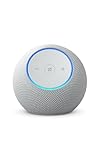 Amazon Echo Dot Max Amazon Echo Dot Max |
|
Check Latest Price |
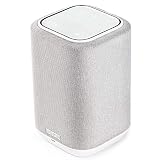 Denon Home 150 Denon Home 150 |
|
Check Latest Price |
 Bose Lifestyle Ultra Speaker Bose Lifestyle Ultra Speaker |
|
Check Latest Price |
 WiiM Sound Lite (2 Pack) WiiM Sound Lite (2 Pack) |
|
Check Latest Price |
 Google Nest Audio (3-Pack) Google Nest Audio (3-Pack) |
|
Check Latest Price |
 Avantree Harmony 2 Avantree Harmony 2 |
|
Check Latest Price |
1. Amazon Echo Dot (newest model) – Best Whole House Starter for Most Homes
Amazon Echo Dot (newest model) – Vibrant sounding speaker, Designed for Alexa+, Great for bedrooms, dining rooms and offices, Deep Sea Blue
Alexa voice control
Built-in motion and temperature sensors
eero built-in mesh wifi up to 1000 sq. ft.
Compact body for bedrooms offices and dining rooms
Pros
- Extremely compact footprint that fits bedrooms
- offices and small rooms
- Alexa+ handles everyday questions
- timers
- weather and routines
- Built-in motion and temperature sensors trigger useful routines
- Groups with other Echo devices for room to room music
- eero built-in adds up to 1000 sq. ft. of mesh wifi coverage
Cons
- Sound quality is entry level compared with larger smart speakers
- Microphone off button and eero extender function depend on the Amazon ecosystem
- No audio input for external sources
I have set up more of these than any other speaker in this roundup, and the thing that keeps surprising people is how little it asks of you. Plug it in, open the Alexa app, and the speaker appears. Grouping it with a second one takes a few taps, and both start playing the same station within a couple of seconds of each other.
The Dot is the right shape for the rooms that most houses forget about. A bedroom, a home office, a bathroom, a pantry. It is small enough to sit on a nightstand or a kitchen counter without looking like equipment, and it is loud enough for background listening in those spaces.
The voice assistant is the real product here. Alexa handles timers, weather, shopping lists and light control, and the built-in motion and temperature sensors mean a routine can fire when someone walks into a hallway or the kitchen gets too warm. For whole house use, that is a genuinely different experience from a speaker you control only by tapping a phone.
The eero built-in feature is the sleeper advantage. Each Echo Dot can act as a mesh wifi extender, adding up to 1000 sq. ft. of coverage to an existing eero network. In a house where the kitchen or the back bedroom sits at the edge of the router’s reach, that solves a coverage problem you would otherwise solve with a separate access point.
What you get when you add several Dots
Group two or more Dots and you can play the same music everywhere, or send different music to each room. Alexa handles the grouping, the volume, and the room assignment, and the sync is tight enough that walking between rooms does not reveal a gap.
Streaming works from Amazon Music, Apple Music, Spotify and other services, or you can push audio from a phone over Bluetooth. There is no 3.5mm input, so a turntable or a CD player needs a separate streamer in the chain.
Where the Dot falls short
Sound quality is the honest limit. The Dot is a small driver in a small plastic body, so bass is modest and there is no real sense of stereo width. If a room is your main listening space, the Era 100 or the Denon Home 150 will sound dramatically better for not much more money.
The other friction is the microphone. Owners report the mic is less reliable in a loud room than a dedicated Echo, and the physical mic-off button is genuinely useful. It also cannot act as a TV output, and the assistant routines occasionally stop partway through, which is an Amazon software issue rather than a hardware one.
2. Sonos Era 100 – Best Value Pick for Real Music Listening
Sonos Era 100 – Black – Wireless, Alexa Enabled Smart Speaker
Dual tweeter architecture
Trueplay room-aware tuning
10 watts output
Wi-Fi, Bluetooth and 3.5mm line-in
Pros
- Wide
- detailed stereo separation from the dual-tweeter architecture with fuller bass than earlier compact Sonos
- Compact body that fits bookshelves
- counters
- desks and nightstands
- Seamless setup in the Sonos app with smooth integration into existing Sonos rooms
- Supports Wi-Fi streaming
- Bluetooth pairing and line-in via the adapter
- Trueplay tuning adapts EQ to the room automatically
Cons
- Alexa wake phrase must be Hey Sonos and cannot be changed
- Wi-Fi setup can fail repeatedly and may need Sonos support
- Some owners reported a 2024 app update disrupting streaming and playback
- Touch controls make accidental volume changes easy
The Era 100 is the speaker I recommend to friends who are building their first whole house system. Sonos spent years owning the category, and this model is the compact, mainstream, room-filling answer that the whole platform is built around.
The dual tweeter layout is the reason it sounds wider than you expect from something this small. Earlier compact Sonos models pushed sound straight at you. The Era 100 spreads it, so a kitchen counter or a bookshelf placement still gives you a sense of left and right. Owners consistently describe it as a clear upgrade over the models it replaces.
Trueplay is doing real work here. It listens to the room and re-tunes the EQ so the speaker does not sound boomy in a small bedroom or thin in a large open living space. When you move the speaker to a different room, you re-run Trueplay and it adapts again. That single feature matters more for whole house audio than any spec on the box, because you will be moving these speakers.
Connectivity is generous for a Sonos. You get Wi-Fi streaming, Bluetooth, and a 3.5mm line-in through the Sonos Line-In Adapter, which is what lets you fold a turntable or an old receiver into the system without buying a separate streamer.
Why it pairs so well in a multi-room setup
Multi-room sync across Sonos speakers is smooth and consistent, with no lag when you start playback or change rooms. Two Era 100s make a convincing stereo pair, and adding a Sub or a pair of surrounds later is straightforward inside the same app.
The app is the mature part of the equation. Rooms are named once and the group remembers them. If you are starting from scratch and want music in every room without fighting software, this is the least frustrating path.
What to watch before you commit
The wake phrase is the most common complaint. Because Alexa lives inside, the speaker only answers to Hey Sonos, and that phrase cannot be changed. Some owners also found the voice assistant would not control their smart lights in certain setups.
Setup reliability is the other one. A portion of owners hit repeated Wi-Fi setup failures that needed Sonos support to clear, and a few reported that the 2024 app update disrupted streaming and playback. None of that is a sound problem, but in a system where you might own six of these, app stability is part of the product.
3. Sonos Era 300 – Premium Pick for Filling a Large Room
Sonos Era 300 Wireless Smart Speaker with Dolby Atmos – Black
Dolby Atmos Music
Upward-firing height channel
300 watts maximum output
2.1 channels of audio
Pros
- Genuine upward-firing height channel creates a wrap-around Dolby Atmos soundstage
- Fills large rooms far better than the Era 100 or earlier Sonos models
- Bluetooth and USB-C line-in let guests and turntables connect easily
- Automatic Trueplay tuning plus polished multi-room synchronization
- Excellent as Arc or Beam surrounds where it adds real depth
Cons
- Cinched-waist design is polarizing and noticeably larger than a Sonos One
- Trueplay can fail when hearing aids or other Bluetooth devices interfere
- Getting the most from Dolby Atmos content requires a compatible subscription service
- The USB-C to 3.5mm line-in adapter is sold separately
If one room in your house does the heavy lifting, the Era 300 is the speaker to build around. It is the only unit in this roundup with a genuine upward-firing height channel, and that single driver is why it can play real Dolby Atmos Music rather than simulate it.
Six drivers sit around the front, sides and top, each with its own waveguide dispersing sound right, left, forward and above. The result is sound that arrives from places you did not put a speaker. In a big living room or an open-plan main floor, nothing else here comes close.
Output is rated at 300 watts, which is a different class entirely from the 10 watts in the Era 100. It fills a two-storey main room at levels where the smaller speakers simply give up, and it stays composed when you push it.
Trueplay runs automatically, and multi-room synchronization is as clean as the rest of the Sonos range. The speaker is also the best home theatre surround in this group: pair it with an Arc or a Beam and it delivers real height and depth behind the sofa.
When the Era 300 earns its footprint
Two scenarios justify it. The first is a large primary room, roughly a great room or an open main floor where a compact speaker cannot cover the space. The second is surround duty behind a Sonos soundbar, where the height channel does work a flat speaker cannot.
Streaming is flexible: Wi-Fi, Bluetooth, or a turntable through the Sonos Line-In Adapter. Voice control runs through Sonos Voice, with Sonos Radio and regular software updates on top.
Reasons to step down instead
The design is polarizing. Owners describe the cinched-waist shape as polarizing and noticeably larger than a Sonos One, and it needs a shelf or surface with real depth to sit on. If the room is small, the Era 100 sounds better for the space.
Bass depth on its own is limited for a speaker this size, and a Sub improves the experience considerably. Two other frictions show up repeatedly: the line-in adapter is an extra purchase, and Trueplay can fail outright if a hearing aid or another Bluetooth device is interfering. You also need an Atmos-ready streaming service to hear what you paid for.
4. Sonos Move 2 – Best for Portability and Outdoor Zones
Sonos Move 2 – Black – Wireless Portable Bluetooth Speaker
Up to 24 hours playback per charge
IP56 dust and water protection
Dual-tweeter architecture
Included wireless charging base
Pros
- Dual-tweeter architecture upgrades the single-tweeter original for a wider
- higher-fidelity stereo soundstage
- Automatic Trueplay tuning keeps optimizing output as the speaker is moved around
- Up to 24 hours of playback per charge
- IP56 rating plus shock-absorbent materials protect against drops
- rain
- dust and splashes
- Works as a Wi-Fi multi-room Sonos speaker as well as a battery-powered portable unit
- Included wireless charging base accepts any USB-PD power supply
Cons
- Heavier and bulkier than typical portable speakers
- Battery and wireless charging need regular recharging and a power outlet nearby
- Carries the same Sonos app limitations as the rest of the ecosystem
Most whole house systems fail outdoors. The Move 2 is the speaker in this roundup that solves that, because it is a real Wi-Fi multi-room member and a real battery-powered portable speaker in one body.
That combination is rare. You can group it with your Sonos rooms while it sits on the patio, then carry it to the kitchen and keep playing the same playlist without touching an app. For a house with a pool, a deck, or a garden room, there is no substitute in this list.
The acoustic redesign is the other story. Move 2 replaced the single tweeter of the original with two, which widens the stereo image noticeably. Trueplay now runs automatically and keeps re-tuning as you move the speaker, so it does not matter that it spends half its life in a different room each week.
Battery life is up to 24 hours per charge, and the included base charges wirelessly from any USB-PD power supply. The IP56 rating plus shock-absorbent materials handle drops, rain, spills, dirt and dust.
How it fits into a mixed indoor-outdoor system
Treat the Move 2 as your roaming zone. Stationary rooms get fixed speakers, and the Move 2 covers the spaces that change: patio, sunroom, balcony, garage. When it is low on battery it goes back on its base and recharges without anyone touching it.
It also works well as a fifth or sixth room speaker indoors when you want music to follow you around rather than come from a fixed corner.
What you give up for the handle
It is 3 kg and noticeably bulkier than a typical portable speaker, so it is not a grab-and-go travel unit. It is a garden speaker with a handle.
Owners also note that the battery and the wireless charging need regular attention and a nearby power outlet, which partly defeats the purpose if your patio is far from a socket. And it carries the same Sonos app limitations as every other speaker in that range.
5. Amazon Echo Dot Max – Best for Larger Rooms and a Built-in Smart Home Hub
Amazon Echo Dot Max (newest model), Alexa speaker with room-filling sound and nearly 3x bass, Great for living rooms and medium-sized spaces, Designed for Alexa+, Glacier White
Nearly 3x the bass of the 2022 Echo Dot
Built-in Matter and Zigbee hub
Omnisense presence and temperature detection
LED display for time and weather
Pros
- Nearly 3x the bass of the 2022 Echo Dot with sound that adapts to the room
- Compact design with a useful LED display for time
- weather and song titles
- Built-in Matter/Zigbee smart home hub eliminates the need for a separate hub
- Omnisense temperature and presence detection drives useful routines
- Faster
- more responsive Alexa processing than earlier Echo models
- Setup is quick and speakers group into rooms easily
Cons
- Microphone array can struggle to pick up voice in loud rooms
- Alexa-specific routines sometimes stop midway without warning
- No audio jack and no physical action button
- Stereo pairing works only between units of the same model
The Echo Dot Max is what the original Echo Dot should have been for anyone past a starter system. It keeps the compact footprint, adds an LED display, and delivers nearly three times the bass of the 2022 Dot. Owners call it a genuine audio step up rather than a cosmetic refresh.
That extra headroom changes what you can do with it. The original Dot suits bedrooms and offices. The Max is described as suited to living rooms and medium-sized spaces, which is exactly where a whole house system usually starts.
The built-in Matter and Zigbee smart home hub is the feature nobody advertises loudly enough. It removes the separate hub most people end up buying, and Omnisense temperature and presence detection gives Alexa routines a real sensor to work with instead of a timer.
Like the standard Dot, it carries eero built-in and adds up to 1000 sq. ft. of mesh wifi coverage to an existing eero network. Grouping through the Alexa app is quick, and a second Dot Max can be paired for richer sound.
Why it upgrades a whole house rather than a room
Two practical advantages over the base Dot. First, the LED display shows the time, weather and current song title, which makes it far more useful as a kitchen or bedside device. Second, the faster processor makes voice responses noticeably more responsive than earlier Echo hardware.
Streaming covers Amazon Music, Apple Music, Spotify and SiriusXM, and it can pair with compatible Fire TV devices to build a home theatre system.
The limits worth knowing
There is no audio jack and no physical action button, so external sources need another path in. Stereo pairing only works between two units of the same model, which is fine if you buy in pairs and annoying if you mix generations.
Two recurring gripes: the microphone array struggles to pick up voice in a loud room, so you repeat yourself, and Alexa routines sometimes stop midway without warning. The front-facing indicator light is also hard to see from behind or beside the speaker.
6. Denon Home 150 – Best for Connecting Gear You Already Own
Denon Home 150 Wireless Smart Speaker – Compact Design, Wi-Fi & Bluetooth, HEOS Built-in, Alexa Built-in, Siri & AirPlay 2, Spotify Connect, Multi-Room Support, White
HEOS built-in multi-room
Aux input and USB for local files
Bluetooth and AirPlay 2 together
1 inch tweeter with 3.5 inch woofer
Pros
- Strong sound for the size with detailed
- refined tuning and velvety bass
- HEOS multi-room grouping across Denon speakers
- sound bars and AVRs
- Bluetooth and AirPlay 2 both built in
- unlike many competing speakers
- USB port for local library playback plus aux input
- Alexa built in for voice control
Cons
- HEOS app is unintuitive and complicated
- especially with multiple devices
- Some room groups only start from the HEOS app
- not from Spotify or Apple Music
- Cannot act as a TV output or re-broadcast receiver audio over Wi-Fi
- Firmware updates after setup are slow and often fail on the first attempt
The Denon Home 150 is the choice for a house with history. If you still own a receiver, an amplifier, a CD player or a turntable, this is the speaker that lets you keep them instead of replacing them.
It has an aux input, a USB port for local libraries, Bluetooth, Wi-Fi, AirPlay 2 and HEOS built in. Very few competitors fit that many inputs into a wireless speaker at this size. A 1 inch tweeter sits above a 3.5 inch woofer, each driven by its own Class D amplifier.
Sound quality is the reason it earns a place. Owners frequently report that it sounds better than the Sonos equivalent, with detailed, refined tuning and what several reviewers describe as velvety bass. For a primary listening room, that is a real argument.
HEOS handles multi-room grouping, and it extends beyond speakers. Denon sound bars and Denon AV receivers join the same group, which is unusual. Alexa is built in for voice control, and two Home 150s can be paired for stereo or used as rear surrounds with the Home Soundbar 550.
Where the HEOS ecosystem earns its place
Denon is a long-running audio brand, and the Home line sits in an ecosystem that already includes AVRs and sound bars. If your living room runs a Denon receiver, adding a Home 150 in the kitchen means one app controls music in both places.
USB playback supports MP3, WAV, AAC and WMA, so a hard drive of local files is a genuine source rather than an afterthought.
The software is the weak point
Owners are split on this one. The HEOS app is widely described as unintuitive and complicated, particularly once you have several devices. Some room groups will only start playback from the HEOS app, not from Spotify or Apple Music, which breaks the habit most people have.
Two more limits matter for whole house use. It cannot act as a TV output or re-broadcast receiver audio over Wi-Fi, so it does not replace your home theatre chain. And firmware updates after setup are slow and often fail on the first attempt. The audio is excellent; the software is the reason its 4.1 rating sits where it does.
7. Bose Lifestyle Ultra Speaker – Best for Design and Turntable Hookups
Bose New Lifestyle Ultra Speaker, Wireless Home Speaker, TrueSpatial Audio, CleanBass, AirPlay & Google Cast, Black
TrueSpatial audio with CleanBass
Aux input for turntables and CD players
AirPlay and Google Cast built in
Wall mount or tabletop placement
Pros
- Room-filling
- immersive sound with clarity in the highs and bass you can feel
- Compact body works as a standalone
- a stereo pair
- or in whole-home multiroom groups
- Aux input allows connection of turntables and CD players
- Wi-Fi
- Bluetooth
- AirPlay
- Spotify and Google Cast all supported
- Adjustable EQ in the Bose app or by voice
- Upfiring driver adds Dolby Atmos height in a Lifestyle home theatre setup
Cons
- Bose app and initial setup are widely criticized
- sometimes taking days to configure stereo
- Speakers lock into their assigned configuration and cannot be repurposed
- Volume behaviour differs from other Lifestyle products and can jump very loud at the top of the dial
- Alexa performance is weaker than dedicated Echo devices
The Bose Lifestyle Ultra Speaker is the one to look at if your speakers have to live in a room that also has to look finished. It is small, fabric-wrapped, and it mounts on a wall or a stand as easily as it sits on a shelf. For a whole house system that has to blend into an interior, that is worth more than another ten watts of output.
Sound is genuinely good. TrueSpatial audio with CleanBass delivers clarity in the highs and bass you can feel, and owners consistently praise the sound while criticising everything around it.
Connectivity is broad: Wi-Fi, Bluetooth, AirPlay, Spotify Connect and Google Cast, plus an aux input for turntables and CD players. That aux input is a real advantage over several competitors here, and adjustable EQ is available in the Bose app or by voice.
You can use one speaker in a kitchen, den or bedroom, pair two for stereo, or group several for multiroom listening. An upfiring driver adds Dolby Atmos height when used in a Lifestyle home theatre setup.
When a design-led speaker makes sense
Choose this if your house has open sightlines, modern finishes, and no tolerance for black plastic boxes. The fabric and plastic enclosure in a wall mount reads as decor, which no other speaker in this roundup manages quite as well.
The flexible configuration also works. One speaker per room for background music, or a stereo pair in the room that matters most, or several grouped for a party.
The lowest rating in the roundup, for software reasons
This is the lowest rated product we cover, at 3.9 stars with 19 percent one-star reviews, and the reason is the app rather than the speaker. The Bose app and initial setup are widely criticised, with some owners reporting that configuring a stereo pair took days.
There is a rigidity problem too: speakers lock into their assigned configuration and cannot be repurposed into another room. In a whole house system, that is a genuine constraint. Volume behaviour also differs from other Lifestyle products and can jump very loud at the top of the dial, and the speakers pair with the Ultra soundbar for home theatre and nothing else.
8. WiiM Sound Lite (2 Pack) – Best for Hi-Res Streaming on an Open Platform
WiiM Sound Lite Smart Speaker, Multi-Room Wireless Speaker, Black (2 Pack)
24-bit/192 kHz hi-res streaming
100 watt peak amplifier
AI RoomFit tuning
Google Cast plus Roon and DLNA
Pros
- Up to 24-bit/192 kHz hi-res streaming with a 100W peak amplifier
- 4 inch paper-cone woofer and dual 1 inch silk-dome tweeters deliver natural mids and smooth highs
- AI RoomFit tuning optimizes sound for the specific room and placement
- Very open platform: Google Cast
- Spotify/TIDAL/Qobuz Connect
- Alexa Cast
- DLNA
- Roon/LMS
- WiiM app is intuitive
- with a one-button auto sync for aligned multi-room playback
- Works with Home Assistant and pairs into a WiiM stereo or home-theater setup
Cons
- Streaming apps run on the phone rather than natively on the speaker
- Occasional brief echo when connected to TV via HDMI
- No built-in display on the base model
- Speaker hardware is dense and heavy for its size
The WiiM Sound Lite is the enthusiast’s answer in this roundup. It streams 24-bit/192 kHz hi-res audio, runs a 100 watt peak amplifier, and does not lock you into a single ecosystem. Owners regularly compare it favourably to Sonos on price, app reliability and network compatibility.
Unlike Sonos, the WiiM platform is deliberately open. You get Google Cast, Spotify Connect, TIDAL Connect, Qobuz Connect, Alexa Cast, DLNA, and Roon or LMS for local libraries. You are not betting the whole house on one company keeping its servers running.
The hardware is more substantial than the price suggests. A 4 inch paper-cone woofer and dual 1 inch silk-dome tweeters are driven by 100 watts of amplification, with a planar magnetic driver listed in the specs. Owners describe the mids as natural and the highs as smooth, and they repeatedly praise the accurate, untuned sound.
AI RoomFit tunes the speaker to the specific room and placement, and the WiiM app has a one-button auto sync for aligned multi-room playback. It also works with Home Assistant for anyone running local automation.
Why two units change the maths
Pair two for true left and right stereo, or keep them as two separate rooms that stay perfectly in sync. The 3.5mm aux-in and Ethernet port give you wired options in rooms where Wi-Fi is marginal, which is a real advantage in a large house.
You can also combine them with a WiiM Sub Pro or other WiiM components to build a cinema setup without changing platforms.
The trade-offs are software, not sound
Streaming services run through an app on your phone rather than natively on the speaker. That means the speaker is dependent on whichever device is casting, which some owners find less seamless than a native app on the hardware itself.
Two smaller frictions: owners report an occasional brief echo when connected to a TV over HDMI, and the base model has no built-in display. The hardware is also dense and heavy for its size, which makes shelf placement worth planning.
9. Google Nest Audio (3-Pack) – Best for Covering Three Rooms Immediately
Google Nest Audio (3-Pack) Smart Speakers – Multi-Room Wireless Home Speaker Bundle with Bluetooth, Wi-Fi, Assistant, Stereo Sound, Voice Control & Smart Home Integration
Three speakers in one bundle
Google Assistant built in
Chromecast-based grouping
Stereo pairing on any two
Pros
- Three-speaker bundle gives whole-home coverage out of the box
- Group all three for seamless multiroom playback or assign each to a different room
- Pair two speakers for immersive stereo sound
- Bluetooth and Wi-Fi with Spotify
- YouTube Music and Chromecast-enabled apps
- Google Assistant handles music
- timers
- weather and smart home control
- Compact fabric-and-wood enclosure fits on counters and shelves
Cons
- No 3.5mm aux input
- so turntables and other analog sources cannot be connected directly
- Corded power means each speaker needs its own outlet
- Assistant-dependent features require a compatible phone or smart display
Most people do not start a whole house audio system with one speaker. They start with three. This bundle is the simplest way to get there, because the decision has already been made for you.
Three speakers in a 3-pack means you can put one in the living room, one in the kitchen and one in a bedroom on the same afternoon. Owners highlight the value of covering three rooms at once and the smooth Chromecast-based grouping that keeps them in sync.
You have a choice with grouping. Play all three together for one zone, or send different music to each. Pair two of them for stereo and keep the third in another room, which covers the most common layout in a house this size.
Streaming works over Wi-Fi and Bluetooth from Spotify, YouTube Music and other Chromecast-enabled apps, and it plays nicely with Android, iOS and anything else already in the Chromecast ecosystem.
What a three-speaker start gets you
It is the fastest route to a real multi-room experience. Rather than buying one speaker and hoping the ecosystem grows with you, you have a functioning whole house system on day one and the option to add more later.
The enclosure is fabric and wood, sized for counters and shelves, and Google Assistant handles music, timers, weather and smart home control alongside a large smart home device catalogue.
Where it does not reach
The absence of an analog input is the limitation owners mention most often. There is no 3.5mm aux, so a turntable, a CD player or an old receiver cannot connect directly. If you have legacy gear, look at the Denon Home 150 or the Bose Lifestyle Ultra instead.
Each speaker is corded, so every placement needs its own outlet, and some assistant features depend on a compatible phone or smart display being present.
10. Avantree Harmony 2 – Best for Whole House Audio With No App
Avantree Harmony 2 – Multi-Room Wireless Speaker System for Home & Office
Under 30 ms latency for synchronized playback
No app required
Optical, AUX and Bluetooth inputs
Battery powered for flexible placement
Pros
- Under 30 ms latency keeps audio synchronized across all three speakers
- Setup needs no app: plug the transmitter into a TV
- phone or laptop and the speakers auto-connect
- Optical
- AUX and Bluetooth inputs cover most source types
- Three speakers provide consistent room-to-room coverage for background music
- TV sound and spoken content
- Speaker batteries allow flexible placement between rooms
Cons
- Not designed for large outdoor venues or very loud environments
- Maximum volume is limited compared with mains-powered whole-home speakers
- No support for USB mics
- XLR mics or 3.5mm TRRS headset mics
- No built-in voice assistant or streaming service apps of its own
The Avantree Harmony 2 solves a different problem. It is not a smart speaker system. It is a way to send one source to three speakers in three rooms with no app, no account, no cloud and no subscription, and it does that with under 30 milliseconds of latency.
Setup is genuinely trivial. Plug the transmitter into a TV, a laptop or a phone over optical, AUX or Bluetooth, and the three speakers connect on their own. Owners value that app-free simplicity in offices, classrooms and homes where a network is not always available.
The latency figure is the important one. Under 30 ms keeps audio synchronized across all three speakers, with no noticeable echo during speech or video. That matters if the source is a TV with dialogue, or a video call, and it is why this system works in classrooms where lip-sync problems would be embarrassing.
Because it needs no network, it keeps working when your Wi-Fi does not. The batteries also let you place a speaker in a room without a convenient power outlet.
What it is genuinely good for
Background music across several rooms, spoken content in a classroom or meeting room, and TV sound in a living room plus kitchen. The inputs cover most source types, and the system is not dependent on any one company keeping a service alive.
It also comes with a 24 month warranty once the product is registered, which is longer than most competitors offer.
Where it stops
Maximum volume is limited compared with mains-powered whole home speakers, and the system is not designed for large outdoor venues or very loud environments. Fifteen watts per speaker is enough for background music, not for a party.
There is no built-in voice assistant and no streaming apps of its own, so you need a source device. It also requires a line-level output, which rules out USB mics, XLR mics and 3.5mm TRRS headset microphones. Check your source before buying.
How to Choose a Whole House Wireless Audio System in 2026
Most wrong purchases in this category are ecosystem mistakes rather than sound quality mistakes. Work through these six questions in order and the speaker choice takes care of itself.
1. Pick the ecosystem before the speaker
Multi-room audio only works cleanly inside one platform. Sonos, HEOS, BluOS, the Alexa multi-room layer and Chromecast-based grouping are separate worlds that do not hand speakers to each other freely. Some cross-brand mixing is possible through AirPlay 2, but it gives you two-room grouping at best and no shared app.
Decide what you already own. If your phone is Android and your lights are Chromecast, the Google route is the path of least resistance. If the family all use iPhones, AirPlay 2 speakers are a safer bet. If you have an existing receiver or a stack of legacy gear, HEOS is built around that.
2. Count rooms and outlets, not speakers
Every speaker in this roundup except the Move 2 and the Avantree Harmony 2 needs its own power outlet. That single constraint decides more layouts than sound quality does. Walk your rooms first and note where outlets actually are, because moving an outlet is a contractor job.
Most homes need three to six zones. A living room, kitchen, main bedroom, office, bathroom and patio is a realistic target. Buy in pairs if stereo matters in a room, and add the remainder as single-room background speakers.
3. Use the 83% rule when placing speakers
The 83% rule is a placement guideline rather than a spec: in a room, position speakers so they cover roughly 83 percent of the listening area, and the rest takes care of itself through room reflections. Pulling two speakers too far apart leaves a dead zone in the middle, which is where people put a couch and then complain the music sounds thin.
Other placement habits that matter more than the model you buy: keep speakers off the floor and away from corners, put them near eye level when possible, and never place one directly behind a listening position. Leave a few inches of wall clearance for ports.
4. Decide how you will play music
If you stream everything, native app support and multi-room grouping are what matter. If you still have a turntable, a CD player or an AV receiver, inputs decide the shortlist. Only the Denon Home 150, the Sonos Era 100, the Era 300, the WiiM Sound Lite and the Bose Lifestyle Ultra have analog inputs in this roundup.
Bluetooth is a different question from multi-room. Bluetooth is a convenient way to push audio from a guest phone. It is a poor way to run a house, because range is short and every device competes for the same link.
5. Plan the hybrid wired and wireless approach
The most practical whole house systems in real homes are hybrid. You use wireless speakers for the rooms where running cable is expensive, and you keep wired in-ceiling or in-wall speakers for the main living room where sound quality matters most. If you already have a wired system, our guide to budget speakers for a whole home audio setup covers that side.
For legacy gear, the WiiM approach works well as a bridge: a small streamer with optical, RCA or HDMI input feeding wireless speakers, letting the old receiver keep doing what it does best.
6. Add an outdoor zone deliberately
Only two options here are built for outside use. The Sonos Move 2 carries an IP56 rating with shock-absorbent materials and up to 24 hours of battery per charge, so it can live on a patio and come inside when the weather turns. The Avantree Harmony 2 is water resistant but has limited maximum volume, so it suits a covered area with background music rather than a party.
Everything else in this roundup is explicitly not water resistant. Plan for a covered location or keep spare indoor speakers for summer.
Think about total system cost, not speaker cost
A whole house system is speakers plus streaming subscriptions plus the networking to support it plus possibly an installer. Budget for the router and access points before you buy the fourth speaker, because a house full of Wi-Fi speakers on a weak mesh network is the most common cause of the dropouts people complain about in forums.
Ask yourself how many rooms you will add in two years and price that now. Ecosystem lock-in is real, and a system that scales cleanly in one brand is usually cheaper than mixing two.
Frequently Asked Questions
What are the best wireless speakers for home use?
The best wireless speakers for home use depend on how many rooms you want covered and what you already own. The Sonos Era 100 is our pick for most people because of its sound quality and mature multi-room app. The Amazon Echo Dot is the fastest and easiest way to cover bedrooms, offices and kitchens, and the Denon Home 150 is the best option if you still own a receiver, a CD player or a turntable that you want to keep connected.
What is the best whole house speaker system?
The best whole house speaker system is the one where every speaker runs in a single ecosystem and every room has a nearby power outlet. In our testing the Sonos Era 100 is the strongest core choice for whole house audio, with the Amazon Echo Dot Max covering medium rooms and the Sonos Move 2 handling outdoor zones. Mixing brands works only through AirPlay 2 or Chromecast, and you lose proper multi-room grouping and a single app.
How does multi-room audio work?
Multi-room audio works over your home network in one of two ways. With a mesh network, speakers talk to each other and one unit stays wired to the router for stability. With a standard Wi-Fi star topology, every speaker connects back to the router individually. Either way, a group of speakers receives the same stream and stays synchronized so the music does not drift between rooms.
What is the difference between a Bluetooth speaker and a wireless speaker?
A Bluetooth speaker is a single device that receives audio directly from a phone over a short wireless link, usually 10 meters. A wireless speaker connects to your home Wi-Fi network, streams on its own without a phone, and can be grouped with other speakers in different rooms. Bluetooth is convenient for one speaker near you; Wi-Fi is what makes whole house multi-room audio possible.
Do wireless speakers sound as good as wired speakers?
Modern wireless speakers have closed most of the gap with wired systems at the midrange and above, especially where hi-res streaming and room correction are involved. Wired in-ceiling and in-wall speakers still win in dedicated listening rooms where you can position them precisely and run a proper amplifier. Many homes end up hybrid, with wireless speakers in the rooms where running cable is expensive and wired speakers in the main living space.
Can you mix brands in multi-room audio?
You can mix brands, but you rarely get true multi-room control. AirPlay 2 lets Apple devices group speakers from several brands, and Chromecast does something similar, but mixed groups usually hold two rooms at a time and lack a single app for naming rooms and volume. A third speaker often drops out or starts playing on its own. The Avantree Harmony 2 is the exception, because it works from one source rather than from a network.
Is Sonos worth it for whole house audio?
Sonos is worth it if sound quality and reliable synchronization across many rooms are your priority, and you are willing to stay inside one ecosystem. The Era 100 and Era 300 give room-filling output and the cleanest group sync we tested. Be aware of two constraints: older Sonos hardware may not work with the current app, and the built-in Alexa only answers to Hey Sonos.
What are the best kitchen and bathroom speakers?
For a kitchen, the Amazon Echo Dot Max suits medium spaces with its LED display and Matter hub, while the Sonos Era 100 is the better choice if you mainly want music. For bathrooms, pick a model with water resistance and expect to bring it inside after use, because most indoor speakers here are explicitly not water resistant. The Sonos Move 2 with its IP56 rating is the only genuinely outdoor-capable option in this roundup.
Our Verdict for 2026
The best wireless speakers for whole house audio come down to ecosystem first, room size second and sound quality third. For most people the Sonos Era 100 is the core of the system, with the Amazon Echo Dot covering small rooms and the Echo Dot Max handling anything larger. The Sonos Move 2 finishes the job outdoors, and the Era 300 turns one room into a cinema.
If your house is full of gear you want to keep, the Denon Home 150 is the answer. If you want hi-res streaming without committing to one company, look at the WiiM Sound Lite. If you want three rooms covered before dinner, the Google Nest Audio 3-pack does exactly that. And if you would rather not sign up for anything, the Avantree Harmony 2 works from one source with no app at all.
Whichever route you take, sort out your Wi-Fi coverage first and buy the platform you can live with for five years. That decision matters more than any spec on the list.