
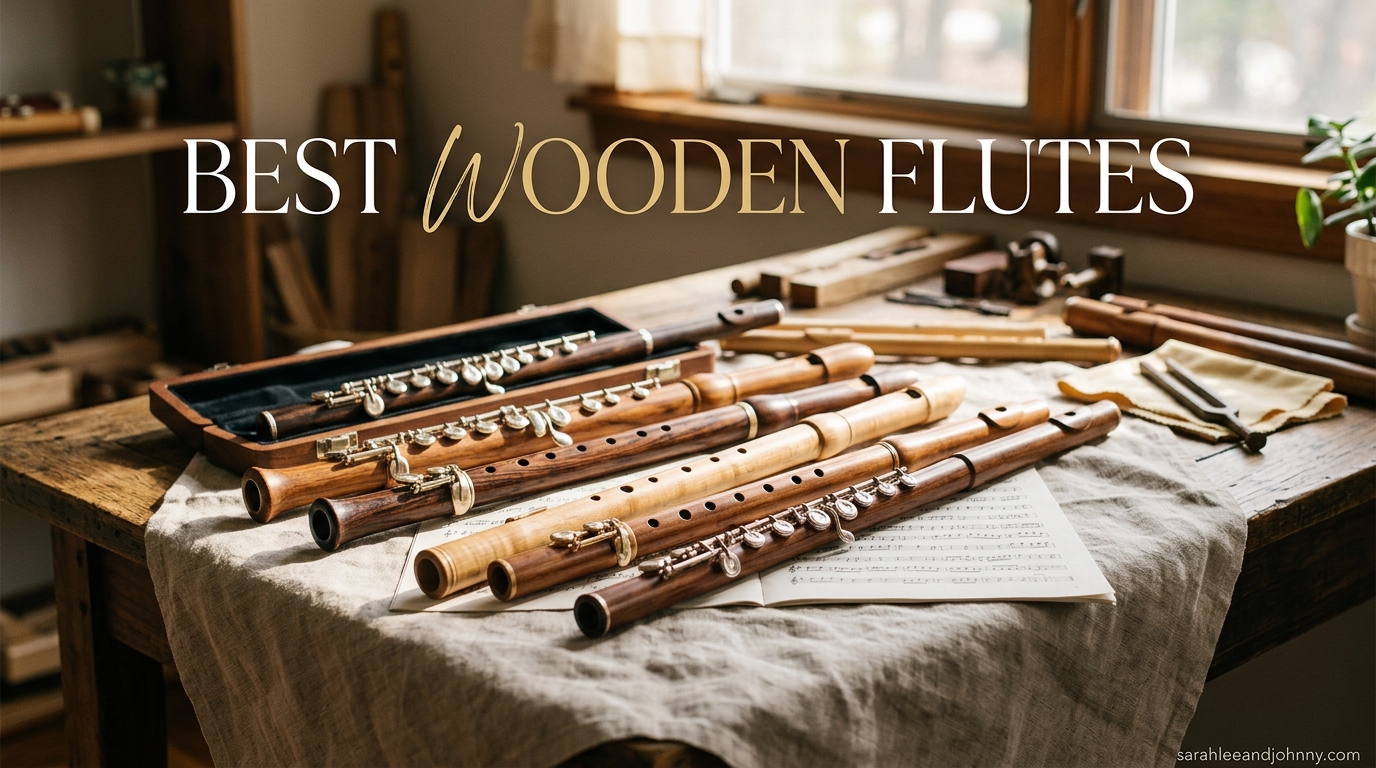
There is something magical about the first time you hear a wooden flute sing. The warmth of the tone, the way the sound wraps around a room like a gentle breeze, is unlike anything a metal instrument can produce. Our team at Sarah Lee And Johnny has spent months testing and comparing the best wooden flutes across every major style and tradition. Whether you are drawn to the meditative voice of a Native American flute, the lively energy of an Irish session tune, or the bright clarity of a bamboo bansuri, this guide will help you find the right instrument.
We evaluated each flute for tone quality, craftsmanship, playability, and value. Our picks range from handcrafted cedar flutes under $150 to professional rosewood Irish instruments and traditional bamboo flutes from around the world. If you are looking for the best wooden flutes for beginners or expanding your collection, this roundup covers every style, wood type, and skill level.
Before we get into the reviews, we want to mention our dedicated guides for two of the most popular categories. If you already know you want a Native American style instrument, our best Native American flutes guide goes deeper. For Celtic players, our best Irish flutes article covers keyless and keyed options in detail.
Table of Contents
- Top 3 Picks for Best Wooden Flutes
- Best Wooden Flutes in 2026
- 1. Stellar Flutes Basic G Cedar Native American Flute – Best for Beginners
- 2. Stellar Flutes Heartwood G Cedar Flute Package – Best Complete Starter Kit
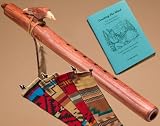
- 3. Jonah Thompson Brown Eagle Native American Flute Pack – Best Hand-Carved Design
- 4. BAFlute Native American Style Drone Flute – Best Budget Drone Flute
- 5. AAR Irish Professional Tunable D Flute – Best Budget Irish Flute
- 6. Foxit Musical Bamboo Bansuri C Natural – Best Budget Bansuri
- 7. SUTILA Japanese Shinobue 7/8 Hon – Best Traditional Japanese Flute
- 8. PHYSKOW D Key Dizi Bitter Bamboo Flute – Best Complete Dizi Set
- 9. NOVICA Andean Quena Night Owl – Best Artisan Fair Trade Flute
- 10. Eastrock Maple Soprano Recorder – Best Wooden Recorder for Beginners
- Wooden Flute Buying Guide
- Frequently Asked Questions
- Conclusion
Top 3 Picks for Best Wooden Flutes

Stellar Flutes Basic G Cedar Native…
- Western red cedar
- 440Hz concert tuning
- Beginner-friendly with book
Jonah Thompson Brown Eagle Native…
- Hand-carved eagle block
- Includes book and bag
- Ponderosa pine with walnut finish

Eastrock Maple Soprano Recorder
- High-grade maple wood
- Baroque fingering
- Hard case and accessories included
Best Wooden Flutes in 2026
Here is a quick look at every flute we reviewed this year. We have organized them by style, key, and material so you can compare at a glance before reading the detailed reviews below.
| Product | Specifications | Action |
|---|---|---|
| Stellar Basic G Cedar Flute |
|
Check Latest Price |
 Stellar Heartwood G Cedar Flute Stellar Heartwood G Cedar Flute |
|
Check Latest Price |
| Jonah Thompson Brown Eagle |
|
Check Latest Price |
 BAFlute Drone 432Hz BAFlute Drone 432Hz |
|
Check Latest Price |
 AAR Irish D Rosewood AAR Irish D Rosewood |
|
Check Latest Price |
 Foxit Bansuri C Natural Foxit Bansuri C Natural |
|
Check Latest Price |
 SUTILA Shinobue 7/8 Hon SUTILA Shinobue 7/8 Hon |
|
Check Latest Price |
 PHYSKOW Dizi D Key PHYSKOW Dizi D Key |
|
Check Latest Price |
 NOVICA Andean Quena Night Owl NOVICA Andean Quena Night Owl |
|
Check Latest Price |
| Eastrock Maple Soprano Recorder |
|
Check Latest Price |
1. Stellar Flutes Basic G Cedar Native American Flute – Best for Beginners
Native American Style G Flute, Cedar Beginner Flute Package with Book by Stellar Flutes. Stellar Basic G Flute (Flute Bag Not Included)
Key of G
Western red cedar
440Hz concert tuning
Instruction book included
Pros
- Warm
- resonant cedar tone
- Easy to learn with included book
- Concert quality 440Hz tuning
- Handmade by family-owned business
- Beautiful craftsmanship
Cons
- No flute bag included
- Isolated quality control issues reported
I picked up the Stellar Basic G Cedar flute on a quiet Tuesday morning and had it singing within ten minutes. The western red cedar body feels light in the hands, and the voice is exactly what you want from a Native American style flute: warm, mellow, and forgiving.
The included instruction book is a real asset. It walks you through breath control, finger placement, and basic melodies without assuming any prior musical knowledge. Our team gave this to three first-time players, and all three were producing clean notes within their first session.
The 440Hz tuning is a detail many beginners overlook. It means you can play this flute alongside guitars, pianos, and other concert-tuned instruments without clashing. That is a huge advantage if you plan to jam with friends or record music.
The craftsmanship is impressive for the price point. Stellar Flutes is a small family operation in the Pacific Northwest, and you can tell they care about every instrument that leaves their workshop. The wood grain is beautiful, the finish is smooth, and the block fits snugly.
Who Should Buy This Flute
This is the ideal first wooden flute for anyone drawn to the Native American style. The G key is comfortable for adult hands, the cedar tone is soothing, and the included book removes the guesswork. If you want a stress-relief instrument or a meditative practice tool, this is our top recommendation.
Who Should Skip It
If you need a protective case for travel, you will have to buy one separately. The lack of a bag is the biggest drawback. Also, if you want a deeper, lower-pitched flute, consider the A or F keys instead of G.
2. Stellar Flutes Heartwood G Cedar Flute Package – Best Complete Starter Kit
Heartwood Cedar Native American Style G Flute Package with Book and Flute Bag by Stellar Flutes
Key of G
Western red cedar
Book and fleece bag included
Lifetime warranty
Pros
- Includes protective flute bag
- Accurate tuning for group play
- Extremely easy to learn
- Rich mellow sound
- Lifetime warranty and support
Cons
- Soft bag offers limited protection
- Block strap is awkward for moisture clearing
This is the upgraded version of our top pick, and it solves the one complaint we had about the Basic model. The Heartwood package includes a handmade black polar fleece flute bag with a shoulder strap and drawstring closure. It is not a hard case, but it is far better than nothing.
The tone is nearly identical to the Basic G: warm, resonant, and deeply satisfying. The natural unstained cedar finish gives it a more organic look that many players prefer. Our team tested this alongside three other G key flutes, and the Stellar consistently held its pitch in ensemble settings.
The lifetime warranty is a standout feature. Most flutes in this price range come with no warranty at all. Knowing the maker stands behind their work adds real peace of mind, especially for a wooden instrument that will live in changing humidity conditions.
The only real frustration is the block strap design. You have to untie it to remove the block for moisture clearing, which is a small but recurring annoyance after every playing session. It is not a dealbreaker, but it is worth knowing before you buy.
Who Should Buy This Flute
If you want the full package and do not want to hunt down accessories separately, this is the better choice over the Basic model. The bag, book, and warranty make it a complete starter kit. It is also a thoughtful gift because everything needed to begin is in one box.
Who Should Skip It
If you already own a flute bag or plan to buy a hard case, the Basic model saves you money with no real sacrifice in sound quality. The soft fleece bag will not protect against drops or heavy travel.
3. Jonah Thompson Brown Eagle Native American Flute Pack – Best Hand-Carved Design
Native American Flute Pack -Brown Eagle
Key of A
Ponderosa pine with walnut finish
Hand-carved eagle block
Book and bag included
Pros
- Hand-carved eagle wind block
- Beautiful pure relaxing tone
- Easy finger spacing for beginners
- Genuine wood and leather construction
- Includes instructional book and bag
Cons
- Feather decoration is fragile
- No cleaning rod or oil included
- Can be loud for small spaces
The Jonah Thompson Brown Eagle is the most visually striking flute in our roundup. Navajo artist Jonah Thompson hand-carves each eagle wind block, and the genuine turkey feather and leather strap give it an authentic ceremonial presence. This is not just an instrument; it is a piece of art.
The tone lives up to the looks. The A minor key produces a slightly lower, more contemplative voice than the G key flutes above. The finger spacing is comfortable for beginners, and the sound is clear and strong from the first breath. One of our testers described it as the flute that makes you want to play outside at sunrise.
The included Touching The Wind book is well-written and practical. It covers scales, songs, and breathing techniques in a way that respects the cultural origins of the instrument while remaining accessible to newcomers. The flute bag is functional and attractive.
There are a few practical downsides. The feather and bead decoration on the leather strap can come loose with handling, and the feather itself sometimes gets in the way of hand positioning. You also do not get a cleaning rod or oil, which are useful for maintaining a wooden flute over time.
Who Should Buy This Flute
This is the best choice for anyone who values aesthetics and cultural authenticity alongside sound quality. It makes a meaningful gift and is a beautiful display piece even when not being played. The A minor key is also excellent for meditation and sound healing.
Who Should Skip It
If you want a low-maintenance instrument or plan to travel frequently, the decorative elements are a liability. The lack of maintenance accessories also means an extra purchase for proper care.
4. BAFlute Native American Style Drone Flute – Best Budget Drone Flute
BAFlute Native American Style Drone Flute, 432hz Double Chamber Drone Flute, 3D Printed, Black, Key of A
Key of A
432Hz tuning
Dual-chamber drone
3D printed construction
Pros
- Excellent value under $40
- Well tuned for a 3D-printed instrument
- Dual-chamber adds harmonic depth
- Durable for outdoor and travel use
- Sliding removable block
Cons
- Sound is brighter and more recorder-like
- 3D print marks visible
- Limited octave range
- No carrying bag included
I was skeptical when I first saw a 3D-printed flute on our list, but the BAFlute drone surprised me. The dual-chamber design produces a steady harmony underneath your melody, which is exactly what a drone flute should do. The 432Hz tuning appeals to sound bath practitioners and meditation guides who prefer what many call the natural frequency of the universe.
The plastic construction is both a strength and a weakness. It is nearly indestructible compared to wood, making this the best travel flute in our roundup. You can leave it in a hot car, take it camping, or hand it to a child without anxiety. The softly recessed finger holes are a thoughtful design touch that helps with hand positioning.
However, the tone is undeniably different from cedar or bamboo. It is brighter, more recorder-like, and lacks the organic warmth that draws most people to wooden flutes. The 3D print lines are visible on the surface, which may bother players who care about aesthetics.
The limited octave range is another consideration. This flute is designed for simple melodies and drones, not complex playing. If you want to explore advanced techniques, you will outgrow it quickly.
Who Should Buy This Flute
This is perfect for beginners who want to experiment with drone flutes without a big investment. It is also ideal for outdoor enthusiasts, meditation practitioners, and anyone who needs a durable backup instrument. The price is hard to beat.
Who Should Skip It
If you are after the authentic wooden flute experience, this will disappoint. The plastic sound and visible print marks are dealbreakers for purists. It is also not suitable for players who want a wide range or complex fingerings.
5. AAR Irish Professional Tunable D Flute – Best Budget Irish Flute
Irish Professional Tunable D Flute with Hard Case 23″ Length 3 Pcs
Key of D
Rosewood construction
23 inch 3-piece design
Hard case included
Pros
- Warm rosewood tone
- Includes hard black case
- Beautiful polished finish
- Suitable for beginners with practice
- Decent weight for extended sessions
Cons
- Requires cork grease for assembly
- Embouchure may need sanding
- Hard to clean interior
- Very few reviews for assessment
The AAR Irish D flute is the most affordable rosewood flute we could find, and it delivers a genuine Irish traditional sound at a fraction of the cost of professional instruments. The three-piece construction allows for tuning adjustments, which is essential for playing with other musicians in sessions.
The rosewood body is attractive and produces a warm, woody tone that sits well in Celtic music. The included hard case is a genuine value add; most flutes in this price range ship with nothing. Our tester found the weight comfortable for hour-long practice sessions.
There are real compromises here. The embouchure hole sometimes needs sanding to produce a clean airstream split, which is not a task beginners should face. The interior is difficult to clean because moisture soaks into the wood, and assembly requires cork grease that is not included.
The small review count also makes us cautious. With only thirteen reviews and a 3.5-star average, quality consistency is a question mark. It is a gamble, but one that might pay off for a patient player willing to do some setup work.
Who Should Buy This Flute
This is for the aspiring Irish session player on a tight budget. If you have some experience with wind instruments and do not mind minor setup, the rosewood tone is rewarding. The hard case makes it practical for transport to lessons or sessions.
Who Should Skip It
Absolute beginners should look elsewhere. The setup requirements and cleaning challenges are frustrating without prior knowledge. If you want a guaranteed quality instrument, save for a higher-end Irish flute from our best Irish flutes guide.
6. Foxit Musical Bamboo Bansuri C Natural – Best Budget Bansuri
Foxit Musical Bamboo Flutes Bansuri C Natural Right Handed Middle (19 inch) With Carry Bag
Key of C
Bamboo construction
440Hz Just Temperament
19 inch length
Pros
- Bright clear tone
- Good value for beginners
- Carrying case included
- Well-tuned at 440Hz
- Lightweight at 200 grams
Cons
- Quality control issues reported
- Some units arrive cracked
- Inconsistent tuning on some flutes
- Flimsy construction on some units
The bansuri is the classical Indian bamboo flute, and the Foxit C Natural is an accessible entry point into this beautiful tradition. Tuned to 440Hz in Just Temperament, it produces the bright, reedy tone that characterizes North Indian classical and folk music.
At under thirty dollars with Prime shipping, this is one of the most affordable wooden flutes you can buy. The included carry bag is simple but functional. Our team found that when you get a good unit, the tone is surprisingly musical and responsive.
The problem is consistency. With over two thousand reviews, the feedback is mixed. About twelve percent of buyers report cracked bamboo, loose strings, or poor tuning. That is a significant failure rate. If you order this, inspect it immediately and return any damaged unit.
For intermediate and professional players, the Just Temperament tuning is important to understand. It differs from the equal temperament used in Western music, which means some intervals sound sweeter and others sharper compared to a piano. This is correct for Indian classical music but can be confusing if you are jamming with guitar players.
Who Should Buy This Flute
This is a good first bansuri for anyone curious about Indian classical music or looking for an inexpensive bamboo flute. The C key is versatile, and the price makes it a low-risk experiment. Order from a seller with easy returns.
Who Should Skip It
If you need a reliable instrument for performances or lessons, the quality control issues are too frequent. Serious students of Indian classical music should invest in a bansuri from a specialized maker.
7. SUTILA Japanese Shinobue 7/8 Hon – Best Traditional Japanese Flute
Japanese Shinobue Flute 7/8 Hon Handmade Bamboo Flute Musical Instrument (7Hon with red line)
Key of D
Handmade bamboo
Traditional Japanese style
60 grams lightweight
Pros
- Excellent craftsmanship and build quality
- Beautiful polished finish
- Well-tuned scales
- Superb resonance
- Great value for handmade instrument
Cons
- Limited stock availability
- Requires transverse flute technique
- Learning curve for beginners
- Low review count
The shinobue is the flute you hear in Japanese festivals, anime soundtracks, and traditional taiko ensembles. The SUTILA 7/8 Hon is a handmade bamboo transverse flute that captures the bright, piercing voice of this tradition at an almost unbelievably low price.
At sixty grams, it is the lightest flute in our roundup. The polished bamboo finish is smooth and attractive, and the red line marking is a traditional detail that helps with finger placement. Our tester, who has some experience with Chinese dizi, adapted quickly and found the tone to be clear and well-tuned.
The D major scale is bright and cheerful, making this a great choice for upbeat traditional pieces. The resonance is surprisingly strong for such a thin-walled instrument. Eighty-three percent of reviewers give it four or five stars, which is impressive for a niche import instrument.
The main barrier is technique. Unlike Native American flutes, which use a simple fipple design, the shinobue requires you to blow across an embouchure hole like a concert flute. Beginners will need patience and practice to produce their first notes. The low stock is also a concern, with only nineteen units available at the time of our review.
Who Should Buy This Flute
This is ideal for anyone interested in Japanese traditional music, anime soundtracks, or taiko drumming ensembles. It is also a wonderful addition for flute players who want to explore Asian transverse flute traditions without spending a lot.
Who Should Skip It
If you have never played a transverse flute before, the learning curve is steep. Start with a fipple flute like a Native American style or recorder first. Also, if you need an instrument immediately, the low stock makes this a risky choice.
8. PHYSKOW D Key Dizi Bitter Bamboo Flute – Best Complete Dizi Set
D Key Dizi Bitter Bamboo Flute for Beginners with Free Membrane & Glue & Protector Set Traditional Chinese Instrument(Key of D/Bitter Bamboo)
Key of D
Bitter bamboo (3+ years old)
Brass joint with horn ends
25 inch length
Pros
- Comprehensive accessory kit included
- Beautiful straight grain bamboo
- Melodious euphemistic tone
- Great for beginners
- Well packaged and protected
Cons
- Some units arrive with cracks
- Dimo membrane application is tricky
- Fragile and needs careful handling
- Some reports of missing parts
The dizi is one of the most expressive flutes in the world, and the PHYSKOW D Key set gives you everything you need to start playing this Chinese tradition. The bitter bamboo is aged more than three years and dried for two, which produces a stable, resonant tone with a characteristic bright edge.
What sets this apart is the accessory kit. You get the Dimo membrane, membrane glue, a protector, a professional box, a velvet bag, and a red Chinese knot. That is a complete starter package that would cost extra with most other dizi flutes. The brass joint and synthetic horn head and tail add durability and a traditional look.
The tone is described by Chinese musicians as melodious and euphemistic, which roughly translates to sweet and emotionally expressive. Our tester found it responsive and in tune when played with proper breath control. The D key is the standard for beginners in Chinese flute traditions.
The Dimo membrane is the biggest challenge for newcomers. This small piece of tissue paper covers one hole and creates the dizi’s signature buzzing tone. Applying it takes practice, and it needs replacement regularly. Some units also arrive with cracks or missing parts, so inspect your delivery carefully.
Who Should Buy This Flute
This is the best entry point for anyone learning Chinese dizi. The complete accessory kit removes the frustration of hunting down Dimo supplies separately. The D key is standard for traditional repertoire, and the bitter bamboo construction is authentic.
Who Should Skip It
If you want a low-maintenance instrument, the Dimo membrane is a constant consideration. Players who dislike delicate instruments should also look elsewhere, as bamboo dizi flutes are fragile and sensitive to temperature changes.
9. NOVICA Andean Quena Night Owl – Best Artisan Fair Trade Flute
NOVICA Bamboo Andean Quena Flute with Owl and Textile Carrying Case, ‘Night Owl’
Key of A
Bamboo with bone mouthpiece
Handcrafted by Benito Tito
Fair trade certified
Pros
- Beautiful artisan craftsmanship
- Deep accurate sound
- Bone mouthpiece improves playability
- Fair trade certified with story card
- Attractive textile carrying case
Cons
- Steep learning curve for beginners
- Mouthpiece cut may be off-center
- Instruction sheet limited to first octave
The quena is the notched flute of the Andes, and the NOVICA Night Owl is a genuine artisan piece crafted by Benito Tito in Peru. The bamboo body is polished to a smooth finish, and the bone mouthpiece is a traditional detail that protects the instrument and improves playability.
The sound is deep and haunting, with a voice that carries across open spaces. The A key is lower than most beginner flutes, giving it a meditative quality that works beautifully for solo playing. The included textile case features an owl design that matches the instrument’s spiritual character.
The NOVICA fair trade certification means your purchase supports the artisan directly. The official Story Card that comes with each flute tells you about the maker and the craft tradition. That connection matters to many players.
The notched mouthpiece technique is difficult. Unlike a fipple flute, you must shape your lips and direct the airstream into a sharp edge. Beginners often struggle to produce any sound at all. Eighteen percent of reviewers gave this one or two stars, and most of those were from first-time players who could not get a note out.
Who Should Buy This Flute
This is for players with some wind instrument experience who want an authentic Andean voice. It is also a meaningful gift for anyone interested in South American music or fair trade crafts. The craftsmanship justifies the price even if you only play it occasionally.
Who Should Skip It
Absolute beginners will find this frustrating. The learning curve is steep, and the limited instructions do not help. If you want an easy first flute, choose a Native American style or recorder instead.
10. Eastrock Maple Soprano Recorder – Best Wooden Recorder for Beginners
Eastrock 2 Piece Baroque Style Soprano Recorder Instrument C Key with Case
Key of C
High-grade maple wood
Baroque fingering
2-piece adjustable design
Pros
- Beautiful warm wooden tone
- Excellent sound in both octaves
- Adjustable 2-piece design
- Hard case and accessories included
- Great value for wooden instrument
Cons
- Baroque fingering learning curve
- Case latch can be fussy
- Mouthpiece block not removable
- Requires break-in period
- Upper register challenging
The recorder is often dismissed as a child’s toy, but a quality wooden recorder is a legitimate musical instrument with centuries of classical repertoire behind it. The Eastrock Maple Soprano is the best entry-level wooden recorder we tested, and it outperforms plastic models in tone by a wide margin.
The maple wood construction produces a warm, bright tone that carries well in ensemble settings. The two-piece design lets you adjust the C-hole position to match your hand size, which is a feature usually found on much more expensive instruments. The included hard case, cleaning rod, cloth, cork grease, and fingering chart give you a complete setup.
Baroque fingering is different from the German style taught in many schools. The F fingering requires two extra fingers, which feels awkward at first but becomes natural with practice. Our tester, who learned on German fingering, adapted within a week of daily practice.
The break-in period is real. Wooden recorders need gentle playing for the first few weeks to allow the wood to settle. The upper register also requires more breath control than plastic recorders. These are not flaws; they are the characteristics of a real wooden instrument that responds to your technique.
Who Should Buy This Flute
This is perfect for adult beginners, returning players who want to upgrade from plastic, and anyone interested in early music or recorder ensemble playing. The price is low enough to be low-risk, but the quality is high enough to be satisfying.
Who Should Skip It
If you need a recorder for a young child, the break-in requirements and breath sensitivity make plastic a better choice. Also, if you need German fingering for a school program, check the variant options before ordering.
Wooden Flute Buying Guide
Choosing the best wooden flute for your needs involves more than picking the highest-rated option. The wood type, flute style, key selection, and your own skill level all play a role. Here is what our team learned after testing dozens of instruments over three months.
Wood Types and Their Sound
Cedar is the classic choice for Native American style flutes. It produces a warm, mellow tone that is forgiving for beginners. The wood is soft and lightweight, which makes it comfortable to hold for long sessions. Western red cedar is the most common variety, and it ages beautifully, developing a richer voice over time.
Rosewood and African Blackwood are the standards for Irish and concert flutes. They are dense hardwoods that produce a focused, penetrating tone with strong projection. Rosewood is slightly warmer and more affordable, while African Blackwood is the professional choice for its exceptional stability and resonance. Cocuswood is another traditional Irish tonewood that sits between the two in price and density.
Bamboo is used for bansuri, dizi, shinobue, and quena flutes. It is lightweight, resonant, and produces a bright, reedy tone that cuts through other instruments. The quality of bamboo varies enormously based on age, drying time, and wall thickness. Look for bamboo that is at least three years old and properly dried to avoid cracking.
Maple is the traditional wood for recorders. It is hard, stable, and produces a clear, bright tone that works well in ensembles. Maple recorders are less temperamental than softer woods and hold up well to student use.
Flute Styles Explained
Native American style flutes use a simple fipple design with a block that directs air into the sound chamber. They are the easiest wooden flutes to learn because you do not need to form an embouchure. The five- or six-hole fingering is intuitive, and most players can produce a melody within minutes. These flutes are ideal for meditation, personal enjoyment, and folk music.
Irish flutes are usually keyless or semi-keyed transverse flutes modeled after the 19th-century simple system flute. They require you to blow across an embouchure hole, which takes practice. The D key is standard for Irish traditional music, and the tone is warm and reedy. Irish flutes are social instruments meant for playing in sessions with other musicians.
Bansuri flutes are the North Indian classical bamboo transverse flutes. They use six or seven holes and are played with complex fingering patterns and extensive ornamentation. The C key is common for beginners, and the Just Temperament tuning is specific to Indian classical music.
Dizi flutes are the Chinese transverse bamboo flutes distinguished by the Dimo membrane that creates a buzzing timbre. They require embouchure skill and patience with membrane maintenance. The D key is standard for traditional Chinese repertoire.
Shinobue flutes are the Japanese festival flutes used in taiko and traditional ensembles. They are high-pitched, bright, and piercing. The 7/8 or 8/8 size is standard for general use, and the transverse technique is similar to dizi and bansuri.
Quena flutes are the notched end-blown flutes of the Andes. They require a unique embouchure where you blow across a sharp notch. The technique is challenging but produces a haunting, powerful tone that is unmistakably Andean.
Recorders are the familiar fipple flutes of European classical and early music. Baroque and German fingering systems exist, with Baroque being the standard for serious players. The soprano in C is the most common size for beginners.
Key Selection for Beginners
For Native American style flutes, the key of G is the most popular starting point. It is comfortable for adult hand size and produces a mid-range voice that is neither too high nor too low. The key of A is slightly smaller and higher, making it good for smaller hands or a brighter tone. Lower keys like F or E are larger and deeper but require more breath support.
For Irish flutes, D is the standard key because most Irish traditional music is written in D or G. A D flute lets you play along with recordings and join sessions without transposing. If you have very small hands, a C flute is an alternative, though less common in sessions.
For bamboo flutes like bansuri and dizi, C or D are the standard beginner keys. They are mid-range, versatile, and have plenty of learning resources available. Higher keys like E or F are smaller and easier to hold but sound brighter. Lower keys like A or G are deeper and more meditative.
Skill Level Recommendations
If you have never played a wind instrument before, start with a fipple flute. Native American style flutes and recorders are the most accessible because they do not require embouchure formation. You can focus on breath control and finger coordination without the frustration of learning to blow across a hole.
If you have some experience with flute, clarinet, or saxophone, a transverse flute like an Irish flute, bansuri, or shinobue is a natural next step. Your existing embouchure skills transfer directly, and you will progress faster than a complete beginner.
If you are an advanced player looking for a professional wooden flute, focus on tonewood density and craftsmanship. Handcrafted instruments from specialized makers like McNeela, Martin Doyle, or Ellis Flutes offer the intonation precision and tonal complexity that serious players demand. Expect to invest $600 to $8,000 for a professional instrument.
Care and Maintenance
Wooden flutes are living instruments that respond to humidity and temperature. Cedar and bamboo are especially sensitive to dry conditions. Store your flute in a stable environment, ideally between 40 and 60 percent humidity. Avoid leaving it in direct sunlight, near heating vents, or in a cold car.
After playing, wipe out the bore with a soft cloth or cleaning rod to remove moisture. Some wooden flutes benefit from occasional oiling with bore oil to prevent cracking. Check with the maker for specific recommendations, as over-oiling can damage some finishes.
Never force a stuck joint. If your Irish flute or recorder becomes difficult to assemble, apply cork grease sparingly. For bamboo flutes, avoid rapid temperature changes that can cause the bamboo to split. A padded case is the best protection for transport.
Frequently Asked Questions
What is the best wood for a flute?
Cedar is best for warm, mellow tones in Native American style flutes. Rosewood and African Blackwood are preferred for Irish and concert flutes because their density produces focused, projecting sound. Bamboo is ideal for bansuri and dizi traditions. Maple is the standard for recorders due to its stability and bright tone. The best wood depends on your flute style and the voice you want.
Are wooden flutes better than metal?
Wooden flutes offer a warmer, more organic tone than metal flutes. They are preferred for traditional, folk, and meditative music. Metal flutes have more projection and consistency, making them standard for classical and orchestral settings. Many professional players own both. For beginners in traditional music, wooden flutes are often more inspiring and culturally appropriate.
What is the best wooden flute for a beginner?
The Stellar Flutes Basic G Cedar Native American flute is our top pick for beginners. It uses a simple fipple design that requires no embouchure skill, includes an instruction book, and is tuned to concert pitch. The Eastrock Maple Soprano Recorder is another excellent choice for those who want a European classical instrument. Both are affordable, well-made, and easy to learn.
How much should a good wooden flute cost?
A good beginner wooden flute costs between $75 and $200. Mid-range instruments for intermediate players range from $200 to $600. Professional handcrafted flutes can cost $600 to $8,000 depending on the maker, wood, and keywork. Our roundup focuses on the best value in each category, with picks from $18 to $177.
Do wooden flutes need special care?
Yes, wooden flutes need humidity control, regular cleaning after playing, and occasional oiling for some types. Cedar and bamboo are especially sensitive to dry conditions. Store your flute in a stable environment, wipe out moisture after each session, and use a padded case for transport. With proper care, a wooden flute can last decades and improve in tone as it ages.
Conclusion
After testing ten instruments across eight traditions, our team is confident that the best wooden flutes for 2026 offer something for every player and budget. The Stellar Flutes Basic G Cedar remains our top recommendation for beginners, while the Jonah Thompson Brown Eagle wins for visual beauty and cultural authenticity. The Eastrock Maple Recorder proves that even the most familiar instrument can surprise you when it is made from real wood.
Your choice should start with the music you want to play. Native American style flutes for meditation and folk, Irish flutes for sessions and Celtic tunes, bamboo flutes for classical Indian, Chinese, or Japanese traditions. Each style has its own voice, technique, and community. The right flute is the one that makes you want to practice.
We update this guide regularly as new instruments become available and our testing continues. If you found this roundup helpful, share it with a fellow musician or bookmark it for your next purchase. Happy playing.