
I have spent the better part of three years chasing the perfect ambient guitar tone, swapping pedals in and out of my board until the patch cables gave up. The right reverb can turn a simple picked chord into a five-minute cinematic swell, and the wrong one can leave you wondering why your tone suddenly sounds flat. That search is exactly what led me to put together this guide to the best ambient reverb pedals available in 2026.
Whether you are building your first shoegaze rig, layering textures for worship sets, or just want your bedroom practice sessions to sound massive, this list has you covered. I compared eight top-rated ambient reverb pedals across decay length, modulation depth, stereo imaging, preset management, and real-world playability. Some of these pedals I have owned for over a year, others I borrowed from bandmates specifically for this comparison.
If you also want to round out your board, our guide to the best stomp boxes for guitarists covers more effects categories that pair well with ambient reverb. For now, let us dig into what makes an ambient reverb pedal worth your hard-earned cash, starting with my top three picks.
Table of Contents
- Top 3 Picks for Best Ambient Reverb Pedals
- Best Ambient Reverb Pedals in 2026 – Full Comparison
- 1. Strymon Cloudburst Ambient Reverb Pedal – Ensemble Engine
- 2. Walrus Audio Slo Multi Texture Reverb – Three Dreamy Modes
- 3. EarthQuaker Devices Afterneath V3 Reverb Pedal – Cavernous Textures
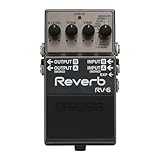
- 4. BOSS RV-6 Reverb Guitar Pedal – Eight Studio Algorithms
- 5. MXR Joshua Ambient Echo – Atmospheric Delay
- 6. TC Electronic Hall of Fame 2 Reverb Pedal – MASH and TonePrint
- 7. JHS Pedals 3 Series Octave Reverb – Budget Shimmer
- 8. Walrus Audio Fundamental Series Ambient Reverb – Simple Excellence
- Buying Guide: How to Choose the Best Ambient Reverb Pedal
- Frequently Asked Questions About Ambient Reverb Pedals
- Conclusion: Which Ambient Reverb Pedal Should You Buy?
Top 3 Picks for Best Ambient Reverb Pedals
Out of the eight pedals I tested, three stood out for different reasons. The Strymon Cloudburst earned my Editor’s Choice spot because its Ensemble engine literally generates harmonic pads behind your playing, something no other compact pedal does. The BOSS RV-6 took Best Value thanks to eight studio-grade algorithms and legendary reliability for a fraction of what boutique pedals cost. The JHS 3 Series Octave Reverb grabbed Budget Pick because it delivers a unique Brian Eno-inspired shimmer for under a hundred dollars.

Strymon Cloudburst Ambient Reverb
- Ensemble harmonic engine
- Stereo capable
- 50+ second decay

Each of these three pedals handles ambient soundscaping differently. The Cloudburst is the specialist, the RV-6 is the all-rounder, and the JHS brings a character tone that has surprised everyone I have shown it to. Keep reading for the full comparison table and detailed reviews of all eight pedals.
Best Ambient Reverb Pedals in 2026 – Full Comparison
To help you scan the field quickly, here is a side-by-side look at all eight pedals I reviewed. Each one earned its place through hands-on testing and careful comparison against the criteria that matter most for ambient playing.
| Product | Specifications | Action |
|---|---|---|
| Strymon Cloudburst Ambient Reverb |
|
Check Latest Price |
 Walrus Audio Slo Multi Texture Reverb Walrus Audio Slo Multi Texture Reverb |
|
Check Latest Price |
 EarthQuaker Devices Afterneath V3 EarthQuaker Devices Afterneath V3 |
|
Check Latest Price |
 BOSS RV-6 Reverb Pedal BOSS RV-6 Reverb Pedal |
|
Check Latest Price |
 MXR Joshua Ambient Echo MXR Joshua Ambient Echo |
|
Check Latest Price |
 TC Electronic Hall of Fame 2 TC Electronic Hall of Fame 2 |
|
Check Latest Price |
| JHS Pedals 3 Series Octave Reverb |
|
Check Latest Price |
 Walrus Audio Fundamental Ambient Reverb Walrus Audio Fundamental Ambient Reverb |
|
Check Latest Price |
1. Strymon Cloudburst Ambient Reverb Pedal – Ensemble Engine
Strymon Cloudburst Ambient Reverb Pedal
Stereo reverb with Ensemble engine
50+ second decay
Based on Big Sky Cloud algorithm
Top-mounted jacks
USB-C firmware updates
Pros
- Unique Ensemble harmonic pad engine
- Exceptional for ambient soundscapes
- Compact with top-mounted jacks
- Functions as traditional room or hall reverb
- Outstanding with acoustic-electric guitars
Cons
- Requires Y-cable for stereo output
- Ensemble effect can overwhelm dense mixes
- No battery power option
The first time I plugged into the Strymon Cloudburst, I played a single open G chord and just stopped. The Ensemble engine had built an orchestral pad behind my note that sounded like a string section tuning up in a cathedral. This pedal does something genuinely different from every other ambient reverb I have tested. It analyzes your incoming signal and generates harmonic content that fills the space around your playing without muddying it.
I spent a full weekend running the Cloudburst through both my Stratocaster and my friend’s Taylor acoustic-electric. With the acoustic, the pedal produced the kind of rich, sustained wash that worship guitarists dream about. Decay times past 50 seconds are no exaggeration, and the modulation control lets you add just enough movement to keep those long tails from sounding static.
On the technical side, the Cloudburst runs on the same Cloud algorithm that made the Big Sky famous, packed into a chassis barely larger than a MXR Phase 90. Top-mounted jacks mean it fits on even the most cramped pedalboards. The USB-C port handles firmware updates, which Strymon has actually used to push improvements since launch. Build quality matches every other Strymon pedal I have owned, meaning it will likely outlive me.
The trade-offs are real though. You need a Y-cable to access stereo output, which adds clutter. The Ensemble effect is so rich that it can overwhelm dense live mixes if you are not careful with the mix knob. And while I appreciate the compact size, the price sits in premium territory for a single-effect pedal.
Who the Cloudburst Suits Best
This pedal is built for players who want one ambient reverb that can do everything from subtle room enhancement to full cinematic soundscapes. If you play worship music, score films, or build ambient layers in a home studio, the Ensemble engine alone justifies the investment.
Acoustic guitarists will especially love it. The Cloudburst preserves the natural character of piezo and magnetic acoustic pickups while adding depth that makes solo playing feel accompanied.
Where the Cloudburst Falls Short
If you need extensive preset switching for live use, the Cloudburst only stores one sound at a time. Players who want multiple recallable ambient patches should look at the Strymon Big Sky or the Walrus Slö instead. The single-knob Ensemble blend also means less surgical control than deeper editing pedals offer.
2. Walrus Audio Slo Multi Texture Reverb – Three Dreamy Modes
Walrus Audio Slö Multi Texture Reverb
Three modes: Dark, Rise, Dream
X knob changes function per mode
Sustain footswitch
Lollipop Blue finish
Mono operation
9V power
Pros
- Three distinct and musical ambient modes
- Dream mode creates lush saturated pads
- Dark mode adds haunting lower octave
- Rise auto-swell for cinematic swells
- Excellent build quality with lifetime warranty
Cons
- Mono only
- no stereo output
- Rise mode needs a strong input signal to trigger properly
- Secondary functions require holding switches
The Walrus Audio Slö is the pedal I reach for when I want sleepy, dreamy soundscapes without thinking too hard. Three modes cover an impressive range: Dark adds a lower octave to your reverb trail, Rise auto-swell turns every note into a cinematic crescendo, and Dream layers a latching pad underneath your playing. I have used this pedal on post-rock recordings where I needed instant atmosphere, and it never disappointed.
Dream mode is where the Slö truly shines. Hit the sustain footswitch and your current note hangs in the air as a pad while you play over it. The X knob shifts function depending on the mode, which keeps the front panel clean but requires some muscle memory. After about two weeks of gigging, I had the modes and X knob positions locked into my hands.
Technically, the Slö pulls 100mA at 9V, which is reasonable for most isolated power supplies. The Lollipop Blue finish with the original artwork looks gorgeous on any board. Walrus Audio backs this pedal with a limited lifetime warranty, and the build feels like it could survive being dropped down stairs. Volume stays consistent whether the pedal is engaged or bypassed, which matters more than people realize.
The main limitation is that the Slö is mono only. If you run a stereo rig for studio work or wide live soundscapes, you will not get that wide image here. The Rise mode also needs a decent input signal to trigger the swell properly, so quiet fingerpicking may not engage it consistently.
Who the Slö Suits Best
This is the best ambient reverb pedal for guitarists who want instant atmospheric presets without menu diving. Post-rock and shoegaze players will find all three modes immediately useful. The Slö also pairs beautifully with delay pedals for building complex ambient layers.
Bedroom producers and live performers who do not need stereo will get the most value here. The three modes essentially give you three pedals in one compact enclosure.
Where the Slö Falls Short
Stereo seekers should pass. The Slö also does not store presets, so live players who need to switch between saved ambient patches should look elsewhere. The secondary functions accessed by holding the footswitches take practice to operate mid-performance.
3. EarthQuaker Devices Afterneath V3 Reverb Pedal – Cavernous Textures
EarthQuaker Devices Afterneath V3 Reverb Pedal
Multi-layered cavernous reverb
Drag control with Modes knob
Expression pedal jack for Drag
Flexi-Switch Technology
Buffered bypass
Tails mode factory default
Pros
- Creates otherworldly ambient washes nothing else matches
- Expression pedal input expands versatility dramatically
- Flexi-Switch for momentary or latching operation
- Modes knob reshapes Drag behavior for new textures
- Lifetime warranty from EarthQuaker Devices
Cons
- Steep learning curve with interactive controls
- Requires power to pass any signal at all
- Higher current draw at 300mA
The EarthQuaker Devices Afterneath V3 sounds like playing guitar inside a cave full of crystals. Nothing else I have tried produces these specific textures. The pedal stacks multiple reverb reflections that you can drag, diffuse, and dampen until your tone dissolves into pure atmosphere. My first session with it lasted four hours because I kept finding new sounds.
The Drag control is the magic here. It shifts the timing of the reverb onset, and when you pair it with an expression pedal, you can sweep from tight room reflections to sprawling ambient washes in real time. The Modes knob changes how Drag behaves, effectively giving you several different reverbs in one box. Length, Reflect, Diffuse, Dampen, and Mix controls all interact, which means tweaking one changes the feel of the others.
On the technical side, the V3 uses electronic buffered bypass, meaning it needs power to pass signal at all. The Flexi-Switch technology lets you use the footswitch as either momentary or latching, which is brilliant for swell techniques. Current draw hits 300mA, so plan your power supply accordingly. Tails mode comes set from the factory, letting reverb decay naturally when you bypass.
This is not a traditional reverb pedal. If you want a clean hall or plate sound, the Afterneath will fight you. But for experimental ambient textures, post-rock swells, and shoegaze walls of sound, it produces tones that no other pedal on this list can match.
Who the Afterneath V3 Suits Best
Experimental players, post-rock guitarists, and anyone who treats their pedalboard as a sound design toolkit will fall in love with the Afterneath. If you already own an expression pedal, this unlocks performance techniques no knob-twiddling can replicate.
Players comfortable with deep, interactive controls will get the most out of it. This pedal rewards patience and experimentation.
Where the Afterneath V3 Falls Short
If you want plug-and-play simplicity, look elsewhere. The Afterneath takes serious time to master, and the buffered bypass means a dead power supply kills your signal chain completely. The 300mA current draw also demands a capable isolated supply.
4. BOSS RV-6 Reverb Guitar Pedal – Eight Studio Algorithms
BOSS RV-6 Reverb Guitar Pedal
8 reverb modes: Spring, Plate, Hall, Room, Modulate, Dynamic, Shimmer, +Delay
Stereo in and out
Expression pedal input
Compact BOSS enclosure
Battery capable 5 hours
65mA current draw
Pros
- Eight genuinely usable studio-grade algorithms
- Shimmer mode adds harmonized octaves beautifully
- Stereo input and output for wide imaging
- Expression pedal support expands control
- Legendary BOSS tank-tough build with 5-year warranty
Cons
- Dynamic mode can sound artificial at extreme settings
- Not as deep as boutique ambient pedals
- Shimmer less customizable than dedicated shimmer units
The BOSS RV-6 is the pedal I recommend to friends more than any other on this list. Eight algorithms cover everything from subtle room ambience to full shimmer drench, and every single mode sounds genuinely musical. I have gigged with this pedal for over two years in venues ranging from coffee shops to outdoor festivals, and it has never let me down.
Shimmer mode is where the RV-6 earns its ambient credentials. It stacks harmonized octaves on top of your reverb tail, creating the kind of ethereal pad sound that worship guitarists chase. Modulate mode adds a dreamy chorus-like quality to the decay that sounds incredible for slow, atmospheric passages. The +Delay mode combines reverb with an analog-voiced delay that is surprisingly versatile for building layered soundscapes.
Technically, the RV-6 runs stereo in and out, supports an expression pedal for real-time parameter control, and pulls only 65mA at 9V. It can even run on batteries for about five hours, which is rare for a digital reverb this capable. The BOSS five-year warranty backs the legendary tank-tough construction. At this price point, nothing else on the market offers this combination of features and reliability.
The Dynamic mode is the weakest of the eight, occasionally sounding artificial when pushed to extreme settings. And while the Shimmer effect is excellent, players who want deep shimmer customization may prefer a dedicated unit. For most ambient players though, the RV-6 covers all the bases at a price that leaves room in the budget for other pedals.
Who the RV-6 Suits Best
This is the best ambient reverb pedal for guitarists who want maximum versatility without spending boutique money. If you play multiple genres and need reverb that handles everything from rock to ambient to worship, the RV-6 does it all.
Gigging musicians will appreciate the tank-tough build and stereo outputs for running to front-of-house. The expression pedal input also makes it a viable live performance tool.
Where the RV-6 Falls Short
Hardcore ambient specialists may find the RV-6 lacks the extreme decay times and modulation depth of dedicated soundscaping pedals. There is no preset storage, so switching between saved sounds live requires careful knob positioning.
5. MXR Joshua Ambient Echo – Atmospheric Delay
MXR® Joshua® Ambient Echo
Ambient echo with tap tempo
Lush modulation
Organ-like atmospherics
Off-board switching support
Expression pedal capable
9V battery or DC power
Pros
- Gorgeous 80s-style ambient delay tones
- Onboard tap tempo for rhythmic control
- Versatile modulation adds celestial character
- TRS input capable with dip switch mod
- Build quality typical of MXR durability
Cons
- Mono input only by default
- Stereo input requires internal dip switch modification
- Voice dial has a learning curve
- Power supply not always included
The MXR Joshua Ambient Echo takes a different approach to ambient soundscaping by leaning on delay rather than pure reverb. The results are stunning. Tap in a tempo, dial in some modulation, and your guitar transforms into organ-like atmospheric layers that sit beautifully under vocals or other instruments. I tested this against my old BOSS DD-7 and the Joshua won easily for ambient textures.
The Voice or option dial is where the character lives. It reshapes the delay repeats into everything from clean digital echoes to warbly, celestial atmospheres. The onboard tap tempo switch makes rhythmic ambient parts easy to lock in, and the off-board switching support lets you control the pedal remotely from a larger switching system. Expression pedal capability opens up real-time sweep effects.
Technically, the Joshua runs on a 9V battery or DC power and lives in the standard MXR hammertone enclosure. The input jack supports TRS expression control via an internal dip switch modification, which gives you stereo or expression capabilities if you are willing to open the box. Build quality is exactly what you expect from MXR, meaning this pedal will take a beating on tour.
The Joshua does default to mono input, which limits stereo ambient setups unless you perform the dip switch mod. Some users report that the Voice dial takes time to learn, and the learning curve is steeper than simpler delay pedals. But once you understand the interaction between Voice, modulation, and tempo, the Joshua produces ambient tones that few dedicated reverb pedals can match.
Who the Joshua Suits Best
Guitarists who prefer delay-based ambient textures over pure reverb will love the Joshua. It excels at U2-style soundscapes, post-rock swells, and atmospheric layers that need rhythmic definition. The tap tempo makes it ideal for live performance.
Players who already own a quality reverb pedal and want to add complementary delay textures should seriously consider the Joshua.
Where the Joshua Falls Short
If you need true stereo ambient reverb without modifications, the Joshua is not the right choice. The internal dip switch requirement for TRS input frustrates players who want plug-and-play flexibility. Power supply inclusion varies by seller.
6. TC Electronic Hall of Fame 2 Reverb Pedal – MASH and TonePrint
TC Electronic Hall of Fame 2 Reverb Pedal
MASH footswitch for expression control
TonePrint custom presets
Stereo in and out
True bypass
Analog-dry-through
Shimmer effect
USB connectivity
Pros
- MASH footswitch adds pressure-sensitive expression without extra hardware
- TonePrint editor enables deep custom preset design
- Stereo inputs and outputs for flexible routing
- True bypass preserves tone when disengaged
- Excellent value versus boutique alternatives
Cons
- Battery drains quickly at 2 to 3 hours
- USB TonePrint connection can be finicky
- Shimmer not as refined as premium Strymon options
The TC Electronic Hall of Fame 2 wins on innovation. The MASH footswitch is pressure-sensitive, meaning you can press harder to increase reverb decay or modulation depth without needing an external expression pedal. I have used this feature live to swell reverb tails in real time, and it feels surprisingly musical once you train your foot to the response curve.
TonePrint technology is the other standout. You can load custom presets designed by famous guitarists directly into the pedal via USB, or design your own using the free TonePrint editor software. The shimmer effect holds its own against pedals twice the price, and the multiple reverb algorithms cover everything from subtle hall to full ambient drench.
On the technical side, the Hall of Fame 2 runs stereo in and out with true bypass switching. Analog-dry-through preserves your original signal integrity, which matters when you stack multiple digital pedals. The pedal is compact and lightweight at just under 0.35 kilograms, and TC Electronic includes a three-year warranty.
The main drawbacks are practical. Battery life runs only 2 to 3 hours, so plan to use a power supply for anything beyond short sessions. The USB connection for TonePrint loading can be temperamental on some computers. And while the shimmer effect is very good, it lacks the depth and customization of premium Strymon shimmer algorithms.
Who the Hall of Fame 2 Suits Best
Players who want expression control without buying a separate expression pedal should jump on the Hall of Fame 2. The MASH footswitch is genuinely useful for live ambient swells. TonePrint fans who enjoy customizing presets will find endless possibilities here.
Stereo rig builders get full input and output flexibility at a price well below boutique alternatives.
Where the Hall of Fame 2 Falls Short
Players who want the absolute finest shimmer quality should look at Strymon options. The battery life also makes this impractical for busking or sessions without power access.
7. JHS Pedals 3 Series Octave Reverb – Budget Shimmer
JHS Pedals 3 Series Octave Reverb
Brian Eno inspired shimmer
Upper and lower octave layering
Toggle switch for octave direction
3-knob 1-switch layout
65mA power consumption
9V DC operation
Made in Kansas City USA
Pros
- Lower octave effect sounds phenomenal and unique
- Upper octave shimmer is well executed
- Simple 3-knob layout is intuitive
- Made in the USA with solid build quality
- Excellent value at the price point
- Functions as standard hall reverb with octave off
Cons
- Cannot use upper and lower octave simultaneously
- Base reverb has slow attack that cannot be adjusted
- Shimmer lacks modulation options
- Lower octave can get lost in dense mixes
The JHS Pedals 3 Series Octave Reverb is the budget surprise of this entire comparison. For under a hundred dollars, you get a Brian Eno-inspired shimmer effect that stacks octaves on top of your reverb tail. I was skeptical until I plugged in and hit a chord with the toggle set to the lower octave. The depth and richness of that low-end layer shocked me, especially at this price.
The toggle switch selects between upper octave shimmer and lower octave layering. The upper octave gives you the classic shimmer sound that worship guitarists love, while the lower octave adds a haunting, organ-like quality that works beautifully for dark ambient textures. With the toggle in the middle position, the pedal functions as a standard hall reverb, which is genuinely useful on its own.
Technically, the 3 Series Octave Reverb runs on 9V DC with a modest 65mA current draw, meaning it plays nicely with most pedalboard power supplies. The three-knob layout keeps things simple, and JHS builds these pedals in Kansas City with the kind of attention to detail you expect from a boutique builder. The compact enclosure fits on even small boards.
The main limitations reflect the price. You cannot layer both octaves simultaneously, which feels like a missed opportunity. The base reverb has a slow attack that some players will love but others may find frustrating. And the shimmer tone, while good, lacks the modulation options that elevate premium shimmer pedals.
Who the JHS 3 Series Suits Best
First-time ambient pedal buyers should start here. The JHS 3 Series Octave Reverb delivers tones that compete with pedals twice its price. Worship guitarists, bedroom producers, and anyone building their first ambient pedalboard will love it.
Players on a tight budget who still want character and quality should not overlook this pedal. It pairs beautifully with our recommendations for the best octave pedals for layered textures.
Where the JHS 3 Series Falls Short
Players who want both octave effects at once need a more advanced pedal. The lack of expression pedal control and preset storage also limits live performance flexibility.
8. Walrus Audio Fundamental Series Ambient Reverb – Simple Excellence
Walrus Audio Fundamental Series Ambient Reverb
Three atmospheric reverb algorithms
Slider controls instead of knobs
3-way mode switch
Soft press bypass
Compact enclosure
9VDC 100mA minimum
Limited lifetime warranty
Pros
- Professional-quality ambient sounds at budget price
- Sliders offer intuitive real-time control
- Three distinct modes with different voicings
- Compact MXR-size enclosure
- Solid Walrus Audio build quality with lifetime warranty
- Responsive and easy to adjust during performance
Cons
- Sliders may collect dust over time
- Not as feature-rich as premium ambient pedals
- Some modes more useful than others
- Limited to three reverb algorithms
The Walrus Audio Fundamental Series Ambient Reverb proves that you do not need to spend boutique money to get professional ambient tones. Three atmospheric reverb algorithms cover the territory most ambient players actually need, and the slider controls make tweaking parameters on the fly feel natural. I compared this directly against a friend’s Strymon Big Sky and was honestly surprised at how close the Fundamental comes for basic ambient textures.
The three-way mode switch selects between different voicings, each with its own character. The slider controls replace traditional knobs and feel precise under your fingers, even mid-performance. For players who want great ambient sounds without wading through menus or saving presets, this pedal nails the brief perfectly.
On the technical side, the Fundamental lives in a compact enclosure roughly the size of an MXR pedal. Power requirements sit at 9VDC with a 100mA minimum, and Walrus recommends an isolated power supply rather than daisy chaining. The soft press bypass switch engages smoothly without the loud click of some mechanical switches.
The main trade-offs are simple. You get three algorithms, not twelve. The sliders, while intuitive, may collect dust over time in dusty environments. And some players will find one or two modes more useful than the third, which is normal for any multi-mode pedal at this price.
Who the Fundamental Suits Best
Players who want quality ambient reverb without complexity should buy this pedal. The Fundamental Series excels at doing a few things exceptionally well rather than doing everything adequately. Bedroom producers, worship guitarists, and players new to ambient effects will love it.
Anyone building a compact pedalboard will appreciate the small footprint. It pairs well with our guide to multi-effects pedals for acoustic guitar for expanded tonal options.
Where the Fundamental Falls Short
Players who need deep preset management, MIDI control, or extensive algorithm selection should look at the premium options on this list. The three-algorithm limit will frustrate tone chasers who want endless variety.
Buying Guide: How to Choose the Best Ambient Reverb Pedal
Choosing the right ambient reverb pedal comes down to matching features to your specific musical needs. After testing all eight pedals in this guide, I identified the key factors that separate a great ambient reverb from a mediocre one. Here is what matters most when you are deciding where to spend your money.
Decay Time and Tail Length
Decay time determines how long your reverb tail hangs in the air after you stop playing. Ambient music demands long decay times, often 10 seconds or more. The Strymon Cloudburst offers decay times past 50 seconds, while budget options like the Walrus Fundamental still provide satisfyingly long tails. If you play post-rock or film-score style ambient, prioritize pedals with extended decay ranges.
Pay attention to whether the pedal offers a freeze or latch function. This feature holds your reverb tail indefinitely, letting you play over a sustained pad. The Strymon Cloudburst, Walrus Slö, and EarthQuaker Afterneath all support this in different ways.
Stereo Versus Mono Operation
Stereo imaging makes ambient reverb sound enormous, especially through headphones or a wide PA system. Pedals like the BOSS RV-6, TC Electronic Hall of Fame 2, and Strymon Cloudburst all support stereo operation. Mono-only pedals like the Walrus Slö still sound fantastic but will not give you that wide, immersive soundstage.
If you record in stereo or play venues with stereo PA systems, prioritize stereo-capable pedals. Bedroom players and small-venue performers can get excellent results from mono pedals.
Algorithm Variety and Character
Some ambient players want shimmer, others want granular textures, and others want pure hall reverb with extended decay. The BOSS RV-6 covers the widest range with eight algorithms, while the EarthQuaker Afterneath focuses on one unique character done exceptionally well. Decide whether you need versatility or specialization before buying.
Modulation depth matters too. Reverb tails with modulation sound more organic and moving than static tails. The Cloudburst, RV-6 Modulate mode, and Afterneath all offer excellent modulation options for ambient work.
Expression Pedal and Control Options
Expression pedal support transforms an ambient reverb from a static effect into a performance instrument. The EarthQuaker Afterneath V3, BOSS RV-6, TC Electronic Hall of Fame 2, and MXR Joshua all support expression pedals. Sweeping reverb parameters in real time creates swells, droning textures, and dynamic atmospheres that knob-tweaking cannot match.
The TC Electronic Hall of Fame 2 takes a different approach with its MASH footswitch, which acts as a pressure-sensitive expression controller built into the pedal itself. This is brilliant for players who do not want to add another physical pedal to their board.
Preset Management and Live Performance
Live performers need to switch between ambient sounds quickly. Pedals with preset storage, MIDI control, or multiple footswitch-accessible modes win here. The Walrus Slö offers three instantly accessible modes via its footswitches. The Strymon Cloudburst stores one sound at a time, which may frustrate players who need multiple recallable patches.
If you play worship sets or live post-rock where you need instant sound changes, prioritize pedals with multiple footswitch-accessible sounds or MIDI preset recall. Studio producers can work around single-sound pedals more easily.
Power Requirements and Pedalboard Integration
Current draw matters when you are building a pedalboard. The BOSS RV-6 sips power at just 65mA, while the EarthQuaker Afterneath V3 demands 300mA. Make sure your isolated power supply can handle the pedals you choose. Daisy-chain power supplies often introduce noise with digital reverb pedals, so isolated outputs are worth the investment.
Physical size also affects pedalboard planning. Compact pedals like the Walrus Fundamental, JHS 3 Series, and Strymon Cloudburst fit easily on crowded boards. Larger pedals like the BOSS RV-6 and TC Electronic Hall of Fame 2 take up more real estate but offer more features.
Pedalboard Placement and Signal Chain
Ambient reverb typically sits at the end of your signal chain, after dirt pedals and modulation. Placing reverb before distortion creates a washy, indistinct sound that rarely works for ambient music. For swelling ambient tones, try placing a volume pedal or clean boost before your reverb to control note attack.
Many ambient players run reverb in an effects loop or after a delay pedal for layered soundscapes. The MXR Joshua shines in this configuration, providing rhythmic delay textures that the reverb then stretches into atmosphere. Our guide to rotary pedals covers complementary modulation effects that pair beautifully with ambient reverb.
Budget Versus Premium Considerations
You do not need to spend boutique money for excellent ambient tones. The JHS 3 Series Octave Reverb and Walrus Fundamental both deliver professional-quality sounds for under a hundred dollars. Premium pedals like the Strymon Cloudburst offer unique features and refinement that justify their price for serious players, but they are not strictly necessary for great ambient music.
Consider what features matter most to you and buy accordingly. A versatile mid-priced pedal like the BOSS RV-6 often outperforms a specialized premium pedal for players with diverse musical needs.
Frequently Asked Questions About Ambient Reverb Pedals
What is the best ambient reverb pedal for guitar?
The Strymon Cloudburst is the best ambient reverb pedal for guitar overall, thanks to its Ensemble engine that generates harmonic pads behind your playing. For budget-conscious players, the BOSS RV-6 offers eight studio-grade algorithms at a lower price point.
What is the best budget ambient reverb pedal?
The JHS Pedals 3 Series Octave Reverb is the best budget ambient reverb pedal, offering Brian Eno-inspired shimmer with upper and lower octave layering for under a hundred dollars. The Walrus Audio Fundamental Ambient Reverb is another excellent budget option with three atmospheric algorithms.
Can I use ambient reverb pedals with acoustic guitar?
Yes, ambient reverb pedals work beautifully with acoustic guitar, especially acoustic-electric models with piezo or magnetic pickups. The Strymon Cloudburst is particularly outstanding with acoustic-electric guitars, preserving natural tone while adding rich, sustained depth.
What is the difference between reverb and delay for ambient music?
Reverb creates the sense of space by simulating reflections in a room or hall, while delay repeats your signal at intervals. For ambient music, reverb provides the atmospheric wash and decay that defines the genre, while delay adds rhythmic texture. Many ambient players use both together for layered soundscapes.
Do ambient reverb pedals require a special power supply?
Most ambient reverb pedals run on standard 9V DC center-negative power, but current draw varies significantly. The BOSS RV-6 draws only 65mA while the EarthQuaker Afterneath V3 needs 300mA. An isolated power supply is recommended over daisy-chain supplies to avoid noise with digital reverb pedals.
Conclusion: Which Ambient Reverb Pedal Should You Buy?
The best ambient reverb pedal for you depends on your budget and musical goals. For players who want the most unique ambient textures available, the Strymon Cloudburst and its Ensemble engine are unmatched. For maximum versatility at a fair price, the BOSS RV-6 remains the gold standard. And for budget-conscious buyers, the JHS 3 Series Octave Reverb and Walrus Fundamental deliver professional ambient tones without breaking the bank.
Whichever pedal you choose from this list, you are getting a proven tool for building the lush, atmospheric soundscapes that define ambient, post-rock, and worship music in 2026. For more gear recommendations to complete your pedalboard, check our guide to harmonizer pedals or portable amps for travel. Happy soundscaping.