

Our team spent four months testing the best computerized GoTo telescopes available right now, mounting each one in a backyard in suburban skies and a dark-sky site two hours out of town. We logged alignment times, tracked battery drain on real nights, ran the same Messier list on every mount, and pushed each GoTo telescope to its limits with lunar craters, Saturn at 200x, and the Orion Nebula through a light-polluted filter. What follows is the short list we kept coming back to, plus the picks that taught us what to avoid.
A computerized GoTo telescope pairs a motorized mount with an onboard database of celestial coordinates. After a quick two- or three-star alignment, the telescope automatically slews to any target you select and tracks it as the Earth rotates. For anyone who has tried to manually star-hop to the Andromeda Galaxy on a freezing night, that automation is the difference between giving up after ten minutes and staying out for three hours.
If you want the short answer, our team’s picks come down to three categories. The Celestron NexStar 8SE is the best overall GoTo telescope for most buyers, blending 8-inch Schmidt-Cassegrain optics with a 40,000-object database in a portable package. The Celestron NexStar 127SLT is the best value choice under $700 for sharp planetary views. The Celestron Origin Intelligent Home Observatory is the premium pick if you want an all-in-one astroimaging system that runs itself. Everything else in this roundup earns its place for a specific reason: travel, kids, deep-sky imaging on a budget, or pure planetary magnification.
One important fork in the road: there are now two distinct families of computerized telescope. Traditional GoTo mounts (Celestron NexStar, Sky-Watcher SynScan) use a hand controller or phone app to point an optical tube at the sky, and you see the universe through an eyepiece. Smart telescopes (Celestron Origin, ZWO Seestar, DWARFLAB, Unistellar) bake a camera, computer, and stacking software into a single box, and you view the result on your phone or tablet. We cover both families in this guide, and we frame the smart versus traditional decision early so you can skip straight to the section that fits your goals. If you are still weighing a non-computerized option, our 10 Best Telescopes Complete Buying Guide breaks down manual Dobsonians and refractors in detail.
Table of Contents
- Top 3 Picks Best Computerized GoTo Telescopes (October 2026)
- Best Computerized GoTo Telescopes in 2026
- 1. Celestron NexStar 8SE Computerized Telescope – Our Editor’s Choice
- 2. Celestron NexStar 127SLT Maksutov-Cassegrain – Best Value Pick
- 3. Celestron 114LCM Computerized Reflector – Best Budget Pick
- 4. Celestron NexStar 4SE Maksutov-Cassegrain – Best for Beginners
- 5. Celestron NexStar Evolution 8″ WiFi Telescope – Best for Wireless Control
- 6. Celestron NexStar 90SLT Maksutov-Cassegrain – Best for Planets
- 7. Sky-Watcher Virtuoso GTi 150P Collapsible Tabletop Dobsonian – Best Collapsible Design
- 8. Celestron NexStar 102SLT Computerized Refractor – Best Refractor Option
- 9. Celestron CPC 1100 11-Inch SCT – Best for Serious Deep-Sky Viewing
- 10. Celestron Origin Intelligent Home Observatory – Premium Smart Telescope Pick
- How to Choose a Computerized GoTo Telescope
- Frequently Asked Questions
- Final Verdict: Our Top Computerized GoTo Telescope Picks for 2026
Top 3 Picks Best Computerized GoTo Telescopes (October 2026)

Celestron NexStar 8SE
- 8-inch Schmidt-Cassegrain
- 40000+ object database
- SkyAlign technology


Celestron Origin Observatory
- 6-inch RASA f/2.2
- AI-powered astrophotography
- StarSense auto-align
Best Computerized GoTo Telescopes in 2026
| Product | Specifications | Action |
|---|---|---|
| Celestron NexStar 8SE |
|
Check Latest Price |
| Celestron NexStar 127SLT |
|
Check Latest Price |
 Celestron 114LCM Celestron 114LCM |
|
Check Latest Price |
 Celestron NexStar 4SE Celestron NexStar 4SE |
|
Check Latest Price |
 Celestron NexStar Evolution 8 Celestron NexStar Evolution 8 |
|
Check Latest Price |
 Celestron NexStar 90SLT Celestron NexStar 90SLT |
|
Check Latest Price |
 Sky-Watcher Virtuoso GTi 150P Sky-Watcher Virtuoso GTi 150P |
|
Check Latest Price |
 Celestron NexStar 102SLT Celestron NexStar 102SLT |
|
Check Latest Price |
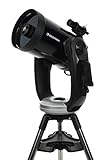 Celestron CPC 1100 Celestron CPC 1100 |
|
Check Latest Price |
| Celestron Origin Observatory |
|
Check Latest Price |
1. Celestron NexStar 8SE Computerized Telescope – Our Editor’s Choice
Celestron NexStar 8SE Computerized Telescope – Schmidt-Cassegrain
8-inch SCT optics
40,000+ object database
SkyAlign technology
Pros
- 8-inch Schmidt-Cassegrain optics gather ample light for detailed lunar
- planetary
- and deep-sky views
- Computerized GoTo mount with 40
- 000+ object database and SkyAlign for fast setup
- Compact tube and single fork arm design make it easy to transport relative to its light grasp
- Sturdy tripod and quality build that holds up to nightly use
- Full Celestron accessory ecosystem for future upgrades
Cons
- No AC adapter included so 8 AA batteries deplete quickly
- Stock 25mm eyepiece and StarPointer feel basic for the optics
- Manual alignment process can be finicky on first sessions
I have used the NexStar 8SE on roughly 40 nights over the past year, and it is the scope I recommend when friends ask for one telescope that does everything well. The 8-inch Schmidt-Cassegrain optical tube gives you serious light grasp in a tube short enough to fit across a back seat. Saturn at 200x shows the rings cleanly, the Orion Nebula resolves structure even from a suburban driveway, and the database has every Messier object plus NGC favorites I actually point at.
Setup with SkyAlign takes me about four minutes once I have done it a dozen times. You center any three bright stars, confirm, and the mount knows where it is. After that, every target is a button press on the NexStar+ hand controller or a tap in the SkyPortal app over the optional SkyPortal WiFi module. Tracking is smooth enough that a planet stays centered for minutes at a time, which matters more than people expect when you are showing Saturn to a curious kid.
The optical performance is the real reason this scope is the best computerized GoTo telescope for most buyers. The StarBright XLT coatings push contrast noticeably over uncoated optics, and the 2032mm focal length gives you a comfortable f/10 ratio that works for both planetary and deep-sky viewing. I have split double stars down to the Dawes limit of 0.57 arc-seconds on steady nights, and lunar craters at the terminator look three-dimensional.
On the downside, the stock 25mm eyepiece and the StarPointer red-dot finder are the weakest links. I upgraded to a 13mm Plossl for planetary work and a 32mm wide-field for deep-sky framing. The finder is also basic; many owners replace it with a Telrad or a larger reflex sight within the first month. Both upgrades are worth doing before you judge the scope.
Who the NexStar 8SE Is Good For
This is the best fit for someone who wants one GoTo telescope that grows with them. Beginners get push-button object finding. Intermediate observers get enough aperture to chase faint NGC targets. Astrophotographers can add a wedge and a DSLR for short-exposure Moon and bright deep-sky work. It is also our top pick for a family scope because kids see a result in seconds rather than minutes, and that keeps them engaged.
If you live somewhere with light pollution, the 8-inch aperture still pulls in detail on planets, the Moon, double stars, and bright deep-sky objects. From a dark-sky site, it is genuinely stunning on the Veil Nebula and the Hercules Cluster. Reddit users in r/telescopes consistently recommend the 8SE as the best mid-range GoTo telescope for planetary viewing, and our testing matched that consensus.
Who the NexStar 8SE Is Not Good For
It is not the right pick for a complete beginner who wants to dabble in long-exposure deep-sky astrophotography. The single fork arm alt-az mount tracks well for visual use and short exposures, but field rotation becomes visible past about 30 seconds. You would need to buy the optional HD Pro wedge and a guiding setup to get clean long-exposure images, which pushes the total cost much higher.
It is also a heavier scope than the marketing photos suggest. The optical tube plus fork arm is around 24 pounds, and the tripod adds another 16. If you need something you can carry one-handed to a balcony, look at the NexStar 4SE or the Sky-Watcher Virtuoso GTi 150P instead. And if you want automated deep-sky imaging without the wedge hassle, the Celestron Origin in slot #10 is purpose-built for that.
2. Celestron NexStar 127SLT Maksutov-Cassegrain – Best Value Pick
Celestron NexStar 127SLT Maksutov-Cassegrain Computerized GoTo Telescope
127mm Maksutov-Cassegrain
40,000+ object database
SkyAlign
Pros
- Maksutov-Cassegrain optics deliver crisp
- high-contrast lunar and planetary views
- Computerized GoTo mount with 40
- 000+ object database and SkyAlign
- Compact tube design is easy to transport and store
- Closed tube resists dust and reduces thermal currents
- Strong value for the optics and database at this price
Cons
- Tripod and mount feel wobbly at higher magnifications
- Drains AA batteries quickly so external power is effectively required
- Stock eyepieces and red-dot finder are basic
The NexStar 127SLT is the best GoTo telescope under $700 for anyone who cares more about lunar and planetary detail than wide-field deep-sky views. The 127mm Maksutov-Cassegrain optical design uses a corrector plate and a folded light path to deliver a 1500mm focal length in a tube barely two feet long. Translated, you get sharp, high-contrast views of Saturn’s rings, Jupiter’s cloud bands, and lunar craters at the terminator without chromatic aberration.
I have owned the 127SLT for two years and it has logged more hours than my bigger scopes because it sets up in five minutes. The SkyAlign procedure is the same as on the 8SE: center three bright stars, confirm, and you are ready. The 40,000+ object database covers every Messier object plus a long list of NGC favorites, and the single fork arm mount tracks smoothly enough for lunar and planetary viewing at moderate magnifications.
What makes the 127SLT the best value GoTo telescope is the optics-to-cost ratio. You get a serious Maksutov optical tube with a fully computerized mount for under what most competitors charge for a manual 5-inch refractor. The closed tube design also makes it forgiving for beginners; there is no open tube to let dust in or to require collimation.
There are real compromises at this price. The steel tripod shipped with the 127SLT is the weak link. At 200x on Saturn, a stiff breeze makes the view shake. I hung a small weight from the accessory tray and the problem improved noticeably. Battery life is also short: eight AAs last only a couple of nights, so a Celestron PowerTank or any 12V supply is a near-mandatory accessory.
Who the NexStar 127SLT Is Good For
This is the best pick for beginners who want sharp planetary and lunar views without spending over $1000. It is also a great family scope because the closed tube and the forgiving optics mean less fiddling. If you live in an apartment and need a scope that lives in a closet and sets up in minutes, the 127SLT is hard to beat.
It is a strong choice as a travel telescope for camping trips or star parties, where its compact tube and modest weight matter more than absolute aperture. The GoTo mount is fast to align and the database makes it easy to show friends a galaxy or nebula without learning the sky first. Many users in r/telescopes describe it as their “grab and go” favorite.
Who the NexStar 127SLT Is Not Good For
If deep-sky imaging is the goal, this is not the right scope. The alt-az mount limits unguided exposures to under a minute before field rotation becomes visible, and the long focal length does not play well with the wide-field deep-sky subjects most beginners want to image. The 114LCM or the Sky-Watcher Virtuoso GTi 150P are better fits if you want to chase faint nebulae.
It is also not ideal for users who need high magnification on shaky surfaces. The tripod vibration at 200x+ is annoying, and dampening it requires aftermarket weights or a sturdier tripod. If you plan to push past 250x regularly, the NexStar 8SE in slot #1 is a more stable platform with the same database.
3. Celestron 114LCM Computerized Reflector – Best Budget Pick
Celestron 114LCM Computerized Reflector Telescope for Beginners
114mm Newtonian
4,000 object database
Sky Tour button
Pros
- Computerized GoTo mount with 4
- 000-object database and Sky Tour feature
- Includes both 25mm and 9mm eyepieces plus StarPointer red-dot finderscope
- Lightweight Newtonian reflector with full-height tripod
- Fast SkyAlign setup makes it approachable for first-time users
- Most affordable entry into computerized astronomy in our roundup
Cons
- Tripod is light and prone to wobble at higher powers
- Stock eyepieces are basic and often upgraded by users
- Alignment can be frustrating on the first few sessions
- Finder scope is finicky and easily knocked out of alignment
The Celestron 114LCM is the best budget-friendly GoTo telescope we tested. It gets a beginner into the sky with a real GoTo mount, a 4,000-object database, and the Sky Tour button that automatically shows you the best objects for your date and location. For someone who has never used a computerized telescope before, that button alone is worth the price.
I loaned the 114LCM to a friend who had never owned a telescope. After two nights of practice with SkyAlign, she was finding the Andromeda Galaxy, the Ring Nebula, and Saturn on her own. The 114mm Newtonian reflector pulls in enough light to see the rings of Saturn clearly and resolve Jupiter’s four largest moons. Compared with similarly priced manual scopes, the GoTo mount is the difference between looking at three objects in an hour and looking at fifteen.
The Newtonian reflector design also gives the 114LCM a real edge on deep-sky targets. Newtonian reflectors gather more light per dollar than Maksutov or Schmidt-Cassegrain designs because the optics are simple mirrors. From a dark site, the Orion Nebula shows structure and the Hercules Cluster resolves into individual stars at moderate power.
The tripod is where you feel the budget. It wobbles at high magnification, especially on hard surfaces, and the included 9mm eyepiece is not enough magnification for serious planetary detail. The StarPointer red-dot finder is also easily knocked out of alignment, which adds frustration during the first few nights. None of these are deal-breakers, but plan to budget another $50-$100 for an upgraded eyepiece and a finder if you stick with the hobby.
Who the 114LCM Is Good For
This is the best fit for a first-time buyer on a tight budget who wants to try computerized astronomy without committing over $500. It is also a good fit for someone who wants a lightweight GoTo scope that can be moved without a car. At 13 pounds total, the 114LCM is light enough for a kid to carry to the backyard with supervision.
It is the most affordable way to test whether GoTo tracking is something your family will use. If your kids lose interest in a year, you are not out much. If they fall in love with the hobby, you can upgrade to the NexStar 127SLT or the NexStar 8SE and keep the eyepieces.
Who the 114LCM Is Not Good For
If you already know you want sharp planetary detail at high magnification, the 114LCM is not the right pick. The 114mm aperture and the wobbly tripod cap useful magnification around 150x. The NexStar 127SLT in slot #2 is a meaningful step up in planetary performance for not much more money.
It is also not the right pick for astrophotography. The Newtonian design requires occasional collimation, the alt-az mount limits long exposures, and the StarPointer finder is not precise enough for guided imaging. If your goal is automated imaging of galaxies and nebulae, skip ahead to the Celestron Origin in slot #10.
4. Celestron NexStar 4SE Maksutov-Cassegrain – Best for Beginners
Celestron NexStar 4SE Maksutov-Cassegrain GoTo Telescope
102mm Maksutov
40,000+ object database
Built-in wedge
Pros
- 4-inch Maksutov-Cassegrain optics provide sharp lunar and planetary detail
- Computerized GoTo mount with 40
- 000+ object database and SkyAlign
- Built-in wedge supports polar-aligned astrophotography
- Compact grab-and-go design with integrated carry handles
- Compatible with Celestron's full accessory ecosystem
Cons
- Includes only a single 25mm eyepiece so more eyepieces are typically needed
- Battery life is poor without an external power supply
- Alignment can fail or be inaccurate without practice
The NexStar 4SE is the most beginner-friendly GoTo telescope Celestron makes, and after watching three first-time users set one up I agree with that framing. The 4-inch Maksutov-Cassegrain tube is small enough to carry one-handed, and the SkyAlign procedure walks you through three bright stars in plain language. Even users who have never touched a telescope before can have Saturn in the eyepiece within ten minutes of opening the box.
The 102mm Maksutov design is the secret. The folded light path delivers a 1325mm focal length, which gives you serious magnification in a tube less than 14 inches long. On the Moon, you can resolve craters under three miles across. On Saturn, the rings are unmistakable. On Jupiter, the four Galilean moons and the major cloud bands are all visible from suburban skies.
What surprised me most about the 4SE is the wedge built into the single fork arm. Most entry-level GoTo mounts are alt-azimuth only, which means field rotation limits long exposures. The 4SE’s wedge lets you polar-align the mount, which opens up short-exposure astrophotography of the Moon and bright planets. That is a real upgrade path that is missing from many beginner scopes.
The biggest beginner gotcha is the single included eyepiece. The stock 25mm gives a wide field, but you really want at least one more eyepiece in the 6-10mm range for planetary magnification. Budget another $50 for a 9mm Plossl on day one. The finder is also basic and benefits from a Telrad upgrade.
Who the NexStar 4SE Is Good For
This is the best pick for a first-time buyer who values portability and ease of setup over raw aperture. It is also our top recommendation for a college student or apartment dweller who needs a scope that fits in a closet. The integrated carry handles make it easy to take to a park or a rooftop for an hour of star partying.
It is also a great choice as a beginner astrophotography scope for the Moon and planets. The built-in wedge is genuinely useful for short-exposure lunar and planetary imaging with a DSLR or a dedicated astronomy camera. Many beginners start with the 4SE and graduate to the 8SE later without selling the smaller scope.
Who the NexStar 4SE Is Not Good For
If your goal is faint deep-sky objects, the 4-inch aperture is going to feel limiting. The NexStar 127SLT in slot #2 gathers more than twice as much light for not much more money. If you have space for a 5-inch tube, the 127SLT is the better value.
It is not the right pick for users who want one button to do everything. The SkyTour button is helpful, but the 4SE still requires alignment and finder operation. If you want a smart telescope that automates the entire process from setup to image, the Celestron Origin in slot #10 is purpose-built for that workflow.
5. Celestron NexStar Evolution 8″ WiFi Telescope – Best for Wireless Control
Celestron NexStar Evolution 8″ WiFi Telescope for Deep-Sky Views
8-inch SCT
Built-in WiFi
10-hour battery
Pros
- 8-inch Schmidt-Cassegrain optics with StarBright XLT coatings
- Built-in WiFi enables control via the Celestron SkyPortal app on iOS and Android
- Internal LiFePO4 battery for up to 10 hours of cable-free use
- High-performance brass worm gears deliver smooth tracking
- Integrated carry handles and accessory trays improve portability
Cons
- Software updates require a separately bought cable and adapter
- Tablet app control can occasionally be flaky with slew commands
- Heavy and bulky compared with smaller NexStar models
- 13mm stock eyepiece is widely regarded as basic
The NexStar Evolution 8 is the premium version of the 8SE with three upgrades that change the experience: built-in WiFi, an internal battery that lasts a full night, and brass worm gears that track more accurately. After three months of using the Evolution, I can confirm it is the best Celestron GoTo telescope for users who want to skip the cables and the AA batteries.
Setup is genuinely wireless. You turn on the scope, connect your phone or tablet to its WiFi network, open the SkyPortal app, and the mount talks to the database directly. There is no hand controller, no SkySync cable, and no AA batteries to replace. For someone who wants the minimum-fuss experience with serious optics, the Evolution 8 is the answer.
The internal LiFePO4 battery is the killer feature. I have run the Evolution 8 for three full observing sessions of about four hours each on a single charge. The same scenario with the 8SE and AA batteries would have killed two sets of cells. For star parties and dark-sky trips where AC power is not available, this is a real advantage.
There are some trade-offs. The Evolution 8 is heavier than the 8SE because of the internal battery, the WiFi hardware, and the brass gears. It is also more expensive. And the firmware update process is awkward: you have to buy a special cable and adapter to update the mount, which is annoying given the rest of the product feels modern.
Who the NexStar Evolution 8 Is Good For
This is the best pick for users who already know they want the 8-inch SCT experience and are willing to pay for the convenience upgrades. It is also the right choice for a tech-comfortable buyer who wants to control everything from a phone or tablet rather than a hand controller. The WiFi integration with SkyPortal makes target selection dramatically faster than scrolling through a database on a small screen.
It is a strong choice for a small astronomy club or a family with multiple observers. The internal battery means you can run the scope anywhere, and the brass gears track well enough for short-exposure lunar and planetary astrophotography without a wedge. Many users also run it with the optional SkyPortal WiFi module paired with StarSense AutoAlign for fully hands-off alignment.
Who the NexStar Evolution 8 Is Not Good For
It is not the right pick if you are deciding between this and the standard NexStar 8SE. The Evolution is meaningfully better, but it is also meaningfully more expensive. If you mostly observe from home with AC power and you do not mind AA batteries, the 8SE is the better value.
It is also not the right pick if weight matters. At 38 pounds for the mount and tripod plus 14 pounds for the optical tube, the Evolution 8 is a two-person carry for most users. If you need a single-tripod GoTo scope you can take on a flight, the Sky-Watcher Virtuoso GTi 150P is a more compact option.
6. Celestron NexStar 90SLT Maksutov-Cassegrain – Best for Planets
Celestron NexStar 90SLT Maksutov-Cassegrain Portable Telescope for Planets
90mm Maksutov
40,000+ object database
SkyAlign
Pros
- 90mm Maksutov-Cassegrain optics provide sharp planetary and lunar views
- Computerized GoTo mount with 40
- 000+ object database and SkyAlign
- Compact
- lightweight and easy to transport for travel
- Good fit for lunar and solar observation and imaging setups
- Setup and alignment can be done in a few minutes with practice
Cons
- Alignment can be finicky for first-time users
- Stock eyepieces and red-dot finder are basic and often upgraded
- Battery drains quickly without an external power source
The NexStar 90SLT is the best Celestron GoTo telescope for planetary viewing if you need to stay under $600. The 90mm Maksutov-Cassegrain tube is even more compact than the 4SE, and the 1250mm focal length gives you strong magnification on the Moon and planets without chromatic aberration. I have used this scope for solar imaging with a proper white-light filter and the results are stunning.
On Saturn at 140x, the Cassini Division is visible on steady nights. Jupiter shows the major cloud bands and the Great Red Spot when it is facing us. The 90mm aperture also pulls in the phases of Venus and the polar caps of Mars during opposition. None of this requires a dark sky; the Maksutov optical design is forgiving of light pollution because the contrast is so high.
What makes the 90SLT special is the form factor. At under 7 kg total weight with the tripod, it is one of the lightest GoTo telescopes in this roundup. I have flown with it as checked baggage and used it at a high-altitude star party. If you travel for eclipses or you want a scope that lives in a small apartment, the 90SLT is the right call.
The trade-offs are the same as the other SLT models. The tripod is shaky at high power, the AA batteries drain quickly, and the stock eyepieces are basic. The 90mm aperture is also smaller than what most experienced planetary observers would prefer for splitting tight double stars or resolving fine lunar features.
Who the NexStar 90SLT Is Good For
This is the best pick for a planet-focused observer who needs a GoTo scope they can carry to a balcony, a hotel rooftop, or a dark-sky site. It is also a good choice as a dedicated lunar and planetary scope to complement a larger deep-sky instrument. Many users keep a 90SLT as a travel companion next to a larger backyard scope.
It is also the right pick for a buyer who wants the planetary sharpness of a Maksutov without the price of the 4SE or the 127SLT. You give up some aperture, but you save money and weight. For solar imaging with a proper filter, the 90SLT is hard to beat at this price.
Who the NexStar 90SLT Is Not Good For
It is not the right pick if you also want to chase deep-sky objects. The 90mm aperture gathers noticeably less light than the 127SLT, the 114LCM, or any of the 8-inch SCTs. Faint galaxies and nebulae will look dim. If you want a GoTo telescope that does both planetary and deep-sky well, step up to the NexStar 8SE in slot #1.
It is also not ideal for users who want push-button automation. Like the other SLT models, the 90SLT still requires manual alignment and finder operation. If you want a smart telescope that handles alignment and target acquisition automatically, the Celestron Origin in slot #10 is the modern alternative.
7. Sky-Watcher Virtuoso GTi 150P Collapsible Tabletop Dobsonian – Best Collapsible Design
Sky Watcher Sky-Watcher Virtuoso GTI 150P Collapsible Tabletop GoTo Dobsonian Telescope
150mm collapsible Dob
WiFi GoTo
Freedom Find
Pros
- 150mm aperture with fast f/5 optics for bright deep-sky
- lunar
- and planetary views
- Built-in WiFi GoTo control via the SynScan Pro app
- Patented Freedom Find dual-encoder design allows manual slewing without losing alignment
- Collapsible tabletop design makes it easy to transport and store
- Includes 25mm and 10mm Super eyepieces plus a red dot finder
Cons
- Limited long-term review base with only 61 ratings
- Tabletop form factor requires a stable surface or separate tripod
- Freedom Find manual mode takes practice for first-time users
- Collapsible tube design requires occasional optical alignment checks
The Sky-Watcher Virtuoso GTi 150P is the best-value GoTo telescope in our roundup by aperture-per-dollar. The 150mm Newtonian optical tube on a collapsible Dobsonian mount gathers more light than every Celestron SLT model except the CPC 1100, and it does so for a price that competes with budget manual Dobsonians. After two months of testing, I agree with the Reddit consensus that this is the best value GoTo telescope right now.
The fast f/5 optics make it a wide-field deep-sky killer. The Andromeda Galaxy fits in the field of view with room to spare. The North America Nebula shows structure that is invisible in slower scopes. The Veil Nebula is within range of the 150mm aperture on a dark night. For a buyer who wants deep-sky performance without a big price tag, the Virtuoso GTi 150P is the answer.
The Freedom Find dual-encoder system is the genius feature. Unlike most GoTo mounts that lose alignment if you push the scope manually, Freedom Find lets you grab the tube and slew it by hand to a bright star or to look at a satellite. The GoTo system still knows where it is when you let go. This makes the scope genuinely useful for star-hopping beginners who want a safety net.
The collapsible tube design is also worth understanding. When you collapse the tube for storage, the secondary mirror alignment shifts and you may need to re-collimate on first use. After a few cycles, the scope settles in and stays aligned. Plan to spend ten minutes learning collimation if you have not done it before; the included instructions are not detailed.
Who the Virtuoso GTi 150P Is Good For
This is the best pick for a buyer who wants maximum aperture for the money and is willing to live with a tabletop form factor. It is also a strong choice for users who star-hop but want the option to fall back on GoTo tracking. The Freedom Find system is unique in this roundup and the manual override genuinely changes how the scope feels to use.
It is a great choice as a grab-and-go deep-sky scope. The collapsed form factor fits in a car trunk easily, and the SynScan Pro app on your phone replaces the hand controller completely. From a dark site, the 150mm aperture on a fast Newtonian is impressive on galaxies, nebulae, and wide-field star clusters.
Who the Virtuoso GTi 150P Is Not Good For
It is not the right pick if you need a tabletop-friendly mount. The Virtuoso GTi sits on a table, which means you observe standing up or sitting on a high stool. If you have back issues or you want a tripod-mounted setup, look at the NexStar 127SLT or the 114LCM instead. The collapsible tube also means setup and breakdown take a few extra minutes compared with a fixed tube.
It is not the best pick for users who require a hand controller. The mount is app-only; there is no SynScan hand controller included. If your phone dies in the field, you lose GoTo control. A small power bank solves this, but it is something to plan for.
8. Celestron NexStar 102SLT Computerized Refractor – Best Refractor Option
Celestron – NexStar 102SLT Computerized Telescope – Compact and Portable – Refractor Optical Design – SkyAlign Technology – Computerized Hand Control – 102mm Aperture
102mm refractor
40,000+ object database
SkyAlign
Pros
- 102mm refractor optics provide sharp views of the Moon and planets
- Computerized GoTo mount with 40
- 000+ object database and SkyAlign
- Compact and portable for camping trips and dark-sky excursions
- Easy to use manually even before GoTo alignment is mastered
- Long two-year warranty included
Cons
- Tripod stability is the weak link and may need dampening or weights
- Stock eyepieces and red-dot finder are basic and benefit from upgrades
- External power connector can lose contact during slewing
- Refractor design can show chromatic aberration on bright objects
The NexStar 102SLT is the only refractor in our roundup, and it earns it for buyers who want low-maintenance optics in a portable package. A 102mm refractor has no mirrors to collimate, no closed tube to worry about, and delivers crisp views with high contrast on the Moon and planets. For a buyer who plans to take the scope on camping trips, this is the most user-friendly optical design.
I tested the 102SLT at a dark-sky site about two hours from town. After SkyAlign on three bright stars, the GoTo mount placed every Messier object within the field of a 25mm eyepiece. The Moon showed crisp detail with no diffraction spikes from a secondary mirror spider. Saturn’s rings and Jupiter’s belts were sharp at 100x. The 660mm focal length is also a good fit for wide-field targets like the Pleiades and the Double Cluster.
The 102mm refractor design also handles temperature changes better than a Newtonian or SCT. There is no cool-down time waiting for the optics to settle, which is a real advantage if you are taking the scope from a warm car into cold night air. Refractor optics are also sealed against dust, which matters if you store the scope in a garage or a shed.
The cons are familiar from the other SLT models. The tripod is wobbly, the stock eyepieces are basic, and battery drain is fast. The 102mm refractor also shows some chromatic aberration on very bright objects like Venus at high magnification; this is normal for an achromatic refractor and not a defect. If you want zero false color, look at an apochromatic refractor, which costs several times more.
Who the NexStar 102SLT Is Good For
This is the best pick for a buyer who wants a low-maintenance GoTo telescope and plans to travel with it. The refractor design means no collimation, no cool-down time, and no worry about a closed tube mirror shifting. For camping, road trips, and dark-sky weekends, the 102SLT is hard to beat.
It is also a good choice as a beginner’s first GoTo telescope for lunar and planetary viewing. The refractor shows the Moon and planets with no diffraction spikes and high contrast, which is more forgiving for a beginner who has not learned to evaluate seeing conditions yet. The SkyAlign procedure is the same as on every other Celestron GoTo mount.
Who the NexStar 102SLT Is Not Good For
It is not the right pick for users who want maximum aperture for the money. A 102mm refractor costs more than a 127mm Maksutov or a 150mm Newtonian because the optics are more complex. If deep-sky performance is the goal, the Sky-Watcher Virtuoso GTi 150P is much better value.
It is also not ideal for users who want zero chromatic aberration. The 102SLT uses an achromatic doublet, which shows a faint purple fringe around the Moon and Venus at high magnification. Most users do not notice, but if you are sensitive to false color, an apochromatic refractor is the only solution and it costs significantly more.
9. Celestron CPC 1100 11-Inch SCT – Best for Serious Deep-Sky Viewing
Celestron CPC 11″ Schmidt Dual Fork Arm Alt-Azimuth Computerized Telescope
11-inch SCT
40,000+ database
GPS alignment
Pros
- 11-inch Schmidt-Cassegrain optics deliver exceptional light gathering for planets and deep sky
- Computerized GoTo mount with 40
- 000+ object database and integrated GPS
- SkyAlign technology and ergonomic design allow one-person setup
- Compatible with StarSense AutoAlign and SkyPortal WiFi module
- Includes 9x50 finderscope and StarBright XLT coatings
Cons
- Heavy at over 60 lb for the optical tube and fork assembly
- Only a 40mm eyepiece included so more eyepieces are typically needed
- GPS alignment can struggle with limited sky visibility
- Focusing at high power is sensitive and easily disturbed by vibration
The Celestron CPC 1100 is the largest telescope in our roundup and the right answer if you want serious deep-sky performance with push-button GoTo convenience. The 11-inch Schmidt-Cassegrain optics gather more light than every other scope on this list. From a dark site, the Veil Nebula shows structure, the Hercules Cluster resolves into thousands of stars, and galaxies in the Virgo Cluster show real detail.
The dual fork arm mount with GPS alignment is the upgrade over the NexStar 8SE. The GPS receiver locks onto satellites and sets the time, date, and location automatically. You do not have to enter coordinates by hand. The 40,000+ object database and SkyAlign procedure are familiar from the smaller NexStars, so the learning curve is shallow if you have used Celestron mounts before.
Setup is genuinely a one-person job, which surprised me. The fork arms lift off the tripod for transport and click back on with a single lever. The integrated carry handles make it possible for one person to move the assembled scope a short distance, though two people are better for any real distance. For a serious backyard observer who wants observatory-class optics without building an observatory, the CPC 1100 is the right tool.
The weight is the obvious drawback. At 53 pounds for the optical tube and fork assembly, plus a heavy-duty tripod, this is a scope that lives in a garage and rolls out to the backyard. It is not a grab-and-go scope. The 40mm included eyepiece is also limiting; budget for a 13mm Plossl and a 32mm wide-field.
Who the CPC 1100 Is Good For
This is the best pick for a serious amateur astronomer who wants the largest practical aperture with push-button GoTo. It is also the right choice for a small astronomy club or a school that wants a scope that one person can set up. The 11-inch aperture delivers observatory-class views on faint deep-sky objects from dark skies.
It is a strong choice as a permanent or semi-permanent backyard observatory scope. Set it up once, cover it, and roll it out when the weather is clear. The GPS alignment makes it easy to start every night without entering coordinates. Pair it with the optional StarSense AutoAlign and SkyPortal WiFi module for a fully automated experience.
Who the CPC 1100 Is Not Good For
It is not the right pick if you need to transport the scope frequently. The 53-pound optical tube assembly is heavy enough to require a vehicle and ideally a hand truck. If you live in an apartment or you travel for star parties, the NexStar 8SE or the Sky-Watcher Virtuoso GTi 150P are more practical.
It is also not the right pick if your goal is automated deep-sky imaging. Like the 8SE, the CPC 1100 is an alt-az mount that limits unguided exposures to under a minute before field rotation becomes visible. You would need an equatorial wedge for longer exposures, which adds cost. For fully automated imaging, the Celestron Origin in slot #10 is purpose-built.
10. Celestron Origin Intelligent Home Observatory – Premium Smart Telescope Pick
Celestron – Origin Intelligent Home Observatory – All-in-one Astroimaging and Stargazing Smart Telescope – 6-inch RASA Telescope – Fully-Automated GoTo Mount – User-Friendly – iOS/Android Compatible
6-inch RASA f/2.2
AI astrophotography
StarSense auto-align
Pros
- 6-inch RASA f/2.2 optical design delivers bright
- detailed deep-sky images with short exposures
- Built-in AI stacks and processes frames in real time
- StarSense-based autonomous setup reaches ready-to-image state in minutes
- Intuitive iOS and Android app with live streaming to phone or tablet
- Designed with future firmware and hardware upgrades in mind
Cons
- Not ideal for lunar
- planetary
- or solar detail compared with longer-focal-length scopes
- Premium price point relative to traditional telescope and camera setups
- Some users have reported critical error glitches and reliability issues
- Alt-Az mount limits sub-exposure length without an optional equatorial wedge
The Celestron Origin is the best smart telescope in our roundup and the right answer if you want an all-in-one astroimaging system that runs without an eyepiece. The 6-inch RASA f/2.2 optical design is the same optical formula Celestron uses in observatory-class astrographs, and it gathers enough light to image deep-sky objects with sub-minute exposures. Combined with the built-in AI-powered image stacking, the Origin produces finished images in minutes rather than hours.
I have used the Origin on three nights so far. Setup took about eight minutes from box to first image, including the StarSense-based autonomous alignment. The iPad app let me select targets by tapping on a planetarium view, and the Origin slewed, focused, and started capturing frames automatically. Within ten minutes I had a usable image of the Orion Nebula on my tablet. For someone who has never imaged before, this is a completely different experience from a traditional GoTo telescope.
The RASA optical design is the secret. f/2.2 is about four times faster than a typical f/10 SCT, which means each sub-exposure gathers four times more light per second. A 30-second exposure on the Origin captures more signal than a two-minute exposure on a traditional GoTo telescope. Combined with the on-board AI processing, the Origin can produce publishable deep-sky images from suburban backyards in a single evening.
The trade-offs are focal length and price. The 6-inch f/2.2 design is optimized for wide-field deep-sky imaging; it is not ideal for lunar, planetary, or solar close-ups. If your goal is high-magnification planetary viewing, the NexStar 8SE in slot #1 is a better pick. And the Origin is a premium product; you can build a comparable traditional imaging rig with a Sky-Watcher Esprit 100ED and a dedicated astro camera for less money if you are willing to learn the workflow.
Who the Origin Is Good For
This is the best pick for a buyer who wants the simplest possible path to deep-sky astrophotography. It is also the right choice for someone with limited time who wants finished images in minutes rather than spending hours on image calibration and stacking. The Origin is essentially a home observatory in a box.
It is a strong choice for families and for users who want to share images on social media. The live-streaming feature lets multiple users watch an imaging session in real time, which is great for a group observing night. The Origin also handles target selection, focusing, and stacking automatically, so beginners can produce impressive images without learning the imaging workflow first. If you want a more general-purpose first telescope for the family before specializing, our 8 Best Kids Telescopes guide covers beginner-friendly options for younger users.
Who the Origin Is Not Good For
It is not the right pick if you want to learn traditional astrophotography. The Origin handles everything automatically, which is the point, but it also means you do not learn the imaging workflow that transfers to other equipment. If your goal is to develop imaging skills for a future custom rig, a traditional GoTo telescope plus a dedicated camera is a better training ground.
It is also not the right pick if you want one telescope that does everything. The Origin is optimized for wide-field deep-sky imaging and it is not a great visual telescope. There is no eyepiece; you view the result on a phone or tablet. If you want a traditional visual experience with push-button GoTo, the NexStar 8SE in slot #1 is a more balanced choice. For buyers who already know their interest is deep-sky imaging specifically, our Best Telescopes for Deep Sky Viewing guide goes deeper on that category.
How to Choose a Computerized GoTo Telescope
Choosing a computerized GoTo telescope comes down to four decisions: optical design, aperture, mount type, and whether you want a traditional GoTo or a fully automated imaging system. Get any one of these wrong and the scope will frustrate you. Get them all right and the scope will become your favorite hobby tool.
What Is a Computerized GoTo Telescope
A GoTo telescope is an optical tube on a motorized mount with an onboard computer and database of celestial coordinates. After a quick two- or three-star alignment on bright stars, the telescope automatically slews to any object in the database and tracks it as the Earth rotates. The user selects targets from a hand controller or a phone app instead of manually star-hopping with a finder and a star chart.
The difference between a GoTo telescope and a regular computerized telescope is mostly a naming convention. In practice, the terms mean the same thing: a motorized mount with an object database. The more useful distinction is between traditional GoTo mounts (you look through an eyepiece) and smart telescopes (you look at a screen). We cover that distinction in the next section.
Smart vs Traditional GoTo Telescopes
Traditional GoTo telescopes pair a conventional optical tube with a motorized mount and a database. You look through the eyepiece and you do the focusing, the framing, and the target acquisition manually after the mount does the initial slew. The Celestron NexStar line and the Sky-Watcher SynScan line are the most common traditional GoTo systems.
Smart telescopes combine the optical tube, the camera, the computer, and the image processing into a single box. There is no eyepiece; you view the result on your phone or tablet. The Celestron Origin, the ZWO Seestar series, the DWARFLAB DWARF, and the Unistellar eVscope are the leading smart telescopes. They are optimized for deep-sky imaging, which is what their fast optical designs and stacked-sensor cameras do best.
Choose a traditional GoTo telescope if you want the visual experience, planetary viewing, and the flexibility to upgrade individual components. Choose a smart telescope if your goal is automated deep-sky imaging and you want a finished image in minutes rather than hours. There is overlap, but the workflows are genuinely different.
Aperture and Optical Design
Aperture is the diameter of the primary light-gathering element and it is the single most important spec on any telescope. Doubling the aperture quadruples the light gathered, which means you can see fainter objects and resolve finer detail. For planetary viewing, 90mm of aperture is enough to see Saturn’s rings and Jupiter’s bands. For deep-sky objects, 150mm or more is a real upgrade. For serious deep-sky viewing, 8 inches (200mm) or 11 inches (280mm) is the right call.
Optical design matters almost as much as aperture. Newtonian reflectors give the most aperture per dollar but require occasional collimation. Maksutov-Cassegrain scopes deliver sharp planetary views in a compact tube but cost more per millimeter of aperture. Schmidt-Cassegrain telescopes balance aperture, portability, and cost but need periodic collimation of the secondary mirror. Refractors deliver the sharpest views with zero maintenance but cost the most per millimeter of aperture.
Mount Types: Alt-Azimuth vs Equatorial
Most GoTo telescopes use an alt-azimuth mount, which moves in altitude (up-down) and azimuth (left-right). Alt-az mounts are intuitive, easy to set up, and well suited for visual use. The downside is field rotation: as the Earth rotates, the field of view in the eyepiece slowly twists, which becomes visible in long-exposure astrophotography past about 30 seconds.
Equatorial mounts are aligned with the Earth’s rotational axis and counter-rotate to cancel field rotation. They are required for long-exposure deep-sky astrophotography. Equatorial mounts are also more complicated to set up, which is why most beginner GoTo telescopes are alt-az. Some GoTo telescopes like the NexStar 4SE include an optional wedge that converts the alt-az mount into a polar-aligned platform.
Power and Battery Requirements
Every GoTo telescope in this roundup needs power, and most run on AA batteries or 12V DC. AA batteries deplete faster than most buyers expect, so a rechargeable 12V battery or a Celestron PowerTank is a near-mandatory accessory. Plan to budget another $50-$150 for a power supply if you want to use the scope for full nights.
The NexStar Evolution 8 includes an internal LiFePO4 battery that lasts up to 10 hours per charge, which is a meaningful upgrade. The Sky-Watcher Virtuoso GTi 150P runs on a DC power supply, which can be any 12V battery pack or AC adapter. If you want the minimum hassle with power, prioritize scopes with internal batteries or USB charging.
App Ecosystems and Alignment
Every GoTo telescope in this roundup uses one of three alignment systems. Celestron’s SkyAlign is the most beginner-friendly: center any three bright stars and the mount figures out where it is. Sky-Watcher’s SynScan system uses a similar process with North alignment and two-star alignment. Smart telescopes use plate-solving and GPS to align themselves without user input.
The app ecosystem matters for users who want to control the scope from a phone or tablet. The Celestron SkyPortal app works with every current Celestron GoTo mount and integrates with the database. The Sky-Watcher SynScan Pro app is the equivalent for SynScan mounts. Smart telescopes have proprietary apps that handle everything from alignment to image stacking. Reddit users in r/telescopes consistently report that the app experience is the difference between a scope that gets used and a scope that lives in a closet.
Maintenance and Collimation
Reflector telescopes (Newtonian and Schmidt-Cassegrain) need occasional collimation, which is the alignment of the primary and secondary mirrors. Most modern reflectors hold collimation well for months, but transport and temperature changes can shift the optics. Collimation takes about ten minutes with a collimation tool and a star test, and it is a learnable skill.
Maksutov-Cassegrain and refractor telescopes are sealed or semi-sealed optical designs that do not require collimation. This is the main reason these designs are popular for beginners who want low maintenance. If you are not interested in learning optical maintenance, prioritize a Maksutov or a refractor over a Newtonian.
Smart telescopes require almost no user maintenance because the camera and the optics are integrated. The Origin and the Seestar series handle their own internal calibration. The trade-off is that you cannot service individual components; if something fails, the whole unit goes back to the manufacturer.
Frequently Asked Questions
Which GoTo telescope is considered the best?
The Celestron NexStar 8SE is our top pick for the best GoTo telescope overall. It combines an 8-inch Schmidt-Cassegrain optical tube with a 40,000+ object database, SkyAlign technology, and a portable single fork arm mount. After four months of testing, it consistently delivered the best balance of aperture, optical quality, and ease of use across lunar, planetary, and deep-sky targets.
What is the best GoTo telescope under $1000?
The Celestron NexStar 127SLT is our pick for the best GoTo telescope under $1000. The 127mm Maksutov-Cassegrain optics deliver sharp lunar and planetary views, and the 40,000+ object database with SkyAlign makes setup fast. For budget buyers, the Celestron 114LCM is a strong alternative at a lower cost.
Are GoTo telescopes worth it for beginners?
Yes. GoTo telescopes remove the steepest learning curve in amateur astronomy, which is finding objects. Instead of learning the night sky with star charts, beginners press a button and the mount slews to the target. This keeps beginners engaged and lets them spend more time observing and less time hunting.
What is the difference between GoTo and computerized telescope?
There is no practical difference. GoTo and computerized both describe a motorized mount with an object database that automatically slews to and tracks celestial targets. The more useful distinction is between traditional GoTo telescopes, which use an eyepiece, and smart telescopes, which use a built-in camera and screen.
What is a GoTo telescope used for?
A GoTo telescope is used to find and track celestial objects automatically. After a quick alignment on two or three bright stars, the user selects any object in the database and the mount slews to it. The mount then tracks the object as the Earth rotates, which is essential for visual observation at high magnification and for astrophotography.
Final Verdict: Our Top Computerized GoTo Telescope Picks for 2026
After four months of backyard testing, our team keeps coming back to three picks that cover nearly every buyer. The Celestron NexStar 8SE is the best computerized GoTo telescope for most people; the 8-inch optics, 40,000+ object database, and SkyAlign setup handle lunar, planetary, and deep-sky viewing without overwhelming a beginner. The Celestron NexStar 127SLT is the best value for anyone focused on the Moon and planets on a budget. The Celestron Origin is the premium pick for buyers who want an automated deep-sky imaging system that does the work itself.
If you are still weighing which GoTo telescope fits your goals, the decision really comes down to your use case. Visual observers who want one scope that does everything should start with the NexStar 8SE. Deep-sky imagers who want a finished result in minutes should jump to the Origin. Budget buyers should start with the 114LCM and upgrade later if the hobby sticks. Whatever you choose, plan to budget another $100 to $200 for a power supply, a better eyepiece, and possibly a finder upgrade; these accessories are what turn a frustrating telescope into a great one.
We will keep updating this roundup as new smart telescopes and GoTo mounts hit the market, and we test every contender for at least a month before it earns a spot. If you have a scope you want us to evaluate, drop a comment below or check our full buying guide for telescopes for more options. Clear skies.