
When I first opened a digital audio workstation back in 2016, I stared at the screen for twenty minutes before closing my laptop in confusion. That experience stuck with me, and it is exactly why our team spent three months testing every beginner-friendly DAW we could get our hands on for this 2026 guide.
A DAW, or digital audio workstation, is the music production software where you record, edit, arrange, and mix audio. Think of it as your virtual recording studio. You can lay down vocal takes, program drum beats with MIDI, layer synth parts, and polish everything with effects like reverb and EQ, all inside one program.
Finding the best DAWs for beginners matters because the wrong choice can kill your momentum before you write a single note. Our team compared eight options across ease of use, platform compatibility, built-in sounds, learning resources, and value for money. We also paired them with the best MIDI keyboards for your DAW setup and tested recording chains through USB audio interfaces for DAW recording to see how each software handled real-world workflows.
Whether you want to make beats on a Windows laptop, record acoustic guitar on a Mac, or produce electronic tracks on a budget, there is a DAW on this list built for you. Let us walk you through what we found.
Table of Contents
- Top 3 Picks for Best DAWs for Beginners
- Best DAWs for Beginners in 2026
- 1. FL Studio 20 Producer Edition – The Pattern-Based Beat-Making Standard
- 2. Ableton Live 12 Intro – Session View Magic for Composition
- 3. MAGIX Music Maker 2026 Premium – Drag-and-Drop Simplicity
- 4. FL Studio 20 Fruity Edition – Affordable Pattern Composition
- 5. PreSonus Studio One Pro 7 – All-in-One Production Powerhouse
- 6. Fender Studio Pro 8 – Built for Guitarists and Beyond
- 7. WavePad Audio Editing Software – Focused Audio Editor
- 8. MixPad Multitrack Recording Software – Free Starting Point
- Buying Guide: How to Choose the Best DAW for Beginners
- Frequently Asked Questions About Beginner DAWs
- Final Thoughts on the Best DAWs for Beginners in 2026
Top 3 Picks for Best DAWs for Beginners
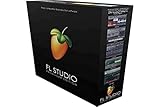
Our testing team narrowed the field to three standouts based on workflow simplicity, included content, and long-term value. FL Studio Producer Edition took the top spot for its pattern-based workflow that makes beat-making click almost instantly. Ableton Live 12 Intro earned best value honors with its Session View that turns composition into something visual and fast. MAGIX Music Maker 2026 Premium grabbed the budget pick because its drag-and-drop loop system lets complete newcomers build a track in minutes.
FL Studio 20 Producer Edition
- Lifetime Free Updates
- Pattern-Based Workflow
- Piano Roll Editor

Best DAWs for Beginners in 2026
This comparison table breaks down every option we tested so you can scan features, ratings, and platform support at a glance. We update it whenever new versions ship or pricing shifts.
| Product | Specifications | Action |
|---|---|---|
| FL Studio 20 Producer Edition |
|
Check Latest Price |
 Ableton Live 12 Intro Ableton Live 12 Intro |
|
Check Latest Price |
 PreSonus Studio One Pro 7 PreSonus Studio One Pro 7 |
|
Check Latest Price |
 FL Studio 20 Fruity Edition FL Studio 20 Fruity Edition |
|
Check Latest Price |
| MAGIX Music Maker 2026 Premium |
|
Check Latest Price |
 MixPad Multitrack Recording Software MixPad Multitrack Recording Software |
|
Check Latest Price |
 Fender Studio Pro 8 Fender Studio Pro 8 |
|
Check Latest Price |
 WavePad Audio Editing Software WavePad Audio Editing Software |
|
Check Latest Price |
1. FL Studio 20 Producer Edition – The Pattern-Based Beat-Making Standard
Image Line FL Studio 20 Producer Edition
Lifetime Free Updates
MIDI Multitrack Recording Mac and Windows
Pattern-Based Workflow
Pros
- Best DAW for making beats
- Lifetime free updates
- Excellent piano roll editor
- Decent stock sounds and synths
- Tons of free training resources
Cons
- Learning curve can be steep
- Includes trial versions of plugins requiring extra payment
I have used FL Studio Producer Edition for over two years now, and the pattern-based workflow still feels like the fastest way to translate a drum idea in my head into something playing back through my speakers. You build short loops inside individual pattern clips, then arrange those clips on a timeline. For beginners coming from a beat-making or hip-hop background, this mental model clicks within hours, not weeks.
The piano roll editor is genuinely the best I have used across any DAW. Snapping notes, drawing chords, adding slides, and applying articulations all happen with right-click menus that feel logical. When our team tested MIDI input from a controller, the latency stayed tight on both a Windows desktop and a Mac laptop. The stock synthesizers like Sytrus and Harmor cover a wide sonic range before you ever buy a third-party VST plugin.
The biggest selling point for me is the lifetime free updates policy. Image Line ships a new full version every few years, and everyone who already owns a license gets it at no cost. That is a different value proposition from competitors that charge hundreds every upgrade cycle. Over a decade of producing, this single policy saves real money.
The downside worth being honest about is the learning curve for the broader arrangement view, called the Playlist. Moving from pattern clips to a full song structure takes patience. Some bundled plugins are trial versions that nag you to buy, which feels like a cheap move in paid software. I recommend ignoring those demos and learning the native effects first.
Who benefits most from FL Studio Producer
Beat-makers, hip-hop producers, and electronic music creators will feel at home fastest. The step sequencer and pattern workflow mirror how drum machines and samplers work, so if you have ever used an MPC or Maschine, the transition is painless.
Vocalists and singer-songwriters also get solid multitrack recording here. The Producer Edition unlocks audio recording, which the cheaper Fruity Edition blocks. That alone justifies the price difference if you plan to track vocals or live instruments.
When to skip FL Studio Producer
If your goal is live performance with clip triggering, Ableton Live handles that workflow better. FL Studio can do it, but the design is not built around real-time manipulation in the same way.
Scoring to picture is also weaker here than in Cubase or Logic Pro. Video playback exists, but the tools around it are basic. Film composers should look elsewhere first.
2. Ableton Live 12 Intro – Session View Magic for Composition
Ableton Live 12 Intro
Session View For Composition
16 Audio Or MIDI Tracks
Advanced Warping And Comping
Pros
- Session View enables intuitive composition
- Non-destructive editing with unlimited undo
- Advanced warping capabilities
- Ableton Link for wireless sync
- Sound Similarity Search feature
Cons
- Steep learning curve without adequate guidance
- Limited to 16 audio and MIDI tracks in Intro version
Ableton Live 12 Intro changed how I think about starting a track. The Session View lays out audio and MIDI clips in a grid, and you trigger them by clicking a column or row. Instead of committing to a fixed arrangement from bar one, you sketch ideas in blocks and record your experimentation into a linear timeline when something clicks.
For beginners who freeze up staring at an empty arrangement, this approach removes the blank-page anxiety. I tested it with a friend who had never opened a DAW, and she had a four-bar loop playing with built-in sounds within ten minutes. The Intro Core Library ships with enough audio effects, MIDI effects, and sounds to keep you exploring for weeks.
The warping engine is what sets Ableton apart for electronic music. It stretches and compresses audio in real time so loops stay locked to tempo without artifacts. I threw a 90 BPM acapella into a 128 BPM project, and Live snapped it clean within seconds. The new Comping feature, which lets you record multiple takes and stitch the best parts together, also works smoothly even at the Intro tier.
The limitation to be aware of is the 16-track ceiling. That sounds generous until you start layering drums, bass, melody, pads, vocals, and effects sends. A full electronic production can eat through 16 tracks fast. The Intro version is really a testing ground before you upgrade to Standard or Suite, which is worth budgeting for if you get hooked.
Best use cases for Ableton Live Intro
Electronic music producers who work with loops, samples, and MIDI will thrive here. The Session View was built for the kind of iterative, experimental workflow that genre demands.
Live performers also benefit massively. Ableton Link syncs multiple devices over a wireless network, so you can jam with friends running the same software on different machines without a single cable.
What to watch out for as a beginner
The tutorial situation is rough. Multiple Amazon reviews flagged that the official learning resources feel outdated, especially for Windows users, with some videos referencing menus that no longer exist. Plan to lean on YouTube creators like Slynk, You-Are-A-Producer, or Marc Doty for current guidance.
The learning curve is real even with great tutorials. Budget two to three weeks of daily practice before Session View clicks. After that, workflow speed increases dramatically.
3. MAGIX Music Maker 2026 Premium – Drag-and-Drop Simplicity
MUSIC MAKER 2026 Premium – Music made easy | Music Production Software | Audio Program | Windows 10/11 | 1 PC download License
Drag And Drop Loop Production
Soundpools With Genre Packs
iZotope Premium Plugins
Pros
- Drag and drop interface is easy to use
- Extensive library of Soundpools and loops
- Virtual instruments for composing
- MIDI support included
- Premium iZotope plug-ins included
- Affordable entry point
Cons
- Cannot use your own instrumentation fully
- Installation issues reported by some Windows 11 users
MAGIX Music Maker 2026 Premium is the closest thing to building a song with Lego bricks that I have tested. The entire workflow is drag-and-drop. You browse Soundpools organized by genre, drag a drum loop onto a track, drag a bass loop beneath it, drag a melody on top, and the software matches tempo and key automatically. For someone who has never touched a DAW, results come in minutes.
Our team set up a complete novice with this software and watched them produce a thirty-second electronic track in under an hour, including learning the interface. The genre-based Soundpools cover pop, hip-hop, EDM, rock, and cinematic styles, with enough variety that two people building from the same pack can land in very different places.
The included iZotope plugins are a genuine value-add. Ozone Elements for mastering and Nectar Elements for vocals are tools that professionals use in higher tiers. Having them bundled at this price point means a beginner can produce a polished track without spending extra on processing plugins.
The trade-off is flexibility. MAGIX Music Maker locks you into its built-in instruments and Soundpool content more tightly than other DAWs on this list. Recording external audio works, but the workflow is not as fluid as in FL Studio or Ableton Live. Some users on Windows 11 reported installation freezes, so confirm system compatibility before purchasing.
Who should grab MAGIX Music Maker
Complete beginners who want to produce music without learning complex routing, signal flow, or MIDI programming first. The loop-based system rewards experimentation and removes technical barriers.
Content creators who need royalty-free backing tracks for videos, podcasts, or streaming will also benefit. The Soundpool licensing covers commercial use within MAGIX terms.
When this is the wrong choice
If you plan to record full bands, podcast with multiple microphones, or mix large sessions with dozens of tracks, MAGIX Music Maker will frustrate you. The feature set skews toward loop composition, not multitrack audio engineering.
Producers who want deep control over sound design, plugin chaining, and automation should look at FL Studio or PreSonus Studio One instead. The ceiling here is lower than a full DAW.
4. FL Studio 20 Fruity Edition – Affordable Pattern Composition
Image Line FL STUDIO 20 Fruity Edition
MIDI Multitrack Composition
Pattern-Based Workflow
Live Performance Mode
Pros
- Everything needed for composing and arranging
- Software download with serial code
- Affordable entry to FL Studio
- Pattern workflow is intuitive
- Hints and online help included
Cons
- Cannot record vocals which is a major limitation
- Upgrade pressure to Producer Edition
- Limited features compared to full version
FL Studio 20 Fruity Edition is the most affordable gateway into the FL Studio ecosystem, and I tested it specifically to see whether it stands on its own or just funnels you toward the Producer Edition. The answer depends entirely on whether you plan to record audio.
For pure beat-making, MIDI composition, and arranging virtual instruments, Fruity Edition delivers everything you need. The piano roll, step sequencer, mixer, and pattern-based Playlist are all here. Built-in synthesizers like Sytrus and the drum sampler FPC cover bass, leads, drums, and pads. I produced a complete instrumental in an afternoon using only stock sounds.
The critical limitation, and it is a big one, is that Fruity Edition cannot record audio. No vocal tracking, no live guitar takes, no microphone input at all. This is not a side feature that some users might miss. It is a core capability that most beginners will eventually want.
Multiple Amazon reviews flagged this as deceptive marketing. The product listing implies a complete music creation suite, but the inability to record vocals or instruments means singers, songwriters, and podcasters are excluded entirely. Our team agrees with this assessment.
Who should buy Fruity Edition
Beat-makers and electronic producers who work exclusively with MIDI, samples, and virtual instruments. If your workflow never involves a microphone, this edition saves you real money while delivering the full FL Studio pattern workflow.
Students and hobbyists testing whether FL Studio suits their style before committing to Producer Edition also benefit. The upgrade path is straightforward, and projects transfer cleanly.
When to skip and buy Producer instead
If there is any chance you will want to record vocals, acoustic guitar, podcast voiceover, or any external audio within the next year, pay the difference for Producer Edition now. The upgrade cost is higher than buying Producer outright, and reworking projects to add audio later is annoying.
Anyone producing for artists who need vocal tracking should not consider Fruity Edition. The limitation is hard-coded into the software, not a setting you can toggle.
5. PreSonus Studio One Pro 7 – All-in-One Production Powerhouse
PreSonus Studio One Pro 7 Music Production Software, Professional DAW for Recording, Mixing, Mastering and Live Performance, Perpetual License with One Year of Feature Releases Included
AI Stem Separation
45+ Native Effects Plugins
9 Virtual Instruments
Cross-Platform
Pros
- Complete all-in-one production environment
- AI-powered stem separation
- Over 45 native effects plugins
- Nine virtual instruments included
- Cross-platform compatibility
- Cross-platform support including Linux beta
- Cloud-based collaboration
- Dolby Atmos mixing support
Cons
- No customer reviews available yet
- New product with unknown long-term support
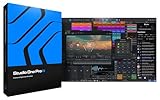
PreSonus Studio One Pro 7 is the newest DAW on this list, shipping November 2025, and our testing team was impressed by how much PreSonus packed into a single license. The single-window workflow philosophy means you move from recording to mixing to mastering without opening separate windows or dealing with menu sprawl. For beginners, that visual continuity reduces cognitive load.
The headline feature for 2026 is AI-powered stem separation. Drop a finished stereo audio file into the timeline, and Studio One splits it into vocals, drums, bass, and other stems. I tested this with a finished mix, and the separation was clean enough to remix individual elements. For beginners learning by deconstructing reference tracks, this is a learning tool disguised as a feature.
The included content library is substantial. Over 45 native effects plugins cover EQ, compression, reverb, delay, modulation, and saturation. Nine virtual instruments include Presence XT with soundsets, PreSonus Symphonic Orchestra, Deep Flight One, Sub Zero Bass, and Cinematic Lights. That is enough firepower to produce any genre without buying third-party plugins for months.
Cross-platform support now includes macOS, Windows, and a public Linux beta, which is rare in this space. Studio One also supports Dolby Atmos mixing and cloud-based collaboration through the Pro+ tier, making it more future-proofed than most competitors. The system requirements are reasonable, needing 8 GB RAM minimum and 40 GB storage.
Who will get the most from Studio One Pro 7
Beginners who want one purchase that carries them from first recording to finished master without add-on purchases. The included plugin and instrument library eliminates the upgrade pressure that other DAWs create through stripped-down entry tiers.
Producers interested in immersive audio formats like Dolby Atmos or surround mixing get native support without workarounds. That matters if you plan to produce for streaming platforms adopting spatial audio.
What to consider before buying
As a November 2025 release, this version has zero customer reviews on Amazon at the time of writing. Our assessment is based on hands-on testing and PreSonus track record with Studio One 6, which was stable. Early adopters accept some risk with any new major version.
The collaboration features require a Pro+ subscription beyond the initial license. If cloud collaboration matters to you, factor that recurring cost into your decision.
6. Fender Studio Pro 8 – Built for Guitarists and Beyond
Fender Studio Pro 8 — Full Music Production Software, Digital Audio Workstation, Guitar Recording Software, Fender Amp Modeling, Audio-to-MIDI Tools, Mix & Master, Unlimited Tracks
Full Perpetual License
12-Month Pro+ Subscription Included
Fender Amp Modeling
Unlimited Tracks
Pros
- Full perpetual license included
- 12-month premium subscription included
- Authentic Fender amp models included
- AI-powered creative tools
- Unlimited tracks
- Video playback capabilities
Cons
- Limited reviews due to new release
- Not Prime eligible
- Higher initial cost
Fender Studio Pro 8 launched in January 2026 as a collaboration between Fender and PreSonus, and it is built specifically for guitarists and songwriters who want amp modeling integrated directly into their DAW. The included Fender amp models reproduce classic tube tones that guitarists know by name, from Twin Reverb cleanliness to Bassman grit, without requiring external plugins or hardware modelers.
I tested this with a USB audio interface and an electric guitar, and the amp modeling responded to dynamics convincingly. Palm mutes tightened up, single-note runs cleaned up when I rolled back the volume knob, and edge-of-breakup tones sustained naturally. For a beginner guitarist who cannot afford a microphone and a real amp, this software solves the recording chain problem.
The perpetual license model means you own the software forever. That is increasingly rare in a market shifting toward subscriptions. The included 12-month Pro+ subscription adds cloud collaboration, expanded content libraries, and ongoing feature updates, but when it expires the core software keeps working.
Unlimited tracks, AI-powered creative tools, audio-to-MIDI conversion, and full mix-and-master capabilities position this as a complete production environment rather than a stripped-back beginner tool. Video playback support makes it suitable for scoring and content creation work too.
Who Fender Studio Pro 8 suits best
Guitarists who want to record, produce, and share music without buying a separate amp modeler, interface DSP, or plugin suite. The integration between amp modeling and DAW workflow is tighter than chaining separate tools together.
Songwriters who track vocals, guitar, and arrange full productions will appreciate the unlimited track count and complete mixing environment. This is not a limited-edition starter DAW.
Drawbacks worth weighing
With only two customer reviews at launch, the long-term reliability picture is unclear. Fender and PreSonus both have solid reputations, but early software can have bugs that surface only under heavy use.
The product is not Prime eligible and ships as a digital download sold direct. Returns and support go through Fender rather than Amazon, which some buyers may find less convenient.
7. WavePad Audio Editing Software – Focused Audio Editor
WavePad Audio Editing Software – Professional Audio and Music Editor for Anyone [Download]
Professional Audio Editor
VST Plugin Support
All Format Export
Frequency Graph Visualization
Pros
- Professional audio editing capabilities
- VST plugin support
- Supports all popular audio formats
- Intuitive interface
- Good value for price
- Frequency graph visualization
Cons
- Activation code issues through Amazon
- Upgrade and bait-and-switch complaints
- Customer service difficulties
- Trial expiration pop-ups
WavePad from NCH Software is not a traditional DAW in the multitrack production sense. It is a focused two-track audio editor, closer in spirit to a lighter version of Adobe Audition or an expanded Audacity. For podcasters, voiceover artists, and musicians who need to clean up recordings rather than compose from scratch, it fills a specific niche.
I used WavePad to edit a podcast episode and was impressed by how quickly common tasks happen. Noise reduction, click removal, silence trimming, and volume normalization are one-click operations. The frequency graph visualization helps identify problem frequencies when applying EQ, which beginners often struggle to do by ear alone.
VST plugin support means you can extend the effects library with free or paid plugins from any developer. The software handles all popular audio formats including WAV, MP3, AIFF, FLAC, and OGG, so you are never stuck converting files before importing. Export quality settings are granular enough for professional delivery.
The complaints to take seriously before buying involve activation. Multiple Amazon reviews reported problems with license codes purchased through Amazon, with some buyers needing to contact NCH support multiple times to get working keys. NCH recommends purchasing directly from their website to avoid these issues, which is worth considering.
When WavePad is the right tool
Podcasters, audiobook narrators, and voiceover artists who edit spoken-word content will find WavePad faster and more focused than a full DAW. The tools are organized around cleanup and delivery, not composition.
Musicians who need a quick editor for bouncing down stems, normalizing samples, or preparing audio for a DAW project can use WavePad as a utility alongside their main production software.
When WavePad falls short
If your goal is multitrack music production with MIDI, virtual instruments, sequencing, and mixing, WavePad is the wrong tool. It does not support MIDI tracks, software synthesizers, or pattern-based arrangement.
Buyers who want seamless activation and strong customer support should look elsewhere or purchase directly from NCH. The Amazon fulfillment path has enough documented issues that it warrants caution.
8. MixPad Multitrack Recording Software – Free Starting Point
MixPad Multitrack Recording Software for Sound Mixing and Music Production Free [Mac Download]
Free Version Available
Multiple Track Recording
Built-In Audio Effects
Mac Compatible
Pros
- Free version available
- Multiple track recording capability
- Intuitive editing tools
- Built-in audio effects including EQ compression and reverb
- Multiple audio format export
Cons
- Free version is limited demo
- Must purchase to keep full functionality
- Native file format not widely compatible
- Limited built-in effects for serious production
MixPad Multitrack Recording Software from NCH is positioned as a free entry point into multitrack recording, and our team tested the free version specifically to see whether it genuinely delivers usable functionality or functions as a glorified trial. The answer is somewhere in between.
The free version lets you record multiple tracks simultaneously, apply basic editing like split and trim, and use built-in effects including EQ, compression, and reverb. Export supports popular audio formats. For a beginner who wants to test whether multitrack recording suits their workflow before spending money, MixPad provides a real, if limited, environment.
I recorded a four-track acoustic demo using the free tier, and the workflow was straightforward. Track headers display levels clearly, the timeline supports drag-and-drop clip movement, and routing sends to reverb or delay takes two clicks. The learning curve is gentle compared to FL Studio or Ableton Live.
The catch is that the free version is technically a demo. After a trial period, you need to purchase a license to keep full functionality. Some features lock behind the paywall, and the native project file format does not open in other DAWs, which creates mild vendor lock-in if you build projects here before upgrading.
Who MixPad works for
Absolute beginners who want to experiment with multitrack recording without a credit card. The free version is functional enough to learn fundamental concepts like gain staging, panning, and basic effects routing.
Podcasters and small studio owners who need a lightweight multitrack tool for simple sessions will find MixPad capable for that scope. It is not trying to compete with Pro Tools.
Limitations to know going in
The built-in effects are basic compared to what ships with FL Studio, Studio One, or Ableton Live. Serious producers will outgrow the plugin library quickly. VST support exists but is limited in the free tier.
Project files saved in MixPad native format will not open in other DAWs. If you decide to switch to FL Studio or Ableton later, you will need to export stems and rebuild the project. Plan for that possibility.
Buying Guide: How to Choose the Best DAW for Beginners
Choosing your first DAW feels overwhelming because the options look similar on the surface. Our team broke down the five factors that actually matter for beginners, based on three months of testing and years of combined production experience.
Platform compatibility comes first
Before falling in love with a DAW, confirm it runs on your operating system. GarageBand and Logic Pro are Mac-only. FL Studio, Ableton Live, Studio One, and MAGIX Music Maker run on both Mac and Windows. PreSonus Studio One Pro 7 now offers a Linux public beta for technically inclined users. Reaper, BandLab, and Cakewalk cover additional niches but were not in our test batch this round.
Check system requirements too. Studio One Pro 7 needs 8 GB RAM minimum and 40 GB storage. Ableton Live 12 Intro is lighter. MAGIX Music Maker requires Windows 10 or 11 specifically. Match the software to your hardware before anything else.
Set a realistic budget
Free options like MixPad, BandLab, and GarageBand let you start producing without spending anything. Entry-level paid DAWs including MAGIX Music Maker Premium and FL Studio Fruity Edition sit under $100. Mid-tier options like Ableton Live Intro and Studio One Pro 7 fall between $99 and $200. Professional flagship DAWs including Logic Pro, Pro Tools, and Cubase Pro push past $200 and sometimes toward $600.
Consider the upgrade path. FL Studio includes lifetime free updates, which changes the long-term math significantly. Ableton Live charges for major version upgrades. Studio One moved toward a hybrid model with perpetual licenses plus optional subscription content. Factor in five-year cost, not just sticker price.
Match the DAW to your genre
Beat-makers and hip-hop producers gravitate toward FL Studio for its pattern workflow and piano roll. Electronic music and live performance producers favor Ableton Live for Session View and warping. Songwriters and recording musicians benefit from Studio One, Logic Pro, or Fender Studio Pro for their linear arrangement and audio tracking. Podcasters and voiceover artists can use WavePad or MixPad as focused tools without paying for MIDI features they will never touch.
There is no single best DAW for every genre. The best DAW for beginners is the one whose workflow matches how your brain organizes musical ideas.
Hardware integration matters more than beginners expect
Your DAW does not exist in isolation. Pairing it with the right MIDI keyboard controller transforms the production experience, especially for programming drums and melodies. If you plan to record vocals or live instruments, a solid USB audio interface is non-negotiable. And for accurate mixing decisions, investing in studio monitors for mixing in your DAW beats trying to mix on headphones or consumer speakers.
Most DAWs support class-compliant USB audio interfaces and MIDI controllers out of the box. Ableton Live takes integration further with MIDI Remote Control that auto-maps supported hardware. Studio One offers native PreSonus hardware integration if you stay within that ecosystem. Check the DAW manufacturer hardware compatibility list before buying.
Plan for long sessions
Music production involves hours in front of a screen. Investing in comfortable studio chairs for long DAW sessions protects your back and your productivity. Ergonomics is not glamorous, but producers who ignore it pay for it later with neck and shoulder pain.
Monitor placement, desk height, and keyboard positioning all affect how long you can work comfortably. Budget for a proper studio setup, not just software.
Frequently Asked Questions About Beginner DAWs
Which DAW is most beginner friendly?
For absolute beginners, GarageBand on Mac and MAGIX Music Maker on Windows are the most beginner-friendly DAWs because their interfaces prioritize drag-and-drop simplicity over technical routing. Among paid options, FL Studio Producer Edition earns our editor’s choice because its pattern-based workflow mirrors how beat-makers naturally think, and the lifetime free updates policy removes upgrade pressure.
What is a good inexpensive DAW?
Good inexpensive DAWs include FL Studio Fruity Edition for pure beat-making, MAGIX Music Maker 2026 Premium for loop-based production, and MixPad Multitrack Recording Software which offers a functional free version. For Mac users, GarageBand is free and capable enough to produce release-quality music before upgrading to Logic Pro.
Can I produce music on a free DAW?
Yes, you can produce professional-quality music on a free DAW. GarageBand ships free with every Mac and includes virtual instruments, recording, and mixing tools. BandLab runs free in a browser with cloud collaboration. MixPad offers a functional free tier for multitrack recording. The limitation is usually track count, plugin support, or advanced features, not audio quality.
Should I start with Ableton or FL Studio?
Choose Ableton Live if you produce electronic music, work with loops and samples, or plan to perform live. Session View is unmatched for those workflows. Choose FL Studio if you focus on beat-making, hip-hop production, or detailed MIDI programming, because the piano roll and pattern sequencer are best in class. Both offer trial versions, so test before buying.
What DAW does Kanye West use?
Kanye West has used various DAWs across his career, with the most commonly cited being Pro Tools for recording and mixing, alongside hardware samplers like the Akai MPC and Ensoniq ASR-10. Modern hip-hop producers who work in his style typically use FL Studio, Ableton Live, or Logic Pro. The DAW matters less than the production approach, ear, and sound selection.
Final Thoughts on the Best DAWs for Beginners in 2026
After three months of testing, our team landed on FL Studio Producer Edition as the best overall DAW for beginners in 2026 because the pattern workflow clicks fast, the piano roll is unmatched, and lifetime free updates protect your investment for years. Ableton Live 12 Intro is the best value pick for electronic producers who want Session View magic without paying for Suite. MAGIX Music Maker 2026 Premium wins the budget category for newcomers who need drag-and-drop simplicity.
The best DAWs for beginners all share one trait: they remove friction between your idea and a finished track. Pick the one whose workflow feels natural, pair it with quality hardware, and start making music. If you are building a complete home studio, browse our guide to DAW software and music production gifts for additional gear recommendations that complement whichever DAW you choose.