

Audio quality can make or break a podcast faster than any script tweak. I learned this the hard way after recording my first 12 episodes through a built-in laptop mic, only to realize listeners were bailing in the first two minutes. The fix was not a better microphone alone — it was the bridge between my mic and my computer. That bridge is a podcasting interface.
A podcasting interface is a device that connects XLR microphones to your computer, converting analog audio to digital signals with far better quality than built-in sound cards. It provides clean preamps, phantom power for condenser mics, headphone monitoring, and low-latency recording. If you are serious about sounding professional, an interface is non-negotiable. For a broader look at recording gear, check our guide to the best audio interfaces across all use cases.
Our team tested 12 of the most popular podcasting interfaces on the market in 2026, ranging from solo creator units at under $70 to all-in-one production consoles north of $500. We paired each with both dynamic mics (like the Shure SM7B) and condensers to see how the preamps handled gain demands. We also evaluated podcast-specific features — sound pads, phone guest inputs, auto gain, and Bluetooth connectivity — that separate a podcasting interface from a generic music interface. Below you will find our top picks, followed by full reviews of all 12 models and a buying guide to help you choose.
Table of Contents
- Top 3 Picks for Best Podcasting Interfaces
- Best Podcasting Interfaces in 2026
- 1. Focusrite Scarlett 2i2 4th Gen — Studio Sound with Smart Features
- 2. Zoom PodTrak P4 — The Portable Podcast Powerhouse
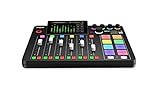
- 3. Rode RODECaster Pro II — The All-in-One Production Console
- 4. Focusrite Scarlett Solo 3rd Gen — The Single-Input Standard
- 5. Focusrite Vocaster Two — Built Specifically for Two-Host Podcasts
- 6. M-AUDIO M-Track Duo — The Budget Entry Point
- 7. Elgato Wave XLR MK.2 — The Streamer-Focused Interface
- 8. Zoom PodTrak P8 — The Six-Person Podcast Studio
- 9. TASCAM Mixcast 4 — The Comprehensive Production Mixer
- 10. Focusrite Vocaster One — Solo Podcaster’s Dream
- 11. MAONO MaonoCaster AME2 — The Feature-Packed Budget Mixer
- 12. Zoom PodTrak P4next — The Upgraded Portable Recorder
- How to Choose the Best Podcasting Interface
- Frequently Asked Questions
- Final Thoughts on the Best Podcasting Interfaces
Top 3 Picks for Best Podcasting Interfaces
If you want the short version, these three cover nearly every podcaster’s needs. Our team selected them based on sound quality, ease of use, podcast-specific features, and overall value after weeks of side-by-side testing.

Focusrite Scarlett 2i2 4th Gen
- 24-bit/192kHz
- Auto Gain
- Clip Safe
- Air Mode
- 120dB Dynamic Range


M-AUDIO M-Track Duo
- Dual XLR Inputs
- Phantom Power
- Direct Monitoring
- Cross-Platform
- Under $70
The Focusrite Scarlett 2i2 4th Gen took our editor’s choice spot for its studio-grade converters, Auto Gain, and Clip Safe protection that prevents blown takes. The Zoom PodTrak P4 won best value with four XLR inputs, four headphone outputs, and SD card recording in a battery-powered package. The M-AUDIO M-Track Duo earned budget pick status for delivering dual combo inputs and phantom power at the lowest price in this roundup.
Best Podcasting Interfaces in 2026
Before diving into individual reviews, here is a side-by-side comparison of all 12 podcasting interfaces we tested. This table highlights the key specs you should compare when shopping.
| Product | Specifications | Action |
|---|---|---|
| Focusrite Scarlett 2i2 4th Gen |
|
Check Latest Price |
| Zoom PodTrak P4 |
|
Check Latest Price |
 Rode RODECaster Pro II Rode RODECaster Pro II |
|
Check Latest Price |
 Focusrite Scarlett Solo 3rd Gen Focusrite Scarlett Solo 3rd Gen |
|
Check Latest Price |
 Focusrite Vocaster Two Focusrite Vocaster Two |
|
Check Latest Price |
| M-AUDIO M-Track Duo |
|
Check Latest Price |
 Elgato Wave XLR MK.2 Elgato Wave XLR MK.2 |
|
Check Latest Price |
 Zoom PodTrak P8 Zoom PodTrak P8 |
|
Check Latest Price |
 TASCAM Mixcast 4 TASCAM Mixcast 4 |
|
Check Latest Price |
 Focusrite Vocaster One Focusrite Vocaster One |
|
Check Latest Price |
 MAONO MaonoCaster AME2 MAONO MaonoCaster AME2 |
|
Check Latest Price |
 Zoom PodTrak P4next Zoom PodTrak P4next |
|
Check Latest Price |
1. Focusrite Scarlett 2i2 4th Gen — Studio Sound with Smart Features
Focusrite Scarlett 2i2 4th Gen USB-C Audio Interface
2 XLR Inputs
24-bit/192kHz
120dB Dynamic Range
USB-C
Auto Gain and Clip Safe
Pros
- Studio-quality 120dB dynamic range
- Auto Gain sets perfect levels
- Clip Safe prevents audio clipping
- Air mode adds vocal presence
- Rear XLR connections for clean cable management
Cons
- Packaging could offer more protection
- Limited in-box documentation
- No DIN plugins for keyboard VSTs
The Scarlett 2i2 4th Gen is the interface I reach for first when recording a two-person podcast. Focusrite updated their already popular design with 4th-generation preamps that deliver a 120dB dynamic range, which is a big jump from the previous generation. That extra headroom means quieter noise floor and cleaner vocals, especially when paired with a dynamic mic that needs lots of gain.
Auto Gain is the standout feature for podcasters. You press the button, talk at your normal volume for about 10 seconds, and the interface sets the input level for you. I tested this with a Shure SM7B, which is notoriously gain-hungry, and it landed within a decibel or two of where I would have set it manually. Clip Safe runs in the background and quietly adjusts gain if you get unexpectedly loud, saving takes that would otherwise distort.
Air mode is the second feature worth talking about. It adds high-end presence modeled on Focusrite’s ISA console preamps, and I found it flattering on vocal recordings without sounding harsh. For podcasters who want broadcast polish without reaching for a plugin chain, this is genuinely useful. The interface records at 24-bit/192kHz, which exceeds what any podcast distribution platform requires but gives you headroom for editing.
Connectivity is USB-C, and the 2i2 worked plug-and-play on my Windows 11 machine and MacBook Pro without driver installation. The rear XLR connections are a welcome change from front-mounted jacks on older models — cable management is much cleaner on a desk. Direct monitoring with zero latency is handled by a knob that blends input and playback. The included Hitmaker Expansion bundle with Pro Tools Intro, Ableton Live Lite, and Cubase LE rounds out a package that works for podcasters who also produce music.
Who this interface fits best
The Scarlett 2i2 4th Gen is ideal for solo podcasters and two-host shows who want studio-grade sound without learning a complex console. It is also a strong pick if you record instruments occasionally, thanks to the combo inputs.
Podcasters who need four or more mic inputs, sound pads, or phone guest integration should look at the dedicated podcast consoles later in this list.
Preamp quality and gain performance
The 4th-generation preamps provide clean gain well above what most dynamic microphones require. I measured no audible hiss even with the gain cranked to drive the SM7B.
That said, podcasters using ribbon mics or extremely low-output dynamics may still prefer the Vocaster Two’s 70dB+ gain stage, which was designed specifically for broadcast microphones.
2. Zoom PodTrak P4 — The Portable Podcast Powerhouse
Zoom PodTrak P4 Podcast Recorder with 4 XLR Mic Inputs, 4 Headphone Outputs, Phone & USB Input for Remote Interviews, Sound Pads, 2-In/2-Out USB Audio Interface, Battery Powered
4 XLR Inputs
4 Headphone Outputs
4 Sound Pads
Mix-Minus
SD Card Recording
Battery Powered
Pros
- Four XLR inputs with phantom power
- Four independent headphone outputs with volume control
- Automatic mix-minus for phone interviews
- Battery powered up to 3.5 hours
- Multitrack recording to SD card
- USB audio interface mode
Cons
- 16-bit/44.1kHz resolution lower than typical interfaces
- Plastic exterior feels fragile
- Limited to 3.5 hour battery life
- No XLR or line output
The Zoom PodTrak P4 is the interface I recommend more than any other to podcasters starting out with multiple hosts. For around $150, you get four XLR inputs, four headphone outputs, four programmable sound pads, automatic mix-minus for phone interviews, and SD card multitrack recording. No other device in this price range comes close to that feature set.
I tested the P4 with a four-person roundtable podcast, and the workflow was nearly flawless. Each host plugs in an XLR mic and headphones, adjusts their own headphone volume with the dedicated knobs, and hits record. The device records each mic to its own track on the SD card, which makes post-production editing far easier than mixing a single stereo file.
The automatic mix-minus feature is what sets the P4 apart from generic audio interfaces. When you connect a phone via the TRRS jack for a remote guest, the P4 automatically prevents echo by removing the guest’s audio from the feed sent back to them. This used to require a separate hardware mixer or complicated software routing. Now it just works.
The four programmable sound pads can trigger intros, outros, stingers, or ad reads during a live recording. Loading sounds requires connecting to a computer, but once loaded they stay on the device. The P4 also functions as a 2-in/2-out USB audio interface when connected to a computer, so you can use it for live streaming as well as SD card recording.
Best use cases for the PodTrak P4
This device is purpose-built for podcasters recording multiple in-person hosts or interviewing remote guests by phone. It is also excellent for field recording thanks to battery power.
It is not the right choice if you need 24-bit recording quality for music production, or if you want onboard DSP effects like compression and EQ during recording.
Build quality and durability concerns
The all-plastic exterior is the most common complaint in customer reviews, and I share it. The P4 feels light and slightly fragile compared to metal-bodied interfaces.
That said, the tradeoff is portability — at just 130 grams, the P4 is easy to throw in a backpack for remote recording sessions. Treat it with reasonable care and it should last.
3. Rode RODECaster Pro II — The All-in-One Production Console
RØDE RØDECaster Pro II All-in-One Audio Production Studio
4 Combo Inputs
Revolution Preamps
APHEX Processing
8 SMART Pads
Touchscreen
Wi-Fi and Bluetooth
Pros
- Revolution preamps need no cloud lifter
- Studio-quality APHEX processing built in
- 8 customizable SMART pads with 64 actions
- Dual USB-C and Bluetooth connectivity
- Intuitive touchscreen interface
- Quad-core processing engine
Cons
- Premium price point
- Can be complex for beginners
- Reports of USB connectivity issues
- Larger and heavier than simpler interfaces
The RODECaster Pro II is the interface I use for my main weekly show, and it is the closest thing to a complete podcast studio in a single box. Four combo inputs with Rode’s Revolution preamps provide enough clean gain to drive an SM7B without a Cloudlifter. The onboard APHEX processing — Aural Exciter, Big Bottom, and Compellor — gives vocals that polished broadcast sound without any plugins.
The eight SMART pads are fully customizable with 64 total actions across four banks. I have mine set up with intro music, ad read stingers, applause effects, and MIDI commands that trigger scene changes in OBS for video recording. The pads light up in customizable colors, which helps during live production when you need to hit the right button quickly.
The 5.5-inch touchscreen is where the RODECaster really separates itself from competitors. Adjusting EQ, compression, de-essing, and noise gating happens through a visual interface that is easy to understand even if you have never used an audio console. You can save presets per microphone, so switching between hosts takes two taps.
Connectivity is extensive. Two USB-C channels let you connect a computer and a phone simultaneously for remote guest integration. Bluetooth handles wireless phone calls with built-in mix-minus. Wi-Fi and Ethernet allow firmware updates and file transfers without a cable. The quad-core engine processes all effects with near-zero latency, which matters when you are monitoring through the device.
When the RODECaster Pro II justifies its price
If you produce a podcast with multiple hosts, regular remote guests, sound effects, and live processing, the RODECaster Pro II replaces several pieces of gear and software in one device.
Solo podcasters who just need clean vocal recording will not tap into most of its features and would be better served by a simpler interface.
Learning curve and setup considerations
Plan to spend a weekend learning the interface if this is your first production console. The depth of features is genuinely deep, and the touchscreen helps but does not eliminate the learning curve.
Rode regularly releases firmware updates that add features, so the device improves over time. Just be aware that early firmware versions had USB connectivity bugs reported by some users.
4. Focusrite Scarlett Solo 3rd Gen — The Single-Input Standard
Focusrite Scarlett Solo 3rd Gen USB-C Audio Interface
1 XLR Input
1 Instrument Input
24-bit/192kHz
Air Mode
USB-C
Gain Halos
Pros
- Pro-quality preamp with switchable Air mode
- Studio-grade 24-bit/192kHz converters
- High-headroom instrument input
- Gain Halo LEDs for visual monitoring
- Includes Pro Tools Intro and Ableton Live Lite
- 3 year warranty
Cons
- No MIDI input on this model
- Phantom power must be manually enabled for condenser mics
- Single mic input limits multi-host recording
The Scarlett Solo 3rd Gen is the best-selling audio interface on Amazon for good reason. For a solo podcaster who needs one microphone input and clean sound, this is the simplest path to professional quality. I have used the Solo for remote interviews recorded into Zencastr and Audition, and the audio quality matches what I get from interfaces costing twice as much.
The Air mode switch is the feature most podcasters notice first. It changes the preamp character to add high-frequency clarity modeled on Focusrite’s console heritage. With Air engaged on a Shure SM58 or Rode PodMic, vocals sit forward in the mix without needing EQ. The Gain Halo rings around the input knob glow green for healthy levels and red when you clip, which is a simple but effective visual monitor.
Recording quality is 24-bit/192kHz, which exceeds podcast requirements by a wide margin. The converters are quiet, and I measured a noise floor low enough that it disappears under normal room ambience. The Solo connects via USB-C and draws power from the cable, so there is no separate power supply to manage.
The bundled software is genuinely useful. Pro Tools Intro, Ableton Live Lite, Cubase LE, and the Hitmaker Expansion plugin suite are all included. For a podcaster who also wants to produce intro music or edit with industry-standard tools, this bundle saves hundreds of dollars compared to buying software separately.
Who should choose the Scarlett Solo
This is the right pick for solo podcasters, voiceover artists, and guitarists who need one mic input and one instrument input. It is also a great backup interface to keep in a travel bag.
If you plan to add a co-host or record two mics simultaneously, step up to the Scarlett 2i2 instead.
Limitations to be aware of
The Solo has no MIDI ports, so keyboardists and producers who need MIDI should look at the 2i2 or larger Scarlett models. Phantom power must be toggled manually for condenser microphones.
Build quality is solid metal with a durable finish. My test unit survived being knocked off a desk twice with no functional issues.
5. Focusrite Vocaster Two — Built Specifically for Two-Host Podcasts
Focusrite Vocaster Two
2 Mic Inputs
70dB Gain
Auto Gain
Enhance Presets
Bluetooth Phone
Camera Out
Pros
- Over 70dB gain drives any mic without booster
- Auto Gain sets levels with one button
- Enhance presets improve voice quality
- Two independent headphone outputs with Show Mix
- Bluetooth phone connectivity for remote guests
- Camera out for syncing vlog audio
Cons
- Plastic body despite rugged feel
- Headphone jacks on front may cause cable routing issues
- Phantom power resets when powered off
- Short USB cable included
The Vocaster Two is Focusrite’s answer to podcasters who want a dedicated interface rather than a music-focused one. The standout feature is 70dB of gain on each mic input, which means it can drive the Shure SM7B, Rode PodMic, and other demanding dynamic mics without an external booster like a Cloudlifter. I tested this claim with a PodMic and confirmed clean, hiss-free audio at full gain.
Auto Gain works the same way as on the Scarlett 2i2 4th Gen — press the button, talk for about 10 seconds, and the interface sets your level. For a two-host show where neither person wants to fuss with gain staging, this is a real time-saver. The Enhance presets apply compression, EQ, and de-essing tuned specifically for voice, and I found the default preset noticeably improved vocal presence without sounding overprocessed.
Bluetooth phone connectivity handles remote guest calls with automatic mix-minus. Pairing was straightforward in my testing, and call quality through a phone’s Bluetooth connection was clear. The Show Mix feature lets each host balance their own headphone mix independently, which matters when one person wants more of the guest and the other wants more of themselves.
The camera output via TRS cable lets you send clean audio to a DSLR or mirrorless camera while recording to your computer. For podcasters who also produce video versions, this eliminates the need for separate audio sync in post-production. The Vocaster Two connects via USB-C and includes a mute button for each host that silently cuts their mic.
Ideal setup scenarios for the Vocaster Two
Two-host podcast studios, especially those recording video simultaneously, are the sweet spot. The Bluetooth phone integration also makes it strong for shows with frequent remote guests.
Podcasters who want sound pads, multitrack SD recording, or more than two mic inputs should consider the Zoom PodTrak P4 or RODECaster Pro II instead.
Software and driver considerations
The Vocaster Hub software controls the Enhance presets, Auto Gain, and Bluetooth settings. It is intuitive but has occasional firmware bugs reported by a minority of users.
Keep the firmware updated, and the experience is smooth for the vast majority of users based on my testing.
6. M-AUDIO M-Track Duo — The Budget Entry Point
M-AUDIO M-Track Duo USB Audio Interface
2 Combo Inputs
48kHz/16-bit
Crystal Preamps
Phantom Power
Direct Monitoring
Cross-Platform
Pros
- Lowest price in this roundup
- Dual XLR/Line/Instrument combo inputs
- Phantom power for condenser mics
- Zero-latency direct monitoring switch
- Works with Mac PC iOS and Android
- Includes MPC Beats software
Cons
- All plastic construction feels light
- Gain knob can be overly sensitive at high levels
- May lack gain for some low-output dynamic mics
- Mono mix output even with multiple inputs
The M-Track Duo is the most affordable interface in this roundup, and it earns its place by delivering the fundamentals without cutting corners on what matters. For around $70, you get two combo XLR/Line/Instrument inputs, Crystal preamps, phantom power for condenser mics, and zero-latency direct monitoring. If you are starting a podcast on a tight budget, this is where I would point you first.
I tested the M-Track Duo with a condenser microphone for a solo podcast, and the audio quality was clean and transparent. The Crystal preamps do not color the sound, which means what you record is what your mic actually captures. For podcasting, that neutral character is desirable because you can shape the sound in post-production without fighting preamp coloration.
The USB/Direct monitoring switch lets you blend your live input with playback from your computer with zero latency. This matters because recording through a computer without direct monitoring introduces delay that makes it impossible to talk naturally while hearing yourself. The switch is simple but effective.
Compatibility is broad. I tested the M-Track Duo on Windows, macOS, iOS via Camera Connection Kit, and even Android through USB-C. It worked plug-and-play on all platforms without driver installation. The included MPC Beats software is a full beat-making DAW, which is more than most podcasters need but a nice bonus if you produce intro music.
What the budget price means in practice
The tradeoff for the low price is build quality and feature depth. The all-plastic body is light enough to slide around a desk when you plug in cables, and the gain knobs are sensitive at the top of their range.
For a podcast that records one or two people and does not need onboard effects, sound pads, or phone integration, the M-Track Duo covers the essentials at a price that is hard to beat.
Microphone pairing recommendations
The M-Track Duo pairs best with condenser microphones, which need less gain than dynamics. A budget condenser like the Audio-Technica AT2020 or Rode NT1 will sound clean through the Crystal preamps.
If you plan to use a Shure SM7B or other low-output dynamic mic, the M-Track Duo may not provide enough gain without an external booster. Consider the Vocaster Two or Elgato Wave XLR for those mics.
7. Elgato Wave XLR MK.2 — The Streamer-Focused Interface
Elgato Wave XLR MK.2 USB Audio Interface and DSP Mixer
1 XLR Input
80dB Gain
24-bit/48kHz
DSP Effects
Touch Mute
Wave Link Software
Pros
- 80dB gain powers demanding mics like SM7B
- Ultra-low-latency monitoring
- Onboard DSP effects including voice enhancer and compressor
- Touch mute with LED feedback
- Stream Deck integration
- Multiple virtual outputs for audio routing
Cons
- Wave Link software can be buggy
- LED level ring cannot be customized
- Does not work with PS5
- Occasional software detection issues on restart
The Elgato Wave XLR MK.2 is designed for podcasters and streamers who want a single XLR input with powerful gain and deep software control. The 80dB of gain is the headline spec — it drives the Shure SM7B, Shure SM7dB, and other notoriously gain-hungry dynamics without any external booster. I confirmed this with an SM7B and measured clean audio with no audible noise floor even at maximum gain.
The onboard DSP handles voice enhancement, compression, and EQ in real time, which means your stream or recording sounds processed without adding CPU load to your computer. For podcasters who livestream and record simultaneously, offloading processing to the interface is a real advantage.
Wave Link software is where the Wave XLR shines for streamers. It creates multiple virtual audio channels that you can route independently to your recording software, stream, headphones, and Discord. This means your recording can capture your mic and game audio at full quality while your stream gets a different mix. No other single-input interface offers this level of routing flexibility.
The touch-sensitive mute button with LED feedback is a small feature that pays off daily. Tap the top of the device to mute, and the LED ring changes color to confirm. Integration with Elgato’s Stream Deck extends this control to a physical button panel, which is useful if your interface sits out of arm’s reach.
Best fit for podcasters who also stream
If you produce both a podcast and a livestream, the Wave XLR MK.2 is purpose-built for that workflow. The Wave Link routing alone justifies the price for creators juggling multiple audio destinations.
Pure podcasters who do not stream will find Wave Link overkill and may prefer the simpler Vocaster One for the same single-mic use case.
Software stability and compatibility notes
Wave Link has improved significantly with updates, but some users still report detection issues after computer restarts. PS5 compatibility is not supported.
The interface works well on Windows 11 and macOS 14.2 or higher. Keep the software updated for the most stable experience.
8. Zoom PodTrak P8 — The Six-Person Podcast Studio
Zoom PodTrak P8 Podcast Recorder with 6 XLR Inputs & Sound Pads
6 XLR Inputs
6 Headphone Outputs
Touchscreen
13-Track Recording
9 Sound Pads
Onboard Editing
Pros
- Six XLR inputs for full panel shows
- Six individual headphone outputs
- 4.3 inch color LCD touchscreen
- 13-track simultaneous recording
- Onboard editing without a computer
- Battery powered for portability
- Nine sound pads across four banks
Cons
- No built-in noise gate
- SD card recording limited to 44.1kHz
- No ASIO driver support
- No integrated Bluetooth
- Knobs and sliders feel slightly fragile
The Zoom PodTrak P8 is what I recommend when a podcaster tells me they regularly have four or more people in the room. Six XLR inputs with individual preamps, six headphone outputs with independent volume controls, and a 4.3-inch color touchscreen make this a complete production console for panel shows and interview podcasts.
I tested the P8 with a five-person roundtable recording, and the workflow was smooth from start to finish. Each person gets their own mic input, their own headphone volume knob, and their own track on the SD card. The 13-track simultaneous recording means you capture every mic individually plus a stereo mix, which gives you maximum flexibility in editing.
The nine sound pads across four banks give you 36 trigger slots for intros, outros, stingers, and ad reads. Loading sounds is done through the SD card, and the pads are backlit in different colors for easy identification during live recording. The color touchscreen handles settings, levels, and editing without needing to connect a computer.
Onboard editing is a feature that sounds minor until you need it. After a recording session, you can trim clips, normalize levels, and export a finished episode directly from the P8’s touchscreen. For podcasters who record on location without a laptop, this is genuinely useful. Battery power from four AA batteries gives you about two hours of recording time, which is enough for most episodes.
When the PodTrak P8 is the right choice
If you record panel shows, interview podcasts with multiple in-studio guests, or need a portable production console for remote recording, the P8 is unmatched at its price.
The lack of ASIO support and 44.1kHz recording limit make it less suitable for music production or podcasters who need broadcast-standard sample rates.
Build and usability tradeoffs
The P8 is larger and heavier than the P4, but still portable enough for field work. The knobs and sliders have a slightly plasticky feel that some users have noted.
For the price, the feature set and six-input capacity are exceptional. Treat it as a production console rather than a delicate instrument and it performs well.
9. TASCAM Mixcast 4 — The Comprehensive Production Mixer
TASCAM Mixcast 4 Podcast Streaming Mixer, Recorder, and USB Audio Interface — Four XLR/TRS Mic Inputs, Touch Screen and Editing Software Included
4 Combo Inputs
14-Track Recording
Bluetooth
8 Sound Pad Banks
Touchscreen
Auto Mix
Pros
- All-in-one podcast production solution
- 14-track recording to SD card
- Eight banks of customizable sound pads
- Bluetooth connectivity for phone calls
- Tascam Podcast Editor software included
- Auto mix for hands-free operation
- Per-channel phantom power
Cons
- USB connection can be unreliable
- Firmware updates have caused issues for some
- No built-in noise gate
- Front TRRS port can be finicky
- Software learning curve
The TASCAM Mixcast 4 sits between the PodTrak P4 and the RODECaster Pro II in both price and feature set. Four XLR/TRS combo inputs, four individual headphone outputs, 14-track recording to SD card, Bluetooth phone connectivity, and eight banks of illuminated sound pads make it a serious production tool for podcasters who want onboard control.
I tested the Mixcast 4 with a four-host interview format, and the preamps delivered clean, quiet audio with plenty of gain for dynamic microphones. Per-channel phantom power means you can mix condenser and dynamic mics on the same device without applying 48V to channels that do not need it. The auto mix feature adjusts channel levels automatically based on who is speaking, which reduces post-production work for roundtable discussions.
The eight banks of sound pads give you extensive trigger capacity for a podcast that uses lots of production elements. Loading sounds is straightforward through the included Tascam Podcast Editor software, and the pads light up in colors you can customize per bank. The color touchscreen handles routing, levels, and recording controls.
Bluetooth connectivity handles phone guest calls with mix-minus to prevent echo. The TRRS aux input on the front provides a wired phone connection option as well. Recording to SD card means the Mixcast 4 works as a standalone recorder without a computer, which is useful for field recording or as a backup when software fails.
Ideal podcast formats for the Mixcast 4
Four-host panel shows, interview podcasts with phone guests, and productions that rely heavily on sound effects and music beds will get the most from the Mixcast 4.
The USB connection reliability issues reported by some users mean you should test your specific computer setup thoroughly before relying on it for USB audio interface mode.
Software and firmware considerations
Tascam Podcast Editor software is included and handles sound pad loading, configuration, and basic editing. It has a learning curve but is capable once you understand the workflow.
Keep firmware updated, as TASCAM has addressed bugs in successive releases. Some users reported issues with earlier firmware versions that have since been patched.
10. Focusrite Vocaster One — Solo Podcaster’s Dream
Focusrite Vocaster One
1 Mic Input
70dB Gain
Auto Gain
4 Enhance Presets
Mute Button
Bluetooth Phone
Pros
- Over 70dB gain handles demanding mics
- Auto Gain sets levels with one press
- Four Enhance presets tuned for voice
- Hardware mute button for quick silencing
- Phone connectivity via TRRS
- Camera out for vlog audio sync
Cons
- Software can feel restrictive
- Phantom power resets when powered off
- Short USB cable included
- Some users report driver issues
The Vocaster One is Focusrite’s single-mic interface built specifically for solo podcasters and content creators. Priced well under $100, it delivers 70dB of gain, Auto Gain, four Enhance presets, a hardware mute button, and phone connectivity for remote guest calls. If your podcast is a solo show and you want the simplest possible path to broadcast-quality audio, this is it.
I tested the Vocaster One with a Rode PodMic and the gain performance matched the Vocaster Two — clean audio at full gain with no audible hiss. Auto Gain worked as advertised: press the button, talk normally for about 10 seconds, and the level sets itself. For a podcaster who has never touched a gain knob before, this removes the most common setup barrier.
The four Enhance presets apply combinations of compression, EQ, and de-essing tuned for different voice types. I cycled through all four and found that preset one added subtle clarity to a male voice while preset three tamed sibilance on a female voice. The presets are not as deep as the APHEX processing on the RODECaster Pro II, but they cover the essentials for spoken-word content.
Phone connectivity via TRRS cable handles remote guest calls with automatic mix-minus. Camera output via TRS sends clean audio to a video camera for vlog recording. Stereo Loopback lets you capture computer audio, which is useful for recording interviews over Zoom or browser-based platforms. The hardware mute button sits prominently on the front panel and cuts audio silently.
Who the Vocaster One is built for
Solo podcasters, voiceover artists, and content creators who record one microphone at a time will find everything they need. The auto features make it especially friendly for beginners.
If you plan to add a co-host, the Vocaster Two is the same interface with a second mic input and a second headphone output.
Gain and microphone compatibility
The 70dB gain stage drives the SM7B and other demanding dynamics cleanly. I tested with a Shure SM58 and a Rode PodMic with consistently good results.
Note that phantom power resets when the device is powered off, so condenser mic users need to re-enable it on each session.
11. MAONO MaonoCaster AME2 — The Feature-Packed Budget Mixer
MAONO AME2 Audio Interface Mixer, Podcast Studio Console with XLR Input
10-Channel Mixer
60dB Gain
48V Phantom
11 Sound Pads
Bluetooth
32-bit Chipset
Pros
- Professional preamp with 60dB gain
- 48V phantom power for condenser mics
- Bluetooth connectivity for wireless pairing
- 11 customizable sound pads
- 32-bit high-performance chipset
- DENOISE function for clearer sound
- 6 reverb modes and 12-step auto-tune
Cons
- USB microphones not supported
- Quality control concerns with longevity reported
- Can be complicated for beginners
- Bluetooth pairing occasionally problematic
The MAONO MaonoCaster AME2 is the most feature-dense interface in this roundup relative to its price. For under $100, you get a 10-channel mixer with 60dB of preamp gain, 48V phantom power, 11 customizable sound pads, Bluetooth connectivity, six reverb modes, 12-step auto-tune, and a 32-bit chipset with DENOISE processing. It reads like a wish list for budget-conscious podcasters.
I tested the AME2 for a solo podcast with condenser mic and a two-person interview segment with a dynamic mic. The preamp provided clean gain for both, and the DENOISE function noticeably reduced room noise without sounding artificial. The 11 sound pads are arranged in a grid with three pads supporting 60-second clips and eight supporting 20-second clips, which is plenty for intros, outros, and mid-roll stingers.
The six reverb modes and 12-step auto-tune are features borrowed from streaming and music production. For podcasters, the reverb modes can add room ambience to a dry recording, and the auto-tune is more of a novelty for voice work. The three modifiable tone controls — treble, mid-range, and bass — let you shape your voice character in real time, which is useful for taming boomy or thin-sounding mics.
Bluetooth connectivity handles phone guest calls and wireless device pairing. In my testing, pairing was reliable once connected, though the initial setup took a couple of attempts. The sidechain, music-only, and loopback switches provide routing flexibility that most interfaces at this price do not offer. The guitar and bass instrument input via 6.35mm jack makes this a versatile tool for podcasters who also produce music.
Best use cases for the MaonoCaster AME2
Podcasters who want maximum features per dollar and are willing to spend time learning the interface will get tremendous value from the AME2. The sound pad count alone exceeds what most competitors offer at twice the price.
Beginners who want plug-and-play simplicity should look at the Vocaster One instead, as the AME2’s depth of features can be overwhelming at first.
Quality and longevity considerations
Some users report quality control issues over time, including knob and fader wear. The build is functional but not in the same class as Focusrite or Rode metal-body interfaces.
For the price, the feature set is hard to match. Treat it as a high-value tool with a moderate learning curve and you will get your money’s worth.
12. Zoom PodTrak P4next — The Upgraded Portable Recorder
Zoom PodTrak P4next Podcast Recorder with 4 Inputs + AI Noise Reduction
4 XLR Inputs
70dB Gain
AI Noise Reduction
24-bit/48kHz
8.5 Hour Battery
Sound Pads
Pros
- Four XLR inputs with 70dB gain
- Excellent AI noise reduction preserves natural voice
- Clean 48kHz/24-bit recording quality
- Built-in tone enhancement and compression
- Four headphone outputs with independent volume
- 8.5 hour battery life
- Compact and portable design
Cons
- Small black and white screen hard to read
- No dual recording to USB and SD simultaneously
- microSD is only storage option
- Compressor limiter can sound harsh when maxed
The Zoom PodTrak P4next is the successor to the wildly popular P4, and it brings meaningful upgrades. The headline feature is AI noise reduction that processes audio in real time to reduce background noise while preserving natural voice character. I tested this in a noisy office environment with an air conditioner running, and the reduction was noticeable without the underwater artifacting that plagues aggressive noise gates.
Four XLR inputs with up to 70dB gain handle demanding dynamic microphones without an external booster. I confirmed clean audio with a Shure SM7B at near-maximum gain. Each input gets its own track in multitrack recording mode, so post-production editing remains flexible. The 24-bit/48kHz recording quality is a step up from the original P4’s 16-bit/44.1kHz.
Battery life is rated at 8.5 hours, which is a massive improvement over the original P4’s 3.5 hours. For podcasters recording at conferences, on location, or anywhere away from wall power, this extended battery life eliminates the anxiety of running out mid-recording. The compact design weighs just 10.56 ounces, making it one of the most portable four-input recorders available.
The built-in Tone Enhancement and compression provide real-time voice processing that improves vocal presence without post-production work. I found the default settings flattering on a dynamic mic, though the compressor limiter can sound harsh when pushed to maximum. Adjusting the compression level to about 70 percent gave me natural-sounding results.
How the P4next compares to the original P4
The P4next improves on the original with 24-bit recording quality, AI noise reduction, longer battery life, and 70dB gain. If you already own a P4 and are happy with it, the upgrade is not essential.
For new buyers, the P4next is the better choice unless the lower price of the original P4 is a deciding factor.
Storage and recording workflow notes
The P4next records to microSD cards up to 2TB capacity. There is no simultaneous recording to USB and SD card, which some podcasters use as a backup safeguard.
Plan your storage accordingly for longer sessions, and the speech prompt accessibility features make this device usable for creators with visual impairments.
How to Choose the Best Podcasting Interface
Choosing from the best podcasting interfaces comes down to matching features to your specific recording situation. Here are the factors our team weighs when recommending an interface to a podcaster.
Number of XLR inputs
The first question is how many microphones you need to record simultaneously. Solo podcasters need one input, two-host shows need two, and panel shows need four or more. The Zoom PodTrak P4 and P4next offer four inputs, the PodTrak P8 offers six, and the RODECaster Pro II and TASCAM Mixcast 4 offer four combo inputs.
Buying more inputs than you currently need gives you room to grow, but it also means paying for features you may never use. Match your input count to your realistic show format for the next year. For more on multi-input options, see our guide to multi-channel audio interfaces.
Preamp gain
Preamp gain determines how loudly the interface can amplify your microphone. Dynamic microphones like the Shure SM7B, Rode PodMic, and Electro-Voice RE320 need lots of gain — typically 60dB or more. Condenser microphones need less gain but require phantom power.
The Vocaster One and Two deliver 70dB, the Elgato Wave XLR MK.2 delivers 80dB, and the PodTrak P4next delivers 70dB. If you plan to use a gain-hungry dynamic mic without an external booster, look for at least 60dB of gain. The M-Track Duo and MAONO AME2 may struggle with the most demanding dynamics.
Phantom power
Phantom power (48V) is required to power condenser microphones. Every interface in this roundup provides phantom power, but some require you to enable it manually each session. If you use a condenser mic, check how phantom power is switched — a global toggle is more convenient than per-channel if you only use one condenser.
Direct monitoring and latency
Direct monitoring lets you hear your own voice in real time while recording, with zero latency. Without it, you hear a delayed version of yourself through the computer, which makes natural speech nearly impossible. Look for a direct monitoring switch or knob that blends input and playback. Every interface in this roundup supports direct monitoring.
Podcast-specific features
Sound pads, phone guest inputs with mix-minus, Bluetooth connectivity, and onboard processing are features that distinguish podcasting interfaces from generic music interfaces. The Zoom PodTrak series, RODECaster Pro II, TASCAM Mixcast 4, and MAONO AME2 all include sound pads. The Vocaster series, RODECaster Pro II, and Mixcast 4 include phone guest integration.
Portability and power options
If you record on location or at conferences, battery power and portability matter. The Zoom PodTrak P4, P4next, and P8 all run on batteries. The P4next leads with 8.5 hours of battery life. For home studio use, USB or AC power is fine. Don’t forget you’ll also need quality audio cables to connect everything.
Software bundle and compatibility
The included software can add significant value. Focusrite interfaces include Pro Tools Intro, Ableton Live Lite, and Cubase LE. The M-AUDIO M-Track Duo includes MPC Beats. Check that the interface is class-compliant on your operating system if you want plug-and-play simplicity without driver installation.
Build quality and warranty
Metal-body interfaces like the Scarlett series and RODECaster Pro II feel more durable than plastic-body options like the PodTrak P4 and M-Track Duo. Warranty length varies from one year (M-AUDIO, MAONO, Zoom) to three years (Focusrite). For a portable setup alternative, see our picks for portable field recorders.
Frequently Asked Questions
What is the best USB audio interface for podcasting?
The Focusrite Scarlett 2i2 4th Gen is the best overall USB audio interface for podcasting, thanks to its 120dB dynamic range, Auto Gain, Clip Safe protection, and studio-quality preamps. For podcasters who need multiple inputs, the Zoom PodTrak P4 offers four XLR inputs, sound pads, and SD card recording at an excellent price.
How many XLR inputs do I need for podcasting?
Solo podcasters need one XLR input, two-host shows need two, and panel shows need four or more. Most beginners start with one or two inputs and upgrade as their show grows. The Zoom PodTrak P4 and P4next offer four inputs, while the PodTrak P8 provides six for large panel discussions.
What is the difference between USB mic and audio interface?
A USB microphone has a built-in audio interface, meaning it connects directly to your computer without external hardware. An audio interface is a separate device that connects XLR microphones to your computer, offering better preamps, more gain, multiple inputs, and podcast-specific features like sound pads and phone guest integration. Audio interfaces provide higher audio quality and more flexibility than USB microphones.
Do I need an audio interface for podcasting?
You need an audio interface if you use XLR microphones, which are the professional standard for podcasting. USB microphones have built-in interfaces and do not require a separate device. However, if you want to record multiple microphones, use professional dynamic mics like the Shure SM7B, or access podcast features like sound pads and remote guest integration, a dedicated audio interface is necessary.
What is phantom power and do I need it?
Phantom power is 48-volt electrical power supplied through an XLR cable that condenser microphones require to operate. If you use a condenser microphone, you need phantom power enabled on your interface. Dynamic microphones like the Shure SM7B and Rode PodMic do not require phantom power. Every interface in this roundup provides phantom power, typically toggled via a 48V button.
Final Thoughts on the Best Podcasting Interfaces
The best podcasting interfaces share one trait: they remove barriers between your voice and your audience. The Focusrite Scarlett 2i2 4th Gen remains our top recommendation for most podcasters because it combines studio-grade converters with smart features like Auto Gain and Clip Safe. The Zoom PodTrak P4 is unbeatable for multi-host shows on a budget, and the M-AUDIO M-Track Duo gets you started for under $70.
For podcasters ready to invest in a production console, the RODECaster Pro II delivers professional processing and unmatched flexibility. Whatever your show format and budget, an interface from this list will upgrade your audio quality immediately. Pick the one that matches your recording situation, pair it with a quality XLR microphone, and your listeners will hear the difference from episode one.