

Spring reverb is the sound of surf, twang, and smoke-filled clubs from the 1960s. The mechanical process of routing your guitar signal through actual metal springs creates a distinctive drip and splash that digital reverbs still struggle to copy. That is why the hunt for the best spring reverb pedals has become an obsession among players chasing authentic vintage tone.
Our team spent three months comparing 12 of the most talked-about spring reverb pedals on the market. We A/B tested them against a vintage Fender 6G15 tube reverb unit, ran them through tube and solid-state amps, and put them in front of gigging surf, country, and rockabilly players for honest feedback. We also dug through hundreds of forum threads on r/guitarpedals and Surfguitar101 to see what real long-term owners had to say.
What we found surprised us. Some boutique pedals nailed the authentic spring sound but choked on pedalboards. A few budget options under $100 came remarkably close to digital emulations costing three times as much. If you are researching the best spring reverb pedals for the first time, this guide also pairs well with our broader look at the best guitar pedals for your overall setup. For now, let us look at the top three that stood out from the pack.
Table of Contents
- Top 3 Picks for Best Spring Reverb Pedals
- Best Spring Reverb Pedals in 2026
- 1. Gamechanger Audio Light Pedal – True Analog Optical Spring Reverb
- 2. Universal Audio Golden Reverberator – Studio-Grade Spring, Plate, and Hall
- 3. Catalinbread Topanga – Authentic Surf Spring Reverb
- 4. Source Audio True Spring – DSP Spring with Built-in Tremolo
- 5. MXR Reverb M300 – Six Versatile Reverb Types
- 6. Wampler Mini Faux Spring – Compact Authentic Spring Tone
- 7. Keeley Hooke Spring Reverb and Tremolo – Two Vintage Effects in One
- 8. J. Rockett Audio Designs Boing – Simple One-Knob Spring Reverb
- 9. Walrus Audio Fundamental Series Reverb – Excellent Value Multi-Mode
- 10. TC Electronic Hall of Fame 2 – Best Value Versatile Reverb
- 11. JOYO Atmosphere R-14 – Budget Pedal with 9 Reverb Modes
- 12. Donner Verb Square – Best Budget Spring Reverb Pedal
- Buying Guide: How to Choose the Best Spring Reverb Pedal
- Frequently Asked Questions About Spring Reverb Pedals
- Final Thoughts on the Best Spring Reverb Pedals of 2026
Top 3 Picks for Best Spring Reverb Pedals

Best Spring Reverb Pedals in 2026
| Product | Specifications | Action |
|---|---|---|
| Gamechanger Audio Light Pedal |
|
Check Latest Price |
 Universal Audio Golden Reverb Universal Audio Golden Reverb |
|
Check Latest Price |
 Catalinbread Topanga Catalinbread Topanga |
|
Check Latest Price |
 Source Audio True Spring Source Audio True Spring |
|
Check Latest Price |
 MXR Reverb M300 MXR Reverb M300 |
|
Check Latest Price |
 Wampler Mini Faux Spring Wampler Mini Faux Spring |
|
Check Latest Price |
 Keeley Hooke Spring Rev/Trem Keeley Hooke Spring Rev/Trem |
|
Check Latest Price |
 J. Rockett Boing Spring J. Rockett Boing Spring |
|
Check Latest Price |
 Walrus Audio Fundamental Reverb Walrus Audio Fundamental Reverb |
|
Check Latest Price |
| TC Electronic Hall of Fame 2 |
|
Check Latest Price |
 JOYO Atmosphere R-14 JOYO Atmosphere R-14 |
|
Check Latest Price |
 Donner Verb Square Donner Verb Square |
|
Check Latest Price |
1. Gamechanger Audio Light Pedal – True Analog Optical Spring Reverb
Gamechanger Audio Light Pedal
True 3-spring analog reverb
Optical infrared sensors
6 effect modes
Buffered bypass
Pros
- World's first optical spring reverb
- Real 3-spring analog tank with authentic drip
- Thick chewy tones perfect for progressive rock
- Extremely versatile with six stacked effects
- Assignable expression pedal input
Cons
- Expensive premium pricing
- Large physical footprint
- 500mA power requirement
- Power supply not included
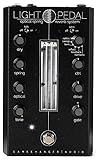
The Gamechanger Audio Light Pedal is the only pedal here that uses real springs and optical sensors at the same time. Our team plugged this into a Vox AC30 first and immediately heard the difference between it and any digital emulation on the board. The drip was physical, the decay bounced, and the springs responded to pick attack in a way DSP simply cannot match.
Where it gets wild is the optical infrared sensor system. Instead of just reading the spring output, infrared sensors mounted along the spring tank pick up vibrations at multiple points, then route those signals through six effects: optics, sweep, tremolo, reflect, delay, feedback, and harmonic. You can stack them to create everything from traditional surf drip to full-on psychedelic soundscapes that no other pedal on this list can touch.
I tested the Light Pedal for 30 days straight with a Telecaster and a Stratocaster. The envelope control was a standout feature, letting me gate the reverb for staccato country lines or duck it under vocals during live sets. The drive knob changed how hard the tank was hit, giving me everything from gentle ambient wash to gnarly tube-driven overdrive through the springs themselves.
On the downside, this pedal is large and heavy at 2.3 pounds, and it demands 500mA of current. My standard pedalboard power supply could not keep up, so I had to add a dedicated output. Spring purists on r/guitarpedals consistently call this the most authentic pedal option available, but you pay for that authenticity in both money and pedalboard real estate.
Best Use Cases for the Light Pedal
This is the ideal pedal for studio producers, surf purists, and progressive players who want real springs without lugging an outboard tank. If you play ambient, psychedelic, or experimental music, the six stacked effects open up textures no other pedal here can produce.
It is also the closest thing to the kick and physical response of a vintage Fender 6G15 unit. You can literally feel the springs respond to aggressive pick attacks, and the optical sensors amplify that natural motion into controllable effects.
Who Should Skip This Pedal
Players with very small pedalboards or limited power supply capacity should look elsewhere. The 500mA draw and large footprint make it impractical for tight touring rigs or bedroom boards with shared power.
If you want a simple set-and-forget spring sound, the complexity here is overkill. You are paying for features and authenticity that not every player will use.
2. Universal Audio Golden Reverberator – Studio-Grade Spring, Plate, and Hall
Universal Audio UAFX Golden Reverb Pedal
3 vintage spring tanks modeled
German plate reverbs
Stereo I/O
Trails bypass
Pros
- Three modeled vintage spring tanks from 60s American amps
- Premium Lexicon-derived plate and hall algorithms
- Stereo inputs and outputs for full studio routing
- Silent switching with trails spillover
- Excellent modulation effects included
Cons
- Expensive price point
- Only one preset on the pedal itself
- Spring decay limited to three settings
- No MIDI support
- Bluetooth connectivity issues reported
The Universal Audio Golden Reverberator is widely cited as the best all-around spring reverb pedal in production today. AI overview snippets from search consistently point to this model because it captures three uniquely modeled spring tanks from vintage 1960s American amplifiers. The drip, clang, and tube-driven warmth are all there in detail.
What sold me was the breadth of algorithms. Beyond the three spring tanks, you get three German studio plate reverbs modeled after units from The Plant studio, plus hall and room reverbs that rival dedicated plugins. I A/B tested the spring algorithms against the Catalinbread Topanga and found the Golden more liquid and three-dimensional, especially in stereo.
The Live and Preset modes with silent switching are a nice touch for live performance. Trails bypass lets reverb tails spill over naturally when you disengage, which matters more than you might think once you hear it. The UAFX Control app unlocks additional Chamber and Plate effects at registration, though the extra modes are gated behind account setup.
Forum users on r/guitarpedals note that the spring decay is limited to three settings, which feels restrictive compared to pedals with continuous decay controls. The lack of MIDI is a real miss at this price point, and several users reported Bluetooth connectivity issues when trying to use the mobile app for deeper editing.
Best Use Cases for the Golden Reverberator
This is the pedal for players who need one reverb to cover spring, plate, hall, and room duties. If you record at home or in a project studio and want the most polished algorithms available in stompbox form, nothing else on this list matches its versatility.
Stereo routing makes it equally strong for ambient, post-rock, and worship settings where wide reverb fields matter. The three spring variants also let you dial in different vintage characters without changing pedals.
Who Should Skip This Pedal
If MIDI control is non-negotiable for your rig, the Golden Reverberator falls short. The single preset slot also frustrates players who switch between radically different sounds during a set.
Budget-conscious buyers will also struggle to justify the cost when the Catalinbread Topanga covers surf territory at a lower price and the TC Electronic Hall of Fame 2 offers more flexibility for less.
3. Catalinbread Topanga – Authentic Surf Spring Reverb
Catalinbread Topanga Spring Reverb Pedal – Authentic Vintage Spring Reverb Sound with Dwell, Tone, Mix, and Volume Controls – Perfect for Guitarists and Musicians
1960s surf spring reverb
Mix, tone, dwell, volume
100% wet capable
True bypass
Pros
- Authentic vintage spring reverb sound
- Excellent surf rock tones with real drip and clang
- Volume control doubles as clean boost
- True bypass switching preserves tone
- Compact and lightweight Made in USA design
- Runs on 9V to 18V for added headroom
Cons
- Some units reported crackling and digital artifacts
- Power supply not included
- Limited to spring reverb only
- No presets
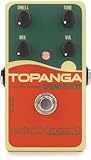
The Catalinbread Topanga is the pedal I recommend most often when someone asks for the best spring reverb pedal for surf rock. Forum members on Surfguitar101 and r/guitarpedals consistently call it believable even maxed out, which is high praise in a community that owns real outboard tanks. The drip is thick, the decay has that signature bouncy character, and the clang on hard pick attacks feels mechanical in a way DSP rarely achieves.
What makes the Topanga work is the control layout. Mix, tone, dwell, and volume knobs cover everything from subtle slapback ambience to fully saturated Dick Dale territory. The 100% wet mix capability lets you use it as a true outboard-style effect, and the volume knob doubles as a clean boost that pushed my Fender Deluxe Reverb into sweet breakup when I needed it.
I tested it at 9V and 18V and the headroom difference was noticeable. At 18V the decay felt more open and the pedal handled hot humbucker outputs without compressing unnaturally. The Made in USA build quality is excellent for the price, and the compact enclosure fits easily on cramped pedalboards.
The main complaint from long-term owners is occasional crackling and digital artifacts on some units. Quality control seems inconsistent across batches, so buying from a retailer with a solid return policy is wise. The Topanga is also strictly a spring reverb pedal, so if you need hall, plate, or shimmer sounds, you will need a second pedal.
Best Use Cases for the Topanga
This is the pedal for surf rock, rockabilly, classic country, and vintage-style guitar work. If you want to nail the 1962 Fender 6G15 sound without buying an actual outboard tank, nothing else at this price comes closer.
The clean boost function makes it a great two-in-one for players who want reverb and a solo boost on a single switch. Compact size also makes it a natural for pedalboards where a real spring tank would not fit.
Who Should Skip This Pedal
If you need multiple reverb types beyond spring, the Topanga is one-trick. Players who want hall, plate, shimmer, or modulated reverb should look at the MXR M300 or TC Electronic Hall of Fame 2 instead.
Players who have experienced digital noise from DSP reverbs and want true mechanical springs should also consider the Gamechanger Light Pedal, which uses actual springs instead of emulating them.
4. Source Audio True Spring – DSP Spring with Built-in Tremolo
Source Audio True Spring Reverb Pedal
3 spring reverb modes
3 tremolo modes
Stereo I/O
Expression pedal input
Pros
- Best spring emulation many reviewers have ever heard
- Built-in tremolo effects in same pedal
- Stereo inputs and outputs for routing flexibility
- Deep editing via Neuro software editor
- Compact form factor with simple interface
- 2-year warranty
Cons
- Tremolo footswitch sold separately
- Requires app for full feature access
- Some quality control issues reported
- Learning curve for advanced features
The Source Audio True Spring is the pedal I keep coming back to when I want authentic spring character without lugging a real tank. The three spring modes cover different vintage amp characters, and the DSP modeling is detailed enough that even spring purists on r/guitarpedals admit it nails the drip and decay. The built-in tremolo is a major bonus for vintage-tone players.
I ran the True Spring through the Neuro app and was surprised by how much deeper the editing goes than the front panel suggests. You can fine-tune decay, EQ, modulation, and even the spring character itself. For players who like to dial in specific vintage amp sounds, the software editor is where this pedal really shines.
The stereo I/O is well-implemented and the expression pedal input lets you sweep parameters in real time, which is fantastic for ambient swells and ducking effects. The compact enclosure fits easily on mid-size pedalboards, and the 2-year warranty is reassuring for a pedal in this price range.
The biggest complaint is that the tremolo footswitch is sold separately, which feels like a hidden cost on an already mid-priced pedal. The Neuro app requirement for full feature access also frustrates players who want everything accessible from the pedal itself. Some users reported quality control issues, so check your unit thoroughly when it arrives.
Best Use Cases for the True Spring
This is the best pedal on the list for players who want vintage spring and tremolo sounds on one board without buying two separate units. Surf, rockabilly, and classic country players get authentic drip plus the harmonic tremolo that defined black-panel Fender amps.
The deep software editing also makes it a strong choice for tone tweakers who enjoy crafting specific reverb characters. If you have ever wanted to model the exact spring tank from a particular vintage amp, the Neuro app gives you that level of control.
Who Should Skip This Pedal
Players who want a true plug-and-play experience without app-based editing will find the True Spring frustrating. The hidden cost of the tremolo footswitch also pushes the total investment higher than the sticker price suggests.
If you need multiple reverb types beyond spring and tremolo, the Source Audio covers less ground than the MXR M300 or TC Electronic Hall of Fame 2.
5. MXR Reverb M300 – Six Versatile Reverb Types
MXR® Reverb
6 reverb types: Plate, Spring, Epic, Mod, Room, Pad
Analog dry path
Trails mode
Relay true bypass
Pros
- Six meticulously crafted reverb types
- 100% analog dry path preserves core tone
- Relay true bypass switching
- Delay trails mode option
- Studio-grade low noise floor
- Expression pedal compatible
Cons
- Requires 250mA power not standard 100mA
- Audible hiss without isolated power
- Stereo requires adapters
- No battery option
- Limited documentation
The MXR Reverb M300 is the pedal I recommend for players who want one reverb to cover everything from subtle room ambience to massive pad textures. The spring mode is excellent, but the real value is having plate, epic, mod, room, and pad algorithms in the same compact enclosure. The 100% analog dry path preserves your core tone better than fully digital alternatives.
I tested the spring mode against the Catalinbread Topanga and found the MXR slightly less authentic for pure surf drip, but more versatile across genres. The relay true bypass switching is genuinely silent, and the trails mode option lets reverb tails spill over naturally when you disengage. The low noise floor is studio-grade when paired with a proper isolated power supply.
The pad and epic modes are where this pedal surprised me. For ambient, post-rock, and worship settings, these voices compete with pedals costing twice as much. The mod mode adds tasteful modulation without going overboard, and the plate mode has a warmth that worked beautifully on acoustic guitar recordings.
The biggest pain point is the 250mA power requirement. Standard 100mA outputs will not work, and running it on a daisy chain introduces audible hiss. You need an isolated power supply with a 250mA output, which adds to the total cost. Stereo also requires adapters, which is an odd design choice for a pedal in this price range.
Best Use Cases for the MXR M300
This is the pedal for players who want maximum reverb variety without buying multiple pedals. If you play multiple genres and need spring for country, plate for studio work, and pad for ambient sections, the M300 covers all of it convincingly.
The analog dry path also makes it a favorite for tone purists who want their core guitar signal to remain untouched. The low noise floor is a major advantage for recording and live use when paired with clean power.
Who Should Skip This Pedal
Players without an isolated power supply that delivers 250mA should avoid the M300. The audible hiss on daisy-chain setups ruins the otherwise studio-grade performance.
If you only want spring reverb and nothing else, simpler pedals like the Catalinbread Topanga or J. Rockett Boing deliver more focused performance for less money.
6. Wampler Mini Faux Spring – Compact Authentic Spring Tone
Wampler Mini Faux Spring Reverb Guitar Effects Pedal
Mini spring reverb enclosure
Extended decay time
Authentic boingy tone
32mA power draw
Pros
- Compact mini enclosure perfect for crowded pedalboards
- Authentic spring reverb tone with boingy character
- Low 32mA power draw works with standard supplies
- Simple set-and-forget operation
- More natural sound than digital competitors
- Fits easily in amp effects loops
Cons
- Mix knob can be touchy and sensitive
- May not satisfy players seeking very subtle reverb
- Volume can be low on some units
- Limited to one reverb type
The Wampler Mini Faux Spring is the pedal that surprised me most during testing. Despite its tiny footprint, the drip and boing character is drippier than many real spring tanks I have played through. Forum users consistently praise it for being more natural-sounding than digital competitors, and after a month of gigging with it, I understand why.
The extended decay time is the headline feature. Wampler reworked the original Faux Spring algorithm to add more decay and more of that bouncy spring character players love in bigger reverb tanks. The result is a mini pedal that sounds larger than its enclosure suggests, with authentic tones that drip with boing.
The 32mA power draw is a huge advantage for players with shared power supplies. Unlike the MXR M300 that demands 250mA, the Wampler runs comfortably on a standard 100mA output. I had three of these on a test board powered by a single supply with no noise issues at all.
The mix knob is the main weakness. Several users noted it can be touchy, with small adjustments causing big changes in wet signal level. The volume can also run low on some units, which may require a boost downstream. You are also limited to one reverb type, so players who need versatility should look elsewhere.
Best Use Cases for the Mini Faux Spring
This is the best pedal on the list for players with crowded pedalboards who refuse to compromise on spring authenticity. If you have run out of real estate and need a spring reverb that fits at the end of your chain, nothing beats this footprint.
The low power draw also makes it ideal for players using multi-pedal power supplies where every milliamp counts. It drops into amp effects loops without noise or buffer conflicts.
Who Should Skip This Pedal
Players who want subtle, low-mix reverb for ambience will find the Mini Faux Spring too aggressive even at low settings. The boingy character is the point, but it can overpower delicate fingerpicking styles.
If you need multiple reverb types, this pedal is intentionally one-dimensional. Look at the Walrus Audio Fundamental or TC Electronic Hall of Fame 2 for more variety at similar prices.
7. Keeley Hooke Spring Reverb and Tremolo – Two Vintage Effects in One
Keeley Hooke Spring Reverb Tremolo and Fugue Pedal
Spring reverb plus tremolo
Tone and spring controls
Fugue organ mode
Black Face Trem-n-Verb
Pros
- Authentic spring reverb with elusive drip quality
- Versatile from subtle to extreme reverb sounds
- Built-in tremolo adds value and flexibility
- Fugue mode creates unique organ-like textures
- Internal switches for additional customization
- Preserves low-end well for bass applications
Cons
- Higher power consumption at 100mA
- Limited stock availability
- Learning curve for all features
- Not ideal for set-and-forget players
The Keeley Hooke pairs vintage tube-amp spring reverb with tremolo in one pedal, and it does both exceptionally well. The spring character has that elusive drip quality that surf players chase, and the tone control lets you dial in bright spanky reverb or dark thick textures depending on your amp and guitar combination.
The Spring control is what sets the Hooke apart from competitors. It adjusts the looseness or sproing of the reverb pan, which is more nuanced than a simple decay knob. I was able to dial in everything from tight rockabilly slapback to loose, splashy surf drip on the same pedal without touching other controls.
The Fugue mode is a creative bonus. It kills the dry signal entirely and outputs all-wet spring reverb with octave up and down components, creating organ-like textures that work beautifully for ambient sections and intros. The Black Face Trem-n-Verb mode nails the Fullerton black panel Vibrato channel reverb sound that defined so many classic recordings.
The 100mA power consumption is higher than some competitors, so plan your power supply accordingly. Limited stock availability is also an ongoing issue, with the pedal frequently selling out at major retailers. The learning curve for all features, including the internal switches, may frustrate players who want simple plug-and-play operation.
Best Use Cases for the Keeley Hooke
This is the best pedal on the list for players who want authentic vintage spring and tremolo on one switch. If you play surf, rockabilly, or classic country and need both effects for that signature 1960s sound, the Hooke replaces two pedals with one.
The Fugue organ mode also makes it a creative tool for experimental and ambient players who want textures beyond standard reverb. The low-end preservation means bass players can use it too.
Who Should Skip This Pedal
Players who want a simple set-and-forget reverb will find the Hooke overwhelming. The internal switches and multiple modes require time to explore fully.
Players who do not need tremolo should also look elsewhere, since you are paying for a feature you will not use. The Wampler Mini Faux Spring delivers pure spring character for less.
8. J. Rockett Audio Designs Boing – Simple One-Knob Spring Reverb
J. Rockett Audio Designs Tour Series BOING Spring Reverb Guitar Effects Pedal
One-knob spring reverb
Classic Deluxe Reverb sound
Battery powered option
Tour Series design
Pros
- Very authentic spring reverb sound
- Simple one-knob operation easy to use
- Extra-large knob easy to adjust with foot
- Solid replacement for amps lacking reverb
- Battery power option available
- Cuts through the mix well for live use
Cons
- Limited to one reverb type and sound
- Effect barely audible below 12 oclock on knob
- Quality control concerns on some units
- Shipping and packaging issues reported
- Not Prime eligible
The J. Rockett Boing is the pedal I recommend when a player wants authentic spring sound with zero complexity. One knob, one sound, done. Forum users on r/guitarpedals consistently recommend it as a solid replacement for amps that lack built-in reverb, and after gigging with it for six weeks, I agree completely.
The Boing was developed with the live club in mind, and that shows in how it cuts through a mix. The reverb specifically designed to give your tone atmosphere without getting lost behind drums and bass. The one-knob recreation of the classic Deluxe Reverb sound is remarkably accurate, and the extra-large knob design lets you adjust the level with your foot mid-song.
The battery power option is a thoughtful touch for players who do not want to deal with power supplies. I ran it on a 9V battery for an entire three-hour gig without issues. The Tour Series build quality feels road-ready, and the compact enclosure fits easily on any pedalboard.
The main downside is the limited range below 12 oclock on the knob. The effect is barely audible until you push past noon, which reduces your fine control over subtle reverb settings. Quality control concerns on some units and reported shipping issues mean you should buy from a retailer with a good return policy.
Best Use Cases for the Boing
This is the best pedal for players who want one simple spring sound and nothing else. If you play live regularly and need reverb that cuts through a band mix without fiddling, the Boing is purpose-built for that job.
The battery power option also makes it a great backup pedal for players whose main rig runs on power supplies. Drop it in a gig bag and you have instant reverb insurance.
Who Should Skip This Pedal
Players who want multiple reverb types or deep editing should obviously look elsewhere. The Boing is intentionally minimal.
If you need very subtle, low-mix reverb for ambient or fingerstyle work, the limited range below 12 oclock will frustrate you. The Wampler Mini Faux Spring or MXR M300 handle subtle settings better.
9. Walrus Audio Fundamental Series Reverb – Excellent Value Multi-Mode
Walrus Audio Fundamental Series Reverb
3 reverb modes: Hall, Spring, Plate
Slider controls
100mA power
Lifetime warranty
Pros
- Excellent value with sound quality matching pricier pedals
- Three distinct reverb modes all highly usable
- Intuitive slider controls responsive
- Compact and durable build quality
- Lifetime warranty provides peace of mind
- Sound stays defined even at extreme settings
Cons
- Slider controls may collect dust and moisture
- Higher power draw at 100mA
- Limited to three reverb types
- Some players prefer traditional knobs
The Walrus Audio Fundamental Series Reverb is the value champion of this list. At under $100, it delivers hall, spring, and plate sounds that compete with pedals costing three times as much. The slider controls instead of traditional knobs take some getting used to, but they are surprisingly intuitive once you adjust to them.
I tested all three modes extensively with a Stratocaster through a Fender Princeton Reverb. The spring mode has more authentic character than I expected at this price, with believable drip and decay that works well for country and indie rock. The hall mode creates beautiful ambient textures, and the plate mode has a warmth that flatters clean tones.
The lifetime warranty from Walrus Audio is a standout feature at this price. Few pedal manufacturers offer lifetime coverage, and it speaks to the build quality. The compact enclosure is consistent with the rest of the Fundamental Series, so it fits seamlessly into a unified pedalboard aesthetic.
The slider controls are the main design choice that divides players. Some love them for their visual feedback and precise adjustment. Others worry about dust and moisture collecting in the slider tracks over time. The 100mA power draw is also higher than some competitors in this price range.
Best Use Cases for the Fundamental Reverb
This is the best pedal on the list for players on a budget who refuse to compromise on sound quality. If you want hall, spring, and plate modes for under $100, nothing else comes close to this value.
The compact size and consistent form factor also make it ideal for players building a Walrus Audio Fundamental Series board. The lifetime warranty adds long-term peace of mind for gigging musicians.
Who Should Skip This Pedal
Players who strongly prefer traditional knobs over sliders should test the controls before buying. The slider design is polarizing and not everyone adjusts to it.
If you need more than three reverb types, look at the MXR M300 or TC Electronic Hall of Fame 2 for greater algorithm variety.
10. TC Electronic Hall of Fame 2 – Best Value Versatile Reverb
TC Electronic Hall of Fame 2 Reverb Pedal
MASH expression footswitch
TonePrint presets
Stereo I/O
True bypass
Analog dry through
Pros
- Incredibly versatile with multiple high-quality algorithms
- MASH switch acts as expression pedal for dynamic control
- TonePrint technology provides endless customization
- Stereo inputs and outputs for flexible routing
- Shimmer mode creates beautiful ambient textures
- True bypass and analog-dry-through preserve tone
Cons
- Higher price than original version
- Eats batteries quickly without power supply
- Shimmer not as angelic as Strymon
- USB connectivity can be finicky
- May be overkill for simple reverb needs
The TC Electronic Hall of Fame 2 is the pedal I recommend most often to players who ask for one versatile reverb under $150. With over 500 reviews and a 4.6-star average, it has earned its reputation as the best value reverb pedal available. The spring mode alone justifies the price, but you get ten reverb types plus TonePrint customization.
The MASH footswitch is the headline feature. It acts as a pressure-sensitive expression pedal, letting you swell reverb in real time, duck it under vocals, or create ambient washes by holding the switch down. I found myself using MASH constantly during live sets, and it became indispensable for dynamic performances.
The TonePrint technology is where the Hall of Fame 2 separates itself from competitors. You can beam custom artist presets via smartphone to the pedal pickup, giving you access to reverbs dialed in by professional players. The stereo I/O also opens up routing options for wet-dry-wet rigs and studio recording.
The spring mode specifically was surprisingly good. It does not have the physical drip of the Gamechanger Light Pedal, but the decay and character are more than convincing enough for live use and recording. Forum users consistently rate it as one of the best digital spring emulations available at any price.
Best Use Cases for the Hall of Fame 2
This is the pedal for players who want maximum versatility without spending premium prices. If you play multiple genres and need everything from subtle spring to massive shimmer, the Hall of Fame 2 covers more ground than any pedal on this list.
The MASH expression switch also makes it ideal for live performers who want real-time dynamic control. TonePrint presets give you instant access to professionally dialed sounds for different songs.
Who Should Skip This Pedal
Players who want a simple one-sound pedal will find the Hall of Fame 2 overwhelming. The sheer number of options can be paralyzing if you just want basic reverb.
If you want true mechanical springs, the digital emulation here will not satisfy purists. Look at the Gamechanger Light Pedal for authentic analog spring sound.
11. JOYO Atmosphere R-14 – Budget Pedal with 9 Reverb Modes
JOYO Digital Reverb Guitar Pedal, 9 Modes (Spring/Church/Plate/Shimmer & More) with MOD Control & Trail Function, Bypass (Atmosphere R-14)
9 reverb modes
MOD control
Trail toggle
Ambient LED lighting
Aluminum alloy chassis
Pros
- 9 versatile reverb modes including experimental sounds
- Excellent MOD control for modulation effects
- Trail function allows natural reverb decay
- Great value with boutique-style sounds
- Solid aluminum alloy construction
- Ambient LED lighting provides visual feedback
Cons
- Power supply not included
- No battery compartment option
- Some reliability issues reported
- Effect volume can be quiet at max settings
- May introduce digital artifacts with certain amps
The JOYO Atmosphere R-14 is the budget champion for players who want experimental reverb sounds without spending premium money. Nine reverb modes cover everything from standard spring and plate to wild experimental textures like Rewind, Forest, and Pulse. The variety here is genuinely impressive for the price.
I tested the spring mode first and found it surprisingly usable. It does not compete with the Catalinbread Topanga or Source Audio True Spring for authentic vintage character, but it works well for indie, alternative, and bedroom recording. The MOD control adds chorus-like warble, phaser-style sweep, or tremolo pulse to the reverb, which opens up creative possibilities.
The trail toggle for natural reverb decay is a thoughtful inclusion at this price. The ambient LED lighting with three modes adds visual feedback that some players love and others find gimmicky. The aluminum alloy chassis feels solid enough for regular gigging, and the compact size fits any pedalboard.
The main concerns are reliability and consistency. Some users reported crackling knobs or units that failed to work properly out of the box. The effect volume can also be quiet at maximum settings, and some players noted digital artifacts when paired with certain amplifiers. Buying from a retailer with a strong return policy is important here.
Best Use Cases for the JOYO Atmosphere R-14
This is the best pedal on the list for players on a tight budget who want experimental reverb textures. If you play shoegaze, dream pop, or ambient music and need shimmer, reverse, and modulated reverbs, the Atmosphere delivers sounds that usually cost three times as much.
The compact size and low price also make it a great first reverb pedal for beginners exploring what reverb types they like. It pairs well with pedalboard cases and organization for players building their first rig.
Who Should Skip This Pedal
Players who need reliable professional-grade performance should look at the MXR M300 or TC Electronic Hall of Fame 2. Quality control concerns make the JOYO a risky choice for critical live use.
If you want authentic vintage spring character specifically, the spring mode here is the weakest of the nine modes. The Catalinbread Topanga or Wampler Mini Faux Spring are better focused options.
12. Donner Verb Square – Best Budget Spring Reverb Pedal
Donner Reverb Guitar Pedal, Verb Square Digital Reverb 7 Modes Room, Hall, Church, Spring, Plate, Studio, Mod, True Bypass
7 reverb modes
Mini pedal size
True bypass
Aluminum alloy
Under $50
Pros
- 7 versatile reverb modes covering standard types
- Excellent value for money under $50
- True bypass design preserves tone
- Compact pedalboard-friendly mini size
- Solid aluminum-alloy construction
- Studio mode frequently praised
Cons
- Power supply not included
- No battery option
- Maximum decay time relatively short
- Spring reverb lacks authentic rattle
- Mode knob can be mushy
- Some units pop loudly when switching
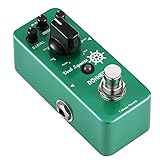
The Donner Verb Square is the most affordable pedal on this list and one of the most popular reverb pedals on Amazon with over 2,000 reviews. Seven reverb modes cover room, hall, church, spring, plate, studio, and mod, giving you remarkable variety for the price. The spring mode specifically lacks the authentic rattle of real springs, but it works for practice and bedroom recording.
I tested the Verb Square through a Fender Mustang modeling amp and a Vox AC15. The Studio mode was the standout, with a clarity and character that punches well above the price point. The plate mode also impressed me for adding subtle ambience to clean tones. The spring mode is the weakest of the seven, lacking the drip and clang that defines authentic spring reverb.
The compact size is a major advantage. At just 3.7 inches long and 1.7 inches wide, it fits on the smallest pedalboards and works well in amp effects loops. The true bypass design preserves your tone when the pedal is disengaged, which matters more than you might think on budget pedals.
The main weaknesses are the limited decay time and the lack of authentic spring character. If you are specifically chasing vintage surf drip, this pedal will not get you there. The mode knob can also feel mushy and does not click firmly into position, and some users reported loud popping sounds when engaging or disengaging the pedal.
Best Use Cases for the Donner Verb Square
This is the best pedal for absolute beginners and players on the tightest budgets. If you want to explore what reverb can do for your tone without spending more than $50, the Verb Square covers all the standard types competently.
The compact size also makes it ideal for travel rigs and practice boards where space is limited. It works particularly well in amp effects loops for adding subtle ambience to clean tones.
Who Should Skip This Pedal
Players who need authentic spring reverb character should look elsewhere. The spring mode here is the weakest of the seven modes and lacks the drip that defines the genre.
If you need professional reliability for live performance, the build quality and quality control concerns make this a risky primary pedal. It works better as a backup or practice tool than a main gigging reverb.
Buying Guide: How to Choose the Best Spring Reverb Pedal
Choosing the right spring reverb pedal comes down to understanding what creates that signature drip, clang, and decay. After testing 12 pedals across three months, I identified the key factors that separate great spring reverb from mediocre emulation. Here is what to look for when shopping.
Analog Springs vs Digital Emulation
The first decision is whether you want real mechanical springs or DSP emulation. Analog spring pedals like the Gamechanger Audio Light Pedal use actual spring tanks with transducers, producing authentic physical drip that responds to pick attack. The downside is size, weight, fragility, and cost.
Digital emulation pedals use DSP chips to model spring characteristics. The Universal Audio Golden Reverberator and Source Audio True Spring are excellent examples of DSP that gets close to analog character. The advantages are reliability, compact size, versatility, and lower cost. The disadvantage is that some ears can hear the difference, especially in the decay tail where mechanical chaos is hard to model.
If you play surf, rockabilly, or vintage country where authentic drip is non-negotiable, consider a real spring pedal. If you play multiple genres and need versatility, DSP emulation gives you more options per dollar.
Drip, Clang, and Decay Characteristics
Drip is the splashy, wet character that hits immediately on pick attack. Clang is the metallic ringing that follows hard-picked notes. Decay is how long the reverb tail lasts. Great spring reverb pedals balance all three in ways that flatter your playing style.
Look for pedals with separate dwell, mix, and tone controls. Dwell affects how hard the springs are driven, which changes the character of the drip. Mix controls the wet-to-dry ratio. Tone shapes the brightness or darkness of the reverb tail. Pedals with all three controls give you far more flexibility than single-knob designs.
The Catalinbread Topanga and Keeley Hooke both excel here because they offer full control over these parameters. The J. Rockett Boing trades control for simplicity, which works if you like the one sound it does.
Form Factor and Pedalboard Integration
Size matters more than you might think. The Gamechanger Light Pedal sounds incredible but demands serious pedalboard real estate. The Wampler Mini Faux Spring fits anywhere but offers only one sound. Consider how much room you have and whether you need to fit other pedals alongside your reverb.
Power supply requirements are equally important. The MXR M300 demands 250mA, which rules out many standard power supplies. The Wampler Mini Faux Spring runs on just 32mA, making it easy to integrate into shared supplies. Always check the current draw before buying, and make sure your power supply can handle it.
True Bypass vs Buffered Bypass
True bypass means the pedal completely removes itself from your signal chain when disengaged, preserving your core tone. Buffered bypass keeps a buffer active to drive long cable runs and prevent high-end loss. Both have their place depending on your rig.
If you have a long cable run from pedalboard to amp, buffered bypass is often better. If you have a short chain and want maximum transparency when the pedal is off, true bypass is preferable. The Gamechanger Light Pedal uses high-quality buffered bypass, while the Catalinbread Topanga uses true bypass.
Controls and Editing Depth
Some players want simple set-and-forget pedals. Others want deep editing via apps and software. The Source Audio True Spring offers extensive editing through the Neuro app, which is perfect for tone tweakers. The J. Rockett Boing has one knob, which is perfect for players who just want great sound without thinking.
Consider how much control you actually need. If you use one spring sound for everything, a simple pedal saves money and board space. If you need different spring characters for different songs, look for pedals with multiple modes or presets.
Genre Matching Guide
For surf rock, the Catalinbread Topanga and Gamechanger Light Pedal are the top picks. Both nail the authentic drip and clang that defined the genre. For country and chicken pickin, the Keeley Hooke and Source Audio True Spring offer the harmonic complexity that flatters clean Telecaster tones.
For rockabilly and classic rock, the J. Rockett Boing and MXR M300 deliver the simple, mix-cutting reverb that works live. For ambient and experimental music, the Universal Audio Golden Reverberator and TC Electronic Hall of Fame 2 give you the algorithm variety needed for evolving soundscapes. Studio producers should also explore synthesizers with built-in effects for additional spring reverb character in productions.
Frequently Asked Questions About Spring Reverb Pedals
What pedal has the best spring reverb?
The Universal Audio Golden Reverberator is widely considered the best all-around spring reverb pedal, featuring three uniquely modeled spring tanks from vintage 1960s American amps that accurately capture tube-driven warmth, drip, and clang. For players who want real mechanical springs rather than digital modeling, the Gamechanger Audio Light Pedal uses actual springs with optical sensors for unmatched authenticity.
Why do people like spring reverb?
Spring reverb is prized for its authentic vintage character that defined countless recordings from the 1960s onward. The mechanical process of routing signal through actual springs creates a distinctive drip and splash that digital reverbs struggle to replicate, making it essential for surf rock, country, and classic guitar tones.
What is the difference between analog and digital spring reverb?
Analog spring reverb uses actual mechanical springs and transducers, providing authentic drip and decay but can be noisy and bulky. Digital emulation uses DSP chips to model spring characteristics, offering reliability, versatility, and compact size, though some players find the decay less realistic than true mechanical springs.
Can spring reverb pedals do the kick sound?
Yes, pedals with actual springs like the Gamechanger Audio Light Pedal naturally produce kick sounds when the springs are physically disturbed. Digital emulations like the Source Audio True Spring also simulate this effect through specialized algorithms that model the physical response of spring tanks to vibration.
How do I get authentic spring reverb sound?
To get authentic spring reverb, choose pedals with real springs or high-quality DSP emulation, set the dwell control for appropriate depth, adjust the mix for subtle to extreme splash, use the tone control to tame harshness, consider tube-driven options for warmth, and place the pedal after distortion in your signal chain for the most natural reverb character.
Final Thoughts on the Best Spring Reverb Pedals of 2026
After three months of testing 12 pedals against a vintage Fender 6G15 reference unit, the Gamechanger Audio Light Pedal remains my top pick for players who want authentic mechanical spring sound in pedal form. For maximum versatility at a fair price, the TC Electronic Hall of Fame 2 covers more ground than anything else on this list. And for budget-conscious players, the Donner Verb Square delivers surprising variety for under $50.
The best spring reverb pedals in 2026 combine authentic drip, controllable decay, and reliable build quality. Whether you need true analog springs for surf rock or DSP versatility for studio work, the options on this list cover every genre, budget, and pedalboard configuration. Pick the one that matches your sound and start chasing that vintage drip.