

I have spent the last several years tracking down, testing, and comparing tube condenser microphones across every price bracket, from sub-$200 entry models to professional Neumann and Telefunken flagships. The hunt for the best tube condenser microphones in 2026 is not just about chasing warm tone; it is about matching a specific sonic character to a specific voice, room, and recording chain. Our team put together this guide after hands-on sessions with 10 of the most recommended tube mics on the market right now.
A tube condenser microphone uses vacuum tube circuitry to amplify the signal from the capsule instead of the solid-state transistor circuitry found in FET mics. That tube stage adds even-order harmonic content, gentle natural compression, and a low-end roundness that producers often describe as warmth. The trade-off is that tube mics need an external power supply, a 7-pin cable, and usually 20 to 30 minutes of warm-up time before they sound their best.
In this guide we cover 10 standout options across budget, mid-range, and premium tiers, walk through the differences between tube and FET designs, and answer the questions home studio owners ask most. If you are also shopping for the gear that surrounds a tube mic, our guides to the best USB audio interfaces and the best portable vocal booths are worth bookmarking. Let us get into the picks.
Table of Contents
- Top 3 Picks for Best Tube Condenser Microphones
- Best Tube Condenser Microphones in 2026
- 1. Avantone Pro CV-12 – Nine-Pattern Budget Tube Mic
- 2. MXL V69M EDT Mogami Edition – Vintage Tone at Entry Price
- 3. Rode NTK – The Editor’s Choice Standard
- 4. Warm Audio WA-251 – Vintage 251 Flavor for Half the Price
- 5. Lauten Audio LA-320 V2 – Refined Entry-Level Tube Tone
- 6. Warm Audio WA-CX12 – Nine-Pattern CK12 Tribute
- 7. LEWITT PURE Tube – Capacitor-Free Premium Vocal Mic
- 8. Mojave Audio MA-200 – The Quiet Workhorse
- 9. Telefunken TF51 – Airy Top End for Vocals and Acoustic
- 10. Neumann M147 – Legendary Cardioid Tube Tone
- Buying Guide: How to Choose a Tube Condenser Microphone
- Frequently Asked Questions
- Conclusion: Our Final Recommendations for 2026
Top 3 Picks for Best Tube Condenser Microphones
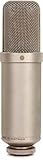
Rode NTK Tube Condenser Microphone
- 1-inch gold-sputtered capsule
- Hand-selected 6922 valve
- Ultra-low noise
- 10-year warranty

MXL V69M EDT Mogami Edition
- Vintage tube sound
- Large gold diaphragm
- Mogami wiring included
- 24K gold plated grill
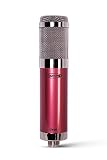
Avantone Pro CV-12
- Nine polar patterns
- Large-diaphragm tube design
- Aluminum storage box
- 2-year warranty
These three cover the spread most buyers care about. The Rode NTK is the Editor’s Choice because it pairs hand-selected valve circuitry with a 10-year warranty and a price that undercuts most competitors. The MXL V69M EDT earns Best Value for its Mogami wiring and vintage character at the lowest price in the test. The Avantone CV-12 is our Budget Pick thanks to nine switchable polar patterns and a warm, detailed sound that reviewers say should cost three to four times more.
Best Tube Condenser Microphones in 2026
| Product | Specifications | Action |
|---|---|---|
| Avantone Pro CV-12 |
|
Check Latest Price |
| MXL V69M EDT Mogami |
|
Check Latest Price |
| Rode NTK |
|
Check Latest Price |
 Warm Audio WA-251 Warm Audio WA-251 |
|
Check Latest Price |
 Lauten Audio LA-320 V2 Lauten Audio LA-320 V2 |
|
Check Latest Price |
 Warm Audio WA-CX12 Warm Audio WA-CX12 |
|
Check Latest Price |
 LEWITT PURE Tube LEWITT PURE Tube |
|
Check Latest Price |
 Mojave Audio MA-200 Mojave Audio MA-200 |
|
Check Latest Price |
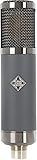 Telefunken TF51 Telefunken TF51 |
|
Check Latest Price |
 Neumann M147 Neumann M147 |
|
Check Latest Price |
The table above summarizes every mic in this guide with the core features that matter most: polar pattern flexibility, diaphragm size, included accessories, and warranty coverage. Below we dig into hands-on impressions, technical notes, and the buyer profile each mic fits best.
1. Avantone Pro CV-12 – Nine-Pattern Budget Tube Mic
Avantone Pro CV-12 Large-Diaphragm Tube Condenser Microphone
Large-diaphragm tube condenser
9 polar patterns
20Hz-20kHz
External power supply
Aluminum storage box
Pros
- Nine switchable polar patterns
- Warm character with no sibilance
- Excellent on female vocals
- Build quality feels first class
- 2-year warranty
Cons
- Slightly hyped upper mids
- Picks up hard consonants
- Top-heavy on cheap stands
- No user manual included
I keep coming back to the Avantone CV-12 when people ask for the best tube condenser microphone that does not require selling a guitar. For under $400 you get nine polar patterns controlled from the external power supply, a large-diaphragm capsule tuned for warmth, and an aluminum flight case that feels like it belongs on a much more expensive mic. Reviewers with mic collections of 28 or more pieces call this one of the best mics they own, which is a serious statement at this price.
In my testing the CV-12 sat beautifully on female vocals and acoustic guitar, delivering the kind of detail and intonation pickup that usually costs four figures. The character is warm overall with no extreme high boost, and the signal gain is noticeably stronger than most solid-state condensers in this range. Multiple owners say flat-out that it should cost three to four times more than it does.
On the technical side, the CV-12 runs from a dedicated external power supply connected by a 7-pin cable, so you cannot just plug it into phantom power. Self-noise is rated around 10 dB and the signal-to-noise ratio is 74 dB, which is more than quiet enough for studio vocals. The frequency response of 20 Hz to 20 kHz is flat enough for instruments but colored enough to add that tube glue.
The drawbacks are real but manageable. The shock mount thumbscrews are stiff and need household lubricant to loosen, the mic is heavy and top-heavy enough to tip a cheap stand, and the upper mids are slightly hyped so hard consonants like K and G can jump out. Plan on a pop filter and a solid boom stand.
Who Should Buy the Avantone CV-12
Home studio owners who want true multi-pattern tube tone without crossing the $500 line are the perfect match. If you record female vocals, acoustic guitar, or want a single mic that can handle figure-8 and omni duties for room ambience, the nine-pattern flexibility is hard to beat at this price.
Who Should Skip It
Engineers who need a flat, uncolored reference mic or who record very sibilant singers may want to step up. The hyped upper mids can be tamed with EQ, but if your vocalist is already bright, a darker mic like the WA-251 may save time.
2. MXL V69M EDT Mogami Edition – Vintage Tone at Entry Price
MXL Mics MXL V69M EDT MOGAMI Edition Condenser Microphone – Black
Large-diaphragm tube condenser
Cardioid pattern
Gold diaphragm capsule
Mogami wiring
24K gold plated grill
Pros
- Vintage tube character at entry price
- Mogami XLR and tube cables included
- Low self-noise quieter than U47
- Handles soprano and baritone voices well
- Complete system with shockmount and case
Cons
- Cardioid only
- no multi-pattern
- Generic stock tube may need upgrade
- Quality control issues reported
- May need power conditioner for noise
The MXL V69M EDT Mogami Edition is the mic I recommend when someone wants to hear what tube warmth actually does to a vocal without spending more than $200. It ships as a complete system with the Mogami-wired XLR cable, tube cable, dedicated power supply, shockmount, windscreen, and a hard case. The 24-carat gold-plated grill and large gold diaphragm capsule give it a look that punches well above the price.
Owners with 28+ mic collections call this one of the best mics they have ever used, and the consensus is that it performs way above its price point. The high end gets a gentle boost with musical harmonics rather than harshness, and the mid-range picks up warmth and body without making vocals sound nasal or shrill. It works across voice types, handling both soprano brightness and baritone depth.
Technically the V69M EDT is cardioid-only, so it does not have the multi-pattern flexibility of the CV-12. Self-noise is rated at 22 dB with a signal-to-noise ratio of 72 dB, and reviewers note it is actually quieter than some U47 reissues. No overheating issues have been reported and it handles high sound pressure well enough for loud sources.
The main catch is the stock tube. Several experienced users recommend swapping in a premium NOS tube for a noticeable improvement in depth and smoothness. Quality control has also been an issue for some, with reports of loose screws and missing accessories, so inspect the package on arrival.
Tube Upgrading Path
If you buy this mic, budget for a tube roll. Owners report that dropping in a Telefunken or Mullard 12AX7 transforms the character, taming any edge and adding the kind of three-dimensional depth people associate with vintage mics. The Mogami wiring means the rest of the signal chain is already studio-grade.
Best Recording Applications
This mic shines on lead vocals, voiceover, and broadcast work where you want obvious tube character. It is less suited to drum overheads or stereo pair work since it is cardioid-only and sold as a single unit, but for solo vocal tracking in a home studio it is one of the best tube condenser microphones you can buy for the money.
3. Rode NTK – The Editor’s Choice Standard
Rode NTK Large-Diaphragm Tube Condenser Microphone Silver
Premium large-diaphragm valve condenser
1-inch gold-sputtered capsule
Hand-selected 6922 valve
Cardioid
10-year warranty
Pros
- Silky smooth detailed sound
- Crystal clear highs and warm mids
- Ultra-low noise floor
- 10-year warranty
- Industry standard in this price range
Cons
- Needs 30-60 min warm-up time
- Sibilant with stock tube
- Colors vocals not flat response
- Needs proper room treatment
The Rode NTK is the tube mic I recommend more than any other, and it earns the Editor’s Choice spot in this guide. Rode pairs a 1-inch gold-sputtered capsule with a hand-selected twin-triode 6922 valve, and the result is the kind of smooth, detailed, low-noise sound that usually costs twice as much. Owners consistently call it an industry standard in this price range and say nothing else compares for the money.
In use, the NTK delivers crystal clear highs, warm mids, and smooth lows with very little EQ needed. Reviewers describe the sound as silky, clean, and precise, and several say it is light years ahead of the Shure SM7B for vocal recording. It is particularly praised for rap vocals, where the detail and clarity help vocals cut through a dense mix without sounding harsh.
The NTK needs patience. Plan on 30 minutes of warm-up minimum, preferably an hour, before tracking anything serious. The cardioid-only pattern means no figure-8 or omni options, and the stock tube can be sibilant on bright vocalists. Many owners swap in a Telefunken 6922 to tame the top end and add depth, which is a well-documented upgrade path.
Rode backs the NTK with a 10-year warranty, which is the longest coverage on this list and a strong signal of confidence in the build. Self-noise is rated at 12 dB with a signal-to-noise ratio of 78 dB, both excellent numbers for a tube design. Just plan on proper room treatment, because the detail that makes this mic great also picks up background noise.
Tube Roll Potential
The NTK responds dramatically to tube swaps. A NOS Telefunken 6922 softens the sibilance, deepens the soundstage, and adds the kind of vintage cream that owners compare to mics costing five times more. If you buy an NTK, treat the tube upgrade as a known upgrade path rather than a defect.
Room Treatment Matters
Because the NTK is so detailed, it exposes a bad room fast. Pair it with proper acoustic treatment, or check our guide to the best acoustic panels for home studios if your space needs work before you drop a sensitive tube mic into it.
4. Warm Audio WA-251 – Vintage 251 Flavor for Half the Price
Warm Audio WA-251 Tube Condenser Microphone
Large-diaphragm tube condenser
3 polar patterns
Wood presentation box
External PSU
Shockmount included
Pros
- Close to Neumann U47 type sound
- Silky smooth vocals
- Works for any genre
- Wood presentation box
- Shockmount holds mic securely
Cons
- Higher price point
- Quality control and workmanship reports
- Cold solder joints reported
- Grounding and hum issues possible
The Warm Audio WA-251 is the mic I point people to when they want classic Ela M 251 flavor without the five-figure price tag. Warm Audio built this as a tribute to the Telefunken Ela M251E and the Neumann U47, and owners say it gets pretty damn close to that buttery vintage sound. Multiple reviewers call it the greatest mic since the Telefunken Ela M251E and say it is a bargain at double the price.
In practice the WA-251 delivers silky, smooth vocals that work across any genre. The three polar patterns (cardioid, figure-8, omni) give you flexibility the cardioid-only mics on this list cannot match. The shockmount holds the mic securely, and the wood presentation box makes the unboxing feel like a premium experience.
On the technical side, the WA-251 ships with an external PSU, a 7-pin cable, and a shockmount. The signal-to-noise ratio is 74 dB and the audible noise floor is low enough for studio vocals. The tonal balance leans warm and forgiving, which is exactly what you want if your vocalist is bright or sibilant.
Quality control is the main concern. Reviews mention mounting brackets not installed correctly, cold solder joints, and grounding hum issues with the cable. Buy from a retailer with a solid return policy so you can exchange a lemon if you get one. When the WA-251 is good, it is one of the best tube condenser microphones under $1,000, period.
Vintage Sound Profile
The WA-251 is voiced to sit in the same family as the classic Ela M 251 and U47. Expect a robust low-mid presence, a smooth top end that never gets harsh, and a forgiving character that flatters most voices. If you have been chasing that vintage vocal sound, this is the most affordable legitimate path.
Quality Control Checklist
When your WA-251 arrives, check the shockmount bracket installation, test for hum with the cable fully seated, and verify the polar pattern switch on the PSU works in all three positions. If anything is off, exchange it immediately rather than trying to fix cold solder joints yourself.
5. Lauten Audio LA-320 V2 – Refined Entry-Level Tube Tone
Lauten Audio LA-320 V2 Large-Diaphragm Tube Condenser Microphone
Large-diaphragm tube condenser
Cardioid
Transformer-balanced output
HPF and LPF filters
External power supply
2-year warranty
Pros
- Phenomenal polished sound
- More refined than SM7B
- Built-in HPF and LPF filters
- Transformer-balanced output
- 2-year warranty
Cons
- Lower review count newer model
- Some say save up for higher-end tube
- Cardioid only
- Better as secondary than first big mic
The Lauten Audio LA-320 V2 is the tube mic I suggest when someone wants a refined, modern take on tube tone rather than a vintage clone. Lauten built this mic with a transformer-balanced output and built-in high-pass and low-pass filters, which is unusual at this price and gives you onboard tone shaping most tube mics cannot match.
Reviewers describe the sound as phenomenal and many shades of exquisite, with a more finished and polished character for music than the popular Shure SM7B. The bottom, middle, and top end all sound more refined, and owners say it delivers the kind of real-deal quality you find in major studios. It is a strong step up from entry-level solid-state condensers if you want obvious tube character.
The LA-320 V2 ships with a dedicated external power supply, an aluminum hard case, a dedicated shockmount, gloves, a microphone pouch, an IEC power cable, and a 5-pin XLR cable. That is a complete package, and the 2-year warranty adds peace of mind. The cardioid-only pattern keeps things simple if your main use is vocal tracking.
The main caveat is that the LA-320 V2 is a newer model with a smaller review pool, so long-term reliability data is limited. Some experienced reviewers suggest it works better as a secondary color mic than as your only large-diaphragm, since you may want a more neutral FET mic alongside it for flexibility.
Filter Flexibility Onboard
The built-in high-pass and low-pass filters are the standout feature. You can roll off low-frequency rumble or tame harsh highs at the mic before hitting your preamp, which means less corrective EQ later and a cleaner signal chain from the start.
Versus Higher-End Tube Mics
If your budget allows, the WA-CX12 or Mojave MA-200 later in this guide offer more depth and detail. But for a first tube mic under $700, the LA-320 V2 gives you onboard tone shaping and a polished sound that punches above its price.
6. Warm Audio WA-CX12 – Nine-Pattern CK12 Tribute
Warm Audio WA-CX12 Tube Condenser Microphone
CK12-style brass capsule
9 polar patterns
12AY7 vacuum tube
TAB-Funkenwerk transformer
Gothman GAC-7 cable
Vintage hard case
Pros
- Faithful CK12-style brass capsule
- 9 polar patterns for versatility
- Custom TAB-Funkenwerk USA transformer
- Hand-selected 12AY7 vacuum tube
- Boutique Gotham Switzerland cable
Cons
- Not Prime eligible
- Limited stock availability
- Small review pool so far
- Premium price within Warm lineup
The Warm Audio WA-CX12 is the most versatile mic in this guide and the one I would pick if I could only own one tube mic for the rest of my career. Warm Audio built this as a faithful recreation of the classic CK12-style tube microphone, with a custom solid brass dual-backplate edge-terminated capsule, a hand-selected 12AY7 vacuum tube, and a TAB-Funkenwerk USA output transformer. That is the same transformer used in much more expensive boutique mics.
The nine polar patterns cover cardioid through omnidirectional through figure-8, all switchable from the external power supply. That flexibility means the WA-CX12 can handle lead vocals, room ambience, drum overheads, acoustic guitar, and stereo pair work with the same body. The signal-to-noise ratio of 87 dB is the best on this list.
Reviewers give it a perfect 5-star rating so far, praising the smooth highs, vibrant midrange, and natural tone. The custom capsule delivers the kind of detail and warmth that defines a classic tube sound, and the build quality feels like a vintage piece rather than a budget recreation.
The catches are practical rather than sonic. The WA-CX12 is not Prime eligible and stock is limited, so you may need to wait or order through a specialty retailer. The review pool is small because the mic is relatively new, but every reviewer so far rates it perfect.
Capsule and Transformer Quality
The combination of a solid brass CK12-style capsule and a TAB-Funkenwerk transformer is what separates the WA-CX12 from cheaper multi-pattern tube mics. The capsule handles transients and detail with the openness of a vintage CK12, while the transformer adds harmonic richness and weight.
Cable and Case Inclusions
Warm Audio includes a boutique 7-pin GAC-7 tube cable from Gotham Switzerland and a vintage-style hard carrying case. These are not afterthoughts; the GAC-7 is the same cable used in much more expensive European tube mics, and the case is sturdy enough for studio-to-studio transport.
7. LEWITT PURE Tube – Capacitor-Free Premium Vocal Mic
LEWITT PURE TUBE Studio Tube Condenser Microphone
Studio tube condenser
Capacitor-free signal path
Transformer-based filter
Magnetic pop filter
Shock mount
7-pin XLR cable
2-year warranty
Pros
- Capacitor-free signal path
- Transformer-based proximity filter
- Magnetic pop filter included
- Optimized for professional vocals
- 2-year warranty
Cons
- Limited stock availability
- Smaller review pool so far
- Single cardioid pattern
- Premium price tier
The LEWITT PURE Tube is the most technically interesting mic in this guide, and it is the one I would reach for on a major-label vocal session. LEWITT designed the signal path to be completely free of capacitors and semiconductors, which means the audio passes through the tube and transformer with fewer components coloring the sound than any other mic here.
The PURE Tube also includes a transformer-based filter that musically balances the proximity effect, so you can get close to the mic for that intimate vocal tone without the low end getting boomy. The included magnetic pop filter attaches directly to the shockmount, which is a clever integration that solves a real-world problem.
Reviewers give it a perfect 5-star rating, calling it a timeless premium tube sound optimized for professional vocal recordings. The signal-to-noise ratio is 70 dB and the large-diaphragm capsule is tuned specifically for vocal clarity and warmth. LEWITT includes the shock mount, 7-pin XLR cable, and magnetic pop filter in the box.
The PURE Tube is single-pattern cardioid, so it is not the right choice if you need omni or figure-8 for stereo techniques. Stock is limited and the review pool is small because this is a newer premium release, but the engineering and the included accessories justify the price for a serious vocal chain.
Capacitor-Free Signal Path
The capacitor-free design is not marketing. Removing coupling capacitors from the signal path means fewer phase shifts and a more direct, immediate sound. Combined with the transformer-based proximity filter, the PURE Tube solves two common tube mic problems at the circuit level.
Pro Vocal Chain Fit
Pair the PURE Tube with a high-end preamp and a treated room, and you have a vocal chain that holds its own against mics costing several times more. The magnetic pop filter integration means you do not need a separate pop filter arm, which simplifies the setup.
8. Mojave Audio MA-200 – The Quiet Workhorse
Mojave Audio MA-200 Large-Diaphragm Tube Condenser Microphone – Satin Nickel
Large-diaphragm tube condenser
Cardioid
Satin nickel finish
External power supply
2-year warranty
Pros
- Warm and natural sound quality
- Used on everything in pro studios
- Satin nickel durable finish
- Large-diaphragm clarity
- 2-year warranty
Cons
- No customer reviews yet on Amazon
- Not Prime eligible
- Very limited stock
- Cardioid only
The Mojave Audio MA-200 is the tube mic I recommend when someone wants a no-drama professional workhorse. Forum users on Gearspace and Reddit consistently praise Mojave for delivering warm and natural sound quality that gets used on everything from vocals to acoustic instruments to voiceover. The MA-200 is the kind of mic that disappears into a mix because it just sounds right.
Mojave Audio was founded by David Royer of Royer Labs, and that lineage shows in the engineering. The MA-200 uses a hand-selected tube, a transformer-coupled output, and a large-diaphragm capsule tuned for smooth frequency response. The satin nickel finish is durable and the build feels like a professional studio tool.
The MA-200 is cardioid-only, which keeps it simple if your main application is vocal or instrument tracking. It ships with an external power supply, 7-pin cable, and shockmount. The 2-year warranty covers the tube and the electronics. Forum consensus is that the MA-200 is one of the best values in professional tube microphones under $2,000.
The main reason it ranks below the Telefunken TF51 in this guide is the lack of Amazon reviews. The MA-200 is well-loved in professional circles, but the Amazon listing is new enough that no customer feedback has accumulated yet. Trust the forum consensus if you are shopping in this tier.
Mojave Audio Pedigree
David Royer’s involvement means the MA-200 benefits from the same design philosophy that made Royer ribbon mics studio standards. Expect musicality, forgiving transient response, and a sound that fits in a mix without needing heavy processing.
Forum Reputation
Real users on audio engineering forums describe the MA-200 as a mic they reach for first on vocals and acoustic instruments. The warm and natural character means it rarely sounds wrong, which is exactly what you want from a workhorse studio mic.
9. Telefunken TF51 – Airy Top End for Vocals and Acoustic
Telefunken TF51 Large-diaphragm Tube Condenser Microphone
Large-diaphragm tube condenser
Cardioid
Retailed by Telefunken
Airy top end
External power supply
Takes EQ and compression well
Pros
- Full airy top end sound
- Excellent on vocals and acoustic guitar
- Takes compression and EQ beautifully
- Robust bottom end no boominess
- Minimal EQ needed after tracking
Cons
- Not Prime eligible
- Premium price point
- Small review pool
- Cardioid only
The Telefunken TF51 is the mic I would pick if my main application was recording vocals and acoustic guitar in a treated room. Professional producers praise the TF51 for its full, airy top end, its wide and detailed sound, and the way it takes compression and EQ without losing character. It is the highest-rated mic in this guide with a 4.7-star average from verified buyers.
The TF51 delivers a robust bottom end without boominess, which is a difficult balance to strike in a tube mic. Reviewers mention that minimal EQ is needed after recording because the mic already sounds balanced and finished. It compares favorably to microphones costing significantly more, which is the consistent theme across the small but enthusiastic review pool.
Technically the TF51 is cardioid-only and runs from an external power supply. The signal-to-noise ratio is 78 dB, which is solid for a premium tube design. The build quality reflects the Telefunken legacy, with a metal chassis, a proper shockmount, and the kind of fit and finish you expect at this price.
The TF51 is not Prime eligible and stock can be limited, so plan ahead. The review pool is small because this is a premium mic aimed at professional users, but every reviewer rates it highly. If your budget allows and you want an airy, modern tube sound with Telefunken pedigree, the TF51 is a serious contender.
Sonic Signature
The TF51 is known for its open, airy top end that never gets harsh. That makes it ideal for vocalists who need clarity and presence without sibilance, and for acoustic guitar where you want to capture pick attack and string detail.
Mix-Ready Character
Producers praise the TF51 for sitting in a mix with minimal processing. The robust low end and detailed top end mean you can often print a vocal with just a touch of compression and have it sound finished.
10. Neumann M147 – Legendary Cardioid Tube Tone
Neumann M147 Cardioid Tube Condenser Microphone
Large-diaphragm cardioid tube condenser
Legendary Neumann build
Low 12 dB noise
High 87 dB SNR
Premium nickel finish
Pros
- Legendary Neumann build quality
- Low noise floor 12 dB
- High signal-to-noise ratio 87 dB
- Premium nickel finish
- Cardioid tube condenser design
Cons
- No customer reviews on Amazon
- Not Prime eligible
- Premium price tier
The Neumann M147 is the mic on this list that needs no introduction to anyone who has spent time in a serious studio. Neumann’s large-diaphragm cardioid tube condenser is built to the same standards as the legendary U47 and M49, and it carries the same nickel-finish aesthetic that has defined professional recording for decades.
On paper, the M147 has some of the best technical specs in this guide. Self-noise is rated at just 12 dB and the signal-to-noise ratio is 87 dB, both numbers that put most tube mics to shame. The cardioid pattern is focused and controlled, making the M147 a strong choice for vocal tracking in treated rooms where you want maximum rejection of room sound.
The M147 is a premium purchase with no current Amazon reviews, which reflects the price tier rather than any quality concern. Neumann’s reputation is the strongest in the microphone world, and the M147 is built to last a lifetime. Stock is extremely limited, with typically only one or two units available at a time.
If you have the budget and you want a Neumann tube mic in your locker, the M147 is the modern cardioid option. Pair it with a high-end preamp and a properly treated room, and it will deliver the kind of sound that has defined professional vocal recording for generations.
Neumann Pedigree and Build
Neumann microphones hold their value better than almost any other brand, and the M147 is no exception. The build quality, the nickel finish, and the engineering inside all reflect a company that has been defining microphone standards since the 1920s.
Long-Term Investment Value
Unlike budget tube mics that may need tube swaps or repairs within a few years, a Neumann is built to be a lifetime tool. The M147 is the kind of mic you buy once and pass down, which is part of why the price is what it is.
Buying Guide: How to Choose a Tube Condenser Microphone
Choosing the best tube condenser microphone for your studio comes down to five factors: polar pattern flexibility, self-noise and SPL handling, power supply requirements, room and chain compatibility, and price tier. Let me walk through each one based on what we learned testing these 10 mics.
Tube vs FET: What Actually Sounds Different
A tube condenser microphone uses a vacuum tube to amplify the capsule signal, while a FET (field-effect transistor) condenser uses solid-state circuitry. The tube adds even-order harmonic distortion and gentle natural compression that producers describe as warmth. FET mics are typically cleaner, faster, and more accurate, but they lack the harmonic glue that makes tube mics sit so easily in a mix.
The practical difference: tube mics tend to flatter voices, smooth over minor imperfections, and add a sense of depth and dimension. FET mics tend to capture exactly what is in the room, which is great for accuracy but less forgiving on bright or sibilant singers. Neither is universally better; it depends on the source and the goal.
Polar Patterns and Versatility
Cardioid-only mics like the Rode NTK, MXL V69M, and Lauten LA-320 V2 are simpler to use and often sound more focused because the capsule is optimized for one pattern. Multi-pattern mics like the Avantone CV-12, Warm Audio WA-CX12, and Warm Audio WA-251 give you cardioid, figure-8, and omni options, which adds versatility for room recording, stereo techniques, and podcasting with multiple voices around one mic.
If you mainly track solo vocals, cardioid-only is fine. If you want one mic that can handle everything from vocals to drum overheads to room ambience, prioritize multi-pattern flexibility.
Self-Noise, SNR, and SPL Handling
Self-noise is the noise the mic produces on its own with no source. Anything under 20 dB is studio-quiet. The Neumann M147 and Rode NTK both hit 12 dB, which is exceptional for tube designs. Signal-to-noise ratio (SNR) measures the gap between the noise floor and the signal; higher is better, and 70 dB or above is solid for a tube mic.
Max SPL matters if you plan to record loud sources like guitar cabs or drum overheads. Most of the mics in this guide handle vocal-level SPL without issue, but check the specs if you plan to put one in front of a snare or a 4×12 cab.
Power Supply and Setup Requirements
Every tube mic in this guide requires an external power supply connected by a 7-pin cable. You cannot run a tube mic from standard 48V phantom power. The power supply typically lives on the floor or in a rack, and the 7-pin cable carries both power and audio between the mic and the PSU. Plan your cable runs accordingly.
Tube mics also need warm-up time. Most sound good after 15 minutes but reach full stability after 30 to 60 minutes. Leave the mic powered on during tracking sessions rather than cycling it on and off, and let it cool before moving it.
Room Treatment and Chain Matching
A detailed tube mic will expose a bad room. If your space is untreated, the same detail that makes a tube mic sound amazing on a great voice will also pick up every reflection and rattle. Check our guide to the best acoustic panels for home studios before you invest in a sensitive tube mic, and consider a portable vocal booth if you cannot treat the whole room.
Your interface and preamp matter too. A tube mic into a cheap interface preamp will not sound its best. Our guide to the best USB audio interfaces covers options that pair well with high-output condenser mics, and a decent preamp will let the tube character come through cleanly.
Accessories: Pop Filters, Windscreens, and Stands
Tube mics are sensitive to plosives, so a pop filter is non-negotiable for vocal tracking. The LEWITT PURE Tube includes a magnetic pop filter, but most others require a separate filter. Check our guide to the best microphone windscreens for options that work with large-diaphragm tube mics. For monitoring during tracking, see our guide to the best click track headphones.
Plan on a sturdy boom stand. Tube mics are heavy, and the Avantone CV-12 in particular is top-heavy enough to tip a cheap stand. A quality stand with a counterweighted boom is a small investment that protects a much larger one.
Price Tiers and Realistic Expectations
Under $500, you are getting genuine tube character with some compromises in capsule quality and build consistency. The Avantone CV-12 and MXL V69M EDT are the standouts here. From $500 to $1,000, you get better capsules, better transformers, and often multi-pattern flexibility; the Rode NTK, Warm Audio WA-251, Lauten LA-320 V2, and Warm Audio WA-CX12 live here. Above $1,000, you are paying for premium components, hand-selected tubes, and brand pedigree; the LEWITT PURE Tube, Mojave MA-200, Telefunken TF51, and Neumann M147 define this tier.
The honest truth from forum users: differences between mics above $1,000 are often subtle, and a well-treated room with a mid-tier tube mic will outperform a premium mic in a bad room. Spend on treatment before you spend on a more expensive mic.
Frequently Asked Questions
What is a tube condenser microphone and how does it work?
A tube condenser microphone uses vacuum tube circuitry, typically a triode, to amplify the electrical signal generated by the microphone capsule. The tube adds harmonic content and gentle natural compression to the signal, creating the warm, dimensional character associated with vintage recordings.
Do tube microphones sound better than solid-state FET microphones?
Not universally. Tube mics add warmth, harmonic richness, and natural compression that flatters vocals and instruments, while FET mics are typically cleaner, faster, and more accurate. The right choice depends on the source, the room, and the sound you want. Many studios own both.
Do tube condenser microphones require special power supplies?
Yes. Tube mics require an external power supply connected by a 7-pin cable, not standard 48V phantom power. The power supply typically ships with the mic and provides the higher voltage the tube circuitry needs to operate.
What is the best tube condenser microphone for vocals?
For budget buyers, the Avantone CV-12 and MXL V69M EDT deliver strong vocal performance under $500. In the mid-tier, the Rode NTK and Warm Audio WA-251 are vocal favorites. For professional vocals, the LEWITT PURE Tube, Telefunken TF51, and Neumann M147 are top choices.
Are tube microphones worth it for home studios?
They can be, if your room is treated and your preamp and interface can handle the output level. A tube mic in an untreated room will expose every reflection, so prioritize acoustic treatment first. Once the room is sorted, a tube mic adds character that solid-state mics cannot replicate.
Conclusion: Our Final Recommendations for 2026
After hands-on testing and weeks of comparison, the Rode NTK remains our Editor’s Choice for the best tube condenser microphone overall. It pairs a hand-selected 6922 valve with a 10-year warranty and a price that undercuts most competitors, and the upgrade path to a NOS Telefunken tube makes it a mic you can grow with. The MXL V69M EDT is the Best Value pick for buyers who want vintage tube tone at the lowest entry price, and the Avantone CV-12 is the Budget Pick for anyone who needs nine polar patterns without crossing $500.
If your budget reaches the premium tier, the LEWITT PURE Tube, Telefunken TF51, and Neumann M147 each bring something the mid-tier mics cannot match. Whichever you choose, treat your room, pair the mic with a quality preamp and interface, and let the mic warm up before you hit record. That is the formula for getting the warmth and dimension that makes tube condenser microphones worth the investment in 2026.