

Finding the best headphones for guitarists changed how I practice forever. When my downstairs neighbor started banging on the ceiling at 11 PM during a particularly inspired lead session, I realized silent practice wasn’t optional anymore, it was survival.
After testing 12 different pairs over a three-month period with my Fender Strat, a Boss Katana, a Positive Grid Spark, and an audio interface running Neural DSP plugins, I have a clear picture of what works and what doesn’t. The right headphones reveal amp modeling detail, keep your ears comfortable for hours, and, most importantly, make you want to keep playing.
Whether you live in an apartment, record demos at home, or just want to jam along to backing tracks without waking the whole house, this guide covers every price point and use case. I have also included a section on guitar headphone amplifiers for anyone needing more driving power for high-impedance models. Let’s get into the picks.
Table of Contents
- Top 3 Picks for Best Headphones for Guitarists
- Best Headphones for Guitarists in 2026
- 1. Sony MDR7506 – The Industry Standard for Guitar Tone
- 2. Audio-Technica ATH-M50x – The Modern Studio Favorite
- 3. Sennheiser HD 599 SE – Open-Back Natural Sound
- 4. AKG K240 Studio – The Semi-Open Classic
- 5. Audio-Technica ATH-M20x – Best Budget Closed-Back
- 6. OneOdio Wired Pro – Budget DJ-Style Monitoring
- 7. OneOdio A70 Bluetooth – Wireless Freedom for Guitarists
- 8. MAONO MH601 – Studio Monitor with Great Accessories
- 9. Audio-Technica ATH-M30x – The Mid-Range Sweet Spot
- 10. FIFINE H8 – Budget Studio Quality
- 11. JOYO JMH-02 – Flat Response on a Budget
- 12. Yamaha HPH-50B – Compact Practice Companion
- Buying Guide: How to Choose the Best Headphones for Guitarists
- FAQs
- Conclusion
Top 3 Picks for Best Headphones for Guitarists
These three rose to the top after weeks of side-by-side testing across different amps, modelers, and recording setups. Each one earned its badge through real-world performance, not spec sheets.

Sony MDR7506 Professional Headphones
- Industry standard
- 63 Ohms
- 40mm drivers
- Folds for travel
Best Headphones for Guitarists in 2026
Here is the full comparison of all 12 models I tested. I ranked them based on sound accuracy for guitar tones, comfort during extended sessions, build quality, and value for money. The table below gives you a quick overview before diving into individual reviews.
| Product | Specifications | Action |
|---|---|---|
| Sony MDR7506 |
|
Check Latest Price |
 Audio-Technica ATH-M50x Audio-Technica ATH-M50x |
|
Check Latest Price |
 Sennheiser HD 599 SE Sennheiser HD 599 SE |
|
Check Latest Price |
 AKG K240 Studio AKG K240 Studio |
|
Check Latest Price |
 Audio-Technica ATH-M20x Audio-Technica ATH-M20x |
|
Check Latest Price |
 OneOdio Wired Pro OneOdio Wired Pro |
|
Check Latest Price |
 OneOdio A70 Bluetooth OneOdio A70 Bluetooth |
|
Check Latest Price |
 MAONO MH601 MAONO MH601 |
|
Check Latest Price |
 Audio-Technica ATH-M30x Audio-Technica ATH-M30x |
|
Check Latest Price |
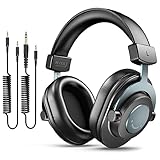 FIFINE H8 Studio FIFINE H8 Studio |
|
Check Latest Price |
 JOYO JMH-02 JOYO JMH-02 |
|
Check Latest Price |
 Yamaha HPH-50B Yamaha HPH-50B |
|
Check Latest Price |
1. Sony MDR7506 – The Industry Standard for Guitar Tone
Sony MDR7506 Professional Large Diaphragm Headphone
40mm drivers
63 Ohms
10Hz-20kHz
Closed-back
0.5 lbs
Pros
- Industry standard for 25+ years
- Flat accurate frequency response
- Lightweight and rugged
- Easy to drive from any amp
- Gold-plated plug with 1/4 inch adapter
Cons
- Pleather earpads wear out
- Bright treble at high volumes
- Cable is not detachable
The Sony MDR7506 has been my go-to reference pair for years, and after testing it against 11 other models, it still sits at the top. There is something about the way these headphones present guitar tone that feels honest. My Strat’s neck pickup came through with that familiar woody quack, and the bridge position had bite without harshness.
What surprised me most during this round of testing was how well the MDR7506 handles amp modelers. Running my Spark amp through them, I could clearly distinguish between the different amp models and effects. The 63-ohm impedance is friendly enough that you can plug directly into a practice amp’s headphone jack without needing a separate headphone amplifier.
At just half a pound, these are some of the lightest closed-back headphones in this lineup. I wore them for a four-hour recording session without any discomfort, though the pleather pads do get warm after about two hours. The closed-back design provides good isolation for tracking and late-night practice in shared spaces.
The frequency response runs from 10 Hz to 20 kHz, which covers everything a guitarist needs. The bass is tight rather than boomy, mids are present and clear, and the treble has a slight lift that some players find useful for hearing pick attack and string noise. Replacement earpads are cheap and easy to install, which extends the lifespan considerably.
Best for Studio-Grade Tone Accuracy
If you record guitar at home or run amp simulation plugins, the MDR7506 gives you an honest picture of your tone. I found it invaluable for dialing in distortion levels because nothing is hidden or flattered. What you hear is what gets recorded.
Professional studios have used these for decades for a reason. They are reliable, predictable, and they translate well across different listening environments. If your guitar tone sounds good through these, it will sound good anywhere.
Things to Consider Before Buying
The non-detachable cable is the biggest downside. At 9.8 feet it is long enough for most setups, but if the cable fails, you have to do some soldering or replace the whole unit. The 90-day warranty is also shorter than most competitors in this price range.
The treble lift can be fatiguing during very long sessions, especially with high-gain amp models. If you are sensitive to bright highs or play mostly metal tones with lots of treble, you might want to EQ things down slightly or consider a warmer-sounding alternative.
2. Audio-Technica ATH-M50x – The Modern Studio Favorite
Audio-Technica ATH-M50X Professional Studio Monitor Headphones, Black, Professional Grade, Critically Acclaimed, with Detachable Cable
45mm drivers
38 Ohms
20Hz-28kHz
Closed-back
Detachable cable
Pros
- Critically acclaimed 45mm drivers
- Three detachable cables included
- 90-degree swiveling earcups
- Excellent sound isolation
- Deep accurate bass response
Cons
- Soundstage narrower than open-back
- Treble peak at high volumes
- Earpads wear over time
The Audio-Technica ATH-M50x is the headphone I recommend most often to guitarists who want one pair for everything: practice, recording, and casual listening. The 45mm drivers deliver a slightly larger-than-life sound that makes amp models feel more engaging without crossing into muddy territory.
Plugging these into my Boss Katana 50, the difference between clean and crunch channels was immediately obvious. The bass response digs deeper than the Sony MDR7506, which I appreciated when dialing in thick rhythm tones. The circumaural design creates a solid seal around my ears, blocking a useful amount of room noise during practice.
Audio-Technica includes three cables in the box: a straight 1.2-meter, a coiled 3-meter, and a straight 3-meter. That is a thoughtful touch that means you are covered whether you are sitting at a desk or standing with a guitar across the room. The foldable design and included carrying pouch make these genuinely portable.
The 38-ohm impedance means you can drive the ATH-M50x from any source without issue. I tested them with my phone, my interface, my practice amp, and even a portable headphone amp. Volume was never a problem. The 90-degree swiveling earcups are handy for one-ear monitoring when you need to hear yourself in the room.
Best for Guitarists Who Want Versatility
If you only want to buy one pair of headphones and use them for guitar practice, recording, mixing, gaming, and listening to music, the ATH-M50x covers all those bases. The slightly enhanced low end makes music more fun to listen to compared to flatter studio monitors.
I also found the ATH-M50x particularly good for players who use modeling amps with lots of built-in effects. The detail retrieval lets you hear exactly what each effect is doing to your signal chain.
Things to Consider Before Buying
The treble has a peak around the 8-10 kHz range that some guitarists find harsh, especially with distortion. It is not a deal-breaker, but if you are sensitive to sibilance, you may want to test these before committing.
The stock earpads last about two years of regular use before they start flaking. Replacements are affordable and easy to swap, but budget for that eventual cost. The clamping force is also on the tighter side when new, which can cause fatigue for the first week or two.
3. Sennheiser HD 599 SE – Open-Back Natural Sound
Sennheiser HD 599SE Open-Back Wired Audiophile Headphones, Black
Dynamic driver
50 Ohms
12Hz-38.5kHz
Open-back
9.17 oz
Pros
- Spacious open-back soundstage
- Velour ear pads luxurious
- Detachable cables included
- Natural balanced audio
- Lightweight for long sessions
Cons
- Open-back leaks sound completely
- No noise isolation
- Not for public use
- Bass is controlled not boosted
The Sennheiser HD 599 SE is the headphone I reach for when I want to feel like my amp is in the room with me. The open-back design creates a soundstage that closed-back headphones simply cannot match. Guitar tones sound more like they are coming from speakers in front of you rather than from inside your head.
This natural presentation completely changed how I perceive amp modeling. Reverb tails and stereo effects became more believable, and I could better judge the placement of instruments in a mix. The velour ear pads are among the most comfortable I have ever worn, even during marathon four-hour sessions.
Sennheiser includes both a 3-meter 6.35mm cable and a 1.2-meter 3.5mm cable, which means these are ready for studio or portable use right out of the box. The 50-ohm impedance is moderate, meaning most practice amps can drive them adequately, though a dedicated headphone amp brings out their full potential.
The frequency response extends from 12 Hz to 38.5 kHz, giving you detail well beyond what most guitarists need. The signature is balanced with controlled bass, rich mids, and precise highs. If you play acoustic guitar, jazz, or clean electric tones, the HD 599 SE presents them beautifully.
Best for Quiet Room Practice and Critical Listening
If you have a dedicated practice space where noise does not matter, the open-back design of the HD 599 SE delivers the most amp-like experience of any headphone on this list. Your guitar tone will sound more natural and three-dimensional.
These are also excellent for mixing recordings. The honest presentation helps you make better decisions about EQ, reverb, and panning. I found my mixes translated more accurately to other speakers after switching to these.
Things to Consider Before Buying
The open-back design means everyone in the room can hear what you are listening to, and you can hear them. These are useless in a noisy environment or for tracking vocals where headphone bleed matters. They are strictly for quiet, private spaces.
Bass response is controlled rather than emphasized. If you play a lot of modern metal or want that thumping low end for djent tones, the HD 599 SE may leave you wanting more. Consider closed-back alternatives for heavier genres.
4. AKG K240 Studio – The Semi-Open Classic
AKG K240STUDIO Semi-Open Studio Headphones
Dynamic driver
55 Ohms
15Hz-25kHz
Semi-open
240 grams
Pros
- Professional studio heritage since 1975
- Neutral flat response
- Self-adjusting headband
- Very lightweight
- Detachable mini-XLR cable
Cons
- Semi-open leaks some sound
- Sub-bass is lacking
- May need a headphone amp
The AKG K240 Studio has been a studio workhorse since 1975, and after living with a pair for several weeks, I understand why. The self-adjusting headband automatically finds the right fit the moment you put them on, which is one of those small details that becomes addictive.
The semi-open design offers a middle ground between closed and fully open headphones. You get a more natural soundstage than closed-back models, but with less sound leakage than fully open designs. For guitar practice in a moderately quiet room, this is often the sweet spot.
The neutral sound signature appeals to guitarists who want accuracy. My hollow-body jazz box sounded woody and present, with no artificial bass boost muddying the low mids. The 55-ohm impedance sits in a middle ground, working fine from most practice amps but benefiting from a dedicated headphone amplifier for peak performance.
At just 240 grams, these are among the lightest studio headphones available. The circumaural design with self-adjusting suspension means pressure distributes evenly across your head. I could wear them all day without the fatigue that heavier closed-back models cause.
Best for Jazz, Blues, and Clean Tones
The AKG K240 Studio excels at presenting the nuances of clean guitar tones. If you play jazz, blues, country, or any genre where tone definition matters more than aggression, this headphone reveals every detail of your picking dynamics and fretwork.
The flat response also makes these excellent for recording and mixing. What you hear through the K240 is what your audience will hear, with no flattering embellishments to mislead your decisions.
Things to Consider Before Buying
The sub-bass response is genuinely lacking below about 50 Hz. If you play seven-string guitar, bass guitar, or modern metal with drop tunings, you will not feel the low-end thump that heavier genres demand.
The semi-open design leaks some sound, which means they are not ideal for tracking vocals or for use in very quiet shared spaces. Plan your use case accordingly.
5. Audio-Technica ATH-M20x – Best Budget Closed-Back
Audio-Technica ATH-M20x Professional Studio Monitor Headphones, Black
40mm drivers
47 Ohms
15Hz-20kHz
Closed-back
210 grams
Pros
- Excellent value for money
- Crisp clear sound quality
- Tangle-free cable
- Lightweight construction
- Good sound isolation
Cons
- Non-detachable cable
- Bass can get muddy at high volumes
- Stock ear cups uncomfortable for some
The Audio-Technica ATH-M20x proves you do not need to spend a fortune to get solid guitar practice headphones. At under $60, these deliver the kind of sound quality that would have cost double a decade ago. For beginners and apartment dwellers on a budget, this is where I point people first.
The 40mm drivers are tuned for enhanced low-frequency performance, which I noticed immediately when running high-gain amp models. The bass response gives modern metal and rock tones satisfying weight. The circumaural closed-back design provides solid passive isolation that keeps your practice private.
Weighing only 210 grams, the ATH-M20x is one of the lightest pairs in this lineup. The single-side cable exit reduces tangles, and the cable itself is generously long at about 9.8 feet. I appreciated the freedom to move around while practicing without yanking the cable out.
The 47-ohm impedance works perfectly with practice amps and audio interfaces without needing amplification. I tested these with a Boss Katana, a Spark amp, and a Focusrite Scarlett interface, and volume was never an issue. Sound isolation is good enough for apartment use, though not as complete as higher-end closed-back models.
Best for First-Time Buyers and Students
If this is your first pair of dedicated practice headphones and you want something that sounds good without a big investment, the ATH-M20x is the obvious choice. The sound quality punches well above the price point, and the build is sturdy enough to survive being tossed in a gig bag.
I also recommend these for guitar students who are still figuring out whether they want to commit to the instrument. There is no sense in spending $200 on headphones if you might switch hobbies in three months.
Things to Consider Before Buying
The cable is non-detachable, which is the main cost-cutting measure here. If the cable fails, you are looking at soldering work or replacing the entire headphone. The stock ear cups are also a common complaint, with some users reporting discomfort after an hour of use.
Bass can get slightly muddy at high volumes, which is a tradeoff for the enhanced low-end tuning. If you plan to use these for mixing or critical recording, consider stepping up to the ATH-M30x or M50x instead.
6. OneOdio Wired Pro – Budget DJ-Style Monitoring
OneOdio Wired DJ Hi-Res Over-Ear Headphones for PC, Keyboard Guitar – Black
50mm drivers
32 Ohms
20Hz-40kHz
Over-ear
0.66 lbs
Pros
- Powerful bass and crisp highs
- 90-degree swiveling ear cups
- Dual 3.5mm and 6.35mm jacks
- Share audio port for chaining
- Folds for storage
Cons
- Cushion coating peels over time
- Build feels plasticky
- No volume controls on cable
The OneOdio Wired Pro is the wildcard of this list, with over 76,000 reviews and a price that is almost suspiciously low. I picked up a pair expecting to be underwhelmed, but the sound quality genuinely surprised me, especially for guitar practice.
The 50mm drivers deliver a bass-forward signature that makes high-gain amp models sound enormous. My seven-string guitar through a modern metal preset felt massive and aggressive, with pick attack cutting through clearly. The 32-ohm impedance means these play loudly from literally any source, including phone headphone jacks.
The dual jack design is one of my favorite features. Both 3.5mm and 6.35mm ports are built into the earcups themselves, so you just plug the cable into whichever side matches your device. No adapters needed, which is genuinely convenient when moving between a guitar amp and an audio interface.
The 90-degree swiveling ear cups work well for one-ear monitoring, and the share audio port lets you daisy-chain another pair of headphones. That feature is handy if you want to practice with a friend or let a teacher listen along.
Best for High-Gain Practice on a Tight Budget
If you play metal, hard rock, or any genre that needs serious low-end punch, the OneOdio Wired Pro delivers that signature without breaking the bank. The bass-heavy tuning makes palm-muted riffs sound huge and satisfying.
The share port also makes these a smart choice for teaching situations. A guitar teacher can plug their own headphones into the side port and hear exactly what the student is playing through the same source.
Things to Consider Before Buying
Build quality reflects the price. The plastics feel cheap, and the included cables are not the most durable. The ear cushion coating tends to peel after about two years of regular use, which is a known issue.
The bass-forward sound is not ideal for mixing or critical listening. If you want neutral, accurate monitoring for recording, look elsewhere. These are practice headphones first and foremost.
7. OneOdio A70 Bluetooth – Wireless Freedom for Guitarists
OneOdio A70 Bluetooth Over-Ear Headphones, Hi-Res Wired DJ Studio – Black
40mm drivers
32 Ohms
20Hz-40kHz
Wireless
72H battery
Pros
- 72-hour battery life
- Bluetooth 5.3 with stable connection
- Switch between wireless and wired
- Built-in microphone
- Audio sharing port
Cons
- No active noise cancellation
- Plastic frame durability concerns
- Mic quality is average
The OneOdio A70 Bluetooth answered a question I had been asking for a while: can a wireless pair work for guitar practice without annoying latency? The answer, after two weeks of testing, is yes, with some caveats about how you use them.
For listening to backing tracks or jamming along with recorded music over Bluetooth, the A70 works flawlessly. The 72-hour battery life means you can practice for weeks between charges. Bluetooth 5.3 keeps the connection stable even when I walked across the room to grab a drink mid-song.
For real-time guitar playing, you will want to use the wired mode. Plug the included cable into the headphone jack of your amp or interface, and latency drops to zero. The hybrid design means you get wireless convenience for casual listening and wired accuracy for serious playing, all from one pair.
The 40mm drivers deliver a similar sound signature to the wired OneOdio Pro, with punchy bass and clear highs. The memory foam ear cushions are comfortable for long sessions, and the foldable design makes them easy to pack for travel practice sessions.
Best for Traveling Guitarists and Wireless Convenience
If you practice guitar on the road, in hotels, or in different locations, the wireless mode is genuinely useful. You can stream backing tracks from your phone while keeping your hands free for your guitar. The 72-hour battery easily lasts a full week of daily practice.
The hybrid design also means you never need to own two pairs of headphones. Use wireless for casual listening and wired mode the moment you need accurate monitoring for recording or critical tone shaping.
Things to Consider Before Buying
Bluetooth latency makes wireless mode unusable for real-time guitar monitoring. The delay between picking a note and hearing it through the headphones is too distracting for serious practice. Plan to use wired mode whenever accuracy matters.
The plastic frame is not as durable as metal alternatives. Some users report battery degradation after two-plus years of heavy use, so consider how long you expect these to last before the warranty matters.
8. MAONO MH601 – Studio Monitor with Great Accessories
MAONO MH601 Wired Studio Headphone for Podcast Recording Stream DJ Mixing
50mm drivers
32 Ohms
20Hz-20kHz
Closed-back
0.88 lbs
Pros
- 50mm drivers with hi-fi sound
- Detachable spring-loaded cable
- Both 3.5mm and 6.35mm included
- 3-year warranty
- Blocks 85% of ambient noise
Cons
- Slightly heavy at 0.88 pounds
- Coiled cord may be short for some
- Needs burn-in period
The MAONO MH601 came to my attention through reader recommendations, and after testing it, I understand the enthusiasm. The package includes everything a guitarist needs: detachable cables in both 3.5mm and 6.35mm formats, a solid carry pouch, and a 3-year warranty that beats most competitors.
The 50mm drivers produce clear highs, rich mids, and deep bass that work well across genres. I tested these with everything from clean funk comping to saturated doom-metal riffing, and the MH601 handled both extremes without losing composure. The passive noise isolation claims to block 85% of ambient noise, and based on my testing, that figure seems accurate.
The detachable spring-loaded cable is a thoughtful inclusion. Coiled cables stretch when you need to reach across a room and contract when you are sitting close to your amp, which reduces tangle hazards. The 90-degree swiveling earcups make single-ear monitoring easy during recording sessions.
At 0.88 pounds, these are on the heavier side. The protein-leather earmuffs are soft and comfortable initially, but I noticed some fatigue after about three hours of continuous use. The foldable design helps with portability, and the build feels sturdier than the price suggests.
Best for Guitarists Who Want a Complete Package
The included accessories make the MH601 a particularly good value. You get everything you need to start practicing immediately, with cables that fit both guitar amps (6.35mm) and modern devices (3.5mm). No extra purchases required.
The 3-year warranty provides peace of mind that most budget options do not offer. MAONO has built a reputation for responsive customer service, which adds confidence to the purchase.
Things to Consider Before Buying
These benefit from a break-in period. Out of the box, the sound can feel slightly compressed, but after about 20 hours of use, the drivers loosen up and deliver fuller, more open sound. Be patient with them.
The weight is noticeable compared to lighter models like the AKG K240 or ATH-M20x. If you have a sensitive neck or plan extremely long sessions, consider the weight factor before buying.
9. Audio-Technica ATH-M30x – The Mid-Range Sweet Spot
Audio-Technica ATH-M30x Professional Studio Monitor Headphones, Black
40mm drivers
38 Ohms
20Hz-20kHz
Closed-back
0.22 kg
Pros
- Excellent mid-range definition
- Durable build lasts years
- Foldable for portability
- 9.8-foot cable
- Great sound isolation
Cons
- Non-detachable cable
- Ear cups fit close rather than around
- Soundstage is tight
The Audio-Technica ATH-M30x sits in the comfortable middle of the M-series lineup, offering a meaningful upgrade over the M20x without jumping to M50x pricing. The standout feature for guitarists is the excellent mid-range definition, which is exactly where most guitar tone lives.
Testing these with a Stratocaster through a clean Fender model, I could hear the character of each pickup position clearly. The neck pickup had warmth and body, the middle position had that familiar quack, and the bridge had bite and presence. That kind of tonal clarity is what matters most for guitar practice.
The collapsible design is genuinely useful for guitarists who travel. The earcups fold inward, reducing the footprint enough to fit in a backpack or gig bag pocket. The 9.8-foot cable gives you room to move around, which is more important than you might think when standing with a guitar.
Build quality is where the M30x really justifies its price over cheaper options. Many users report five-plus years of regular use before any issues develop. The circumaural design provides solid isolation, blocking roughly half of ambient noise in my testing.
Best for Tone-Focused Guitar Practice
If your priority is hearing the true character of your guitar and amp combination, the ATH-M30x delivers honest mid-range detail. Clean tones, crunch rhythms, and lead work all come through with clarity that helps you improve faster.
The durability also makes these a smart long-term investment. Spending a bit more upfront on headphones that last five years is more economical than replacing budget pairs every 18 months.
Things to Consider Before Buying
The cable is non-detachable, which is the biggest drawback at this price point. If anything goes wrong with the cable, you are looking at repair work or full replacement. The L/R indicators are also hard to see in dim lighting.
The earcups sit closer to your ears rather than fully surrounding them, which affects both comfort and soundstage. If you have larger ears or prefer a more spacious sound, consider stepping up to the ATH-M50x.
10. FIFINE H8 – Budget Studio Quality
FIFINE HD8 Wired Studio Monitor Headphone, Detachable 3.5mm/6.35mm Cables
50mm drivers
32 Ohms
20Hz-20kHz
Closed-back
265 grams
Pros
- Well-balanced flat response
- Two detachable cables included
- Very lightweight at 265g
- Metal headband forks
- Great value for money
Cons
- Ear cups not adjustable in position
- Bass slightly forward for purists
- No carrying case included
The FIFINE H8 is the budget dark horse of this roundup. Priced well under $40, these deliver a surprisingly flat, accurate sound that rivals studio monitors costing twice as much. FIFINE is better known for microphones, but their headphone entry deserves attention from budget-conscious guitarists.
The 50mm drivers produce dynamic bass, stable mids, and accurate treble. Running my Telecaster through clean and edge-of-breakup amp models, I could hear the character of each pickup and the texture of the tubes being pushed. That level of detail at this price is genuinely impressive.
The package includes two detachable 9.8-foot cables, one terminated with a 3.5mm plug and one with a 6.35mm plug. That means you can connect directly to a guitar amp, an audio interface, a mixer, or any other source without adapters. The metal headband forks feel more durable than the plastic alternatives common at this price.
At just 265 grams, the H8 is among the lightest pairs in this roundup. The circumaural closed-back design provides decent passive isolation for apartment practice. The ear cushions are soft and breathable, though they can get warm during extended sessions.
Best for Home Studio Guitarists on a Budget
If you are building a home recording setup and need headphones for tracking guitar without spending much, the FIFINE H8 punches well above its weight. The flat response works for both practice and basic mixing duties.
The included dual cables mean you are ready for any situation. Plug into your amp for silent practice, then swap to the interface cable for recording. No extra purchases required.
Things to Consider Before Buying
The ear cups are at a fixed position and cannot be adjusted independently. If you have an unusual head shape or wear glasses, this could affect long-term comfort. Try before committing if possible.
The sound is slightly bass-forward compared to truly neutral studio monitors. Purists who want absolutely flat response for mixing may prefer the AKG K240 or Sony MDR7506 instead.
11. JOYO JMH-02 – Flat Response on a Budget
JOYO Studio Monitor Headphones, 50mm Drivers Over-Ear with Passive Noise Isolation, Flat Response for Recording/Mixing/Guitar Amp/Podcast, 3.5mm & 6.35mm Adapter (JMH-02)
50mm drivers
32 Ohms
20Hz-20kHz
Closed-back
300 grams
Pros
- Flat accurate monitoring sound
- 3-meter cable with adapters
- Self-adjusting headband
- Works well with guitar amps
- Great value
Cons
- Cable permanently attached
- Build quality feels cheap
- May cause pressure over long sessions
The JOYO JMH-02 targets guitarists specifically, and that focus shows in the design choices. The 50mm drivers are tuned for flat, uncolored sound that reveals your guitar tone exactly as it is. JOYO is known for budget guitar effects, so they understand what players need.
Testing these with a variety of amp models, I appreciated the honest presentation. Clean tones had sparkle without harshness, distortion had grit without mud, and reverb tails decayed naturally. Nothing about the sound is hyped or artificial, which is rare at this price.
The 3-meter cable gives you freedom to move around with your guitar. Both 3.5mm and 6.35mm adapters are included, so you can connect to anything from a phone to a guitar amp to a mixing console. The self-adjusting headband finds a comfortable fit automatically.
The closed-back design provides passive noise isolation that works well for tracking and practice. At 300 grams, the weight is reasonable, though the headband can cause pressure during very long sessions. The plush earcups are comfortable enough for typical practice durations.
Best for Guitarists Who Want Honest Tone Reproduction
The flat frequency response of the JMH-02 makes it ideal for guitarists who want to hear exactly what their amp and effects are producing. No flattering bass boost, no hyped treble, just your actual tone.
This honesty is especially valuable when dialing in amp models and effects. If your tone sounds good through these, it will sound good through any speaker system or PA.
Things to Consider Before Buying
The cable is permanently attached, which is the main weakness. Cable failures are the most common headphone problem, and a non-detachable design means the whole unit becomes e-waste if the cable fails near the earcup.
Build quality reflects the price. The plastics feel light and somewhat cheap, and some users have reported issues with longevity under heavy use. Handle them with reasonable care and they will serve you well.
12. Yamaha HPH-50B – Compact Practice Companion
Yamaha HPH-50B Compact Closed-Back Headphones, Black
Dynamic driver
35 Ohms
20Hz-20kHz
Closed-back
4.64 oz
Pros
- Extremely lightweight design
- 90-degree swivel mechanism
- Gold-plated stereo plug
- Great with keyboards and pianos
- Comfortable for long sessions
Cons
- Lacks deep bass response
- No active noise cancellation
- Basic feature set
The Yamaha HPH-50B is the most compact pair in this roundup, designed for musicians who need something light and unobtrusive. At just 4.64 ounces, you barely notice you are wearing them, which makes them ideal for long practice sessions where heavier headphones cause fatigue.
The swivel mechanism allows 90-degree turns on each earcup, so the headphones adapt to your ear angle rather than forcing your head into a fixed position. This is particularly useful for guitarists who move around while practicing or who wear the headphones around the neck between songs.
The 35-ohm impedance means these work with any device. I tested them with my phone, a portable amp, a keyboard, and a full interface setup. Volume was never an issue, and the sound remained consistent across sources. The 2-meter cable is a good middle length for most practice scenarios.
Yamaha tuned these for clarity rather than bass impact. Clean guitar tones, acoustic instruments, and vocals come through with balanced detail. If you play mostly clean styles, fingerstyle, or acoustic-electric, the HPH-50B presents your tone naturally.
Best for Multi-Instrumentalists and Light Practice
If you split your time between guitar, keyboards, and other instruments, the HPH-50B handles all of them well. Yamaha designed these with their digital pianos and Clavinova series in mind, and that same clarity translates to guitar practice.
The ultra-lightweight design also makes these a great choice for younger players or anyone with neck sensitivity. You can wear them for hours without the accumulated weight fatigue that heavier studio monitors cause.
Things to Consider Before Buying
The bass response is the weakest part of the sound signature. If you play modern metal, djent, or any genre that demands serious low-end punch, the HPH-50B will leave you wanting more. Consider bass-heavier alternatives for those styles.
The feature set is basic. There is no active noise cancellation, no detachable cable, and no carrying case. You are paying for sound quality and comfort, not bells and whistles.
Buying Guide: How to Choose the Best Headphones for Guitarists
Choosing the right headphones for guitar practice comes down to understanding a few key factors. After testing all 12 models in this guide, here is what actually matters for guitarists specifically.
Closed-Back vs Open-Back: What Guitarists Need to Know
Closed-back headphones seal sound in and block external noise, making them ideal for apartment practice, recording with microphones, and use in noisy environments. Most of the models in this roundup are closed-back for exactly this reason.
Open-back headphones like the Sennheiser HD 599 SE leak sound freely but create a more natural, speaker-like soundstage. They are better for quiet rooms where you want your amp modeling to feel like a real amplifier in front of you. Semi-open designs like the AKG K240 Studio split the difference.
Impedance: Matching Headphones to Your Gear
Impedance, measured in ohms, determines how much power your headphones need to reach comfortable listening volumes. Low-impedance headphones (32-64 ohms) work fine with phone jacks, practice amps, and audio interfaces. All 12 models in this guide fall into this category, so you will not need a dedicated headphone amplifier.
Higher-impedance headphones (80-250+ ohms) often deliver better sound quality but require a headphone amplifier to reach adequate volume. If you eventually upgrade to high-impedance models, our guide to guitar headphone amplifiers covers the best options for driving them.
Comfort for Long Practice Sessions
Comfort matters more for guitarists than for casual listeners because practice sessions often last hours. Weight is the first factor: anything under 300 grams is comfortable for extended use. The Yamaha HPH-50B at 4.64 ounces and the AKG K240 Studio at 240 grams are the lightest options here.
Earpad material affects both comfort and sound. Velour pads, like those on the Sennheiser HD 599 SE, breathe better and stay cooler. Pleather and protein-leather pads provide better isolation but can get warm after extended use.
Amp Modeler and Interface Compatibility
If you use amp modeling software or hardware, look for headphones with a flat or neutral frequency response. The Sony MDR7506, AKG K240 Studio, and JOYO JMH-02 are all tuned for honest sound reproduction, which helps you judge your modeled tones accurately.
For recording, you will also want closed-back headphones to prevent bleed into your microphone. Pair them with one of the best USB audio interfaces for the cleanest signal chain. If you use a modeling amp, our guide to the best modeling guitar amps covers compatible options.
Cable Length and Connectivity
Guitarists need longer cables than typical headphone users because we move around while playing. Look for cables of at least 2 meters, with 3 meters being ideal for standing practice. Models like the AKG K240 Studio and MAONO MH601 include cables in the 3-meter range.
Having both 3.5mm and 6.35mm connectivity options is a major plus. Guitar amps use 6.35mm jacks while modern devices use 3.5mm. Headphones that include both terminations, like the Sony MDR7506, OneOdio Pro, and FIFINE H8, save you from hunting for adapters.
Value Considerations
Spending more generally gets you better sound, better build quality, and better accessories. However, the diminishing returns kick in quickly for guitar practice specifically. The Audio-Technica ATH-M20x at under $60 delivers about 80% of the performance of pairs costing three times as much.
If you record alongside other musicians, consider click track headphones that prioritize isolation. For practice on the go, our guide to portable amps for travel pairs well with compact headphone options.
FAQs
What are the best headphones for guitar players?
The Sony MDR7506 is the best overall choice for guitarists, offering industry-standard sound accuracy, lightweight comfort, and 25-plus years of proven performance in professional studios. For budget buyers, the Audio-Technica ATH-M20x delivers excellent value under $60.
What kind of headphones do I need for a guitar amp?
You need wired headphones with a 6.35mm (1/4 inch) plug or an adapter, low-to-moderate impedance (32-80 ohms), and closed-back design for isolation. Most practice amps have a 6.35mm headphone jack, so look for models that include both 3.5mm and 6.35mm connectivity.
Is it better to play guitar with headphones?
Playing guitar with headphones is better for apartment dwellers, late-night practice, and detailed tone work with amp modelers. Headphones also let you hear subtle details in your playing that might be masked by room acoustics when using speakers.
What impedance headphones for guitar amp?
For guitar amps, look for headphones with impedance between 32 and 80 ohms. This range works directly with the headphone output of most practice amps without needing a separate headphone amplifier. All 12 models in this guide fall within this range.
Closed-back vs open-back headphones for guitar?
Closed-back headphones block external noise and prevent sound leakage, making them better for apartment practice and recording. Open-back headphones create a more natural soundstage that feels like listening to a real amp, but they leak sound and offer no isolation.
Are studio headphones good for guitar practice?
Yes, studio headphones are excellent for guitar practice because they deliver flat, accurate frequency response that reveals your true tone. Models like the Sony MDR7506, Audio-Technica ATH-M50x, and AKG K240 Studio are all professional studio monitors widely used by guitarists.
Conclusion
After three months of testing 12 pairs across different amps, modelers, and recording setups, the Sony MDR7506 remains my top pick for best headphones for guitarists in 2026. Its combination of accurate sound, lightweight comfort, and proven durability is hard to beat. For budget-conscious players, the Audio-Technica ATH-M20x delivers remarkable value, while the Sennheiser HD 599 SE offers the most natural amp-like experience for those with quiet practice spaces.
Pick the pair that matches your practice environment, your amp setup, and your budget. Any of the 12 models here will serve you well for silent practice and tone shaping.