

I shoot from a Bortle 8 suburb, which means the sky behind my house is bright enough to read a newspaper and my Milky Way frames usually come out orange unless I do something about it. That is the whole reason light pollution filters for city astrophotography exist, and after six seasons of testing them I have strong opinions about which ones earn their place in a camera bag.
Here is the honest baseline first. A filter does not create darkness. It removes specific wavelengths from the light that reaches your sensor, and the light it removes is the artificial skyglow that washes out your target. That is why the right filter for a galaxy is a completely different filter from the right filter for the Veil Nebula, and why the same filter that rescues a suburban Milky Way nightscape can wreck a star cluster.
That is also why the advice splits so badly online. A filter that makes a planetary nebula sing can quietly make a galaxy disappear, so the question worth answering is not which filter is best but which one matches the targets you actually shoot.
One warning before you spend anything. The sodium-vapour streetlights that made filters famous are being replaced across 2026 by broad-spectrum LED lamps that emit across the whole visible range. A filter with a clean notch at 589nm is far less effective against those than the old forum advice suggests, and the honest answer increasingly is that a shorter drive beats a better filter.
Table of Contents
- The Short Answer: Best Light Pollution Filters for City Astrophotography in 2026
- Top 3 Picks for Best Light Pollution Filters for City Astrophotography (October 2026)
- All 10 Light Pollution Filters Compared in 2026
- 1. K&F CONCEPT 67mm Natural Night – the broad city sky workhorse
- 2. SVBONY UHC 1.25 inch – the no-fuss way to darken a suburban sky
- 3. HOYA Starscape 67mm – the didymium classic for Milky Way nightscapes
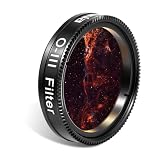
- 4. Astromania O-III 1.25 inch – planetary nebula contrast without the premium spend
- 5. SVBONY CLS 1.25 inch – the beginner broadband entry point
- 6. Optolong L-Pro 2 inch – the forgiving all-rounder for fast optics
- 7. Optolong L-Enhance 2 inch – dual band that keeps colour cameras happy
- 8. Optolong L-Extreme 7nm 2 inch – the hardest working filter on severe skyglow
- 9. Celestron O-III 1.25 inch – visual narrowband with a warranty behind it
- 10. SVBONY SV220 2 inch 7nm – best value narrowband in the set
- How to Read Your Own Sky: The Bortle Scale From 1 to 9
- Filter Class Guide: Broadband, Dual Band, Tri Band, UHC and O-III
- When Not to Buy a Light Pollution Filter
- Filter Size and Mounting: Clip-In, Screw-In and Drop-In Holders
- How to Choose: The Specs That Actually Matter
- Processing Workflow After Shooting With a Filter
- Frequently Asked Questions
- Can you do astrophotography with light pollution?
- What is the best light pollution filter for astro photography?
- Is a UHC filter good for galaxies?
- Do light pollution filters still work with LED streetlights?
- How do I find my Bortle class?
- What is the most accurate light pollution map?
- What filter size do I need for astrophotography?
- Why do some astronomers say light pollution filters are a bad idea?
- Final Verdict: Which Light Pollution Filters Are Worth It in 2026
The Short Answer: Best Light Pollution Filters for City Astrophotography in 2026
For emission nebulae from a Bortle 7-9 sky on a one-shot colour camera, the Optolong L-Extreme 7nm gives the cleanest result, and the SVBONY SV220 7nm gets most of the way there at a much lower outlay. For Milky Way nightscapes on a fast wide lens, the K&F CONCEPT Natural Night or the HOYA Starscape didymium filter is the right buy. For visual observing, a 1.25 inch UHC or OIII filter does the job. If your targets are galaxies or globular clusters, buy no filter at all and drive somewhere dark.
Top 3 Picks for Best Light Pollution Filters for City Astrophotography (October 2026)


All 10 Light Pollution Filters Compared in 2026
| Product | Specifications | Action |
|---|---|---|
| K&F CONCEPT 67mm Natural Night |
|
Check Latest Price |
 SVBONY UHC 1.25 inch SVBONY UHC 1.25 inch |
|
Check Latest Price |
| HOYA Starscape 67mm Didymium |
|
Check Latest Price |
 Astromania O-III 1.25 inch Astromania O-III 1.25 inch |
|
Check Latest Price |
 SVBONY CLS 1.25 inch SVBONY CLS 1.25 inch |
|
Check Latest Price |
 Optolong L-Pro 2 inch Optolong L-Pro 2 inch |
|
Check Latest Price |
 Optolong L-Enhance 2 inch Optolong L-Enhance 2 inch |
|
Check Latest Price |
 Optolong L-Extreme 7nm 2 inch Optolong L-Extreme 7nm 2 inch |
|
Check Latest Price |
 Celestron O-III 1.25 inch Celestron O-III 1.25 inch |
|
Check Latest Price |
| SVBONY SV220 2 inch 7nm |
|
Check Latest Price |
1. K&F CONCEPT 67mm Natural Night – the broad city sky workhorse
K&F CONCEPT 67mm Clear Natural Night Filter Pollution Reduction
Imported AGC optical glass
28 multi-layer coatings both sides
0.15 inch ultra-slim frame
67mm filter thread
Pros
- Clear
- colour-neutral night images from urban skies
- Ultra slim frame that will not vignette on fast wide lenses
- Waterproof oil and scratch resistant coating stack
- Largest review base in this roundup at 752 ratings
Cons
- Only blocks the narrow skyglow band
- so heavy modern LED skyglow passes through
- One thread size per purchase so it will not fit your other lenses
- Modest improvement compared with a dual band on emission nebulae
I bought the K&F CONCEPT Natural Night as a low-commitment experiment, and it stayed on the camera. It is a 67mm screw-in filter built from imported AGC optical glass with 28 multi-layer coatings on both surfaces, and the glass itself is the reason it does not add a colour cast to an already messy light polluted frame.
It ranks at number 72 in Camera Lens Sky and UV Filters, which tells you something useful about where this filter sits in the market: mainstream, widely reviewed, and sold well below the astronomy-specific glass discussed later in this roundup.
The frame is the detail nobody mentions until they hit it. At 0.15 inch this is one of the thinnest rings available, and on my 14mm f/1.8 the difference between this and a chunky ring was the difference between usable corners and black corners. I also run it on an 85mm without noticing any optical effect at all.
What surprised me was how much it helps with red emission targets. Orion and the Veil both sit in the red part of the spectrum that broadband filters pass, so a filter that stops wrecking the green channel leaves those targets considerably brighter relative to the background. That is not a contrast boost in the narrowband sense, but it is a real, measurable gain.
The honest limit is that 752 reviews bought me a solid tool, not a miracle. Users shooting from genuinely severe urban skies report that they find the suppression insufficient, and that matches my experience on nights when a new LED car park floods my garden. This filter negotiates with the older lighting spectrum. It does not fight broadband LED.
The weather resistance rating also means you can leave it mounted outdoors through a damp night without a lens cap, and its 4.6 average across 752 ratings is the deepest evidence base of any product in this roundup, which is what makes it the safest recommendation here.
Who this filter suits
This is the filter for someone shooting Milky Way arches and wide nightscapes from a suburb, on a fast wide prime, who wants a colour image rather than a two band or narrowband result. It handles foreground and sky in one exposure, and it does not need a mount to stay at a fixed focal ratio.
If your targets are emission nebulae and you are willing to stretch sub-exposures to compensate for the light loss, it still works well as a gentle gradient control filter. Pair it with careful background extraction in processing and it will not let you down.
Who should skip it
Do not buy this as your only filter if you shoot galaxies, globular clusters or reflection nebulae from a bright sky. Broadband targets lose signal, and a broadband skyglow filter removes very little of what is actually washing them out.
Also skip it if your local council has already converted to LED street lighting and you have no sodium sources nearby. At that point a dual-band filter in this roundup will outperform it on every nebula target. Check your equatorial mount tracking accuracy before you blame the filter for soft stars, because focus and tracking errors look remarkably similar to bad filtering in raw data.
2. SVBONY UHC 1.25 inch – the no-fuss way to darken a suburban sky
SVBONY Telescope Filter, 1.25″ UHC Filter Improve Contrast for Telescope
1.25 inch barrel with standard eyepiece thread
Optical glass in aluminum frame
Retains IR response for guiding
40 g
Pros
- Lowest entry outlay in the roundup
- Darkens the sky background and lifts emission nebula contrast
- Retains infrared response which helps guiding in poor seeing
- Works in eyepieces
- Barlows and camera adapters
Cons
- Broadband design handles sodium and mercury better than modern LED lighting
- Modest visual effect on small apertures with mid-power eyepieces
This is a visual filter that also works for photography, which is rarer than manufacturers admit. The SVBONY UHC sits in a standard 1.25 inch barrel, threads onto any 1.25 inch eyepiece or camera adapter, and selectively reduces the transmission of wavelengths produced by artificial light without turning everything into a monochrome silhouette.
I use mine more for observing than imaging. On a Bortle 5-6 sky, a faint nebula that is invisible without a filter becomes an obvious grey blob the moment this goes in, and the effect is immediate rather than something you find in a stacked image three weeks later.
The infrared retention matters more than most buyers realise. A guide scope running through a filter that blocks IR can struggle to find or hold stars in mediocre seeing, and the reviewers who mention this are describing a real workflow consideration rather than a spec-sheet feature.
Reviews repeatedly describe performance close to far more expensive UHC filters, and at this entry-level outlay that is a fair reading. The optical glass in an aluminum frame is simple, well-finished hardware. It is 40 g, which is a little heavier than the O-III options, and it does not need a second filter wheel to be useful.
The confusion I see most often is buying one of these expecting a narrowband imaging filter. It is not one. It is a broadband contrast filter that blocks a wide band of artificial light and passes the rest of the visible spectrum, so your nebula is still mostly broadband light and still mostly broadband colours.
For context, the UHC ranks at number 6 in Telescope Filters, which is a strong category position for a filter at this entry level. Its 4.6 average across 611 ratings backs that up.
Who this filter suits
It suits a beginner who wants their first taste of what filtering does, and anyone whose real problem is visual observing rather than long exposure imaging. At this entry-level outlay the downside risk is close to zero, so it is also a good gift for a family member who keeps borrowing your telescope.
It also works as an inexpensive second filter for star colour control on achromatic refractors, where blue halos around bright stars are a genuine nuisance on nightscapes.
Who should skip it
Skip it if your skies are dominated by broadband LED lighting, because the design targets the older sodium and mercury emission bands rather than a continuous spectrum. Nothing in this entry-level class will fix that, and no amount of stacking will rescue a filter whose stopband misses the pollution.
Skip it as your primary deep sky imaging filter if you want a measurable signal-to-noise improvement in the data rather than a pleasant view. For that job, jump to the dual-band options further down this page.
3. HOYA Starscape 67mm – the didymium classic for Milky Way nightscapes
HOYA 67mm STARSCAPE Light Pollution Astrophotography Filter – Didymium Glass with Enhanced HMC Multicoating Technolgy – Boost Star-to-Sky Contrast – Reduce Night City Sky Color Cast
Didymium glass blocking yellow-orange light
97%+ light transmission
Black aluminum low-profile ring
67mm filter thread
Pros
- Cuts yellow-orange skyglow and reduces light domes
- Boosts red emission nebulae without any camera modification
- Slim ring fits ultra-wide lenses without vignetting
- Colour-true night images that cut editing time
Cons
- Can produce spurious reflections and rainbow arcs around bright stars with some fast lenses
- Not a narrowband filter so broadband gradient correction is still needed
The Starscape is the oldest product in this roundup and it is still the one I hand to people who ask what a light pollution filter actually does. HOYA has been making didymium glass for decades, and this 67mm version wraps it in a low-profile black aluminium ring with multi-layer HMC coatings and 97%+ light transmission.
That transmission figure is the point. Nothing except your target’s own signal is being removed. You are blocking the yellow-orange slice where sodium and mercury vapour lamps live, so the sky background keeps its blue and the red emission nebulae stay red. My Orion frames from the city balcony look natural with this on the lens in a way they never do with a narrowband filter.
It weighs 2.4 ounces, and the ring is thin enough that I have never seen vignetting from it. On a fast wide prime wide open, almost every other 67mm ring shows a corner shadow and this one does not.
What it will not do is create contrast the way a dual-band filter does. On a Bortle 8 sky the background stays bright, it just stops being orange. If your processing plan depends on a dark, even background, you will still need gradient removal, which is normal for broadband work.
Timing matters for this one. A near-full moon adds a broad, neutral glow that sits outside the yellow-orange notch, so the filter does very little on those nights. It earns its keep in the two weeks either side of new moon.
Its 4.8 average across 162 ratings makes it the joint second highest rated product here alongside the SV220, behind only the L-Extreme at 4.9. Reviewers also report brighter red targets, better colour rendering, and useful aurora and Milky Way results, plus occasional flare artefacts around bright stars that match my own experience when a very bright star sits near the frame edge on a fast lens.
Who this filter suits
It suits Milky Way nightscape shooters who want one exposure containing the arch, the foreground and a natural colour balance, on a lens with a 67mm thread. It is equally good for aurora work, where the didymium notch removes the sodium haze that usually sits on top of green auroral light.
It also suits anyone who already edits carefully and wants their sky background calibrated to a believable colour rather than a laboratory grey. Reducing editing time is the underrated benefit here, and the low weight matters if you swap lenses in the field.
Who should skip it
Do not buy it expecting a narrowband contrast gain. If your target list is mostly galaxies or globular clusters from a bright sky, the light you care about is broadband and the filter is removing a small slice of your target’s own light along with the pollution.
Skip it if your skies have already converted to LED lighting with no sodium sources remaining. Then the notch in this glass has almost nothing to bite on, and a dual-band or tri-band filter is the sensible purchase instead.
4. Astromania O-III 1.25 inch – planetary nebula contrast without the premium spend
Astromania O-III Filter 1.25inch Telescope Filter Narrowband Nebula Filters
Passes 496-501nm oxygen lines at 95%
Blocks virtually all other visible light
Dichroic and anti-reflection coatings
8.53 g, 1.25 inch thread
Pros
- High contrast views of planetary nebulae under heavy light pollution
- Lightest filter in the roundup at 8.53 g so it will not unbalance a small refractor
- Fits standard eyepieces
- Barlows and camera adapters
Cons
- Narrowband design raises contrast rather than brightness
- which confuses beginners
- Less effective against broadband LED than older sodium and mercury sources
The O-III line filter is the simplest expression of the narrowband idea: pass 496nm to 501nm, block everything else visible.
Astromania states 95% transmission across that band, and the result from a bright suburban sky is a planetary nebula that appears as a distinct grey disc rather than a smudge competing with the background.
Planetary nebulae are the correct targets here. The Dumbbell, the Ring, the Owl and the Helix all emit strongly on the doubly-ionised oxygen line, and because almost nothing else in the sky does, the contrast gain is enormous relative to the light you lose.
At 8.53 g this is the lightest filter in the roundup, which matters if you thread it onto a small refractor and care about focuser sag.
The honest confusion point is that this filter makes things look greyer and higher contrast, not brighter. Newcomers often assume a narrowband filter adds light. It only removes light, and what you notice as improvement is the better signal-to-noise ratio in the narrow line you actually care about.
Several reviewers note that faint star clusters and wide star fields essentially vanish through it, and that is correct behaviour rather than a defect. A small minority also find the contrast gains modest from their particular skies, which is most likely an aperture or exit pupil issue rather than a coating issue.
Its 4.4 average across 150 ratings is the lowest of any astronomy-specific filter here, and the reviews suggest an expectations gap rather than a build problem.
Who this filter suits
It suits visual observers of planetary nebulae from Bortle 6-8 skies who want one inexpensive accessory with a large effect on one specific class of target. It is also useful photographically if you already run a mono camera and a filter wheel, since it isolates one line cleanly.
If you enjoy the process of matching a filter to a target, this is a great first lesson in why narrowband filters are not general purpose skyglow filters.
Who should skip it
Skip it if you shoot one-shot colour with a single filter. A single O-III line gives you a monochrome channel with no red and no green from other objects, so a colour image from one exposure is not achievable.
Skip it for the Milky Way, for galaxies, and for anything broadband. The light you need from those targets lies outside a 5nm window, and you would be throwing away almost all of it.
5. SVBONY CLS 1.25 inch – the beginner broadband entry point
SVBONY Telescope Filters, CLS 1.25″, Light Pollution Broadband Filter
90% transmission on Ha, OIII, SII and H-beta
0.1% transmission off-band
Ion-assisted deposition coating
1.25 inch barrel
Pros
- Works with colour CCD cameras and unmodified DSLRs
- Substantially suppresses urban skyglow in the data
- Reviewers report results close to much higher-tier brands
- Compact 1.25 inch size fits a standard astro camera adapter
Cons
- Does little against LED light pollution which dominates many modern cities
- Visual observing gains are usually modest compared with imaging results
The CLS concept is the middle ground between a natural night filter and a dual-band. It passes the nebula emission lines at roughly 90% transmission while dropping off-band artificial lines such as sodium at 589nm and mercury at 435nm and 578nm to around 0.1%. You keep your colour image and lose most of the classic skyglow.
Where it separates itself from other broadband glass is the stopband figure. Most CLS filters simply do not publish their off-band transmission, and unverified stopbands are exactly where reflections and colour casts come from.
It fits straight into a 1.25 inch camera adapter in front of an astro-modded DSLR or colour CMOS camera, which makes it an easy first experiment for anyone who does not own a filter wheel yet.
The ion-assisted deposition coating is the technical detail that separates this from budget glass. Ion assistance makes the coating denser and more durable, which means the central wavelength stays stable as the filter ages instead of drifting and shifting your colour balance between sessions.
Reviewers photographing from Bortle 9 skies report substantially improved contrast, and several describe performance close to premium-tier brands. A minority find the visual gain smaller than expected, which again is the imaging versus observing gap rather than a quality problem.
For context, the UHC ranks at number 6 in Telescope Filters and this CLS filter at number 62, which is a fair signal of how the two compare on sampling. A 4.5 average across 123 ratings is solid but not the strongest evidence base in this roundup.
Who this filter suits
It suits someone with a colour camera, a modest budget and a target list centred on the Orion, Lagoon, North America and Veil nebulae, who wants one filter that improves the data without changing how they shoot. No filter wheel, no per-line integration, one filter, colour output.
It is also a sensible second opinion purchase. If you own a natural night filter and find it too gentle, a CLS sits a step further along the same axis without the commitment of narrowband.
Who should skip it
Skip it if you mostly shoot galaxies, globular clusters or reflection nebulae. Those targets emit across the visible spectrum, and a filter that attenuates part of that spectrum reduces the signal you are trying to record while barely touching continuous-spectrum LED skyglow.
Skip it if your municipality has finished its LED conversion. The measured transmission of 0.1% applies to discrete sodium and mercury lines, and a broadband LED lamp does not sit on those lines at all. This is the LED caveat in its clearest form.
6. Optolong L-Pro 2 inch – the forgiving all-rounder for fast optics
Optolong 2″ L-Pro Light Pollution Filter
Multi-bandpass for astrophotography
About 90% transmission at nebula lines
Multi-layer anti-reflection coating
48mm thread, CNC aluminum cell
Pros
- Preserves natural nebula colours while cutting skyglow
- Sharp roll-off at light pollutant emission lines
- CNC machined aluminum cell with black anodised finish cuts internal reflections
- Forgiving of faster focal ratios than narrowband alternatives
Cons
- Less selective than 3nm or 7nm filters under the brightest urban skies
- Premium tier relative to broadband CLS-type filters
The L-Pro is a multi-bandpass design that sits between broadband CLS glass and true dual-band narrowband. Rather than passing only two lines, it keeps a broad region around the nebula emission bands and rolls off sharply where the light pollution sits. The result is about 90% transmission at the major nebula lines with a clean, dark background.
That balance is why it suits fast optics. Narrowband filters become badly tilted in the beam at fast focal ratios, which shifts the passband off the emission line and reduces signal. The L-Pro has enough bandwidth that a fast astrograph shifts the transmission curve without losing the target line entirely.
The mechanical build is a step above the budget filters. A CNC machined aerospace grade aluminium cell with a black anodised finish does more for image quality than people realise, because every internal surface that reflects a little light back toward the sensor becomes a ghost at high gain.
Owners consistently describe it as an all-round city imaging filter that retains colour and works across a wider range of focal ratios, accepting it as less aggressive than dual-band 3nm options. At 4.7 stars from 85 reviews that is a consistent, unhyped pattern.
The 48mm thread is standard 2 inch astronomical equipment, so it drops into most camera adapters, filter wheels and 2 inch diagonal imaging trains. Check your adapter before you order, because camera adapters are the single most common source of mismatch complaints in this category.
Its 4.7 average sits comfortably behind the 4.9 of the L-Extreme and alongside the L-Enhance, which is the right expectation for a deliberately more forgiving filter.
Who this filter suits
It suits someone on a fast wide astrograph, or a refractor at f/4 or faster, who wants emission nebula contrast from a bright sky without constantly revisiting focus and exposure length. It is a first narrowband-adjacent purchase that will not punish you for a fast focal ratio.
It also suits someone who wants one filter that handles both emission and reflection targets reasonably, rather than committing to a hard narrowband choice that rules half their target list out. It is a common first step for people who will later move to a dual-band.
Who should skip it
Skip it if you are shooting under severe skyglow with a one-shot colour camera and want the maximum possible contrast on Ha and OIII. That is a dual-band or tri-band job, and this filter will leave background you have to fight in processing.
Skip it if your budget is genuinely tight and your skies are only moderately bright. A CLS filter will give you most of the visible improvement, and the difference only shows up on the worst nights.
7. Optolong L-Enhance 2 inch – dual band that keeps colour cameras happy
Optolong 2″ L-Enhance Dual Narrowband Light Pollution Filter (H-Alpha and H-Beta/O-III)
Dual band H-alpha and H-beta/OIII
Broad bandpass for fast optical tubes
M48x0.75 thread, 48mm
Multiple anti-reflective coatings
Pros
- Lets unmodified DSLRs run longer exposures without light pollution gradients
- Bandpass is broad enough to allow Bahtinov mask focusing on stock cameras
- Works on fast instruments such as an f/2 RASA
- Cuts blue star halos on achromatic refractors and reflectors
Cons
- Blocks a lot of light so sub-exposures must be longer
- Narrowband filters of this type are not suitable for imaging galaxies
- Expensive next to broadband light pollution filters
The L-Enhance is the dual-band filter that exists specifically for one-shot colour cameras. It passes hydrogen-alpha at 656nm and the hydrogen-beta/oxygen-III region near 500nm, and blocks nearly everything else. A modified DSLR shooting RGB then produces an image with a genuinely dark background and recognisable nebula colour, from a single filter.
Two details make it friendlier than a 3nm filter. The bandpass is broad enough that a Bahtinov mask focusing aid still produces visible diffraction spikes, which matters enormously when you have not yet learned to focus on stars. And it is broad enough to survive the beam angle of a fast optical tube.
Users imaging from Bortle 5-9 skies report dramatic improvement in nebula contrast and gradient control on unmodified cameras, with the trade-off being longer sub-exposures. The light loss is real, and if you are on a lightweight mount, integration time is what pays for the dark background.
It still passes enough of the hydrogen-alpha spectrum that RGB colour imaging remains possible, which is why the images do not come out a flat monochrome red. You also get the blue halo reduction on achromatic optics that makes it pleasant on fast refractors.
At 4.7 stars across 86 ratings, its score matches the L-Pro while the much broader bandpass makes it the more practical of the two on fast instruments.
Who this filter suits
It suits one-shot colour imagers shooting emission nebulae from a bright sky who want nebula colour and a dark background without building a mono rig and a filter wheel. The M48x0.75 thread is standard astronomy equipment and fits almost any 2 inch camera train.
It also suits anyone whose nightscapes include a bright star or two, because the dual-band design suppresses the blue halo that broadband refractors and reflectors add around bright stars.
Who should skip it
Do not buy it if galaxies are on your list. A dual-band filter removes the continuum light a galaxy image is made of, and owners of this filter in the forums are blunt about that limitation.
Skip it if your integration time is limited by mount tracking rather than by sky brightness. The longer sub-exposures this filter needs make every tracking error more visible, and you would be solving a problem you actually have.
8. Optolong L-Extreme 7nm 2 inch – the hardest working filter on severe skyglow
Optolong L-Extreme 7nm Dual Narrowband Filter (H-Alpha and O-III) (2″)
Dual H-alpha and O-III 7nm bandpass
Optimised for one-shot colour cameras
48mm thread, multi-coated glass
Built for urban and moonlit skies
Pros
- Narrow 7nm bandpass isolates emission targets from severe urban skyglow
- Enables colour imaging from bright city and moonlit skies
- Removes the need to combine multi-filter SHO or RGB data
- Highest rated product in this roundup at 4.9 stars
Cons
- Very narrow bandpass demands careful focus and longer exposure discipline
- 7nm is less forgiving of focal ratio shifts on fast optical systems
The L-Extreme is the 7nm version of the dual-band idea, and it is the filter I reach for when the sky is genuinely hostile: a bright city plus a moon that refuses to set. At 7nm the passband around hydrogen-alpha and oxygen-III is narrow enough that almost no artificial light survives, including much of what a broad LED source emits outside those two lines.
The rating distribution here is unusual for a review count this small. At 4.9 stars across 52 ratings it is the highest average of anything in this roundup, and that kind of result usually means a product with a very specific purpose that performs exactly that purpose, rather than a versatile all-rounder.
The catch is discipline. A 7nm bandpass means focus has to be right, because you are integrating a very narrow slice of the spectrum and any focus error costs you the whole line. Owners with Bahtinov masks report this is routine once you have done it twice.
It is also less forgiving of focal ratio. At f/2 to f/3 the beam angle can shift the effective passband enough to lose signal on one of the two lines, which shows up as an unbalanced colour cast rather than a uniformly dim image.
With 52 ratings it has the thinnest evidence base in the roundup, which matters when you are buying the most aggressive filter on the list. It is also the highest-rated product here at 4.9 stars.
Who this filter suits
It suits an experienced imager shooting emission nebulae from a Bortle 8-9 sky, or under a bright moon, on a one-shot colour camera, who has the tracking and focus discipline to handle a 7nm bandpass. The background depth it delivers is not achievable with a broadband filter at any tier.
If you are already shooting narrowband with a mono camera and a filter wheel, this is less compelling. A mono rig can shoot individual lines longer and combine them, and that route often reaches a cleaner result without a second filter purchase.
Who should skip it
Skip it if your optical train is very fast and you are not yet confident about focusing and tracking. The 7nm passband turns small errors into big ones, and a beginner can spend a whole night producing an unusable frame.
Skip it for broadband targets entirely. There is no version of this filter in which a galaxy, a globular cluster or a reflection nebula survives, and the light loss on those objects is severe.
9. Celestron O-III 1.25 inch – visual narrowband with a warranty behind it
Celestron Oxygen III Narrowband Telescope Specialized Filter – 1.25″
Isolates 496nm and 501nm oxygen lines
Blocks the rest of the visible spectrum
StarBright XLT coatings
Two-year limited warranty
Pros
- Darkens the background and makes planetary and emission nebulae stand out
- Faint targets such as the Owl
- Crab and Monkey Head become detectable
- Stackable with other filters for further contrast
- Backed by a two-year US warranty from an established optical brand
Cons
- Needs roughly 6-8 inches of aperture or more before the payoff is obvious
- Dims stars and star clusters almost completely on broadband targets
- Supplied plastic packaging is awkward and not reusable for storage
This is the Celestron-branded equivalent of the Astromania O-III, and it isolates the same 496nm and 501nm doubly-ionised oxygen lines while blocking the rest of the visible spectrum. What it adds is StarBright XLT coatings and a two-year limited warranty from a company with US-based support.
The 4.3 rating with 135 reviews is the lowest in this roundup, and the reviews are dominated by expectations rather than build quality. Owners who expected a general light pollution filter rate it accordingly; observers who understand it is a line filter tend to be far happier.
You need roughly 6-8 inches of aperture or more before the payoff is obvious. Below that, the exit pupil through a 1.25 inch filter sits under a few millimetres and the view goes dim faster than the contrast improves. This is the single most useful thing to know before buying any narrowband visual filter.
Dim stars and star clusters almost completely when used on broadband targets, which several reviewers call out as a fault rather than understanding it as the intended behaviour of a line filter.
Stackability is a genuine advantage. Combining an O-III with a UHC broadens the transmitted set while keeping the strong lines, and many observers use exactly that pairing on difficult urban nights.
StarBright XLT coatings are a branded stack rather than a published transmission figure, which is worth weighing against the explicit percentages some competitors give.
Who this filter suits
It suits a visual observer with a moderate aperture telescope who wants to reach planetary and high-surface-brightness nebulae from a lit location, and who values having a warranty behind the coatings. At 10 g it is light enough to add to an eyepiece without upsetting the balance.
It also suits an imager who already runs a mono camera and a filter wheel, and wants a reliable single-line filter as one channel of a narrowband set, where the warranty is meaningful because a damaged filter means a wasted night.
Who should skip it
Skip it if you expected a general light pollution filter for nightscapes. It is not one, and buyers who wanted broadband suppression rate it accordingly. A CLS or natural night filter is the correct purchase for that job.
Skip it with a small aperture scope or with any target that is mostly stars. You will lose more than you gain, and you may conclude filters do not work when the real problem is exit pupil geometry.
10. SVBONY SV220 2 inch 7nm – best value narrowband in the set
SVBONY SV220 Telescope Filter, 2″ 7nm Dual-Band Nebula Filter for Deep Sky
O-III 500.7nm and H-alpha 656.3nm passbands
Over 94% transmission
Anodized aluminum frame, waterproof glass
M48x0.75 thread, 30 g
Pros
- Blocks skyglow while passing H-alpha and O-III for city deep sky imaging
- Over 94% transmission delivers strong contrast and detail
- Reduces post-processing gradient and editing effort
- Waterproof optical glass in an anodized aluminum frame
Cons
- Not usable on telescopes at f/4 or faster
- Not intended for visual observing or solar imaging
- Cannot be used with smart telescopes
The SV220 is the recommendation that keeps coming up as the value pick, and r/AskAstrophotography users specifically call it out as probably the best affordable alternative to premium dual-band glass. It is a 7nm dual-band filter passing O-III at 500.7nm and hydrogen-alpha at 656.3nm with over 94% transmission and strong out-of-band light rejection.
Users describe it as an affordable dual-band alternative to premium 7nm filters for city and full-moon deep sky imaging, and the 4.8 rating across 122 reviews supports that read. The waterproof optical glass in an anodised aluminium frame is also better weather protection than most filters at this level.
It also cannot be used with smart telescopes, which is a hardware limitation rather than an optical one. If you shoot with a compact robotic imaging platform, check compatibility before you order.
For processing, the practical benefit owners report most is reduced post-processing effort. A 7nm dual-band background is smooth and even enough that gradient removal becomes a minor correction instead of the longest part of your workflow.
It ranks at number 9 in Telescope Filters, which puts it near the top of the category alongside the SVBONY UHC and well ahead of the astronomy-specific glass it rivals on price.
Who this filter suits
It suits one-shot colour imagers shooting emission nebulae from a Bortle 7-8 sky who want most of the contrast benefit of a premium 7nm dual band without going to the top of the range. It is also the easiest recommendation in this roundup because the restrictions are simple and stated.
If your optical train is f/5 or slower and your target list is Ha and OIII dominated, this is where I would start rather than at the top of the range.
Who should skip it
Skip it on a fast astrograph. At f/4 and faster the manufacturer does not recommend it, and that is a physics limit rather than marketing caution.
Skip it for galaxies, globular clusters or reflection nebulae. No dual-band filter in this roundup can serve those targets, and the most readily available ones are the most tempting mistake to make.
How to Read Your Own Sky: The Bortle Scale From 1 to 9
The Bortle scale runs from 1 to 9 and describes naked-eye sky brightness rather than how much light your camera receives. Class 1 is a pristine dark site where the Milky Way casts a shadow. Class 9 is inner city, where only the brightest objects are visible. The opening line of most r/AskAstrophotography threads on this topic is some version of I live in a Bortle 7-8, so this is the number to establish first.
You can estimate your own class by looking at the naked eye. If you can see the Milky Way as a bright band with structure, you are at class 3 or better. If it is a faint grey smear near the horizon, class 5-6. If you cannot see it at all from a dark location, you are in class 7 and above.
For a more precise number, use a light pollution map that reports measured sky brightness rather than modelled population density, and check the result against your own dark patch at night. Local shielding from buildings and trees moves the real figure by a class or more.
Which filter class suits which Bortle class
Bortle 1-3: buy nothing. A filter removes signal from your target as well as from the sky glow, and at a genuinely dark site there is very little skyglow to remove. Astrophotographers in a Cloudy Nights thread put the technical case plainly: light pollution is a signal, not noise, and your target is also signal.
Bortle 4-5: a broadband natural night filter is optional and mildly helpful for nightscapes. A CLS filter is sensible if your skies still have sodium lighting nearby. Dual-band is worth it for emission nebulae.
Bortle 6-7: this is where filtering starts to pay properly. A CLS or L-Pro will tame the background on emission targets, and a dual-band will do considerably better. Nightscape shooters still get useful results from a didymium natural night filter.
Bortle 8-9: dual-band or tri-band is the correct answer for emission nebulae. Broadband filters will not touch modern LED skyglow. If galaxies are your target, the honest answer is to drive out rather than filter in.
Filter Class Guide: Broadband, Dual Band, Tri Band, UHC and O-III
Broadband filters are the entry point. A natural night or CLS filter removes a band of artificial light while passing most of the visible spectrum, so your target keeps its colour and your sky keeps its brightness. They are for nightscapes, for unmodified colour cameras, and for visual work. They do not create contrast that broadband targets did not already have.
Dual-band narrowband filters pass two regions only, typically hydrogen-alpha at 656nm and oxygen-III near 500nm. Almost everything else is blocked, which is why they defeat skyglow so thoroughly. On a one-shot colour camera they produce a recognisably coloured nebula on a nearly black background. Their cost is brightness, and they are useless for broadband targets.
Most of the older advice you will find online was written during the sodium-vapour era, so treat any filter recommendation that does not mention LED conversion with some suspicion.
Tri-band filters add sulphur-II near 672nm and give you a Hubble-palette-style result from a single filter. The extra line produces green and gold tones that dual-band images lack, and it costs more signal per sub-exposure. If you already shoot mono with a filter wheel, tri-band is usually unnecessary.
O-III filters pass only the doubly-ionised oxygen lines from 496nm to 501nm. They are the highest contrast filters in this roundup and the least versatile, useful for planetary nebulae and for a single channel of a mono narrowband set.
Which targets each class cannot image
Every narrowband option here blocks galaxies, globular clusters and reflection nebulae, because those objects emit across the visible spectrum and you need that continuum light. An AstroBin discussion thread makes the point that CLS filters do suppress light pollution while also negatively impacting the acquisition of broadband targets, and that warning is accurate for the dual-band and O-III filters as well.
This is the number one reason filters sit unused in people’s camera bags. Buy the wrong class for your target list and no amount of stacking or processing will bring the signal back.
When Not to Buy a Light Pollution Filter
Do not buy one if you are under Bortle 3. You will be removing signal from targets that are already bright enough, and reviewers and forum regulars report that filters bought for a dark-sky trip are actively unhelpful at a genuinely dark site.
Do not buy one if your targets are galaxies, globular clusters or reflection nebulae. That is the whole point of the counter-argument made in a Cloudy Nights thread, where the technical case is that a filter attenuates the target signal along with the sky glow. You cannot filter your way out of that.
Do not buy one if your local lighting is entirely broadband LED. A filter with a clean stopband at 589nm has nothing to bite on. Verify your streetlight type before spending anything.
Consider the drive instead. One photographer who owned a light pollution filter, used it once and stopped argued that travelling away from light pollution beats filtering, which is a fair summary of the honest position in a lot of these discussions. If you are 40 minutes from a Bortle 4 site, a filter solves a convenience problem rather than buying you a better sky.
Do not buy one if your sky background is already clean because you shoot during astronomical twilight. A shorter total integration on a dark sky beats a longer integration through a filter.
Filter Size and Mounting: Clip-In, Screw-In and Drop-In Holders
Two inch astronomical filters, the 48mm thread items in this roundup, thread into most camera adapters, filter wheels and 2 inch imaging trains using M48x0.75 threads. That is the standard across astro equipment, so compatibility is usually straightforward if your adapter is a proper astronomical one rather than a photographic step ring.
One and a quarter inch filters, the 31.75mm thread items here, fit eyepieces, Barlows and small camera adapters. They are inexpensive and widely supported, but they vignette on a slow instrument at long focal lengths because the physical diameter is small relative to the exit pupil.
67mm photographic filters thread directly onto a lens. This is the simplest option for a camera on a tripod shooting the Milky Way or an aurora scene, and the least appropriate for a telescope, where you would want a step ring at best.
Drop-in filter holders and clip-in units exist for mirrorless bodies, and clip-in answers are among the most common questions in astrophotography forums. A clip-in sits inside the body behind the shutter, so it works with any lens and any focal length, but it costs a noticeable amount of light at fast apertures and it cannot be used with a mechanical or electronic filter wheel. Check whether your specific body is supported before buying.
Thick frames are the other common return reason. Every product reviewed here specifies a slim profile, and the 0.15 inch frame on the K&F CONCEPT is the extreme example, but measure your clear aperture on a fast wide lens before you order. A mounting-side companion to this guide is our equatorial mount roundup, since tracking quality changes what a filter can save you.
Before you order any of them, check the exit pupil figure for your telescope and eyepiece combination, and read our short guide to filter formats to see how mounting changes what a filter can do.
How to Choose: The Specs That Actually Matter
Bandpass width is the first number to read. Roughly 5nm is a single narrow line, 7nm is dual-band, 10-12nm is broadband CLS, and anything wider is a general contrast filter. The narrower it is, the more skyglow it removes and the less of your broadband target survives. Half-width versus full-width transmission is the other figure worth checking, because two filters with the same nominal bandwidth can behave very differently at the edges.
Transmission at the emission lines tells you how much signal you keep. A filter that removes 95% of your target light is not buying you contrast so much as buying you a longer integration time. The dual-band options here sit around 90-94% at the lines they pass, which is a reasonable balance.
The LED caveat deserves a date. Much of the advice circulating online was written during the sodium-vapour era, when streetlight emission sat on narrow lines a filter could cleanly notch out. As LED conversion has accelerated across cities in recent years, broadband filters have become noticeably less effective, and the shift continues. A filter sold on sodium-era reasoning deserves less of your trust than one sold on a published transmission curve.
Finally, star colour and star profile. Narrowband filters tend to preserve star colour better because they reject the blue halo broadband glass passes. Very narrow filters can make bright stars appear blotchy after aggressive stretching, which is worth checking on a subsample before committing to a full session.
Almost no discussion online covers whether a filter helps or hurts star colour in a wide-field composition, and that is worth testing on your own data rather than trusting a forum verdict.
Processing Workflow After Shooting With a Filter
Set your white balance before you stretch. One photographer who worked in the city suggests roughly 2900K for light-polluted frames against 4600K and warmer at a dark site, and that order-of-magnitude difference is a useful starting point for a broadband frame.
Shoot raw. Every colour decision a filter influences is recoverable from raw data and none of it is recoverable from a JPEG, so the file format matters more here than in most photography.
Apply colour calibration last. After the background is neutral and flat, a photometric colour calibration pass on the background stars removes the green or magenta cast that CLS-type filters are known for, and it is far easier to fix once the background is not fighting you.
For any new filter, check your flat frames carefully for dust and reflection artefacts before a night of integration. Dew and fogging on the filter surface is a common cause of uneven backgrounds that looks like a filter problem but is not one.
Frequently Asked Questions
Can you do astrophotography with light pollution?
Yes, but expect a steeper learning curve. From a Bortle 6-8 sky you can still image emission nebulae well with a dual-band or tri-band filter, because those targets emit on narrow lines that survive filtering. Galaxies, globular clusters and reflection nebulae are much harder, since you need broadband light that the sky glow overwhelms.
What is the best light pollution filter for astro photography?
For emission nebulae from a bright sky on a one-shot colour camera, the Optolong L-Extreme 7nm gives the deepest background and the SVBONY SV220 7nm delivers similar results at a much lower outlay. For Milky Way nightscapes on a fast wide lens, the Ku0026amp;F CONCEPT Natural Night or HOYA Starscape didymium filter is the better choice.
Is a UHC filter good for galaxies?
No. A UHC filter is a broadband contrast filter that blocks a band of artificial light, so it removes some of a galaxy’s own continuum light while doing little against modern broad-spectrum LED skyglow. For galaxies, a darker sky or longer integration helps far more than any filter.
Do light pollution filters still work with LED streetlights?
Much less well than they did. Broadband and CLS filters with a stopband at 589nm were designed for sodium and mercury lines. LED lamps emit across the whole visible range, so most of that light passes straight through. Dual-band and tri-band filters fare better because they block almost everything except two or three emission lines.
How do I find my Bortle class?
Judge it by naked-eye sky brightness at a dark spot in your area. A bright structured Milky Way band is class 3 or lower. A faint grey smear is class 5-6. No Milky Way at all from a dark location is class 7 and above. An interactive light pollution map gives you a starting figure, but add about one class if you are near a busy road.
What is the most accurate light pollution map?
Satellite radiometric maps that measure actual sky brightness rather than modelled population or road density are the most reliable, and several of them let you zoom to your exact coordinates. Check your result against the naked eye, because local shielding from buildings and trees can differ substantially from the modelled value.
What filter size do I need for astrophotography?
Two inch filters with M48x0.75 threads fit most telescope camera adapters, filter wheels and imaging trains. One and a quarter inch filters fit eyepieces, Barlows and small adapters but vignette on slower, longer instruments. 67mm photographic filters thread straight onto a lens, which suits tripod Milky Way work.
Why do some astronomers say light pollution filters are a bad idea?
Because a filter attenuates every photon at that wavelength, and your target is also made of photons at those wavelengths. If your target is broadband, you lose signal and gain little contrast. The argument is strongest under dark skies and for broadband targets, and weakest for narrowband emission targets under heavy skyglow.
Final Verdict: Which Light Pollution Filters Are Worth It in 2026
There is no single best light pollution filter for city astrophotography, because the correct answer changes with your target list. Our pick for a Bortle 7-8 suburban shooter who wants one tool that works on a colour camera is the K&F CONCEPT 67mm Natural Night: it is colour-neutral, it will not vignette a fast wide lens, and it has by far the largest review base in this roundup at 752 ratings averaging 4.6 stars.
If your targets are emission nebulae, the ranking changes. The Optolong L-Extreme 7nm is the strongest filter in this group for severe skyglow at 4.9 stars, and the SVBONY SV220 gets you most of the same performance for far less outlay, which makes it the pick we would actually recommend first to a city imager. The Optolong L-Enhance suits anyone who wants colour on a fast astrograph, and the L-Pro suits anyone who wants forgiveness over maximum rejection.
For visual observing from a bright suburb, the SVBONY UHC and either of the O-III filters will show you things you cannot see unfiltered, with the Celestron option backed by a two-year warranty and the Astromania option the lighter of the two.
And if your list is galaxies, globular clusters or reflection nebulae, the best light pollution filter for city astrophotography is a longer drive and a clear night. Every filter in this roundup reduces the light your target actually needs, and no amount of editing brings it back. Before you buy anything else, check that your equatorial mount is tracking well enough that a gradient is the only problem you have.