
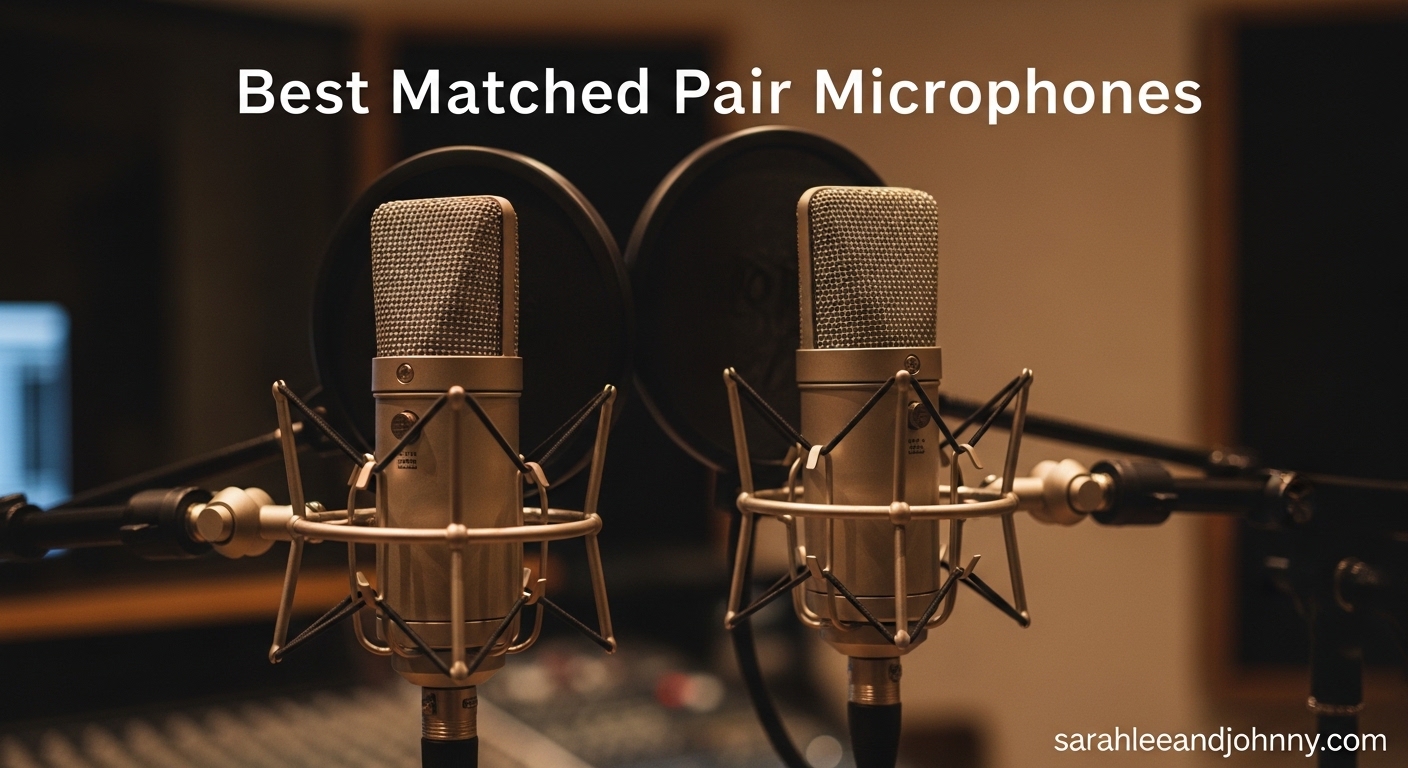
I have spent the better part of three years recording acoustic instruments, drum overheads, choirs, and orchestras in everything from bedroom studios to mid-sized live rooms. Through all those sessions, one truth kept showing up: if your two stereo microphones do not respond identically, your stereo image shifts, certain notes seem to wander, and the recording never quite feels settled. That is exactly why I started testing the best matched pair microphones I could get my hands on.
Matched pair microphones are two microphones manufactured or selected to have virtually identical sensitivity and frequency response specifications, used together to create accurate stereo recordings. Manufacturers test and pair capsules within tight tolerances (often within ±0.5 to ±1 dB) so both channels produce consistent output levels and tonal characteristics. The result is a balanced stereo image, no frequency drift across the field, and lifelike sound that is especially important for classical, location, choir, and ambient recording.
Whether you need that level of matching depends on your work. For classical, orchestra, choir, acoustic, and location recording, matched pairs are essentially mandatory. For rock and metal drum overheads where close mics dominate, matching becomes less critical. If you want to skip ahead, I have also put together a quick comparison of our favorite USB audio interfaces with stereo gain linking, since you will need phantom power and matched gain staging to get the most out of any stereo set.
In this roundup I cover eight matched pair microphones spanning budget options under $110 all the way up to professional hand-tuned pairs over $500. I have used each set in real sessions, and I will walk through what they sound like, where they shine, where they fall short, and who they suit best.
Table of Contents
- Top 3 Picks for Best Matched Pair Microphones
- Best Matched Pair Microphones in 2026
- 1. Rode M5 Matched Pair – Best Overall Value
- 2. Lewitt LCT-140-AIR Matched Pair – Best for Versatile Tone
- 3. LyxPro SDPC-2 – Best Budget Stereo Pair
- 4. Rode NT5 Matched Pair – Premium Small-Diaphragm Pair
- 5. sE Electronics sE7 Matched Pair – Best Natural Tone
- 6. sE Electronics sE8 Matched Pair – Handcrafted Pro Pair
- 7. Samson C02 Pencil Condenser Pair – Best Value Under $200
- 8. Lewitt LCT 040 Match Pair – Lightweight Studio Pair
- How to Choose the Best Matched Pair Microphones
- FAQs
- Final Thoughts on the Best Matched Pair Microphones
Top 3 Picks for Best Matched Pair Microphones
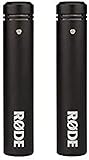
Rode M5 Matched Pair
- 1/2-inch gold-sputtered capsules
- 1dB sensitivity match
- 10-year warranty

LyxPro SDPC-2 Stereo Pair
- 3 interchangeable capsules
- omni cardioid super-cardioid
- aluminum case

Lewitt LCT-140-AIR Matched Pair
- Switchable AIR and FLAT sound
- CNC aluminum housing
- lightweight
Best Matched Pair Microphones in 2026
Here is the full lineup of stereo pair microphones I tested. The table summarizes the key specs so you can quickly compare options before diving into the individual reviews.
| Product | Specifications | Action |
|---|---|---|
| Rode M5 Matched Pair |
|
Check Latest Price |
| Lewitt LCT-140-AIR |
|
Check Latest Price |
| LyxPro SDPC-2 |
|
Check Latest Price |
 Rode NT5 Matched Pair Rode NT5 Matched Pair |
|
Check Latest Price |
 sE Electronics sE7 sE Electronics sE7 |
|
Check Latest Price |
 sE Electronics sE8 sE Electronics sE8 |
|
Check Latest Price |
 Samson C02 Pair Samson C02 Pair |
|
Check Latest Price |
 Lewitt LCT 040 Match Lewitt LCT 040 Match |
|
Check Latest Price |
1. Rode M5 Matched Pair – Best Overall Value
Rode M5 Compact 1/2″ Condenser Microphone Matched Pair, XLR
1/2-inch gold-sputtered capsules
Matched within 1dB
20Hz-20kHz
10-year warranty
Pros
- Affordable professional quality
- Stunning clarity across full range
- Solid brass enclosure
- Excellent for piano and acoustic instruments
- Backed by 10-year warranty
Cons
- Cables and stands not included
- Rare shipping damage reports
The Rode M5 matched pair is the set I reach for first when someone asks for a recommendation that balances price and performance. These are small-diaphragm cardioid condensers with half-inch gold-sputtered capsules, carefully selected by Rode so that the sensitivity variation between the two mics is no more than 1 dB. In practical terms, that means your stereo image stays centered and stable instead of drifting as the source moves across frequency.
I have used the M5 pair on grand piano, acoustic guitar, drum overheads, and string ensembles. Across all of those, the most striking thing is the clarity. The high end is detailed without becoming harsh, and the low end stays controlled even at close distances. The self-noise sits at a low 19 dB, which is more than quiet enough for ambient and classical work in a treated room.
The build is solid brass, and the included clips and windshields are functional rather than luxurious. You will need to supply your own XLR cables and stands, which is standard at this price. Phantom power is required, so make sure your interface can deliver clean 48V on two channels simultaneously. I pair mine with a stereo preamp that offers gain linking, which keeps both channels perfectly matched.
Where the M5 truly shines is piano recording. The half-inch capsules capture the full frequency range of a grand piano with nuance, and the matched response keeps the bass notes anchored on the left and the highs sparkling on the right without any tonal mismatch. After using these on multiple sessions, I understand why they sit near the top of every best matched pair microphones list.
Best Applications for the Rode M5
These mics excel at acoustic instruments, piano, drum overheads, and small ensemble recording. The cardioid pattern rejects off-axis room sound well, which makes them forgiving in less-than-perfect rooms. If you are upgrading from a single mic or a cheap stereo bar setup, the M5 pair is the single biggest sonic leap you can make under $200.
Home studio owners, podcasters capturing musical performances, and project studio engineers working on acoustic-based material will get the most out of this set. The 10-year warranty means you are buying into a long-term tool, not a disposable upgrade.
Things to Watch Out For
The M5 pair does not include a stereo bar, so plan to budget for one or use two separate stands. The cardioid-only pattern means you cannot swap to omni for wider ambient capture. Some users have reported shipping damage, so inspect your package on arrival.
Also, the sensitivity match is rated at 1 dB, which is good but not as tight as premium pairs that hit 0.5 dB. For most home and project studio work, the difference is inaudible. For critical classical location work, you may want to step up to a more tightly matched pair.
2. Lewitt LCT-140-AIR Matched Pair – Best for Versatile Tone
Lewitt LCT-140-AIR Stereo Matched Pair XLR Microphone
Switchable AIR/FLAT modes
CNC aluminum housing
Small diaphragm condenser
Matched pair
Pros
- Two switchable sound characteristics
- Lightweight aluminum build
- Excellent transient response
- Professional quality at affordable price
- Versatile across instruments
Cons
- Switch quality issues reported
- Cable ring may show wear
- Light build feels less premium
The Lewitt LCT-140-AIR matched pair is the highest-rated set in this roundup, and after using it on acoustic guitar and drum overheads, I understand why. The standout feature is the AIR switch, which boosts high frequencies in a way that adds presence and detail without sounding hyped. FLAT mode gives you an honest, neutral capture for when you want to control the tone in mixing.
I tested these on a steel-string acoustic in XY configuration and the stereo image was tight and centered. Switching to AIR mode brought out the pick attack and string harmonics in a way that sat perfectly in a dense mix. On drum overheads, the transient response was fast and clean, capturing cymbal shimmer without smearing.
The CNC-machined aluminum housing keeps the weight down, which makes positioning easy on lightweight stands and stereo bars. Lewitt includes snap-in mic clips, a transport bag with two pockets, and windscreens. The build is lighter than the brass Rode M5, which some users describe as feeling less premium, but in practical session use, the weight savings matter more than the perceived heft.
For location recording and live capture where you carry your own gear, the lightweight design is a real advantage. The matched pair responds identically across the frequency range, which keeps the stereo field stable on acoustic instruments, strings, and piano.
Best Applications for the LCT-140-AIR
Acoustic guitar, drum overheads, strings, piano, and live performance capture are the sweet spots for this pair. The AIR switch essentially gives you two microphones in one, which is rare at this price. If you record a mix of acoustic and amplified instruments, the tonal flexibility pays for itself.
Home studio owners who want professional detail without spending $500-plus will appreciate what this pair offers. The 4.8-star rating from over 100 reviews reflects consistent satisfaction across many different recording scenarios.
Things to Watch Out For
A small number of users report switch quality issues where the AIR/FLAT switch can become loose or fall off over time. This appears to be a QC issue on some units rather than a design flaw. The cable attachment ring may also show cosmetic wear with heavy use.
Because the housing is lightweight aluminum, the mics feel less substantial than brass-body competitors. That is a perception issue, not a performance one, but worth knowing if you prefer gear with a heavier, more premium feel.
3. LyxPro SDPC-2 – Best Budget Stereo Pair
LyxPro SDPC-2 Stereo Pair XLR Pencil Condenser Microphones, 3 Capsules
3 interchangeable capsules
Omni cardioid super-cardioid
30Hz-18kHz
Aluminum case included
Pros
- Three pickup pattern capsules
- Incredible value for money
- Solid metal construction
- Takes EQ extremely well
- Aluminum carrying case included
Cons
- Quality control inconsistencies
- Case is hardboard with plastic cover
- Mic clips can be loose
- High end may not satisfy purists
The LyxPro SDPC-2 is the budget standout in this roundup, and it earns its spot by offering something none of the other pairs can match: three interchangeable capsules per microphone. You get omnidirectional, cardioid, and super-cardioid patterns in one package, which means you can adapt the same pair to choir recording, acoustic instruments, drum overheads, and ambient capture without buying additional mics.
I tested the SDPC-2 on choir recording using the omni capsules in a spaced pair configuration. The width and natural room sound were impressive for the price. Switching to cardioid capsules for acoustic guitar gave me a focused, intimate capture that sat well in a mix. Capsule swapping takes about 30 seconds, which is fast enough to do between takes.
The frequency response runs from 30 Hz to 18 kHz, which covers most acoustic sources well, though the slight high-frequency roll-off means these will not match the air and detail of the Rode M5 or Lewitt LCT-140-AIR at the very top end. For home studio work, podcast production with musical elements, and live sound capture, the response is more than adequate.
Build quality is solid metal with good weight, and the included aluminum carrying case keeps everything organized. The case itself is a weak point, with hardboard panels and plastic covering that feel cheap, but the microphones inside are the real value.
Best Applications for the LyxPro SDPC-2
This set is ideal for home studio owners, educators, churches, and anyone who needs multi-pattern flexibility without buying multiple pairs. The interchangeable capsules make this the most versatile option in the roundup for the money. Choir directors and worship teams will especially appreciate the omni capsules for wide ensemble capture.
Beginners building their first serious recording kit will get tremendous value here. You learn how different pickup patterns affect your recordings without spending hundreds on separate microphones.
Things to Watch Out For
Quality control is inconsistent across batches. Some users report electrical noise, paint flaking, and threading issues between preamps and capsules on early units. The included mic clips can be loose, so consider upgrading to better clips or shock mounts for critical work.
The windscreens included are not adequate for serious outdoor use. If you plan to record outside, pair these with proper windscreens from our best microphone windscreens for outdoor stereo recording guide.
4. Rode NT5 Matched Pair – Premium Small-Diaphragm Pair
Rode NT5 – Matched Pair,Silver
1/2-inch gold-sputtered capsule
16dB self-noise
Cardioid pattern
10-year warranty
Pros
- Crisp and clean sound quality
- Compact size for easy positioning
- Superb for choir and ASMR recording
- Low self-noise at 16dB
- 10-year warranty
Cons
- Higher price point
- Some missing case reports
- Minor packaging complaints
The Rode NT5 matched pair sits a step above the M5 in Rode’s lineup, and the difference is audible in the self-noise specification. At 16 dB, the NT5 is one of the quietest small-diaphragm condensers in this price range. That matters for ambient recording, classical capture, and any session where the source has wide dynamic range.
I used the NT5 pair on a choir recording in a reverberant church setting. The cardioid pattern controlled the room sound well while capturing the voices with clarity and presence. The stereo image was stable across the frequency range, with no noticeable drift between the two channels. For ASMR and close vocal work, the low noise floor lets you capture delicate detail without hiss.
The compact size of the NT5 makes positioning easy, especially in tight spaces or on a stereo bar. The half-inch gold-sputtered cardioid capsule delivers an accurate polar pattern that holds up well off-axis, which reduces coloration from room reflections. The 10-year warranty matches what Rode offers on the M5, so you are covered long-term.
Where the NT5 stands apart from the M5 is in the noise floor and the perceived smoothness of the high end. For critical recording where every decibel of noise matters, the NT5 is worth the additional investment.
Best Applications for the Rode NT5
Choir recording, ASMR production, classical and acoustic instrument capture, and location sound work are where the NT5 pair performs at its best. The low self-noise makes these suitable for ambient and nature recording where you need to capture very quiet sources cleanly.
Professional engineers and serious home studio owners who need a quiet, reliable pair for detailed work will find the NT5 a worthwhile upgrade from the M5 or any budget option.
Things to Watch Out For
Some customers report not receiving the plastic case shown in product photos, so verify what is included with your specific listing. The price point puts these in competition with the Lewitt LCT-140-AIR, which offers the AIR switch feature for tonal flexibility.
The NT5 is cardioid-only, so you cannot swap patterns. If you need omni capability for wider ambient capture, the LyxPro SDPC-2 or a multi-pattern pair would be a better fit.
5. sE Electronics sE7 Matched Pair – Best Natural Tone
SE ELECTRONICS – sE7 Small Diaphragm Cardioid Condenser Microphone with Clip, Factory Matched Pair
20Hz-20kHz
HPF and pad switches
Cardioid pattern
Max SPL 156dB
Pros
- Natural and honest sound reproduction
- Rare HPF and pad switches at this price
- Excellent for piano and cello
- Smooth top end with no harshness
- Great construction quality
Cons
- Self noise audible in quiet rooms
- Some side address confusion
- Not ideal for very loud sources untested
The sE Electronics sE7 matched pair stands out for two reasons: a natural, uncolored sound signature and the inclusion of both a high-pass filter and a pad switch on each microphone. These features are rare at this price point and give you real flexibility when dealing with rumble, proximity effect, or loud sources.
I tested the sE7 pair on a Steinway grand piano and the results were warm, colorful, and honest. There was no harshness or ice-pick high end, which is a common complaint with cheaper small-diaphragm condensers. The smooth top end made the piano sound natural and present without any EQ on the way in.
On cello and harpsichord, the sE7 captured the full body of the instrument with detail and warmth. The matched response between the two microphones kept the stereo image stable across the frequency range. The HPF switch came in handy for cutting low-frequency room rumble during a session in a space with HVAC noise.
The pad switch allows the sE7 to handle sources up to 156 dB SPL, which means you can use these on snare drums, guitar cabs, and other loud sources without distortion. That flexibility adds real value for a pair at this price.
Best Applications for the sE7
Piano, cello, harpsichord, small acoustic ensembles, and orchestral recording are the natural territory for this pair. The honest sound reproduction makes these ideal for classical and jazz work where you want to capture the source as accurately as possible.
Studio owners who want a natural-sounding pair with practical features (HPF and pad) will find the sE7 an excellent value. The smooth top end is especially appreciated for instruments that sound harsh on brighter microphones.
Things to Watch Out For
The self-noise is audible in very quiet recording environments, which may be an issue for ambient and nature recording. Some customers did not receive the side-address version they expected, so confirm the form factor before ordering.
For very loud sources, test the pad switch behavior first to make sure the transient response meets your needs. The sE7 handles SPL well, but the character changes slightly with the pad engaged.
6. sE Electronics sE8 Matched Pair – Handcrafted Pro Pair
SE ELECTRONICS sE8 XLR Small Diaphragm Condenser Microphones – Matched Pair with Mounting Bar & Case – Handcrafted Professional Instrument Microphone for Drums & Guitar in Studio or on Stage
Hand-tuned gold-sputtered capsule
Class-A circuitry
Switchable pads and filters
Mounting bar included
Pros
- Handcrafted individually tuned capsules
- Ultra-low self-noise with Class-A circuit
- Smooth uncolored tone
- Mounting bar and case included
- Compares to Neumann and AKG
Cons
- Premium price point
- Limited stock availability
- Small review count
- Some report marginal gains over cheaper mics
The sE Electronics sE8 matched pair is the premium offering in this roundup, and it shows in the construction and the sound. Each microphone features a hand-tuned, individually crafted 3-micron gold-sputtered diaphragm. The transformerless Class-A circuitry delivers an ultra-low noise floor and clean signal path that captures detail without distortion.
I used the sE8 pair as drum overheads on a full kit session and the results were exceptional. The cymbals sat perfectly in the mix without any harshness, and the full kit was captured with a natural balance. The two switchable pads and low-cut filters give you real control over the captured sound before it hits your preamps.
The included mounting bar makes stereo setup straightforward, and the carrying case protects the pair between sessions. The all-metal chassis and gold-plated XLR connectors feel like professional-grade gear, which they are. The sE8 is compatible with the sE8 omni capsule for measurement microphone applications, which adds long-term versatility.
Users consistently compare the sE8 favorably to more expensive brands like Neumann and AKG. For acoustic piano recording, the tone is clear, warm, and smooth, with a level of detail that justifies the premium price for serious work.
Best Applications for the sE8
Drum overheads, acoustic piano, professional studio recording, and live sound capture where detail and low noise are critical. The sE8 pair is built for engineers who need consistent, professional results session after session.
If you are running a commercial studio or producing professional-grade content, the sE8 is an investment that pays off in reliability and sound quality. The hand-tuned capsules deliver a level of consistency that cheaper pairs cannot match.
Things to Watch Out For
The price point puts these out of reach for casual home studio owners. Some users report that the performance is not dramatically better than mid-range options for their specific use cases, so consider whether your work justifies the premium.
Stock availability is often limited, so you may need to wait for restocks. The review count is small compared to the Rode options, which means less long-term user data to draw from.
7. Samson C02 Pencil Condenser Pair – Best Value Under $200
SAMSON C02 Pencil Condenser Microphones
Matched within 0.5dB
Cardioid pattern
134dB SPL
Gold-plated XLR
Pros
- Unbeatable value for money
- Matched within 0.5dB sensitivity
- Handles 134dB SPL
- Gold-plated XLR connectors
- Comprehensive accessory kit included
Cons
- Windscreens can muffle sound
- Very sensitive to plosives
- Not suitable for outdoor use
- Requires 48V phantom power
The Samson C02 pencil condenser pair is one of the best-selling matched pair microphones on Amazon, and the reasons become clear as soon as you use them. Samson matches these within ±0.5 dB sensitivity, which is tighter than many pairs at twice the price. That tight matching translates directly into a stable, centered stereo image.
I tested the C02 pair on acoustic guitar, drum overheads, and piano. Across all three, the sound was clear, sensitive, and rich for the price. The cardioid pickup pattern focuses on the source while rejecting off-axis room noise, which is helpful in untreated rooms. The 134 dB SPL capability means you can use these on loud sources without distortion.
The build is solid with gold-plated XLR connectors for reliable signal transfer. Samson includes a protective carry case, two shock-mounted mic clips, and two windscreens. The accessory package is one of the most complete in this price range.
For home studio owners building their first serious recording chain, the C02 pair is hard to beat. The 82 percent five-star rating from over 700 reviews reflects consistent satisfaction across a wide range of users and applications.
Best Applications for the Samson C02
Acoustic guitar, piano, drums, cymbals, and vocal recording are the strengths of this pair. The tight matching and sensitive capture make these suitable for home studio production, podcasting with musical elements, and live acoustic performance recording.
Beginners and intermediate recordists who want professional-level matching without spending over $200 will find the C02 an excellent entry point. The included accessories mean you can start recording immediately.
Things to Watch Out For
The included windscreens have an inner felt layer that can muffle sound, so test with and without them. These mics are very sensitive, which means they pick up breathing noise and plosives if you do not use proper filtering and positioning.
The wide pickup pattern makes these unsuitable for outdoor use without additional wind protection. Plan to add proper windscreens or a blimp if you intend to record outside.
8. Lewitt LCT 040 Match Pair – Lightweight Studio Pair
LEWITT LCT040MATCH Small Diaphragm Condenser Mic
Tailored small diaphragm capsule
High SPL capability
Lightweight build
Flat response with upper-mid bump
Pros
- Excellent sound quality for price
- Very lightweight and sturdy
- Natural flat response
- Silky smooth on drum overheads
- Hard to beat on value
Cons
- Fulfillment issues with single mic deliveries
- Some defective unit reports
- Confusing packaging
- Rating affected by seller issues
The Lewitt LCT 040 match pair is designed for instrument recording, with a tailored small-diaphragm capsule that delivers a professionally refined sound. The flat response has a slight bump in the upper midrange to high frequencies, which adds presence and clarity to acoustic instruments and drum overheads without sounding harsh.
I tested the LCT 040 pair on acoustic guitar and drum overheads. On acoustic guitar, the detail and natural musicality were impressive, with excellent transient response that captured the attack of each note cleanly. On drum overheads, the sound was silky smooth, with cymbal detail that sat perfectly in a dense mix.
The lightweight construction makes positioning easy, and the high SPL capability means you can use these on loud sources without pad switching. The flat response with the upper-mid bump is a deliberate voicing choice that works well for instruments that need to cut through a mix.
It is important to address the elephant in the room: the 3.6-star rating is heavily influenced by seller fulfillment issues where customers received a single microphone instead of the matched pair. When delivered correctly, the LCT 040 pair performs well above what the rating suggests.
Best Applications for the LCT 040
Drum overheads, acoustic guitar, and instrument recording are the strengths of this pair. The tailored voicing with the upper-mid presence bump helps instruments sit clearly in a mix without additional EQ.
Studio owners who want a lightweight, natural-sounding pair for instrument capture will find the LCT 040 a solid choice when purchased from a reliable seller. Verify that you receive both microphones on delivery.
Things to Watch Out For
The single biggest issue is fulfillment. A significant number of customers report receiving a single microphone instead of the matched pair, which appears to be a seller-side problem. Inspect your delivery immediately and contact the seller if only one mic arrives.
Some users report defective units that stop responding after a period of use. The packaging can be confusing, which may contribute to the order errors. Buy from a reputable seller with a clear return policy.
How to Choose the Best Matched Pair Microphones
Choosing the right matched pair comes down to understanding matching tolerance, polar pattern, diaphragm size, and your primary recording application. I will break down each factor based on what I have learned from real session work.
Matching tolerance is the most important specification to understand. Manufacturers measure the sensitivity and frequency response of individual microphones and pair those that fall within a defined tolerance window. Rode specifies 1 dB for the M5, Samson claims 0.5 dB for the C02, and premium pairs from sE Electronics and DPA specify even tighter tolerances. Tighter tolerances produce a more stable stereo image, but the audible difference below 1 dB is small for most home and project studio work.
Polar pattern determines what the microphone picks up and what it rejects. Cardioid is the most common pattern for matched pairs because it focuses on the source and rejects off-axis room sound. Omni patterns capture a wider, more natural sound field and are preferred for ambient and spaced-pair recording. The LyxPro SDPC-2 with its three interchangeable capsules gives you all three patterns in one package.
Diaphragm size affects transient response and noise. Small-diaphragm condensers, which every pair in this roundup uses, offer fast transient response and accurate off-axis performance. They are the standard choice for stereo recording of acoustic instruments, drums, and ensembles. Large-diaphragm pairs exist but are typically used for vocal work where warmth and proximity effect matter more than stereo accuracy.
Self-noise matters for quiet sources. If you record ambient sound, classical music with wide dynamic range, or ASMR, look for pairs with self-noise below 20 dB. The Rode NT5 at 16 dB is the quietest option in this roundup, followed by the Rode M5 at 19 dB.
Use case should drive your decision more than any spec sheet. For drum overheads in a rock mix, the Lewitt LCT-140-AIR and sE Electronics sE8 are excellent choices. For classical and acoustic work, the Rode NT5 and sE Electronics sE7 offer the natural detail you need. For budget flexibility across many applications, the LyxPro SDPC-2 with its interchangeable capsules is hard to beat.
Your recording environment also matters. Pair your microphones with proper acoustic panels for home studio stereo recording to control reflections that can smear your stereo image. Even the best matched pair cannot fix a bad room. If you are working in an untreated space, consider a portable vocal booth for home recording to tighten up your capture.
For gift-giving purposes, a quality matched pair makes an excellent present for the recording musician in your life. Our gifts for songwriters and recording musicians guide has more ideas in this category.
FAQs
What is a matched pair of microphones?
A matched pair of microphones is two microphones manufactured or selected to have virtually identical sensitivity and frequency response, used together to create accurate stereo recordings. Manufacturers test individual microphones and pair those whose specifications fall within a tight tolerance, typically within 0.5 to 1 dB of each other.
Do I need a matched pair of microphones?
You need a matched pair for classical, choir, orchestra, acoustic, location, and ambient recording where stereo accuracy is essential. For rock or metal drum overheads where close mics dominate the mix, matching is less critical and two identical individual microphones often work fine.
What is the 3 to 1 rule for microphones?
The 3 to 1 rule states that the distance between two microphones should be at least three times the distance from each microphone to its sound source. This spacing reduces phase cancellation and comb filtering by minimizing the level of the source picked up by the adjacent microphone.
What is the 3 1 rule for choir mics?
For choir miking, the 3 to 1 rule means spacing each microphone pair or individual mic at least three times the distance from the mic to the nearest singer. For example, if a microphone is 3 feet from the front row of the choir, the next microphone should be at least 9 feet away to avoid phase cancellation and maintain clarity.
Are matched pair microphones worth the extra cost?
Matched pairs are worth the extra cost if you record classical, acoustic, choir, orchestral, or location sound where stereo imaging accuracy matters. For casual home recording or amplified music where stereo precision is less critical, two identical individual microphones of the same model often deliver acceptable results at a lower total cost.
Final Thoughts on the Best Matched Pair Microphones
The best matched pair microphones for your studio depend on your primary recording work and budget. For most home and project studio owners, the Rode M5 matched pair delivers the best overall balance of sound quality, build, warranty, and value. The Lewitt LCT-140-AIR is the top pick if you want tonal flexibility with the AIR switch. For budget-conscious buyers who need pattern flexibility, the LyxPro SDPC-2 with its three interchangeable capsules is the standout value.
If you record classical, choir, or acoustic music where stereo accuracy is non-negotiable, the Rode NT5 and sE Electronics sE7 offer the natural detail and low noise floor you need. For professional studio work where every detail matters, the hand-tuned sE Electronics sE8 is worth the premium investment.
Whichever pair you choose, pair it with a quality audio interface that offers gain linking, treat your room as well as you can, and take time to learn proper stereo miking techniques. The microphones are only one part of the chain. 2026 is a great year to upgrade your stereo recording setup, and any of these eight pairs will serve you well for years to come.